

Damara Tern vs Australian Fairy Tern
Sternula balaenarum contro Sternula nereis
Fai un quiz con Damara Tern e Australian Fairy Tern
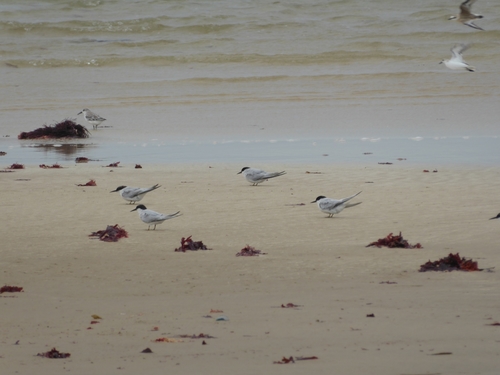 Damara Tern
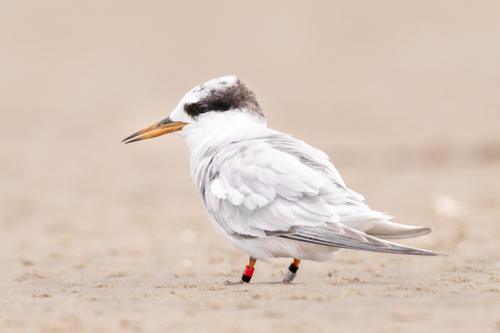 Australian Fairy Tern
In breve
Il segno di campo più affidabile tra Damara Tern e Australian Fairy Tern è il motivo e l'estensione del nero sulla testa negli adulti in riproduzione: Damara Tern mostra un cappuccio nero completo che si estende dalla fronte alla nuca, mentre il nero dell'Australian Fairy Tern raggiunge solo l'occhio, mai fino al becco. In volo, gli adulti di Damara Tern mostrano una punta d'ala triangolare nera distintiva, mentre le ali dell'Australian Fairy Tern sono di un grigio-bluastro pallido più uniforme. I Damara Tern immaturi mostrano barre color crema sulla mantellina, una caratteristica assente negli immaturi di Australian Fairy Tern. Entrambi sono piccoli, terns pallidi, ma sottili differenze nel colore del becco e delle gambe, così come nel motivo della testa, sono fondamentali per la separazione, specialmente durante la stagione di riproduzione. Fai attenzione ai cambiamenti stagionali nel motivo della testa e nel colore del becco, che possono causare confusione al di fuori del periodo di riproduzione.
Consigli di identificazione
- Head Pattern in Breeding Adults: Damara Tern mostra un cappuccio nero completo dalla fronte alla nuca; il patch nero dell'Australian Fairy Tern si ferma all'occhio e non raggiunge mai il becco. Questo è il segno più affidabile durante la stagione di riproduzione.
- Non-breeding Head Pattern: Entrambe le specie perdono il cappuccio completo nel piumaggio non riproduttivo, ma Damara Tern mantiene una maschera nera attorno agli occhi fino alla nuca, mentre la testa dell'Australian Fairy Tern è per lo più bianca con solo una ridotta macchia scura.
- Immature Upperparts: I Damara Tern immaturi hanno barre color crema sulla mantellina, che sono assenti negli immaturi di Australian Fairy Tern. Cerca questo nei gruppi di giovanili o nella dispersione post-riproduzione.
- Wing Pattern in Flight: Gli adulti di Damara Tern mostrano una punta d'ala triangolare nera dal carpo alla punta; le ali dell'Australian Fairy Tern sono uniformemente di un grigio-bluastro pallido senza un forte triangolo nero.
- Bill Color in Breeding: Entrambi hanno becchi giallo-arancio in riproduzione, ma quello dell'Australian Fairy Tern è spesso più luminoso e più arancione, specialmente durante il corteggiamento. Nel non-riproduttivo, il becco dell'Australian Fairy Tern diventa nero alla punta e alla base, mentre il colore del becco di Damara Tern è meno descritto ma potrebbe essere più opaco.
- Leg Color: Entrambe le specie hanno gambe giallo-arancio in riproduzione, ma questo non è un forte separatore.
- Size: Damara Tern è leggermente più piccolo (23cm, 46g) rispetto all'Australian Fairy Tern (25cm), ma questo è raramente utile a meno che gli uccelli non siano affiancati.
- Back Color: La schiena di Damara Tern è di un grigio molto pallido; le ali dell'Australian Fairy Tern sono di un grigio leggermente più bluastro, ma questo è sottile e variabile con la luce.
- Feeding Behavior: Damara Tern spesso si nutre da solo e da altezze più basse; l'Australian Fairy Tern si libra più in alto e può essere visto con altri terns o vicino ad attività di pesci predatori.
- Habitat/Range: Se ti trovi nell'Africa meridionale, aspettati Damara Tern; in Australia/Nuova Zelanda/Nuova Caledonia, aspettati Australian Fairy Tern. I loro areali non si sovrappongono.
- Seasonal Context: Damara Tern si riproduce nell'estate meridionale (Nov–Feb), Australian Fairy Tern si riproduce in primavera fino all'inizio dell'estate (Set–Feb). Il tempismo può aiutare se conosci i cicli di riproduzione locali.
- Sexes: I sessi sono simili in entrambe le specie; non fare affidamento sul sesso per l'identificazione.
- Tail and Structure: Non sono state descritte forti differenze; entrambi sono terns compatti e con coda corta con un aspetto simile.
- Voice: Non sono state descritte differenze diagnostiche nelle fonti fornite.
- Common Pitfall: Gli uccelli non riproduttivi e immaturi sono spesso confusi a causa del ridotto motivo della testa e della dimensione simile—cerca la presenza o l'assenza di barre color crema sulla mantellina e l'estensione del nero sulla testa per la migliore separazione.
Taglia
Entrambe le specie sono terns molto piccoli e simili in dimensioni complessive, ma Damara Tern è leggermente più piccolo (massa corporea 46g, lunghezza 23cm) rispetto all'Australian Fairy Tern (lunghezza circa 25cm; massa non specificata ma simile). Sul campo, questa differenza di dimensioni è sottile e raramente diagnostica a meno che non siano visti affiancati.
Piumaggio
-
Juvenile/Immature: I Damara Tern immaturi mostrano distintive barre color crema sulla mantellina, che non si vedono nell'Australian Fairy Tern. Gli immaturi di Australian Fairy Tern assomigliano agli adulti non riproduttivi, privi di forti barre sulla mantellina.
-
Adult Breeding: Gli adulti di Damara Tern hanno un cappuccio nero completo dalla fronte alla nuca e una schiena di un grigio molto pallido, con una punta d'ala triangolare nera in volo. Gli adulti di Australian Fairy Tern hanno una macchia nera che non si estende oltre l'occhio (mai fino al becco), con un corpo bianco e ali di un grigio-bluastro pallido. Il becco e le gambe sono giallo-arancio in entrambi, ma il cappuccio nero di Damara è più esteso.
-
Adult Non-breeding: Entrambe le specie perdono il cappuccio nero completo nel piumaggio non riproduttivo, sostituito da più bianco sulla fronte e sulla corona. Damara Tern mostra una maschera nera attorno agli occhi che si estende fino alla nuca, mentre il nero dell'Australian Fairy Tern è ridotto e il becco diventa nero alla punta e alla base. I sessi sono simili in entrambe le specie.
Comportamento
Entrambe le specie si nutrono principalmente di piccoli pesci tuffandosi, ma Damara Tern tipicamente tuffa da un'altezza inferiore (3–8m), mentre l'Australian Fairy Tern si libra più in alto (5–15m) e utilizza un tuffo più superficiale e rasente alla superficie. Damara Tern spesso si nutre solitariamente, distanziandosi dagli altri terns, specialmente nei gruppi invernali, mentre l'Australian Fairy Tern è più probabile che venga visto in colonie o gruppi sciolti vicino ai siti di alimentazione. Entrambe le specie si riproducono in colonie, ma la riproduzione di Damara Tern è più strettamente legata all'estate dell'Africa meridionale, mentre l'Australian Fairy Tern si riproduce in primavera fino all'inizio dell'estate nel Pacifico sud-occidentale.
Habitat
Damara Tern si riproduce sulle coste dell'Africa meridionale e migra verso le coste tropicali dell'Africa occidentale in inverno; è strettamente costiero. L'Australian Fairy Tern si trova lungo le coste e le estuari di Australia, Nuova Zelanda e Nuova Caledonia, spesso vicino a piscine e estuari poco profondi. I loro areali non si sovrappongono, ma entrambi preferiscono spiagge aperte, sabbiose o disseminate di conchiglie per la riproduzione e acque poco profonde per l'alimentazione. Se ti trovi al di fuori del Pacifico sud-occidentale o dell'Africa meridionale, la specie presente è quasi certamente quella locale.
Damara Tern · Australian Fairy Tern · I miei uccelli difficili