

Motmot

カンムリコリン 対 ギアナウズラ

Colinus cristatus 対 Odontophorus gujanensis

カンムリコリンとギアナウズラのクイズ
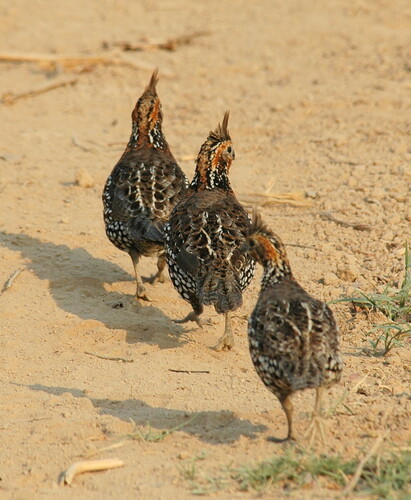
カンムリコリン (Colinus cristatus) カンムリコリン
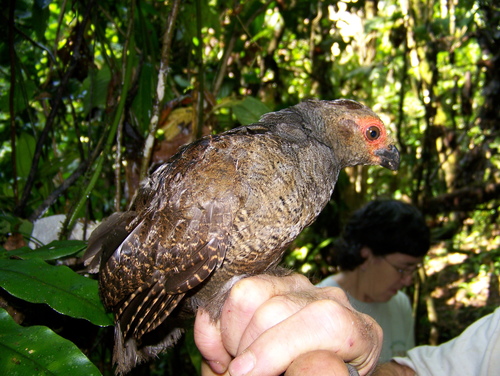
ギアナウズラ (Odontophorus gujanensis) ギアナウズラ

メディア

読み込み中…

要点

カンムリコリンとギアナウズラを区別する最も信頼できるフィールドマークは、冠の色と形、顔の模様です:カンムリコリンは長く、淡いバフまたは白の冠と対照的な白またはバフの喉を持ち、ギアナウズラは短く、ゆるい赤褐色の冠と目の周りにオレンジまたは赤の裸の皮膚を持つ地味な茶色の顔を示します。すべての年齢において、コリンウズラは下側がはるかに淡く、喉のコントラストがより明確ですが、ウズラは暗く、より均一です。幼鳥のギアナウズラは赤橙色のくちばしと非螺旋状の赤褐色の冠で識別できます。サイズも役立ちます:ギアナウズラは明らかに大きく、がっしりとしています。両種は重複する地域に生息していますが、好む生息地は著しく異なります。

識別のコツ

  1. Crest color and shape: カンムリコリンは長く、淡いバフまたは白の冠(時には暗い先端がある)を示し、ギアナウズラは短く、ゆるい赤褐色の冠を持っています。これは、すべての年齢の止まっている鳥と歩いている鳥の両方で見ることができます。
  2. Facial pattern: カンムリコリンの強く対照的な白またはバフの喉とマーブル状の黒と白の首を探してください。ギアナウズラは地味な茶色の顔と喉を持ち、鋭いコントラストはありません。
  3. Bare skin around eye: ギアナウズラだけが目の周りにオレンジまたは赤の裸の皮膚を持ち、近距離での微妙ですが信頼できるマークです。
  4. Bill color in juveniles: 幼鳥のギアナウズラは赤橙色のくちばしを持ち、カンムリコリン(すべての年齢)は黒いくちばしを持っています。
  5. Underparts color: カンムリコリンは下側がはるかに淡く、バフ、シナモン、黒の模様があります;ギアナウズラは下側が地味な茶色で、かすかな縞模様があります。
  6. Upperparts and back: 両者はまだらですが、ギアナウズラの上面は黒い螺旋模様のある茶色で、カンムリコリンは黒、茶色、灰色のまだら模様があり、全体的に明るく見えることがよくあります。
  7. Size and bulk: ギアナウズラはカンムリコリンよりも明らかに大きく、体が重いです。これは、スケール感が明確な場合にのみ使用してください。
  8. Leg color: 両者は青灰色の脚を持っているので、これは区別には役立ちません。
  9. Sex differences: 両種は性別が似ています;雌のカンムリコリンは雄よりわずかに茶色がかっていますが、これは強いフィールドマークではありません。
  10. Flight behavior: ギアナウズラは低く急いでカバーに飛び込む傾向があります;カンムリコリンは開けた地面の端に留まることがあります。
  11. Habitat: カンムリコリンは開けたまたは半開けた生息地に生息し、森林の奥深くにはめったにいません。ギアナウズラは密な湿った森林の鳥です。
  12. Group size and behavior: カンムリコリンはしばしば小さく、目に見える群れで見られます;ギアナウズラは秘密主義で、通常は密な下草に隠れています。
  13. Vocalizations: 速く、ハスキーな「クワイ・ボブ・ホワイト」または「オー、ウィート」という声が聞こえたら、それはカンムリコリンです。ギアナウズラの鳴き声はここでは説明されていません。
  14. Geographic context: 両者は南アメリカ北部とパナマに生息することがありますが、カンムリコリンは開けた国や特定の島で見られる可能性が高いです。
  15. Juvenile marks: 赤橙色のくちばしと平らな赤褐色の冠(螺旋模様なし)を見たら、それは幼鳥のギアナウズラです。

大きさ

カンムリコリンは明らかに小さく、全長178–216 mm(7.0–8.5インチ)であるのに対し、ギアナウズラは230–290 mm(9–11インチ)で大きいです。フィールドでは、ギアナウズラははるかにがっしりとしており、体が重いように見え、くちばしも太いです。一緒に見た場合、サイズの違いはすぐに明らかですが、サイズを判断するのが難しい孤立した鳥には注意してください。

羽色

幼鳥のギアナウズラは赤橙色のくちばしと、成鳥の微細な螺旋模様がない平らな赤褐色の冠で特徴的です。成鳥のギアナウズラは短く、ゆるい赤褐色の冠、地味な茶色の顔、目の周りにオレンジまたは赤の裸の皮膚を持っています。彼らの上面は黒い螺旋模様のある茶色で、下側はかすかな縞模様のある地味な茶色です。対照的に、すべての年齢のカンムリコリンは長く、淡いバフまたは白の冠(時には暗い先端がある)、強く対照的な白またはバフの喉(時には黒の斑点がある)、マーブル状の黒と白の首を示します。上面は黒、茶色、灰色のまだら模様があり、下側はバフ、シナモン、黒の模様があり、全体的にはるかに明るく、より模様のある外観を与えます。両種の両性は似ていますが、雌のカンムリコリンはわずかに茶色がかっています。目の色は両者とも茶色ですが、ギアナウズラだけが目の周りに色の付いた裸の皮膚を持っています。飛行中、どちらの種も特徴的な上翼のパネルや対照的な模様を示さないため、区別は体と頭の羽毛に依存します。

行動

カンムリコリンは通常、地面で小さな群れで見られ、しばしば厚いカバーの近くにいて、北部コリンウズラに非常に似た行動をします。通常、開けたまたは半開けた生息地の端でより近づきやすく、目に見えます。一方、ギアナウズラは非常に秘密主義で、密な森林の下草の中を静かに移動し、開けた場所に出ることはめったにありません。もしフラッシュした場合、ギアナウズラは低く急いでカバーに戻る傾向がありますが、カンムリコリンは開けた地面の端でより長く留まることがあります。

生息環境

カンムリコリンは草原、低木、農業の端などの開けたまたは半開けた生息地を好み、しばしば厚いカバーの近くにいますが、森林の奥深くにはめったにいません。その範囲は南アメリカ北部、パナマ、コスタリカの一部に広がり、アルバなどの島にも生息することがあります。ギアナウズラは亜熱帯または熱帯の湿った低地森林の鳥で、密な森林を離れることはめったにありません。彼らの範囲が重複する場所でも、生息地の好みは強い手がかりです:コリンウズラには開けた国、ウズラには密な湿った森林です。

声

カンムリコリンの雄は特徴的で速い、ハスキーな三音節の鳴き声(「クワイ・ボブ・ホワイト」)または繁殖期に二音節の「オー、ウィート」を持っています。ギアナウズラの鳴き声は提供されたメモには記載されていないため、声はカンムリコリンの特徴的な鳴き声が聞こえた場合にのみ診断的です。

より良い説明を送る

比較と同じ項目を使ってください。文章はすぐに公開されます。

The most reliable field mark to separate Crested Bobwhite from Marbled Wood-Quail is the color and shape of the crest and facial pattern: Crested Bobwhite has a long, pale buff or white crest and a contrasting white or buff throat, while Marbled Wood-Quail shows a short, loose, reddish-brown crest and a drab brown face with orange or red bare skin around the eye. In all ages, the bobwhite is much paler below with more distinct throat contrast, whereas the wood-quail is darker and more uniform. Juvenile Marbled Wood-Quail can be told by their reddish-orange bills and non-vermiculated, reddish-brown crests. Size is also helpful: Marbled Wood-Quail is noticeably larger and bulkier. Both species can be found in overlapping regions, but their preferred habitats differ markedly.

  1. Crest color and shape: Crested Bobwhite shows a long, pale buff or white crest (sometimes with dark tips), while Marbled Wood-Quail has a short, loose, reddish-brown crest. This is visible in both perched and walking birds of all ages.
  2. Facial pattern: Look for the strongly contrasting white or buff throat and marbled black-and-white neck on Crested Bobwhite. Marbled Wood-Quail has a drab brown face and throat, with no sharp contrast.
  3. Bare skin around eye: Only Marbled Wood-Quail has orange or red bare skin around the eye, a subtle but reliable mark at close range.
  4. Bill color in juveniles: Juvenile Marbled Wood-Quail have reddish-orange bills, while Crested Bobwhite (all ages) has a black bill.
  5. Underparts color: Crested Bobwhite is much paler below, with buff, cinnamon, and black markings; Marbled Wood-Quail is drab brown below with faint barring.
  6. Upperparts and back: Both are mottled, but Marbled Wood-Quail's upperparts are brown with black vermiculations, while Crested Bobwhite is more mottled with black, brown, and grey, often appearing lighter overall.
  7. Size and bulk: Marbled Wood-Quail is noticeably larger and heavier-bodied than Crested Bobwhite. Use this only when you have a clear sense of scale.
  8. Leg color: Both have bluish-grey legs, so this is not helpful for separation.
  9. Sex differences: Both species are sexually similar; female Crested Bobwhite is only slightly browner than the male, which is not a strong field mark.
  10. Flight behavior: Marbled Wood-Quail flushes low and quickly into cover; Crested Bobwhite may linger at the edge of open ground.
  11. Habitat: Crested Bobwhite is found in open or semi-open habitats, rarely deep in forest. Marbled Wood-Quail is strictly a bird of dense, humid forest.
  12. Group size and behavior: Crested Bobwhite is often in small, visible groups; Marbled Wood-Quail is secretive, usually hidden in dense undergrowth.
  13. Vocalizations: If you hear a fast, husky 'quoit bob-white' or 'oh, wheet', you are hearing Crested Bobwhite. Marbled Wood-Quail's call is not described here.
  14. Geographic context: Both can occur in northern South America and Panama, but Crested Bobwhite is more likely in open country and on certain islands.
  15. Juvenile marks: If you see a reddish-orange bill and plain reddish-brown crest (without vermiculations), it is a juvenile Marbled Wood-Quail.

Crested Bobwhite is significantly smaller, measuring 178–216 mm (7.0–8.5 in) in length, while Marbled Wood-Quail is larger at 230–290 mm (9–11 in). In the field, Marbled Wood-Quail appears much bulkier and heavier-bodied, with a stouter bill. If seen together, the size difference is immediately apparent, but beware of lone birds where size can be hard to judge without context.

Juvenile Marbled Wood-Quail are distinctive with their reddish-orange bills and plain, reddish-brown crests lacking the fine vermiculations of adults. Adult Marbled Wood-Quail have a short, loose, reddish-brown crest, a drab brown face, and orange or red bare skin around the eye. Their upperparts are brown with black vermiculations, and the underparts are drab brown with faint barring. In contrast, Crested Bobwhite of all ages shows a longer, pale buff or white crest (sometimes with dark tips), a strongly contrasting white or buff throat (sometimes spotted with black), and a marbled black-and-white neck. The upperparts are mottled black, brown, and grey, and the underparts are pale with buff, cinnamon, and black markings, giving a much lighter and more patterned appearance overall. Both sexes are similar in both species, but female Crested Bobwhite is slightly browner. The eye color is brown in both, but only Marbled Wood-Quail has colored bare skin around the eye. In flight, neither species shows distinctive upperwing panels or contrasting patterns, so separation relies on body and head plumage.

Crested Bobwhite is typically seen in small groups on the ground, often near thick cover, and behaves much like its close relative, the Northern Bobwhite. It is usually more approachable and visible at the edges of open or semi-open habitats. Marbled Wood-Quail, on the other hand, is very secretive, moving quietly in dense forest undergrowth and rarely venturing into open spaces. If flushed, Marbled Wood-Quail tends to fly low and quickly back into cover, whereas Crested Bobwhite may linger longer at the edge or in more open ground.

Crested Bobwhite favors open or semi-open habitats such as grasslands, scrub, and agricultural edges, often near thick cover but rarely deep inside forest. Its range extends through northern South America, Panama, and just into Costa Rica, and it can occur on islands such as Aruba. Marbled Wood-Quail is a bird of subtropical or tropical moist lowland forests, rarely leaving dense woodland. Even where their ranges overlap, the habitat preference is a strong clue: open country for bobwhite, dense humid forest for wood-quail.

Crested Bobwhite males have a distinctive, fast, husky three-syllable call ('quoit bob-white') or a two-syllable 'oh, wheet' during breeding season. Marbled Wood-Quail's vocalizations are not described in the provided notes, so voice is only diagnostic if the bobwhite's characteristic call is heard.

変更を破棄しますか?

保存していない編集があります。今離れると失われます。

カンムリコリン · ギアナウズラ · 苦手な鳥