

Crested Bobwhite vs Marbled Wood-Quail
Colinus cristatus contro Odontophorus gujanensis
Fai un quiz con Crested Bobwhite e Marbled Wood-Quail
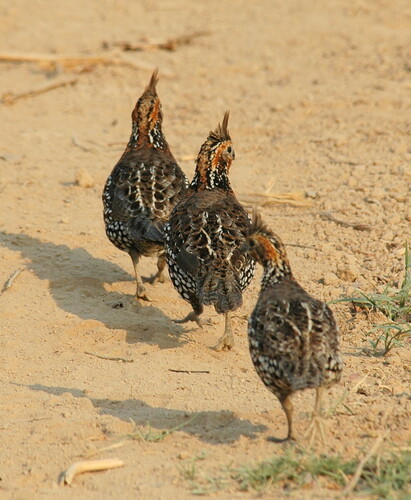 Crested Bobwhite
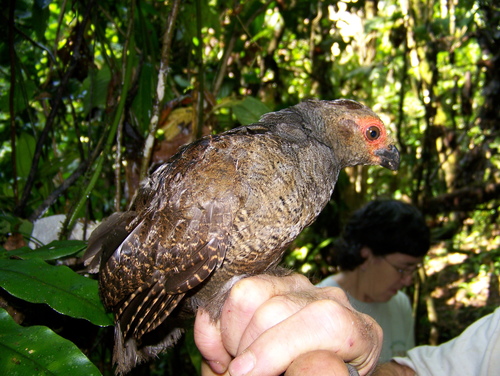 Marbled Wood-Quail
In breve
Il segno di campo più affidabile per separare il Crested Bobwhite dal Marbled Wood-Quail è il colore e la forma della cresta e del pattern facciale: il Crested Bobwhite ha una lunga cresta di color buff pallido o bianco e una gola bianca o buff in contrasto, mentre il Marbled Wood-Quail mostra una cresta corta e sciolta di color rosso-bruno e un volto marrone opaco con pelle nuda arancione o rossa attorno all'occhio. In tutte le età, il bobwhite è molto più chiaro sotto con un contrasto della gola più distinto, mentre il wood-quail è più scuro e uniforme. I giovani Marbled Wood-Quail possono essere riconosciuti dai loro becchi arancione-rossicci e dalle creste rosso-bruno non vermicolate. Anche la dimensione è utile: il Marbled Wood-Quail è notevolmente più grande e massiccio. Entrambe le specie possono essere trovate in regioni sovrapposte, ma i loro habitat preferiti differiscono notevolmente.
Consigli di identificazione
- Crest color and shape: Il Crested Bobwhite mostra una lunga cresta di color buff pallido o bianco (a volte con punte scure), mentre il Marbled Wood-Quail ha una cresta corta e sciolta di color rosso-bruno. Questo è visibile sia negli uccelli posati che in quelli in movimento di tutte le età.
- Facial pattern: Cerca la gola bianca o buff fortemente contrastante e il collo marmorizzato bianco e nero del Crested Bobwhite. Il Marbled Wood-Quail ha un volto e una gola marrone opaco, senza un contrasto netto.
- Bare skin around eye: Solo il Marbled Wood-Quail ha pelle nuda arancione o rossa attorno all'occhio, un segno sottile ma affidabile a distanza ravvicinata.
- Bill color in juveniles: I giovani Marbled Wood-Quail hanno becchi arancione-rossicci, mentre il Crested Bobwhite (tutte le età) ha un becco nero.
- Underparts color: Il Crested Bobwhite è molto più chiaro sotto, con marcature buff, cannella e nere; il Marbled Wood-Quail è marrone opaco sotto con barre deboli.
- Upperparts and back: Entrambi sono maculati, ma le parti superiori del Marbled Wood-Quail sono marroni con vermicolazioni nere, mentre il Crested Bobwhite è più maculato con nero, marrone e grigio, spesso apparendo più chiaro nel complesso.
- Size and bulk: Il Marbled Wood-Quail è notevolmente più grande e massiccio rispetto al Crested Bobwhite. Usa questo solo quando hai una chiara percezione della scala.
- Leg color: Entrambi hanno zampe grigio-bluastre, quindi questo non è utile per la separazione.
- Sex differences: Entrambe le specie sono sessualmente simili; la femmina del Crested Bobwhite è solo leggermente più marrone del maschio, il che non è un segno di campo forte.
- Flight behavior: Il Marbled Wood-Quail si alza in volo basso e rapidamente verso il riparo; il Crested Bobwhite può indugiare al bordo di terreno aperto.
- Habitat: Il Crested Bobwhite si trova in habitat aperti o semi-aperti, raramente profondo nella foresta. Il Marbled Wood-Quail è strettamente un uccello di foreste dense e umide.
- Group size and behavior: Il Crested Bobwhite è spesso in piccoli gruppi visibili; il Marbled Wood-Quail è segreto, di solito nascosto in una fitta vegetazione.
- Vocalizations: Se senti un veloce e rauco 'quoit bob-white' o 'oh, wheet', stai ascoltando il Crested Bobwhite. Il richiamo del Marbled Wood-Quail non è descritto qui.
- Geographic context: Entrambi possono verificarsi nel nord del Sud America e a Panama, ma il Crested Bobwhite è più probabile in campagna aperta e su alcune isole.
- Juvenile marks: Se vedi un becco arancione-rossiccio e una cresta marrone-rossa semplice (senza vermicolazioni), è un giovane Marbled Wood-Quail.
Taglia
Il Crested Bobwhite è significativamente più piccolo, misurando 178–216 mm (7.0–8.5 in) di lunghezza, mentre il Marbled Wood-Quail è più grande a 230–290 mm (9–11 in). Sul campo, il Marbled Wood-Quail appare molto più massiccio e pesante, con un becco più robusto. Se visti insieme, la differenza di dimensione è immediatamente evidente, ma fai attenzione agli uccelli solitari dove la dimensione può essere difficile da giudicare senza contesto.
Piumaggio
I giovani Marbled Wood-Quail sono distintivi con i loro becchi arancione-rossicci e le creste marrone-rossicce semplici che mancano delle fini vermicolazioni degli adulti. Gli adulti Marbled Wood-Quail hanno una cresta corta e sciolta di color rosso-bruno, un volto marrone opaco e pelle nuda arancione o rossa attorno all'occhio. Le loro parti superiori sono marroni con vermicolazioni nere, e le parti inferiori sono marrone opaco con barre deboli. In contrasto, il Crested Bobwhite di tutte le età mostra una cresta più lunga di color buff pallido o bianco (a volte con punte scure), una gola bianca o buff fortemente contrastante (a volte macchiata di nero) e un collo marmorizzato bianco e nero. Le parti superiori sono maculate di nero, marrone e grigio, e le parti inferiori sono chiare con marcature buff, cannella e nere, dando un aspetto complessivamente molto più chiaro e più patternato. Entrambi i sessi sono simili in entrambe le specie, ma la femmina del Crested Bobwhite è leggermente più marrone. Il colore degli occhi è marrone in entrambi, ma solo il Marbled Wood-Quail ha pelle nuda colorata attorno all'occhio. In volo, nessuna delle due specie mostra pannelli distintivi sulle ali superiori o pattern contrastanti, quindi la separazione si basa sulla piumaggio del corpo e della testa.
Comportamento
Il Crested Bobwhite è tipicamente visto in piccoli gruppi a terra, spesso vicino a coperture spesse, e si comporta molto come il suo stretto parente, il Colino della Virginia. Di solito è più avvicinabile e visibile ai margini di habitat aperti o semi-aperti. Il Marbled Wood-Quail, d'altra parte, è molto segreto, muovendosi silenziosamente nella fitta vegetazione della foresta e raramente avventurandosi in spazi aperti. Se disturbato, il Marbled Wood-Quail tende a volare basso e rapidamente verso il riparo, mentre il Crested Bobwhite può indugiare più a lungo al bordo o in terreni più aperti.
Habitat
Il Crested Bobwhite predilige habitat aperti o semi-aperti come praterie, cespugli e margini agricoli, spesso vicino a coperture spesse ma raramente in profondità nella foresta. Il suo areale si estende attraverso il nord del Sud America, Panama, e appena in Costa Rica, e può verificarsi su isole come Aruba. Il Marbled Wood-Quail è un uccello delle foreste umide tropicali o subtropicali, raramente lasciando la fitta vegetazione. Anche dove i loro areali si sovrappongono, la preferenza dell'habitat è un forte indizio: campagna aperta per il bobwhite, foresta umida e densa per il wood-quail.
Voce
I maschi del Crested Bobwhite hanno un richiamo distintivo, veloce e rauco di tre sillabe ('quoit bob-white') o un richiamo di due sillabe 'oh, wheet' durante la stagione degli amori. Le vocalizzazioni del Marbled Wood-Quail non sono descritte nelle note fornite, quindi la voce è diagnostica solo se si sente il richiamo caratteristico del bobwhite.
Crested Bobwhite · Marbled Wood-Quail · I miei uccelli difficili