

Motmot

ヒガシオリーブタイランチョウ 対 ムナグロノジコ

Tyrannus couchii 対 Spiza americana

ヒガシオリーブタイランチョウとムナグロノジコのクイズ
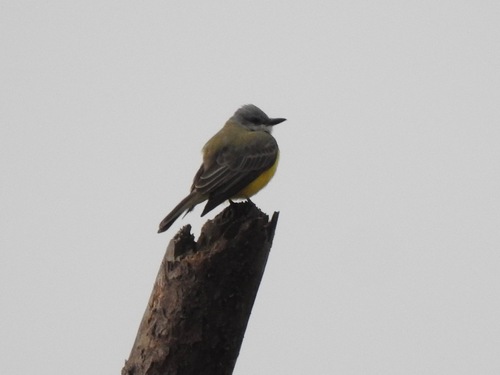
ヒガシオリーブタイランチョウ (Tyrannus couchii) ヒガシオリーブタイランチョウ
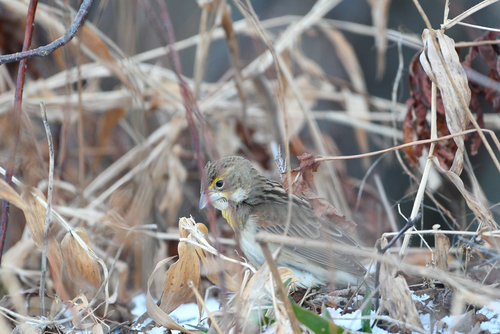
ムナグロノジコ (Spiza americana) ムナグロノジコ

メディア

読み込み中…

要点

ヒガシオリーブタイランチョウとムナグロノジコを区別する最も信頼できるフィールドマークは全体的な構造です:ヒガシオリーブタイランチョウは大きな頭と大きなくちばしを持つフライキャッチャーで、暗い少し分かれた尾と明るい黄色の腹部を持っています。一方、ムナグロノジコは小さくてずんぐりした種子食べる鳥で、厚い淡いくちばし、錆色の肩の斑点、(成鳥のオスでは)大胆な黒い喉の斑点があります。幼鳥のヒガシオリーブタイランチョウは淡い縁のある翼と茶色がかった腹部を示すことがありますが、ムナグロノジコの縞模様のある背中や錆色の肩は決して見せません。飛んでいる時や休んでいる時、ムナグロノジコの小さなサイズ、短い尾、そしてスズメのような印象は、直立した長い尾のキングバードとはすぐに異なります。生息地と声も役立ちます:キングバードは開けた森林やエッジに止まり、ムナグロノジコは草原やプレーリーを好みます。

識別のコツ

  1. Structure and size: ヒガシオリーブタイランチョウははるかに大きく、大きな頭とくちばし、長くて少し分かれた尾を持っています。ムナグロノジコは小さく、ずんぐりしていて短い尾を持ち、厚い円錐形のくちばしがあります。これは距離があっても明らかです。
  2. Bill shape: Kingbirdのくちばしは長く、真っ直ぐで尖っています(フライキャッチャータイプ);ムナグロノジコのくちばしは厚く、短く、円錐形(フィンチタイプ)で、種子に適しています。
  3. Tail shape: Kingbirdの尾は暗く、長く、少し分かれており、白い縁はありません。ムナグロノジコの尾は短く、四角く、平坦で、分かれていません。
  4. Head pattern (adults): Kingbirdは淡い灰色の頭に暗い頬と淡い喉を示し、黄色い腹部と対照的です。ムナグロノジコのオスは灰色の冠と頬、大胆な黒い喉の斑点、黄色い眉を持っています;雌や幼鳥は茶色がかった頬/冠を持ち、黒はありません。
  5. Underparts color: Kingbirdは常に明るい黄色の下胸と腹部を持ち(すべての年齢)、暗い胸の帯があります。ムナグロノジコのオスは黄色の胸を持っていますが、腹部は淡いです;雌や幼鳥はほとんど淡い下部で、少し黄色の洗いがかかっていますが、決してキングバードほど明るくはありません。
  6. Back and upperparts: Kingbirdの背中は灰色がかったオリーブ色で、滑らかで無地です。ムナグロノジコの背中は黒い縞模様のある茶色で、スズメのような外観を与えます。
  7. Shoulder patch: ムナグロノジコは肩に錆色(栗色)の斑点を示します(雌や幼鳥ではあまり明らかではありません)、キングバードにはありません。
  8. Juvenile/immature marks: 若いキングバードは淡い翼の縁と茶色がかった腹部を持っていますが、決して縞模様のある腹部や背中を示しません。幼鳥のムナグロノジコは腹部と背中に縞模様があり、茶色がかった頭を持ち、黒い喉はありません。
  9. Flight jizz: 飛んでいるキングバードは長い尾と浮遊感があり、しばしば昆虫を捕まえます。ムナグロノジコは短い尾を持ち、スズメやバンティングに典型的な急速で跳ねるような飛行をします。
  10. Perching behavior: Kingbirdは露出した枝やワイヤーに直立して止まります;ムナグロノジコはしばしば草の茎や低い低木に止まり、時には群れでいます。
  11. Habitat: Kingbirdは森林のエッジ、水の近く、または木のある郊外の地域に見られます。ムナグロノジコは開けた草原、畑、またはプレーリーに生息し、密集した木の近くにはめったに見られません。
  12. Voice: Kingbirdの鳴き声は大きく、ざらざらしていて多様です;ムナグロノジコの歌は鋭い、ブザー音の「dick dick cissel」です。歌を聞くと、識別は簡単です。
  13. Sex/season pitfalls: 雌と幼鳥のムナグロノジコは黒い喉がなく、鈍いですが、まだ縞模様のある背中と錆色の肩を示します。Kingbirdの性別は年間を通じて似ています。
  14. Context: 森の中の高い止まり木から昆虫を捕まえている鳥はおそらくキングバードです;畑の草の茎から歌っている鳥はおそらくムナグロノジコです。
  15. Common pitfalls: 明るいオスのムナグロノジコは表面的にはキングバードのように黄色い胸を持っているように見えることがありますが、常に黒い喉、縞模様のある背中、そして小さなサイズを確認してください。若いキングバードは決して縞模様や錆色の肩を持っていません。

大きさ

ヒガシオリーブタイランチョウはかなり大きくて重い(39.0g対26.85g [wikidata])、体が長く、頭が大きいです。キングバードのサイズは他の大きなフライキャッチャーと比較可能で、ムナグロノジコよりも明らかにずんぐりしていて長い尾を持っています。ムナグロノジコは大きなスズメや小さなバンティングに近いサイズで、コンパクトでずんぐりした体型と短い尾を持っています。一緒に見ると、キングバードのサイズと比率はすぐにより頑丈で細長いことがわかります。

羽色

幼鳥のヒガシオリーブタイランチョウは茶色がかった腹部と翼の羽毛の淡い縁を持っていますが、若い鳥でもキングバードのクラシックなパターンを示します:淡い灰色の頭に暗い頬、灰色がかったオリーブ色の上部、明るい黄色の下胸と腹部です。尾は暗く、少し分かれており、白い縁はありません。ムナグロノジコはすべての羽色で、茶色がかった縞模様のある背中、肩の錆色の斑点(雌や幼鳥ではあまり明らかではありません)、淡い腹部を示します。成鳥のオスのムナグロノジコは黒い喉の斑点と黄色の胸で特徴的ですが、雌や幼鳥は黒がなく、より控えめで、茶色がかった頬/冠と縞模様のある腹部を持っています。ムナグロノジコは決してキングバードのきれいな黄色の腹部、暗い頬、大きな頭の外観を示しません。飛んでいる時、ムナグロノジコの翼は暗く、肩は錆色で、尾は短くて四角く、分かれていません。

行動

ヒガシオリーブタイランチョウは通常、露出した枝やワイヤーに直立して止まり、開けたまたは軽く木のある地域で昆虫を捕まえるためにスキャンします。その動きは慎重で、頻繁にフライキャッチングを行い、止まり木に戻ります。ムナグロノジコはしばしば開けた畑の草や低い低木に止まり、歌ったり種子を探したりしています。その行動はよりスズメのようで、地面を跳ねたり歩いたりし、群れで餌を食べ、昆虫を捕まえる可能性は低いです。キングバードは混合群れに参加することはほとんどありませんが、ムナグロノジコは繁殖シーズン外ではしばしば参加します。

生息環境

ヒガシオリーブタイランチョウは軽く木のある生息地、森林のエッジ、河川回廊、そして水の近くに散在する木のある郊外の地域を好みます。純粋な草原ではめったに見られません。ムナグロノジコは開けた国の典型的な鳥で、プレーリーの草原、雑草の生えた畑、そして木の覆いがほとんどない農業地域で繁殖します。木のない畑で鳥を見つけた場合、ムナグロノジコの可能性がはるかに高いです;そのような環境でのキングバードは珍しいでしょう。

声

ヒガシオリーブタイランチョウは大きく、多様でざらざらした鳴き声を出し、ムナグロノジコの単純でブザー音の歌よりも複雑で音程が変化します。ムナグロノジコの歌は鋭い「dick dick」の後にブザー音の「cissel」または「chis chis chis」が続き、その飛行音は低い電気的なブザーです。キングバードの鳴き声はより厳しく多様で、ムナグロノジコの鳴き声はより機械的で反復的です。声はよく聞こえれば強力な識別要因です。

より良い説明を送る

比較と同じ項目を使ってください。文章はすぐに公開されます。

The most reliable field mark to separate Couch's Kingbird from Dickcissel is overall structure: Couch's Kingbird is a large-headed, big-billed flycatcher with a dark, slightly forked tail and bright yellow underparts, while Dickcissel is a smaller, chunky seed-eater with a thick, pale bill, rusty shoulder patch, and (in adult males) a bold black throat patch. Juvenile Couch's Kingbirds can show pale-edged wings and browner underparts, but never the streaked back or rust shoulder of Dickcissel. In flight or at rest, Dickcissel's smaller size, short tail, and sparrow-like jizz are immediately different from the upright, long-tailed kingbird. Habitat and voice also help: kingbirds perch in open woodlands and edges, while Dickcissels prefer grassy fields and prairies.

  1. Structure and size: Couch's Kingbird is much larger, with a big head and bill, and a long, slightly forked tail. Dickcissel is smaller, chunky, and short-tailed, with a thick, conical bill. This is often obvious even at a distance.
  2. Bill shape: Kingbird's bill is long, straight, and pointed (flycatcher-type); Dickcissel's is thick, short, and conical (finch-type), suited for seeds.
  3. Tail shape: Kingbird's tail is dark, long, and slightly forked, lacking white edges. Dickcissel's tail is short, square, and plain, with no fork.
  4. Head pattern (adults): Kingbird shows a pale gray head with darker cheeks and a pale throat, contrasting with the yellow belly. Dickcissel males have a gray crown and cheeks, a bold black throat patch, and a yellow eyebrow; females/immatures have brownish cheeks/crown and lack the black.
  5. Underparts color: Kingbird always has a bright yellow lower breast and belly (all ages), with a darker breast band. Dickcissel males have a yellow breast, but the belly is pale; females/immatures are mostly pale below with some yellow wash, never as bright as kingbird.
  6. Back and upperparts: Kingbird's back is grayish-olive, smooth and unmarked. Dickcissel's back is brown with black streaks, giving a sparrow-like appearance.
  7. Shoulder patch: Dickcissel shows a rusty (chestnut) patch on the shoulder (less obvious in females/immatures), absent in kingbird.
  8. Juvenile/immature marks: Young kingbirds have paler wing edges and browner underparts, but never show streaked flanks or back. Juvenile Dickcissels are streaked on the flanks and back, with brownish head and no black throat.
  9. Flight jizz: Kingbird in flight appears long-tailed and buoyant, often sallying for insects. Dickcissel is short-tailed, with rapid, bounding flight typical of sparrows/buntings.
  10. Perching behavior: Kingbird perches upright on exposed branches or wires; Dickcissel often perches on grass stems or low shrubs, sometimes in flocks.
  11. Habitat: Kingbird is found in wooded edges, near water, or suburban areas with trees. Dickcissel is in open grasslands, fields, or prairies, rarely near dense trees.
  12. Voice: Kingbird's call is loud, raspy, and varied; Dickcissel's song is a sharp, buzzy "dick dick cissel". If you hear the song, ID is straightforward.
  13. Sex/season pitfalls: Female and juvenile Dickcissels lack the black throat and are duller, but still show streaked back and rusty shoulder. Kingbird sexes are similar year-round.
  14. Context: A bird flycatching from a high perch in a wooded area is likely a kingbird; a bird singing from a grass stem in a field is likely a Dickcissel.
  15. Common pitfalls: Bright male Dickcissels can look superficially yellow-breasted like kingbirds, but always check for the black throat, streaked back, and smaller size. Young kingbirds are never streaked or rusty-shouldered.

Couch's Kingbird is substantially larger and heavier (39.0g vs. 26.85g [wikidata]), with a longer body and larger head. The kingbird's size is comparable to other large flycatchers, noticeably bulkier and longer-tailed than Dickcissel. Dickcissel is closer in size to a large sparrow or small bunting, with a compact, chunky build and shorter tail. When seen together, the kingbird's size and proportions are immediately more robust and elongated.

Juvenile Couch's Kingbirds have browner underparts and pale edges to the wing feathers, but even young birds show the kingbird's classic pattern: pale gray head with darker cheeks, grayish-olive upperparts, and bright yellow lower breast and belly. The tail is dark and slightly forked, lacking any white edges. Dickcissel, in all plumages, shows a brownish, streaked back, rusty patch on the shoulder (less obvious in females/immatures), and pale underparts. Adult male Dickcissels are distinctive with a black throat patch and yellow breast, but females and juveniles lack the black and are more subdued, with brownish cheeks/crown and streaked flanks. Dickcissel never shows the kingbird's clean yellow belly, dark cheeks, or large-headed look. In flight, Dickcissel's wings are dark with a rusty shoulder, and the tail is short and square, not forked.

Couch's Kingbird typically perches upright on exposed branches or wires, scanning for insects to sally after in open or lightly wooded areas. Its movements are deliberate, with frequent flycatching sallies and returns to a perch. Dickcissel is often seen perched on grasses or low shrubs in open fields, singing or foraging for seeds. Its behavior is more sparrow-like: hopping or walking on the ground, feeding in flocks, and less likely to sally for insects. Kingbirds rarely join mixed flocks, while Dickcissels often do outside the breeding season.

Couch's Kingbird prefers lightly wooded habitats, forest edges, riparian corridors, and suburban areas with scattered trees, especially near water. It is rarely found in pure grassland. Dickcissel is a classic bird of open country, breeding in prairie grasslands, weedy fields, and agricultural areas with little to no tree cover. If you find the bird in a treeless field, Dickcissel is far more likely; a kingbird in such a setting would be unusual.

Couch's Kingbird gives a loud, varied, and raspy call, more complex and variable in pitch than the simple, buzzy song of Dickcissel. Dickcissel's song is a sharp "dick dick" followed by a buzzed "cissel" or "chis chis chis"; its flight call is a low, electric buzz. Kingbird calls are harsher and more varied, while Dickcissel's are more mechanical and repetitive. Voice is a strong separator if heard well.

変更を破棄しますか?

保存していない編集があります。今離れると失われます。

ヒガシオリーブタイランチョウ · ムナグロノジコ · 苦手な鳥