

Motmot

コスタリカスズメフクロウ 対 コスズメフクロウ

Glaucidium costaricanum 対 Glaucidium griseiceps

コスタリカスズメフクロウとコスズメフクロウのクイズ
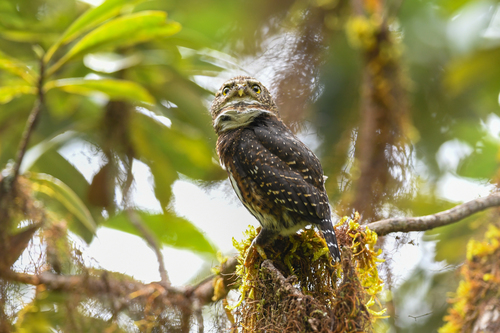
コスタリカスズメフクロウ (Glaucidium costaricanum) コスタリカスズメフクロウ
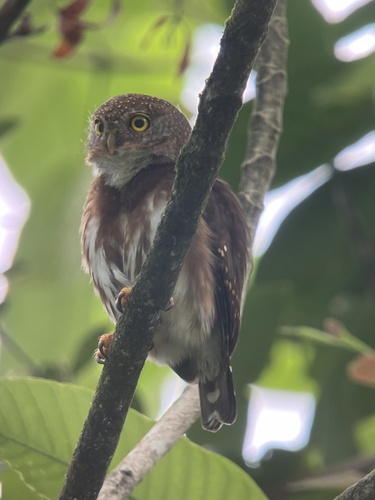
コスズメフクロウ (Glaucidium griseiceps) コスズメフクロウ

メディア

読み込み中…

要点

コスタリカスズメフクロウとコスズメフクロウの最も信頼できるフィールドマークは、腹部のパターンです:コスタリカはほとんど白い腹部を示し、わずかに筋模様がありますが、コスズメフクロウは下に大胆な赤褐色の筋があります。両種は後頭部に「偽の目」を持っていますが、コスタリカは色がより変化に富んでおり(茶色または赤褐色の形態)、コスズメフクロウは常に灰褐色です。幼鳥のコスズメフクロウは独特の灰色の冠を持ち、冠の斑点がなく、コスタリカとは異なります。両者は小さくてずんぐりしたフクロウで、帯状の尾を持っていますが、羽毛と分布の微妙な違いが自信を持って区別するための鍵です。

識別のコツ

  1. 幼鳥の冠の色: 幼鳥のコスズメフクロウは無地の灰色で斑点のない冠とすすけた後頭部の「偽の目」を持ち、コスタリカの幼鳥は灰色の冠や無地の冠としては記述されていません。これは幼鳥の羽毛の鳥に使用してください。
  2. 腹部の筋模様: 成鳥のコスズメフクロウは白っぽい腹部に大胆な赤褐色の筋を示します;コスタリカスズメフクロウはほとんど白い腹部を持ち、筋模様はほとんどありません。これはすべての年齢の止まっている鳥にとって重要なフィールドマークです(幼鳥を除く)。
  3. 色の形態: コスタリカスズメフクロウは茶色と赤褐色の形態がありますが、コスズメフクロウは常に灰褐色です。赤褐色の鳥はコスタリカです。
  4. 冠の斑点: コスズメフクロウの成鳥は冠にクリーム色から白っぽい斑点を持っています;コスタリカの成鳥はより淡い斑点を持っていますが、特に赤褐色の形態ではあまり明確でないことがあります。
  5. 尾のパターン: 両者は帯状の尾を持っていますが、コスタリカの尾は4本の白い帯と白い先端を持ち、コスズメフクロウの尾は濃い茶色で淡い帯があります。違いは微妙で、フィールドでは常に見えるわけではありません。
  6. 顔の円盤: コスタリカの顔の円盤は基底色に狭いクリーム色と白い斑点が一致します;コスズメフクロウの顔の円盤はあまり明確にマークされていませんが、これは微妙です。
  7. くちばしの色: コスタリカは緑がかった黄色の上顎と黄色の先端を持つ淡い茶色の下顎があります;コスズメフクロウのくちばしの色は指定されていませんが、対照的ではない可能性があります。
  8. 後頭部の「偽の目」: 両者は暗い後頭部の斑点を持ち、淡い色に囲まれていますが、これらは特に幼鳥のコスズメフクロウではすすけて対照的です。
  9. 目と足の色: 両者は黄色い目と足を持ち、これは区別にはなりません。
  10. 分布と標高: コスタリカとパナマでは、山地の森林の鳥はコスタリカの可能性が高いです;低地またはこれらの国の外では、コスズメフクロウの可能性が高いです。
  11. 鳴き声: コスズメフクロウの歌は数回の間隔を置いたフクロウの声で始まり、次に急速な一連の声が続きます;コスタリカの声はここでは記述されていないので、注意して使用してください。
  12. 行動: 両者は似たように行動するため、狩りや止まるスタイルに頼らないでください。
  13. サイズ: 両者はサイズと体重が似ています;同定にはサイズを使用しないでください。
  14. 性別と季節: どちらの種にも重要な性的または季節的な羽毛の違いは記述されていません;代わりに年齢と腹部のパターンを使用してください。
  15. 疑わしい場合: 腹部の筋模様(大胆 = コスズメフクロウ、無地 = コスタリカ)と幼鳥の冠の色(灰色、無地 = コスズメフクロウ)に焦点を当ててください。

大きさ

両種はサイズが非常に似ており、コスタリカスズメフクロウは14.5〜17 cm、コスズメフクロウは13〜18 cmの長さです。両者のオスは約50〜70 gで、コスタリカのメスは最大99 gに達し、コスズメフクロウ(約56 g)よりもわずかに重いです。フィールドでは、サイズだけでは信頼できる区別にはならず、重複がかなりあり、両者は小さくてコンパクトに見えます。

羽色

幼鳥のコスズメフクロウは灰色で斑点のない冠とすすけた後頭部の「偽の目」を持ち、コスタリカの幼鳥とは異なります。コスタリカスズメフクロウの成鳥は2つの形態があります:茶色と赤褐色で、どちらも上に淡い斑点があり、尾には4本の白い帯と白い先端があります。彼らの腹部はほとんど白く、筋模様はほとんどなく、側面は上部と一致します。コスズメフクロウの成鳥は常に灰褐色で、冠にはクリーム色から白っぽい斑点があり、白っぽい腹部には大胆な赤褐色の筋があります。彼らの尾は濃い茶色で淡い帯があります。両者は後頭部に「偽の目」を持っていますが、これらはコスズメフクロウの幼鳥ではより対照的です。コスタリカの顔の円盤は基底色に狭いクリーム色と白い斑点が一致しますが、コスズメフクロウはあまり明確にマークされていません。目と足の色は両者とも黄色ですが、くちばしの色は微妙に異なります:コスタリカは緑がかった黄色の上顎と黄色の先端を持つ淡い茶色の下顎があります。

行動

両種は密な葉の中に低く止まり、短く迅速なダッシュで狩りをし、ミスした場合はしばしば止まり木に戻ります。両者は昼夜を問わず活動し、興奮すると尾を振ることがあります。行動の違いはフィールドでは信頼できる診断にはなりません。

生息環境

コスタリカスズメフクロウはコスタリカとパナマに限定され、通常は山地の森林に生息しています。コスズメフクロウはメキシコから中央アメリカ、コロンビア、エクアドルまでの広範な範囲を持ち、低地を含むより広い種類の森林生息地に見られます。コスタリカとパナマでは両者が発生する可能性がありますが、コスタリカはより高い標高で見られる可能性が高いです。生息地だけが手がかりになることがありますが、一部の地域では重複が可能です。

声

コスズメフクロウは2〜4回の均等に間隔を置いたフクロウの声で始まり、間を置いてから6〜18回の類似の音の急速な一連が続きます(「フー・フー、フー・フー・フー...」)、時にはトリルを伴います。ここではコスタリカスズメフクロウの詳細な鳴き声の説明は提供されていないため、完全な歌が知られていない限り、声は信頼できる区別にはなりません。

より良い説明を送る

比較と同じ項目を使ってください。文章はすぐに公開されます。

The most reliable field mark between Costa Rican Pygmy-Owl and Central American Pygmy-Owl is the underpart pattern: Costa Rican shows mostly white underparts with little streaking, while Central American has bold reddish-brown streaks below. Both species have 'false eyes' on the nape, but Costa Rican is more variable in color (brown or rufous morphs), and Central American is always grayish-brown above. Juvenile Central American Pygmy-Owls are uniquely gray-crowned and lack crown spots, unlike Costa Rican. Both are small, chunky owls with banded tails, but subtle differences in plumage and range are key for confident separation.

  1. Juvenile crown color: Juvenile Central American Pygmy-Owls have a plain gray, unspotted crown and sooty nape 'false eyes', unlike Costa Rican juveniles, which are not described as gray-crowned or unspotted. Use this for birds in juvenile plumage.
  2. Underpart streaking: Adult Central American Pygmy-Owls show bold reddish-brown streaks on the whitish underparts; Costa Rican Pygmy-Owls have mostly white underparts with little or no streaking. This is a key field mark for perched birds of all ages except juveniles.
  3. Color morphs: Costa Rican Pygmy-Owl comes in brown and rufous morphs, while Central American is always grayish-brown above. A rufous bird is Costa Rican.
  4. Crown spotting: Central American adults have buff to whitish spots on the crown; Costa Rican adults have paler spots but can be less distinct, especially in rufous morphs.
  5. Tail pattern: Both have banded tails, but Costa Rican's tail has four white bands and a white tip, while Central American's tail is rich brown with pale bars. The difference is subtle and not always visible in the field.
  6. Facial disc: Costa Rican's facial disc matches the basal color with narrow buff and white marks; Central American's facial disc is less distinctly marked, but this is subtle.
  7. Bill color: Costa Rican has a greenish-yellow maxilla and light brown mandible with yellow tip; Central American's bill color is not specified but likely less contrasting.
  8. Nape 'false eyes': Both have dark nape spots bordered pale, but these are especially sooty and contrasting in juvenile Central American.
  9. Eye and foot color: Both have yellow eyes and feet, not a separator.
  10. Range and elevation: In Costa Rica and Panama, a montane forest bird is more likely Costa Rican; in lowland or outside these countries, Central American is more probable.
  11. Vocalizations: Central American's song starts with a few spaced hoots, then a rapid series; Costa Rican's voice is not described here, so use with caution.
  12. Behavior: Both behave similarly, so do not rely on hunting or perching style.
  13. Size: Both are similar in size and weight; do not use size for identification.
  14. Sex and season: No significant sexual or seasonal plumage differences are described for either species; use age and underpart pattern instead.
  15. When in doubt: Focus on underpart streaking (bold = Central American, plain = Costa Rican) and juvenile crown color (gray, unspotted = Central American).

Both species are very similar in size, with Costa Rican Pygmy-Owl measuring 14.5–17 cm and Central American Pygmy-Owl 13–18 cm in length. Males of both are around 50–70 g, with Costa Rican females reaching up to 99 g, slightly heavier than Central American (about 56 g). In the field, size alone is not a reliable separator, as overlap is substantial and both appear small and compact.

Juvenile Central American Pygmy-Owls have a gray, unspotted crown and sooty nape 'false eyes', making them stand out from Costa Rican juveniles, which are not described as having this gray, unspotted crown. Adult Costa Rican Pygmy-Owls come in two morphs: brown and rufous, both with pale spots above and a tail with four white bands and a white tip. Their underparts are mostly white with little or no streaking, and the flanks match the upperparts. Central American adults are always grayish-brown above, with buff to whitish spots on the crown and bold reddish-brown streaks on the whitish underparts. Their tail is rich brown with pale bars. Both have 'false eyes' on the nape, but these are more contrasting in juveniles of Central American. The facial disc of Costa Rican is the basal color with narrow buff and white marks, while Central American is less distinctly marked. Eye and foot color are yellow in both, but bill color differs subtly: Costa Rican has a greenish-yellow maxilla and light brown mandible with yellow tip.

Both species perch low in dense foliage and hunt with short, swift dashes, often returning to the perch if they miss. Both are active by day and night and may swish their tails when agitated. Behavioral differences are not reliably diagnostic in the field.

Costa Rican Pygmy-Owl is restricted to Costa Rica and Panama, typically in montane forests. Central American Pygmy-Owl has a much wider range, from Mexico through Central America to Colombia and Ecuador, and is found in a broader variety of forested habitats, including lowlands. In Costa Rica and Panama, both can occur, but Costa Rican is more likely at higher elevations. Habitat alone can be a clue, but overlap is possible in some regions.

Central American Pygmy-Owl gives a song that starts with 2–4 evenly spaced hoots, pauses, then continues with a rapid series of 6–18 similar notes ('huu-huu, huu-huu-huu...'), sometimes with trills. No detailed vocal description is provided for Costa Rican Pygmy-Owl here, so voice is not a reliable separator unless the full song is known.

変更を破棄しますか?

保存していない編集があります。今離れると失われます。

コスタリカスズメフクロウ · コスズメフクロウ · 苦手な鳥