

Motmot

スズメバト 対 ケアシスズメバト

Columbina passerina 対 Columbina talpacoti

スズメバトとケアシスズメバトのクイズ
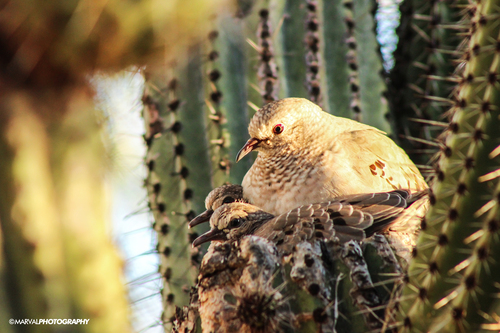
スズメバト (Columbina passerina) スズメバト
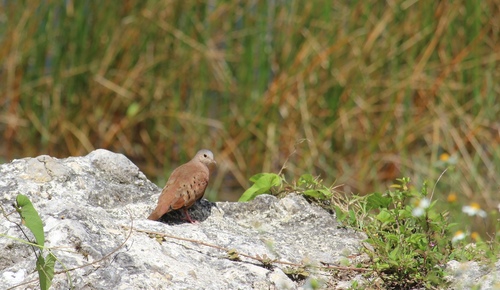
ケアシスズメバト (Columbina talpacoti) ケアシスズメバト

メディア

読み込み中…

要点

スズメバトとケアシスズメバトを区別する最も信頼できるフィールドマークはサイズと構造です:スズメバトは明らかに小さく、よりコンパクトで、尾が短く、黒い先端のある黄色い基部のくちばしを持っています。飛行中、スズメバトは栗色の初列風切羽と翼の縁を示し、ケアシスズメバトはシナモン色と黒の下羽を見せます。成鳥のオスのケアシスズメバトは、より豊かな赤褐色の体と淡い灰色の頭を持ち、より均一に茶色で鱗状のスズメバトと対照的です。両種の雌はより茶色ですが、スズメバトは頭部と胸部に鱗状の外観を保持しています。両種は開けた生息地の地面に見られますが、ケアシスズメバトはより大きく、都市や農業の環境で見られる可能性が高いです。

識別のコツ

  1. Size and structure: スズメバトはケアシスズメバト(通常46.5 g)よりも明らかに小さく軽い(26–40 g)です。スズメバトのコンパクトで短尾の外観を探してください。
  2. Tail shape and length: スズメバトは背中と同じ色の非常に短い尾を持っています;ケアシスズメバトの尾は長く、黒で縁取られています。
  3. Bill color: スズメバトは近距離で見える黒い先端のある黄色い基部のくちばしを持っています。ケアシスズメバトのくちばしは明確に二色ではありません。
  4. Head and breast scaling: スズメバトはすべての羽衣で頭部と上胸部に鱗状のパターンを示します;ケアシスズメバトはこれが欠けており、滑らかな頭に見えます。
  5. Male plumage: 成鳥のオスのケアシスズメバトは豊かな赤褐色で淡い灰色の頭を持ち、オスのスズメバトは冠部がスレートグレーで下部がピンクグレーですが、全体的に赤褐色が少なく、より均一な色合いです。
  6. Female plumage: 雌のスズメバトは灰茶色で鱗状;雌のケアシスズメバトは鱗状の効果がなく、単純な茶色です。
  7. Wing coverts: 両種は翼の覆羽に黒い斑点がありますが、これは単独では診断的ではありません—他のマークと組み合わせて使用してください。
  8. Flight pattern and wing color: 飛行中、スズメバトは栗色の初列風切羽と翼の縁を見せ、ケアシスズメバトはシナモン色と黒の下羽と黒で縁取られた尾を示します。これらの飛行マークは、鳥が飛び立ったときに最もよく見えます。
  9. Underparts: スズメバトの下部はピンクグレー(オス)または灰色がかった(雌)です;ケアシスズメバトの下部はより淡い茶色で、雌では頭と体の間のコントラストが少なくなります。
  10. Habitat context: 南アメリカの都市や農業の環境では、ケアシスズメバトがより可能性があります。南部アメリカでは、スズメバトがデフォルトの小さな地面の鳩です。
  11. Behavior: ケアシスズメバトは群れで見られる可能性が高く、特に翼を上げてアピールするオスは攻撃的です。スズメバトはより孤独またはペアで、攻撃的ではありません。
  12. Voice: 上昇するウープの連続(スズメバト)と柔らかいカーブー(ケアシスズメバト)を聞いてください。
  13. Geographic range: ケアシスズメバトは南西部アメリカの珍しい冬の訪問者です;スズメバトは南部アメリカの居住者です。
  14. Subspecies variation: 一部のスズメバトの亜種はより淡いまたは暗いですが、上記のコアフィールドマークは信頼できます。
  15. Pitfalls: 両種の雌と幼鳥は、黒い斑点のある翼で似たような茶色に見えることがありますが、スズメバトの鱗状の頭と短い尾が重要です。疑わしい場合は、常にくちばしの色と全体のサイズを確認してください。

大きさ

スズメバトはアメリカ合衆国で最も小さな鳩で、長さは15–18 cm、質量は26–40 gです [wikipedia]。ケアシスズメバトは大きくて重く、長さは12–18 cmですが、通常は46.5 g(範囲35–56 g)です [wikidata]。質量の違いは重要です:ケアシスズメバトはスズメバトより約50%重いです。フィールドでは、スズメバトはより華奢に見え、尾が短く、体がよりコンパクトですが、ケアシスズメバトはより大きく、尾が長いように見えます。

羽色

幼鳥と成鳥のスズメバトは、頭部と上胸部に独特の鱗状の外観を示し、上面は茶色で翼の覆羽には黒い斑点があります。飛行中(すべての年齢)、スズメバトは診断的な栗色の初列風切羽と翼の縁を示します。対照的に、ケアシスズメバトは両性別と年齢で黒い斑点のある翼の覆羽を持ちますが、成鳥のオスは上面が豊かな赤褐色で淡い灰色の頭を持ち、雌は鱗状の効果がない単純な茶色です。飛行中、ケアシスズメバトはシナモン色と黒の下羽と黒で縁取られた尾を示します。両種は短い尾を持っていますが、スズメバトの尾はさらに短く、背中の色に合っていますが、ケアシスズメバトの尾はより明確に黒で縁取られています。くちばしの色も役立ちます:スズメバトは黒い先端のある黄色い基部を持ち、ケアシスズメバトのくちばしは二色とは記述されていません。

行動

両種は地面での時間を多く過ごし、開けた場所で餌を食べます。スズメバトは一般的に目立たず、攻撃的ではありませんが、ケアシスズメバトはより攻撃的で、特にオスは互いに脅かすことがあります。ケアシスズメバトはしばしば群れで餌を食べ、時には野生のハトと一緒にいて、非常に近づきやすいです。スズメバトは一羽またはペアで見られる可能性が高く、大きな都市の群れでは見つかりにくいです。

生息環境

スズメバトは南アメリカ、中央アメリカ、カリブ海、北部南アメリカの南部アメリカで、低木、畑、森林の縁などの開けた乾燥した生息地を好みます。ケアシスズメバトは人間が改変した環境により適応し、メキシコからアルゼンチンまでの開けた国、耕作地、都市の中心部で一般的です。アメリカでは、ケアシスズメバトは極南西部の珍しい冬の訪問者ですが、スズメバトは南部アメリカの居住者です。南アメリカの都市公園や農業地帯で小さな地面の鳩を見かけた場合、ケアシスズメバトの可能性が高く、南部アメリカではスズメバトが期待されます。

声

スズメバトは音程が上昇し繰り返される柔らかいウープの連続を出し、ケアシスズメバトは柔らかいクーイングのカーブーを出します。呼び声は明確ですが、両方とも柔らかく、騒がしい環境では見逃されることがあります。上昇するウープを聞いたら、スズメバトを考えてください;柔らかいカーブーはケアシスズメバトに合います。

より良い説明を送る

比較と同じ項目を使ってください。文章はすぐに公開されます。

The most reliable field mark to separate Common Ground Dove from Ruddy Ground Dove is size and structure: Common Ground Dove is distinctly smaller and more compact, with a noticeably shorter tail and a yellow-based bill with a black tip. In flight, Common Ground Dove shows chestnut primaries and wing borders, while Ruddy Ground Dove reveals cinnamon and black underwings. Adult male Ruddy Ground Doves have a richer rufous body and pale gray head, contrasting with the more uniformly brown and scaly Common Ground Dove. Females of both species are browner, but Common Ground Dove retains a scaled appearance on the head and breast. Both species can be found on the ground in open habitats, but Ruddy Ground Dove is bulkier and more likely to be seen in urban or agricultural settings.

  1. Size and structure: Common Ground Dove is noticeably smaller and lighter (26–40 g) than Ruddy Ground Dove (typically 46.5 g). Look for a compact, short-tailed appearance in Common Ground Dove.
  2. Tail shape and length: Common Ground Dove has a very short tail that is similar in color to the back; Ruddy Ground Dove's tail is longer and edged with black.
  3. Bill color: Common Ground Dove has a yellow-based bill with a black tip, visible at close range. Ruddy Ground Dove's bill is not distinctly bicolored.
  4. Head and breast scaling: Common Ground Dove shows a scaly pattern on the head and upper breast in all plumages; Ruddy Ground Dove lacks this, appearing smooth-headed.
  5. Male plumage: Adult male Ruddy Ground Dove is rich rufous above with a pale gray head, while male Common Ground Dove has slate-gray on the crown and pink-gray underparts, but is overall less rufous and more evenly colored.
  6. Female plumage: Female Common Ground Dove is gray-brown and scaly; female Ruddy Ground Dove is plain brown, lacking the scaly effect.
  7. Wing coverts: Both species have black spots on the wing coverts, but this is not diagnostic alone—use in combination with other marks.
  8. Flight pattern and wing color: In flight, Common Ground Dove flashes chestnut primaries and wing borders; Ruddy Ground Dove shows cinnamon and black underwings and a black-edged tail. These flight marks are best seen when the bird is flushed.
  9. Underparts: Common Ground Dove's underparts are pink-gray (male) or grayish (female); Ruddy Ground Dove's are paler brown, with less contrast between head and body in females.
  10. Habitat context: In urban or agricultural settings in South America, Ruddy Ground Dove is more likely. In the southern US, Common Ground Dove is the default small ground-dove.
  11. Behavior: Ruddy Ground Dove is more likely to be seen in groups and can be aggressive, especially males displaying by raising a wing. Common Ground Dove is more solitary or in pairs and less aggressive.
  12. Voice: Listen for a series of rising whoops (Common Ground Dove) versus a soft cur-WOO (Ruddy Ground Dove).
  13. Geographic range: Ruddy Ground Dove is only a rare winter visitor to the southwestern US; Common Ground Dove is a resident in the southern US.
  14. Subspecies variation: Some Common Ground Dove subspecies are paler or darker, but the core field marks above remain reliable.
  15. Pitfalls: Females and immatures of both species can appear similar brown with black-spotted wings, but the scaly head and short tail of Common Ground Dove are key. Always check for bill color and overall size when in doubt.

Common Ground Dove is the smallest dove in the United States, with a length of 15–18 cm and a mass of 26–40 g [wikipedia]. Ruddy Ground Dove is larger and heavier, measuring 12–18 cm in length but typically weighing 46.5 g (range 35–56 g) [wikidata]. The difference in mass is significant: Ruddy Ground Dove is about 50% heavier than Common Ground Dove. In the field, Common Ground Dove appears daintier, with a shorter tail and more compact body, while Ruddy Ground Dove looks bulkier and longer-tailed.

Juvenile and adult Common Ground Doves show a distinctive scaled appearance on the head and upper breast, with brown upperparts and black-spotted wing coverts. In flight (all ages), Common Ground Dove displays chestnut primaries and wing borders, which are diagnostic. Ruddy Ground Dove, in contrast, has black-spotted wing coverts in both sexes and ages, but adult males are rich rufous above with a pale gray head, and females are plain brown without the scaly effect. In flight, Ruddy Ground Dove shows cinnamon and black underwings and a tail edged in black. Both species have short tails, but Common Ground Dove's tail is even shorter and matches the back color, while Ruddy Ground Dove's tail is more distinctly edged black. Bill color is also useful: Common Ground Dove has a yellow base with a black tip, while Ruddy Ground Dove's bill is not described as bicolored.

Both species spend much of their time on the ground, feeding in open areas. Common Ground Dove is generally unobtrusive and less aggressive, while Ruddy Ground Dove is described as more aggressive, especially males, which may threaten each other by jumping and raising a wing. Ruddy Ground Dove often feeds in groups, sometimes with feral pigeons, and can be quite approachable. Common Ground Dove is more likely to be seen singly or in pairs and is less likely to be found in large urban flocks.

Common Ground Dove prefers open, dry habitats such as scrub, fields, and woodland edges in the southern United States, Central America, the Caribbean, and northern South America. Ruddy Ground Dove is more adaptable to human-modified environments, being common in open country, cultivated land, and urban centers from Mexico south to Argentina. In the US, Ruddy Ground Dove is only a rare winter visitor to the extreme southwest, while Common Ground Dove is a resident in the southern US. If you see a small ground-dove in a city park or agricultural field in South America, Ruddy Ground Dove is more likely; in the southern US, Common Ground Dove is expected.

Common Ground Dove gives a series of soft whoops that rise in pitch and are repeated, while Ruddy Ground Dove produces a soft cooing cur-WOO. The calls are distinct, but both are soft and may be overlooked in noisy environments. If you hear a rising whoop, think Common Ground Dove; a soft cur-WOO fits Ruddy Ground Dove.

変更を破棄しますか?

保存していない編集があります。今離れると失われます。

スズメバト · ケアシスズメバト · 苦手な鳥