

Common Ground Dove vs Ruddy Ground Dove
Columbina passerina contro Columbina talpacoti
Fai un quiz con Common Ground Dove e Ruddy Ground Dove
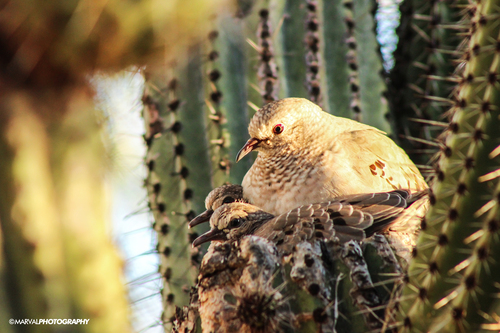 Common Ground Dove
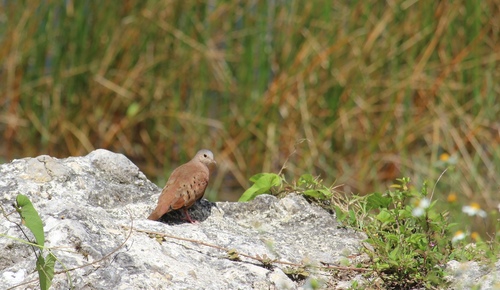 Ruddy Ground Dove
In breve
Il segno distintivo più affidabile per separare il Common Ground Dove dal Ruddy Ground Dove è la dimensione e la struttura: il Common Ground Dove è nettamente più piccolo e compatto, con una coda visibilmente più corta e un becco con base gialla e punta nera. In volo, il Common Ground Dove mostra primarie castagne e bordi delle ali, mentre il Ruddy Ground Dove rivela sottovoli cannella e neri. I maschi adulti di Ruddy Ground Dove hanno un corpo rufoso più ricco e una testa grigia chiara, in contrasto con il Common Ground Dove, che è più uniformemente marrone e squamoso. Le femmine di entrambe le specie sono più marroni, ma il Common Ground Dove mantiene un aspetto squamoso sulla testa e sul petto. Entrambe le specie possono essere trovate a terra in habitat aperti, ma il Ruddy Ground Dove è più robusto e più probabile da vedere in ambienti urbani o agricoli.
Consigli di identificazione
- Size and structure: Il Common Ground Dove è nettamente più piccolo e leggero (26–40 g) rispetto al Ruddy Ground Dove (tipicamente 46.5 g). Cerca un aspetto compatto e con coda corta nel Common Ground Dove.
- Tail shape and length: Il Common Ground Dove ha una coda molto corta che è simile nel colore al dorso; la coda del Ruddy Ground Dove è più lunga e bordata di nero.
- Bill color: Il Common Ground Dove ha un becco con base gialla e punta nera, visibile da vicino. Il becco del Ruddy Ground Dove non è distintamente bicolore.
- Head and breast scaling: Il Common Ground Dove mostra un motivo squamoso sulla testa e sul petto superiore in tutte le livree; il Ruddy Ground Dove manca di questo, apparendo con la testa liscia.
- Male plumage: Il maschio adulto di Ruddy Ground Dove è di un rufoso ricco sopra con una testa grigia chiara, mentre il maschio di Common Ground Dove ha grigio ardesia sulla corona e parti inferiori rosa-grigie, ma è complessivamente meno rufoso e più uniformemente colorato.
- Female plumage: La femmina di Common Ground Dove è grigio-marrone e squamosa; la femmina di Ruddy Ground Dove è marrone uniforme, priva dell'effetto squamoso.
- Wing coverts: Entrambe le specie hanno macchie nere sulle copritrici delle ali, ma questo non è diagnostico da solo—usa in combinazione con altri segni.
- Flight pattern and wing color: In volo, il Common Ground Dove lampeggia primarie castagne e bordi delle ali; il Ruddy Ground Dove mostra sottovoli cannella e neri e una coda bordata di nero. Questi segni di volo sono meglio visti quando l'uccello è spaventato.
- Underparts: Le parti inferiori del Common Ground Dove sono rosa-grigie (maschio) o grigio (femmina); quelle del Ruddy Ground Dove sono marroni più chiare, con meno contrasto tra testa e corpo nelle femmine.
- Habitat context: In ambienti urbani o agricoli in Sud America, il Ruddy Ground Dove è più probabile. Nel sud degli Stati Uniti, il Common Ground Dove è il piccolo piccione a terra predefinito.
- Behavior: Il Ruddy Ground Dove è più probabile da vedere in gruppi e può essere aggressivo, specialmente i maschi che si esibiscono alzando un'ala. Il Common Ground Dove è più solitario o in coppie e meno aggressivo.
- Voice: Ascolta una serie di grida ascendenti (Common Ground Dove) rispetto a un morbido cur-WOO (Ruddy Ground Dove).
- Geographic range: Il Ruddy Ground Dove è solo un raro visitatore invernale nel sud-ovest degli Stati Uniti; il Common Ground Dove è residente nel sud degli Stati Uniti.
- Subspecies variation: Alcune sottospecie di Common Ground Dove sono più chiare o più scure, ma i segni distintivi principali sopra rimangono affidabili.
- Pitfalls: Le femmine e gli immaturi di entrambe le specie possono apparire simili marroni con ali macchiate di nero, ma la testa squamosa e la coda corta del Common Ground Dove sono fondamentali. Controlla sempre il colore del becco e la dimensione complessiva quando hai dubbi.
Taglia
Il Common Ground Dove è il più piccolo piccione negli Stati Uniti, con una lunghezza di 15–18 cm e una massa di 26–40 g [wikipedia]. Il Ruddy Ground Dove è più grande e pesante, misurando 12–18 cm in lunghezza ma pesando tipicamente 46.5 g (intervallo 35–56 g) [wikidata]. La differenza di massa è significativa: il Ruddy Ground Dove è circa il 50% più pesante del Common Ground Dove. Sul campo, il Common Ground Dove appare più delicato, con una coda più corta e un corpo più compatto, mentre il Ruddy Ground Dove appare più robusto e con coda più lunga.
Piumaggio
I piccioni Common Ground Dove giovanili e adulti mostrano un aspetto squamoso distintivo sulla testa e sul petto superiore, con parti superiori marroni e copritrici delle ali macchiate di nero. In volo (tutte le età), il Common Ground Dove mostra primarie castagne e bordi delle ali, che sono diagnostici. Il Ruddy Ground Dove, al contrario, ha copritrici delle ali macchiate di nero in entrambi i sessi e le età, ma i maschi adulti sono di un rufoso ricco sopra con una testa grigia chiara, e le femmine sono marroni uniformi senza l'effetto squamoso. In volo, il Ruddy Ground Dove mostra sottovoli cannella e neri e una coda bordata di nero. Entrambe le specie hanno code corte, ma la coda del Common Ground Dove è ancora più corta e corrisponde al colore del dorso, mentre la coda del Ruddy Ground Dove è più distintamente bordata di nero. Anche il colore del becco è utile: il Common Ground Dove ha una base gialla con una punta nera, mentre il becco del Ruddy Ground Dove non è descritto come bicolore.
Comportamento
Entrambe le specie trascorrono gran parte del loro tempo a terra, nutrendosi in aree aperte. Il Common Ground Dove è generalmente poco appariscente e meno aggressivo, mentre il Ruddy Ground Dove è descritto come più aggressivo, specialmente i maschi, che possono minacciarsi a vicenda saltando e alzando un'ala. Il Ruddy Ground Dove spesso si nutre in gruppi, a volte con piccioni randagi, e può essere abbastanza avvicinabile. Il Common Ground Dove è più probabile da vedere singolarmente o in coppie e è meno probabile da trovare in grandi stormi urbani.
Habitat
Il Common Ground Dove preferisce habitat aperti e asciutti come cespugli, campi e bordi di boschi nel sud degli Stati Uniti, in America Centrale, nei Caraibi e nel nord del Sud America. Il Ruddy Ground Dove è più adattabile agli ambienti modificati dall'uomo, essendo comune in campagna aperta, terreni coltivati e centri urbani dal Messico a sud fino all'Argentina. Negli Stati Uniti, il Ruddy Ground Dove è solo un raro visitatore invernale nel sud-ovest estremo, mentre il Common Ground Dove è residente nel sud degli Stati Uniti. Se vedi un piccolo piccione a terra in un parco cittadino o in un campo agricolo in Sud America, è più probabile che sia un Ruddy Ground Dove; nel sud degli Stati Uniti, ci si aspetta un Common Ground Dove.
Voce
Il Common Ground Dove emette una serie di grida morbide che aumentano di tono e vengono ripetute, mentre il Ruddy Ground Dove produce un morbido cooing cur-WOO. Le chiamate sono distinte, ma entrambe sono morbide e possono essere trascurate in ambienti rumorosi. Se senti una grida ascendente, pensa al Common Ground Dove; un morbido cur-WOO si adatta al Ruddy Ground Dove.
Common Ground Dove · Ruddy Ground Dove · I miei uccelli difficili