

Motmot

オカメインコ 対 キンショウジョウインコ

Nymphicus hollandicus 対 Alisterus scapularis

オカメインコとキンショウジョウインコのクイズ
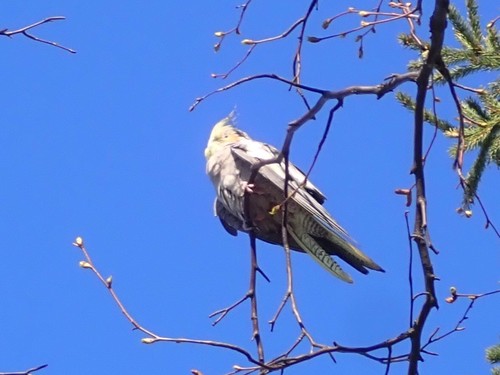
オカメインコ (Nymphicus hollandicus) オカメインコ
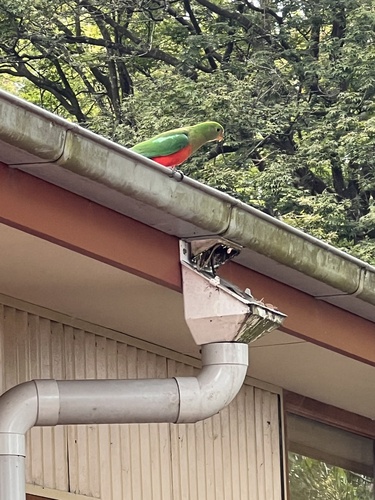
キンショウジョウインコ (Alisterus scapularis) キンショウジョウインコ

メディア

読み込み中…

要点

The most reliable field mark between Cockatiel and Australian King-Parrot is the presence of a prominent, expressive crest and long, slender tail in Cockatiel—features completely absent in Australian King-Parrot. Juvenile Cockatiels show yellow barring and spots on the underside of their wings and tail, while juvenile King-Parrots lack these marks and instead resemble adult females with green heads and breasts. Adult male King-Parrots are strikingly red-headed and red-breasted with green wings, whereas wild-type Cockatiels are mostly grey with a yellow face and orange cheek patch. Both species are native to Australia, but their size, structure, and typical habitats differ dramatically.

識別のコツ

  1. Crest presence: Cockatiel always shows a prominent, expressive crest—no crest in Australian King-Parrot of any age or sex.
  2. Tail shape and length: Cockatiel has a very long, slender, and pointed tail; King-Parrot has a long but broad, straight-edged tail.
  3. Juvenile wing and tail pattern: Juvenile Cockatiels (and adult females) show yellow barring on the underside of the tail and yellow spots on the underside of the flight feathers—King-Parrots never show these marks at any age.
  4. Adult male plumage: Adult male King-Parrot is bright red on the head and breast, green on the back and wings, with a blue rump—Cockatiel never shows this color combination.
  5. Cheek patch: Cockatiel (all ages) shows an orange cheek patch (brighter in adult males)—King-Parrot never has an orange cheek patch.
  6. Facial color: Cockatiel males have a yellow face and crest; females and juveniles have a grey face with a yellowish tint. King-Parrot males have a red face, females and juveniles have a green face.
  7. Bill color: Cockatiel has a pale bill; King-Parrot males have a reddish-orange upper mandible with a black tip, females and juveniles have a grey or yellowish bill.
  8. Body size and bulk: King-Parrot is much larger and bulkier than Cockatiel—size difference is obvious in the field.
  9. Flight style: Cockatiel is agile and swift with pointed wings; King-Parrot is heavier, with broad wings and a more direct, powerful flight.
  10. Habitat: Cockatiel is found in open, dry or lightly wooded habitats; King-Parrot is restricted to humid forests and rainforests.
  11. Social behavior: Cockatiel is often in flocks and very sociable; King-Parrot is more often in pairs or small groups, less gregarious.
  12. Captive color mutations: Cockatiel in captivity may show unusual colors (yellow, white, cinnamon, pied, etc.), but wild birds are always grey/yellow/orange and never overlap with King-Parrot's red/green/blue.
  13. Sexual dimorphism: Cockatiel males and females differ mainly after first molt; King-Parrot males and females are dramatically different in adult plumage.
  14. Iris color in juveniles: Juvenile King-Parrots have brown irises; Cockatiel iris color is not diagnostic.
  15. No overlap in wild range/habitat: If seen in dense forest, King-Parrot is likely; in open country, Cockatiel is likely.

大きさ

Cockatiel is notably smaller and lighter (body mass ~86g [wikidata]) than the Australian King-Parrot, which is much larger (about 43 cm in length, no mass given but substantially heavier by structure [wikipedia]). Cockatiel has a long, very slender tail relative to body size, while King-Parrot has a long but broader tail and a bulkier, more robust body. In the field, King-Parrots appear much bigger and heavier-set than the slim, delicate Cockatiel.

羽色

Juvenile Cockatiels (and adult females) are grey overall with yellow barring on the underside of the tail and yellow spots on the underside of the flight feathers; these marks are lost in adult males after their first molt (6–9 months), which then show a bright yellow face and crest with a more vivid orange cheek patch. Cockatiel crests are always present and expressive. Cockatiel plumage is highly variable in captivity, but wild birds are consistently grey, yellow, and orange. In contrast, adult male Australian King-Parrots are unmistakable: bright red head, breast, and underparts, green back and wings with a pale green shoulder band, blue rump, and a long green tail. Females and juveniles are mostly green with a small or absent pale shoulder band and lack the red head and breast. Juvenile King-Parrots resemble females but have brown irises and a yellowish beak. King-Parrots never show a crest, orange cheek patch, or the intricate barring/spotting of juvenile Cockatiels. Cockatiel color mutations in captivity can be confusing, but wild birds do not overlap with King-Parrot's bold red and green pattern.

行動

Cockatiels are highly sociable, playful, and often seen in flocks, especially in open country. Their crest is constantly moving, reflecting their mood. In flight, they are agile, with long, pointed wings and a slim, tapering tail. Australian King-Parrots are calmer, more reserved, and usually seen in pairs or small groups, often in forested areas. Their flight is direct and strong, with broad wings and a heavy body. King-Parrots are less likely to be encountered in open habitats and do not display the same playful flocking behavior as Cockatiels.

生息環境

Cockatiels are native to open country throughout Australia, often seen in arid or semi-arid regions, grasslands, and lightly wooded areas. They are not typical of dense forests. Australian King-Parrots are restricted to humid, heavily forested uplands and adjacent rainforests along eastern Australia, from Queensland to Victoria. They are rarely found in open country and are more likely to be seen in or near dense eucalyptus or rainforest habitats. Habitat context alone can be a strong clue: Cockatiel in open, dry country; King-Parrot in lush, forested uplands.

より良い説明を送る

比較と同じ項目を使ってください。文章はすぐに公開されます。

The most reliable field mark between Cockatiel and Australian King-Parrot is the presence of a prominent, expressive crest and long, slender tail in Cockatiel—features completely absent in Australian King-Parrot. Juvenile Cockatiels show yellow barring and spots on the underside of their wings and tail, while juvenile King-Parrots lack these marks and instead resemble adult females with green heads and breasts. Adult male King-Parrots are strikingly red-headed and red-breasted with green wings, whereas wild-type Cockatiels are mostly grey with a yellow face and orange cheek patch. Both species are native to Australia, but their size, structure, and typical habitats differ dramatically.

  1. Crest presence: Cockatiel always shows a prominent, expressive crest—no crest in Australian King-Parrot of any age or sex.
  2. Tail shape and length: Cockatiel has a very long, slender, and pointed tail; King-Parrot has a long but broad, straight-edged tail.
  3. Juvenile wing and tail pattern: Juvenile Cockatiels (and adult females) show yellow barring on the underside of the tail and yellow spots on the underside of the flight feathers—King-Parrots never show these marks at any age.
  4. Adult male plumage: Adult male King-Parrot is bright red on the head and breast, green on the back and wings, with a blue rump—Cockatiel never shows this color combination.
  5. Cheek patch: Cockatiel (all ages) shows an orange cheek patch (brighter in adult males)—King-Parrot never has an orange cheek patch.
  6. Facial color: Cockatiel males have a yellow face and crest; females and juveniles have a grey face with a yellowish tint. King-Parrot males have a red face, females and juveniles have a green face.
  7. Bill color: Cockatiel has a pale bill; King-Parrot males have a reddish-orange upper mandible with a black tip, females and juveniles have a grey or yellowish bill.
  8. Body size and bulk: King-Parrot is much larger and bulkier than Cockatiel—size difference is obvious in the field.
  9. Flight style: Cockatiel is agile and swift with pointed wings; King-Parrot is heavier, with broad wings and a more direct, powerful flight.
  10. Habitat: Cockatiel is found in open, dry or lightly wooded habitats; King-Parrot is restricted to humid forests and rainforests.
  11. Social behavior: Cockatiel is often in flocks and very sociable; King-Parrot is more often in pairs or small groups, less gregarious.
  12. Captive color mutations: Cockatiel in captivity may show unusual colors (yellow, white, cinnamon, pied, etc.), but wild birds are always grey/yellow/orange and never overlap with King-Parrot's red/green/blue.
  13. Sexual dimorphism: Cockatiel males and females differ mainly after first molt; King-Parrot males and females are dramatically different in adult plumage.
  14. Iris color in juveniles: Juvenile King-Parrots have brown irises; Cockatiel iris color is not diagnostic.
  15. No overlap in wild range/habitat: If seen in dense forest, King-Parrot is likely; in open country, Cockatiel is likely.

Cockatiel is notably smaller and lighter (body mass ~86g [wikidata]) than the Australian King-Parrot, which is much larger (about 43 cm in length, no mass given but substantially heavier by structure [wikipedia]). Cockatiel has a long, very slender tail relative to body size, while King-Parrot has a long but broader tail and a bulkier, more robust body. In the field, King-Parrots appear much bigger and heavier-set than the slim, delicate Cockatiel.

Juvenile Cockatiels (and adult females) are grey overall with yellow barring on the underside of the tail and yellow spots on the underside of the flight feathers; these marks are lost in adult males after their first molt (6–9 months), which then show a bright yellow face and crest with a more vivid orange cheek patch. Cockatiel crests are always present and expressive. Cockatiel plumage is highly variable in captivity, but wild birds are consistently grey, yellow, and orange. In contrast, adult male Australian King-Parrots are unmistakable: bright red head, breast, and underparts, green back and wings with a pale green shoulder band, blue rump, and a long green tail. Females and juveniles are mostly green with a small or absent pale shoulder band and lack the red head and breast. Juvenile King-Parrots resemble females but have brown irises and a yellowish beak. King-Parrots never show a crest, orange cheek patch, or the intricate barring/spotting of juvenile Cockatiels. Cockatiel color mutations in captivity can be confusing, but wild birds do not overlap with King-Parrot's bold red and green pattern.

Cockatiels are highly sociable, playful, and often seen in flocks, especially in open country. Their crest is constantly moving, reflecting their mood. In flight, they are agile, with long, pointed wings and a slim, tapering tail. Australian King-Parrots are calmer, more reserved, and usually seen in pairs or small groups, often in forested areas. Their flight is direct and strong, with broad wings and a heavy body. King-Parrots are less likely to be encountered in open habitats and do not display the same playful flocking behavior as Cockatiels.

Cockatiels are native to open country throughout Australia, often seen in arid or semi-arid regions, grasslands, and lightly wooded areas. They are not typical of dense forests. Australian King-Parrots are restricted to humid, heavily forested uplands and adjacent rainforests along eastern Australia, from Queensland to Victoria. They are rarely found in open country and are more likely to be seen in or near dense eucalyptus or rainforest habitats. Habitat context alone can be a strong clue: Cockatiel in open, dry country; King-Parrot in lush, forested uplands.

変更を破棄しますか?

保存していない編集があります。今離れると失われます。

オカメインコ · キンショウジョウインコ · 苦手な鳥