

Motmot

コスズメフクロウ 対 アナホリフクロウ

Glaucidium griseiceps 対 Athene cunicularia

コスズメフクロウとアナホリフクロウのクイズ
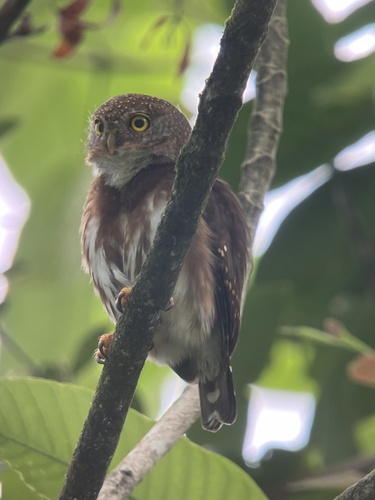
コスズメフクロウ (Glaucidium griseiceps) コスズメフクロウ
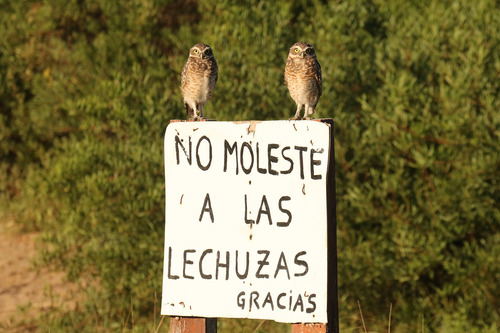
アナホリフクロウ (Athene cunicularia) アナホリフクロウ

メディア

読み込み中…

要点

最も信頼できるフィールドマークは全体の構造です:アナホリフクロウははるかに大きく、脚が長く、地上で直立した姿勢を持っていますが、コスズメフクロウは小さく、コンパクトで、木に止まります。幼鳥の羽毛も特徴的です:若いアナホリフクロウは上翼にバフのバーを示し、上部にはほとんど白い斑点がありませんが、幼いコスズメフクロウは無地の灰色の頭頂と、首の後ろにすすけた「偽の目」を持っています。成鳥では、アナホリフクロウの目立つ白い眉と顎が、コスズメフクロウの斑点のある頭頂と縞模様の腹部と対照的です。生息地は強い手がかりです—アナホリフクロウは開けた地面に生息し、しばしば草原や乱れた場所に見られますが、コスズメフクロウは森林や木々のある地域に留まります。サイズだけでも大きな違いがあります:アナホリフクロウは体重が2倍以上で、はるかに長いです。

識別のコツ

  1. サイズは主要な手がかりです: アナホリフクロウはコスズメフクロウよりもはるかに大きく、ずっしりとしています。鳥がロビンサイズまたはそれ以上であれば、コスズメフクロウを除外してください。
  2. 脚の長さと姿勢: アナホリフクロウは長い灰色の脚を持ち、しばしば地面に直立して立っています。コスズメフクロウは脚が短く、木に水平に止まります。
  3. 幼鳥の翼のパターン: 幼いアナホリフクロウは上翼にバフのバーを示し、上部にはほとんど白い斑点がありません;コスズメフクロウの幼鳥は無地の灰色の、斑点のない頭頂と、首の後ろにすすけた「偽の目」を持っています。
  4. 顔のマーキング: アナホリフクロウは大胆な白い眉と白い顎のパッチを持ち、特に鳥が頭を上下させるときに明らかです。コスズメフクロウはこれらを欠き、代わりに斑点のある頭頂と首の後ろの「偽の目」を示します。
  5. 腹部のパターン: アナホリフクロウの成鳥は茶色の斑点またはバーのある白い腹部を持っています;コスズメフクロウは赤褐色の縞模様のある白っぽい腹部を持っています(斑点やバーではありません)。
  6. 頭頂と首の後ろ: コスズメフクロウの成鳥は灰色がかった茶色の斑点のある頭頂と、首の後ろに暗い「偽の目」を持っています。アナホリフクロウの頭頂は白い斑点のある茶色ですが、首の後ろの「目」は欠けています。
  7. 尾のパターン: コスズメフクロウはリッチな茶色の尾に淡いバーを持っています;アナホリフクロウの尾は特に記述されていませんが、あまり明確にバーがありません。
  8. 生息地の文脈: 開けた地面、草原、または都市の芝生はアナホリフクロウを指し示します。森林や木々、特に中層の止まり木はコスズメフクロウを示します。
  9. 行動: アナホリフクロウは地面で活発で、しばしば巣穴や低い止まり木の近くに見られます。コスズメフクロウは樹上性で、地面に出ることはめったにありません。
  10. 飛行スタイル: アナホリフクロウは開けた地面の上を低く直接飛びます;コスズメフクロウは森林の中でよりひらひらとした動きで、機敏です。
  11. 声: コスズメフクロウはリズミカルなフクロウの声を出し、その後に急速な一連の声を続けます;アナホリフクロウの鳴き声は高音で、チャッター音です。
  12. 性差の二形性: 両種は性別間に目立った違いを示さないため、性別に頼らないでください。
  13. 日焼け: 成熟したオスのアナホリフクロウは日光にさらされることで色が薄く見えることがありますが、同じ構造的および顔の特徴を示します。
  14. 止まり木の選択: ワイヤー、フェンスの柱、または地面に止まっている小さなフクロウはアナホリフクロウの可能性が高いです;木の中、特に森林ではコスズメフクロウを疑ってください。
  15. 落とし穴: 遠くから見ると、止まっているアナホリフクロウはコンパクトに見えることがありますが、長い脚と白い顔のマークは通常双眼鏡で見ると明らかです。幼いコスズメフクロウは決して若いアナホリフクロウのバフの翼のバーを示しません。

大きさ

アナホリフクロウはかなり大きく、長さは19〜28 cm、体重は140〜240 g、翼幅は50.8〜61 cmです。コスズメフクロウは比較的小さく、長さは13〜18 cm、体重は50〜59 gです。遠くからでも、アナホリフクロウのサイズ(アメリカンロビンまたはそれ以上の大きさ)と長い脚は明らかであり、コスズメフクロウは小さくてコンパクトに見えます。最小のアナホリフクロウと最大のコスズメフクロウの間には長さの重複がありますが、質量と体積は常にアナホリフクロウの方が大きいです。

羽色

行動

アナホリフクロウは非常に地上性で、しばしば地面に直立して立っているか、低い柱に止まっているのが見られ、動揺すると頭を上下させて白い顎のパッチを見せる傾向があります。その長い脚は常に見えます。コスズメフクロウは樹上性で、木の中で静かに止まり、しばしば中層にいて、地面に出ることはめったにありません。飛行中、アナホリフクロウは開けた地面の上を直接低く飛びますが、コスズメフクロウは森林や木々の中を移動し、よりコンパクトで丸みを帯びて見えます。

生息環境

アナホリフクロウは厳密に開けた国の種で、草原、放牧地、砂漠、農業地、さらには都市の芝生やゴルフコースに見られます—常に植生が低く、巣穴が利用可能な場所です。コスズメフクロウは森林や木々の鳥で、メキシコからエクアドルまでの広範囲な森林生息地に見られますが、開けた草原にはいません。開けた地面に小さなフクロウを見た場合、それはほぼ確実にアナホリフクロウです;森林や密な木々の中では、コスズメフクロウの可能性がはるかに高いです。

声

コスズメフクロウは2〜4の均等に間隔を置いたフクロウの声を出し、その後に一時停止し、6〜18の似たような音の急速な一連を続けます(「フー・フー、フー・フー・フー...」)、時々トリルを伴います。アナホリフクロウの典型的な呼び声は提供されたメモには記述されていませんが、一般的に高音で、チャッター音またはラトリング音であり、コスズメフクロウのリズミカルなフクロウのパターンは欠けています。声はよく聞こえれば混同されることはないでしょう。

より良い説明を送る

比較と同じ項目を使ってください。文章はすぐに公開されます。

The most reliable field mark is overall structure: Burrowing Owl is much larger and longer-legged, with a terrestrial, upright stance, while Central American Pygmy-Owl is tiny, compact, and perches in trees. Juvenile plumage is also distinctive: young Burrowing Owls show a buff bar across the upperwing and lack most white spotting above, while juvenile Central American Pygmy-Owls have a plain gray crown and sooty 'false eyes' on the nape. In adults, Burrowing Owl's prominent white eyebrows and chin contrast with the pygmy-owl's spotted crown and streaked underparts. Habitat is a strong clue—Burrowing Owl is found on open ground, often in grasslands or disturbed sites, while Central American Pygmy-Owl stays in forested or wooded areas. Size alone is a major separator: Burrowing Owl is more than twice as heavy and much longer.

  1. Size is a primary clue: Burrowing Owl is much larger and bulkier than Central American Pygmy-Owl. If the bird is robin-sized or bigger, rule out pygmy-owl.
  2. Leg length and posture: Burrowing Owl has long, grayish legs and stands upright, often on the ground. Central American Pygmy-Owl is short-legged and perches horizontally in trees.
  3. Juvenile wing pattern: Juvenile Burrowing Owls show a buff bar across the upperwing and lack most white spotting above; pygmy-owl juveniles have a plain gray, unspotted crown and sooty 'false eyes' on the nape.
  4. Facial markings: Burrowing Owl has bold white eyebrows and a white chin patch, especially obvious when the bird bobs its head. Central American Pygmy-Owl lacks these, instead showing a spotted crown and nape 'false eyes.'
  5. Underpart pattern: Burrowing Owl adults have white underparts with brown spots or bars; pygmy-owl has whitish underparts with reddish-brown streaks (not spots or bars).
  6. Crown and nape: Central American Pygmy-Owl adults have a grayish-brown, spotted crown and dark 'false eyes' on the nape. Burrowing Owl's crown is brown with white spots but lacks the nape 'eyes.'
  7. Tail pattern: Pygmy-owl has pale bars across a rich brown tail; Burrowing Owl's tail is not specifically described but is less distinctly barred.
  8. Habitat context: Open ground, grassland, or urban lawns point to Burrowing Owl. Forest or woodland, especially mid-level perches, indicate pygmy-owl.
  9. Behavior: Burrowing Owl is active on the ground, often near burrows or low perches. Pygmy-owl is arboreal and rarely seen on the ground.
  10. Flight style: Burrowing Owl flies low and direct over open ground; pygmy-owl is more fluttery and maneuverable in wooded settings.
  11. Voice: Central American Pygmy-Owl gives rhythmic hoots followed by a rapid series; Burrowing Owl's calls are higher-pitched and chattering.
  12. Sexual dimorphism: Both species show little visible difference between sexes; do not rely on sex for ID.
  13. Sun-bleaching: Adult male Burrowing Owls may appear paler due to sun exposure, but still show the same structural and facial features.
  14. Perch choice: A small owl perched on a wire, fencepost, or on the ground is likely Burrowing Owl; in trees, especially in forest, suspect pygmy-owl.
  15. Pitfall: At a distance, a perched Burrowing Owl can look compact, but the long legs and white facial marks are usually visible with binoculars. Juvenile pygmy-owls never show the buff wing bar of young Burrowing Owls.

Burrowing Owl is substantially larger, measuring 19–28 cm in length and weighing 140–240 g, with a wingspan of 50.8–61 cm. Central American Pygmy-Owl is tiny by comparison, at 13–18 cm and 50–59 g. Even at a distance, Burrowing Owl's size (about that of an American Robin or larger) and long legs are obvious, while the pygmy-owl appears petite and compact. There is some overlap in length at the smallest Burrowing Owl and largest pygmy-owl, but mass and bulk are always much greater in Burrowing Owl.

  • Juvenile/immature birds: Juvenile Burrowing Owls lack most white spotting above and brown barring below, but show a buff bar across the upperwing and may have a buff (not white) breast. Juvenile Central American Pygmy-Owls have a plain gray, unspotted crown and sooty 'false eyes' on the nape—no buff wing bar or pale eyebrows.
  • Adults: Central American Pygmy-Owl adults have a grayish-brown, spotted crown, rich brown upperparts, pale bars on the tail, and whitish underparts with reddish-brown streaks. Burrowing Owl adults have brown heads and wings with white spots, prominent white eyebrows, a white chin patch, and white underparts with variable brown spotting or barring.
  • Key contrasts: Only Burrowing Owl shows strong white eyebrows and chin, and only pygmy-owl has a spotted crown and streaked (not spotted/banded) underparts. Both lack ear tufts.

Burrowing Owl is highly terrestrial, often seen standing upright on the ground or perched on low posts, with a tendency to bob its head and display its white chin patch when agitated. Its long legs are always visible. Central American Pygmy-Owl is arboreal, perching quietly in trees, often at mid-levels, and rarely comes to the ground. In flight, Burrowing Owl is direct and low over open ground, while pygmy-owl moves through forest or woodland and appears more compact and rounded.

Burrowing Owl is strictly an open-country species, found in grasslands, rangelands, deserts, agricultural fields, and even urban lawns or golf courses—always where vegetation is low and burrows are available. Central American Pygmy-Owl is a forest or woodland bird, found in a wide range of wooded habitats from Mexico to Ecuador, but not in open grasslands. If you see a small owl on open ground, it is almost certainly a Burrowing Owl; in forest or dense woodland, pygmy-owl is much more likely.

Central American Pygmy-Owl gives a series of 2–4 evenly spaced hoots, then a pause, followed by a rapid series of 6–18 similar notes ('huu-huu, huu-huu-huu...'), sometimes with trills. Burrowing Owl's typical calls are not described in the provided notes, but are generally higher-pitched, chattering or rattling, and lack the rhythmic hooting pattern of pygmy-owl. Vocalizations are unlikely to be confused if heard well.

変更を破棄しますか?

保存していない編集があります。今離れると失われます。

コスズメフクロウ · アナホリフクロウ · 苦手な鳥