

Motmot

ニシフタスジモズモドキ 対 ミズイロアメリカムシクイ

Vireo cassinii 対 Setophaga cerulea

ニシフタスジモズモドキとミズイロアメリカムシクイのクイズ
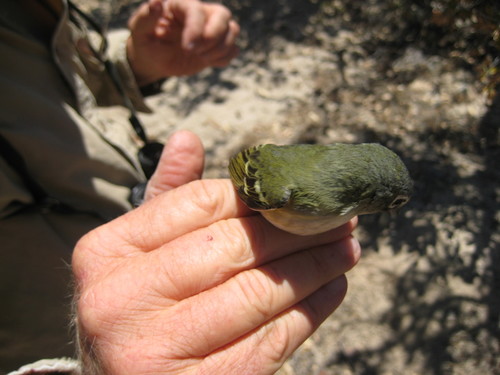
ニシフタスジモズモドキ (Vireo cassinii) ニシフタスジモズモドキ
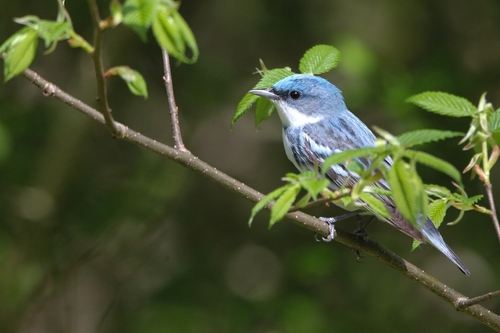
ミズイロアメリカムシクイ (Setophaga cerulea) ミズイロアメリカムシクイ

メディア

読み込み中…

要点

ニシフタスジモズモドキとミズイロアメリカムシクイを区別する最も信頼できる方法は、顔の模様と全体の色合いに焦点を当てることです。年齢に関係なく、ニシフタスジモズモドキは目の周りに大胆で途切れのない白い「眼鏡」を示し、灰色がかったオリーブ色の頭を持っています。一方、ミズイロアメリカムシクイ(特に成鳥のオス)は、薄い色の眉班を持つ青と白の模様があり、眼鏡はありません。幼鳥と雌のミズイロアメリカムシクイは緑がかった青い背中と黄色がかった腹部を示し、決してニシフタスジモズモドキの灰色がかったオリーブ色や白ではありません。両種は2本の白い翼帯を持っていますが、ニシフタスジモズモドキはずんぐりしていて、くちばしが重く、樹冠の低い位置で採餌する傾向があります。ミズイロアメリカムシクイは非常に繊細で、より細く尖ったくちばしを持ち、樹上の高い位置でより活発でムシクイのような採餌スタイルを持っています。鳴き声もかなり異なります:ニシフタスジモズモドキは遅く、疑問を呈するフレーズを発しますが、ミズイロアメリカムシクイはブザー音のような加速するトリルを歌います。

識別のコツ

  1. 白い眼鏡(ニシフタスジモズモドキ): 目の上と下に大胆で連続した白い弧を探してください。これは「眼鏡」を形成し、ニシフタスジモズモドキのすべての年齢と性別に存在し、ミズイロアメリカムシクイにはありません。
  2. 眉班(ミズイロアメリカムシクイ): ミズイロアメリカムシクイは目の上に薄い色の眉班(眉毛)を示し、完全な眼鏡はありません。雌や幼鳥で最も明らかです。
  3. 全体の色: ニシフタスジモズモドキは上面が灰色がかったオリーブ色で、下面は白で、青や黄色の色調はありません。ミズイロアメリカムシクイのオスは上面が青で、下面が白、黒い筋があります。雌や幼鳥は上面が青緑色で、下面が黄色がかっています。
  4. 胸の帯と筋(ミズイロアメリカムシクイのオス): 成鳥のオスのミズイロアメリカムシクイは、暗い青または黒のネックレスと黒い側面の筋を持っています。これはニシフタスジモズモドキには見られません。
  5. 翼帯: 両種は2本の白い翼帯を持っていますが、ミズイロアメリカムシクイは白い尾の斑点も持っています(飛行中または尾を広げたときに見える)、これはニシフタスジモズモドキにはありません。
  6. くちばしの形: ニシフタスジモズモドキは、モズモドキに典型的なより太く、フック状のくちばしを持っています。ミズイロアメリカムシクイのくちばしは細く、まっすぐで、鋭く尖っています。
  7. 体の形: ニシフタスジモズモドキはずんぐりしていて、体が重いです。ミズイロアメリカムシクイは小さく、スリムで、より繊細です。
  8. 採餌スタイル: ニシフタスジモズモドキはゆっくりと体系的に動き、しばしば立ち止まります。ミズイロアメリカムシクイは速く、敏捷で、樹冠を活発に移動します。
  9. 止まり木の高さ: ニシフタスジモズモドキは通常、中層から下層の樹冠にいます。ミズイロアメリカムシクイはほぼ常に樹上の高い位置にいます。
  10. 声: ニシフタスジモズモドキは遅く、疑問を呈するフレーズを歌います(「チャチャチャ」)。ミズイロアメリカムシクイは速く、ブザー音のようなトリルを出します(「ズレイ ズレイ ズレイ ズレイ ズィー」)。
  11. 地理的範囲: ニシフタスジモズモドキは西部(太平洋州、山脈)に生息しています。ミズイロアメリカムシクイは東部(広葉樹林)に生息しています。重複は非常に稀です。
  12. 生息地: ニシフタスジモズモドキは開けた乾燥した森林を好みます。ミズイロアメリカムシクイは成熟した湿った落葉樹林に見られます。
  13. 季節的文脈: 繁殖期に西部で見られた場合、ほぼ確実にニシフタスジモズモドキです。東部では、特に樹冠の高い位置では、ミズイロアメリカムシクイの可能性が高いです。
  14. 性別/年齢の落とし穴: 雌や幼鳥のミズイロアメリカムシクイは、より鈍い色に見えることがあり、モズモドキと混同される可能性がありますが、常に眼鏡がなく、下面は黄色がかっています。
  15. 尾の模様: 飛行中に白い尾の斑点が見えた場合、それはミズイロアメリカムシクイです。ニシフタスジモズモドキにはこの特徴はありません。

大きさ

ニシフタスジモズモキは明らかに重く、頑丈で、体重は約14.6g [wikidata]です。一方、ミズイロアメリカムシクイははるかに軽い体格(8〜10g)です [wikipedia]。両者は長さ(約11〜14cm)で似ていますが、ニシフタスジモズモドキはよりずんぐりしていて、くちばしが太く、全体的に繊細さが少ないように見えます。ミズイロアメリカムシクイは最小のSetophagaムシクイの一つで、細く尖ったくちばしと、よりコンパクトで敏捷な外観を持っています。フィールドでは、ニシフタスジモズモドキはしばしばずんぐりしていて動きが遅いように見えますが、ミズイロアメリカムシクイは速くて軽やかです。

羽色

行動

ニシフタスジモズモドキは中層から下層の樹冠で体系的に採餌し、葉や枝の間で昆虫を探しながらゆっくりと意図的に動きます。しばしば歌うために立ち止まり、ほとんどのムシクイよりも活動的ではありません。ミズイロアメリカムシクイははるかに活動的で敏捷で、樹冠の高い位置で採餌し、しばしば最も外側の枝の間で見られます。その動きは速く、急に動くのがSetophagaムシクイの典型です。ニシフタスジモズモドキは長い間同じ場所に留まる傾向がありますが、ミズイロアメリカムシクイは落ち着きがなく、より広い範囲をカバーします。

生息環境

ニシフタスジモズモドキは、開けた森林や西部の山々と丘陵地帯(南ブリティッシュコロンビアから西部アメリカまで)で繁殖し、しばしば中程度の標高で、より開けた乾燥した生息地に生息します。ミズイロアメリカムシクイは、特に広葉樹の大規模な区域で、北アメリカ東部の成熟した落葉樹林で繁殖し、南アメリカの亜熱帯森林で冬を越します。移動中、ミズイロアメリカムシクイは西部の遠くではめったに見られず、ニシフタスジモズモドキは東部には見られません。生息地の文脈は強力な手がかりになることがあります:夏に東部の広葉樹林の高い樹冠で「モズモドキ」を見ることは、ミズイロアメリカムシクイである可能性がはるかに高いです。

声

ニシフタスジモズモドキは、一連の短く、粗い笛のようなフレーズを歌い、高い音と低い音の終わりを交互に繰り返し、「質問と回答」のリズムと「チャチャチャ」の特性を持っています。その歌は持続的で遅いペースです。ミズイロアメリカムシクイの歌は、ブザー音のような加速するトリルです:「ズレイ ズレイ ズレイ ズレイ ズィー」、その呼び声は鋭く金属的な「ズィー」です。ミズイロアメリカムシクイの歌は、ニシフタスジモズモドキに比べて高音で、速く、より昆虫のようです。フィールドでは、歌のテンポとトーンの違いは通常明らかです。

より良い説明を送る

比較と同じ項目を使ってください。文章はすぐに公開されます。

The most reliable way to separate Cassin's Vireo from Cerulean Warbler is by focusing on facial pattern and overall coloration: Cassin's Vireo of any age shows bold, uninterrupted white 'spectacles' around the eye and a grayish-olive head, while Cerulean Warbler (especially adult males) has a blue-and-white pattern with a thin pale supercilium, not spectacles. Juvenile and female Cerulean Warblers show a greenish-blue back and yellowish underparts, never the gray-olive and white of Cassin's. Both species have two white wingbars, but Cassin's Vireo is chunkier and heavier-billed, and tends to forage lower in the canopy. Cerulean Warbler is much more delicate, with a thinner, pointed bill and a more active, warbler-like foraging style high in the treetops. Vocalizations are also quite different: Cassin's Vireo gives slow, questioning phrases, while Cerulean Warbler sings a buzzy, accelerating trill.

  1. White spectacles (Cassin's Vireo): Look for bold, continuous white arcs above and below the eye, forming 'spectacles'—present in all ages and sexes of Cassin's Vireo, absent in Cerulean Warbler.
  2. Supercilium (Cerulean Warbler): Cerulean Warbler shows a thin, pale eyebrow (supercilium) above the eye, not a full spectacle; most obvious in females and immatures.
  3. Overall color: Cassin's Vireo is grayish-olive above and white below, with no blue or yellow tones. Cerulean Warbler males are blue above and white below, with black streaks; females/immatures are blue-green above, yellowish below.
  4. Breast band and streaking (Cerulean Warbler male): Adult male Cerulean Warblers have a dark blue or black necklace and black flank streaks—never seen in Cassin's Vireo.
  5. Wingbars: Both species have two white wingbars, but Cerulean Warbler also has white tail spots (visible in flight or when tail is spread), which Cassin's lacks.
  6. Bill shape: Cassin's Vireo has a thicker, more hooked bill typical of vireos; Cerulean Warbler's bill is thin, straight, and sharply pointed.
  7. Body shape: Cassin's Vireo is chunkier and heavier-bodied; Cerulean Warbler is smaller, slimmer, and more delicate.
  8. Foraging style: Cassin's Vireo moves slowly and methodically, often pausing; Cerulean Warbler is quick, agile, and moves actively through the canopy.
  9. Perch height: Cassin's Vireo is usually in the middle to lower canopy; Cerulean Warbler is almost always high in the treetops.
  10. Voice: Cassin's Vireo sings slow, questioning phrases ('cha-cha-cha'); Cerulean Warbler gives a fast, buzzy trill ('zray zray zray zray zeeee').
  11. Geographic range: Cassin's Vireo is western (Pacific states, mountains); Cerulean Warbler is eastern (hardwood forests). Overlap is extremely rare.
  12. Habitat: Cassin's prefers open, drier woodlands; Cerulean Warbler is found in mature, moist deciduous forests.
  13. Seasonal context: If seen in the West during breeding season, it's almost certainly Cassin's Vireo; in the East, especially high in the canopy, Cerulean Warbler is more likely.
  14. Sex/age pitfalls: Female and immature Cerulean Warblers may look duller and could be confused with vireos, but always lack spectacles and have a yellowish wash below.
  15. Tail pattern: If you glimpse white tail spots in flight, it's Cerulean Warbler; Cassin's Vireo lacks this feature.

Cassin's Vireo is noticeably heavier and more robust, with a body mass of about 14.6 g [wikidata], compared to the Cerulean Warbler's much lighter build (8–10 g) [wikipedia]. Both are similar in length (about 11–14 cm), but Cassin's appears bulkier, with a thicker bill and a less delicate structure overall. Cerulean Warbler is one of the smallest Setophaga warblers, with a slim, pointed bill and a more compact, agile appearance. In the field, Cassin's Vireo often looks stocky and slow-moving, while Cerulean Warbler is quick and light.

  • Juvenile/immature birds: Cerulean Warbler immatures resemble adult females, with blue-green upperparts, a pale supercilium (eyebrow), yellowish underparts, and two white wingbars. They lack the strong facial spectacles of Cassin's Vireo. Cassin's Vireo of all ages shows grayish-olive upperparts, white underparts, and bold, continuous white spectacles around the eye, plus white wingbars.
  • Adult males: Cerulean Warbler males are strikingly blue above with a black or blue breast band and black streaks on the flanks, white below, and two white wingbars. Cassin's Vireo males never show blue or black streaking, instead having a grayish-olive head and back, and no breast band.
  • Adult females: Cerulean Warbler females are blue-green above, yellowish below, with a pale eyebrow and no streaking or breast band. Cassin's Vireo females look like males, with gray-olive above, white below, and bold spectacles.
  • Wing pattern: Both species have two white wingbars at all ages, but Cerulean Warbler also shows white tail spots (not present in Cassin's Vireo).

Cassin's Vireo forages methodically in the middle to lower canopy, moving slowly and deliberately as it searches for insects among leaves and branches. It often pauses to sing and is less active than most warblers. Cerulean Warbler is much more active and agile, foraging high in the canopy, often among the outermost branches. Its movements are quick and darting, typical of Setophaga warblers. Cassin's Vireo tends to stay in one area for longer periods, while Cerulean Warbler is restless and covers more ground.

Cassin's Vireo breeds in open woodlands and forests of the western mountains and foothills (from southern British Columbia through the western US), often at mid-elevations and in more open, drier habitats. Cerulean Warbler breeds in mature deciduous forests of eastern North America, especially in large tracts of hardwoods, and winters in South American subtropical forests. In migration, Cerulean is rarely found in the far West, while Cassin's is not found in the East. Habitat context can be a strong clue: seeing a 'vireo' in the high canopy of an eastern hardwood forest in summer is much more likely to be Cerulean Warbler.

Cassin's Vireo sings a series of short, rough-whistled phrases, often alternating between high and low endings, with a 'question-and-answer' rhythm and a 'cha-cha-cha' quality. Its song is persistent and slow-paced. Cerulean Warbler's song is a buzzy, accelerating trill: 'zray zray zray zray zeeee', and its call is a sharp, metallic 'zzee'. Cerulean's song is higher-pitched, faster, and more insect-like compared to Cassin's. In the field, the difference in song tempo and tone is usually obvious.

変更を破棄しますか?

保存していない編集があります。今離れると失われます。

ニシフタスジモズモドキ · ミズイロアメリカムシクイ · 苦手な鳥