

Motmot

シロハラムラサキツバメ 対 ウロコツグミモドキ

Progne dominicensis 対 Allenia fusca

シロハラムラサキツバメとウロコツグミモドキのクイズ
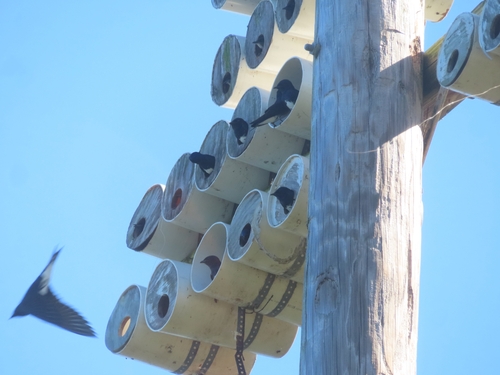
シロハラムラサキツバメ (Progne dominicensis) シロハラムラサキツバメ
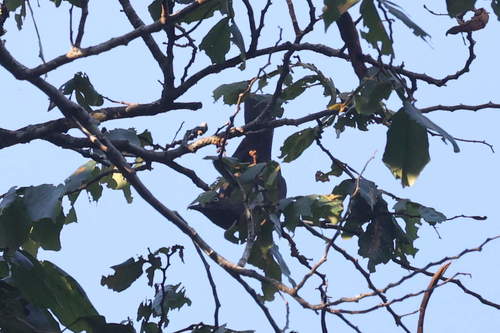
ウロコツグミモドキ (Allenia fusca) ウロコツグミモドキ

メディア

読み込み中…

要点

カリブハラムラサキツバメとウロコツグミモドキを区別する最も信頼できる方法は、全体的な形状と飛行スタイルによるものです:ハラムラサキツバメは大きく、広い翼を持つツバメで、分かれた尾と迅速で機敏な飛行を特徴とし、一方でグミモドキはより重く、長い体を持つ歌鳥で、まっすぐな尾と遅く、より直接的な動きをします。成鳥のオスのハラムラサキツバメは、上面が光沢のある青黒で、下部が鋭い白であり、グミモドキのウロコ模様のある縞模様の下部と土色の上面と対照的です。幼鳥や雌のハラムラサキツバメは鈍い色合いになることがありますが、決してグミモドキの大胆な胸の模様や白い翼のバーを示すことはありません。くちばしの形状も迅速な手がかりです:ハラムラサキツバメは空中で餌を取るための短く、広く、平らなくちばしを持ち、グミモドキはわずかに下向きの、ツグミのようなくちばしを持っています。文脈と行動—ハラムラサキツバメは開けた空中に、グミモドキは密な葉の中にいることが多く、しばしば決定的です。

識別のコツ

  1. 飛行スタイル: ハラムラサキツバメは速く、機敏に飛ぶことが多く、しばしば高く、開けた空中にいます;グミモドキは遅く動き、通常は密な植生や地面で見られます。
  2. 尾の形: カリブハラムラサキツバメは明確に分かれた尾を持っています(すべての年齢);ウロコツグミモドキの尾はまっすぐで暗く、白い先端があります(すべての年齢)。
  3. くちばしの形: ハラムラサキツバメは空中で昆虫を捕まえるための短く、広く、平らなくちばしを持ち、グミモドキは探査や採餌のための長く、わずかに下向きの、ツグミのようなくちばしを持っています。
  4. 下部: 成鳥のオスのハラムラサキツバメは上面が光沢のある青黒で、下部が鋭い白です;雌や幼鳥は鈍い色合いですが、依然として白い下部を持っています。グミモドキは常に胸と側面に大胆なウロコ模様を示し、決して清潔な白ではありません。
  5. 上部: ハラムラサキツバメは光沢のある青黒(オス)または鈍い色合い(雌/幼鳥)で、グミモドキは灰褐色で赤みがかったまたは暗い色合いを持ち、決して光沢のある青黒ではありません。
  6. 翼のバー: ウロコツグミモドキは単一の白い翼のバーを示し(すべての年齢)、止まっているときや翼を折りたたんでいるときに見えます;ハラムラサキツバメには翼のバーがありません。
  7. 尾の模様: グミモドキの尾は外側の羽に白い先端があります;ハラムラサキツバメの尾は均一に暗く、分かれています。
  8. ジズ: ハラムラサキツバメは流線型で空気力学的に見え、広い翼と分かれた尾を持っています;グミモドキはより重く、長い体を持ち、ツグミのような姿勢をしています。
  9. 群れのサイズ: ハラムラサキツバメは群れで見られることが多く、特に飛行中;グミモドキは孤独またはペアで見られます。
  10. 生息地: ハラムラサキツバメは開けた地域、水の近く、または都市/農村の場所に生息し、適切な巣穴(崖、建物、ココナッツの木)があります;密な下草の中ではほとんど見られません。グミモドキは小さな藪、森林の端、そして小さな生息地を好みます。
  11. 声: ハラムラサキツバメは短く、ゴロゴロした呼び声を出します;グミモドキは長く、さまざまな、モッキングバードのような歌を歌います。
  12. 止まっている姿勢: ハラムラサキツバメはワイヤーや露出した枝に直立して止まり、しばしば群れで見られます;グミモドキはより水平に座り、しばしば隠れています。
  13. 季節的な混乱: 雌や幼鳥のハラムラサキツバメは鈍い色合いですが、決してグミモドキのウロコ模様の胸や翼のバーを示しません;薄暗い光の中で鈍いハラムラサキツバメに注意してください。
  14. 採餌行動: ハラムラサキツバメは空中で昆虫を捕まえ、グミモドキは地面や葉の中で採餌します。
  15. 落とし穴: 薄暗い光の中では、鈍いハラムラサキツバメが茶色っぽく見えることがありますが、ウロコ模様の下部がないことと分かれた尾があることでグミモドキと区別できます。

大きさ

ウロコツグミモドキは大きく、重く、平均して約68g、長さ23cmで、頑丈でツグミのような体型をしています。カリブハラムラサキツバメはやや小さく、18.5cmで約40gで、より流線型のツバメのようなシルエットを持っています。フィールドでは、ハラムラサキツバメはスリムで空気力学的に見え、グミモドキはより重く、長い体に見えます。質量の違いは並んで見ると顕著ですが、形状は通常サイズよりも明らかです。

羽色

どちらの種についても、飛行中に診断的な年齢特有の上翼パターンは記述されていません。成鳥のオスのカリブハラムラサキツバメは上面が光沢のある青黒で、下部が鋭い白です;雌や幼鳥は鈍い色合いで、灰褐色の胸と側面を持ちますが、依然として白い下部を持っています。対照的に、すべてのウロコツグミモドキ(年齢や性別に関係なく)は土色の上面、暗い灰褐色の頭、そして胸と側面に特徴的なウロコ模様を持っています—これは白っぽい下部に大胆な灰褐色の模様によって作られています。グミモドキはまた、単一の白い翼のバー(止まっているときや翼を折りたたんでいるときに見える)と外側の尾羽の白い先端を示します。幼鳥や雌のハラムラサキツバメは決してグミモドキの縞模様やウロコ模様の下部や白い翼のバーを示しません。ハラムラサキツバメの尾は分かれており、グミモドキの尾はまっすぐで暗く、白い先端があります。

行動

カリブハラムラサキツバメはほぼ常に開けた空中で飛んでいるのが見られ、しばしば地面の高いところで、機敏で迅速な動きで空中で昆虫を捕まえます。彼らは群れを作ることが多く、特に水の近くや開けた地域で見られます。ウロコツグミモドキは地上または樹上で採餌することが多く、密な葉の中や地面をゆっくりと、計画的に移動し、しばしば一人またはペアで見られます。彼らの動きはより慎重で、ハラムラサキツバメのように開けた空に飛び出すことはほとんどありません。

生息環境

カリブハラムラサキツバメは開けた国、水の近く、都市部、または適切な巣穴(崖、建物、ココナッツの木)がある農村地域に生息しています;密な下草の中ではほとんど見られません。ウロコツグミモドキは小さな藪、森林の端、そして小さな生息地を好みます。もし鳥が藪の奥深くにいるか、地面で採餌している場合、ハラムラサキツバメは安全に除外できます。

声

カリブハラムラサキツバメはツバメに典型的なゴロゴロした「チューチュー」という呼び声を出し、短く、シンプルであまり音楽的ではありません。ウロコツグミモドキははるかに複雑な歌を持っています:さまざまな音とフレーズの連続で、モッキングバードを思わせますが、より柔らかく、遅いです。もし長く、さまざまな音楽的な歌が聞こえたら、それはグミモドキです;短く、シンプルな呼び声はハラムラサキツバメを指し示します。

より良い説明を送る

比較と同じ項目を使ってください。文章はすぐに公開されます。

The most reliable way to separate Caribbean Martin from Scaly-breasted Thrasher is by overall shape and flight style: the martin is a large, broad-winged swallow with a forked tail and rapid, agile flight, while the thrasher is a bulkier, longer-bodied songbird with a straight tail and slower, more direct movements. Adult male martins show glossy blue-black above with sharp white lower underparts, contrasting with the thrasher’s scaly-marked, streaked underparts and earth-toned upperparts. Juvenile and female martins can be duller, but never show the thrasher’s bold chest markings or white wing bar. Bill shape is also a quick clue: martins have a short, wide, flat bill for aerial feeding, while thrashers have a slightly decurved, thrush-like bill. Context and behavior—martins in open air, thrashers in dense foliage—are often decisive.

  1. Flight style: Martins are fast, agile fliers, often high and in open air; thrashers move slowly, usually in dense vegetation or on the ground.
  2. Tail shape: Caribbean Martin has a distinctly forked tail (all ages); Scaly-breasted Thrasher’s tail is straight and dark with white tips (all ages).
  3. Bill shape: Martins have a short, wide, flat bill for catching insects in flight; thrashers have a longer, slightly decurved, thrush-like bill for probing and foraging.
  4. Underparts: Adult male martins are glossy blue-black above with sharply white lower underparts; females/juveniles are duller but still have white lower underparts. Thrashers always show bold scaly markings on the chest and flanks, never clean white.
  5. Upperparts: Martins are glossy blue-black (male) or duller (female/juvenile); thrashers are gray-brown with reddish or dark tones, never glossy blue-black.
  6. Wing bar: Scaly-breasted Thrasher shows a single white wing bar (all ages), visible when perched or with wings folded; martin lacks any wing bar.
  7. Tail pattern: Thrasher’s tail has white tips to the outer feathers; martin’s tail is uniformly dark and forked.
  8. Jizz: Martins look streamlined and aerodynamic, with broad wings and a forked tail; thrashers are bulkier, longer-bodied, and more thrush-like in posture.
  9. Group size: Martins are often seen in groups, especially in flight; thrashers are solitary or in pairs.
  10. Habitat: Martins are in open areas, near water, or urban/rural sites; thrashers are in dense thickets or forest edges.
  11. Vocalization: Martins give short, gurgly calls; thrashers sing long, varied, mockingbird-like songs.
  12. Perched posture: Martins perch upright on wires or exposed branches, often in groups; thrashers sit more horizontally, often in cover.
  13. Seasonal confusion: Female and juvenile martins are duller but never show the thrasher’s scaly chest or wing bar; beware of dull martins in poor light.
  14. Feeding behavior: Martins catch insects in flight; thrashers forage on the ground or in foliage.
  15. Pitfall: In poor light, a dull martin may look brownish, but the lack of scaly underparts and presence of a forked tail will separate it from thrasher.

Scaly-breasted Thrasher is larger and heavier, averaging about 68 g and 23 cm in length, with a robust, thrush-like build. Caribbean Martin is slightly smaller at 18.5 cm and about 40 g, with a more streamlined, swallow-like silhouette. In the field, the martin looks slimmer and more aerodynamic, while the thrasher appears bulkier and longer-bodied. The difference in mass is notable if seen side-by-side, but shape is usually more obvious than size.

No age-specific upperwing patterns are described for either species that would be diagnostic in flight. Adult male Caribbean Martins are glossy blue-black above with crisp white lower underparts; females and juveniles are duller, with grey-brown breast and flanks but still white lower underparts. In contrast, all Scaly-breasted Thrashers (regardless of age or sex) have earth-toned upperparts, a dark gray-brown head, and a distinctive scaly appearance on the chest and flanks—created by bold gray-brown markings on whitish underparts. The thrasher also shows a single white wing bar (visible when perched or with wings folded) and white tips to the outer tail feathers. Juvenile/female martins never show the thrasher’s streaked or scaly underparts or white wing bar. The martin’s tail is forked, while the thrasher’s is straight and dark with white tips.

Caribbean Martins are almost always seen flying in the open, often high above ground, catching insects on the wing with agile, rapid movements. They are gregarious and may be seen in groups, especially near water or open areas. Scaly-breasted Thrashers are terrestrial or arboreal foragers, moving slowly and methodically through dense foliage or on the ground, often alone or in pairs. Their movements are more deliberate, and they rarely sally out into open air like martins.

Caribbean Martins are found in open country, near water, urban areas, or rural sites with suitable nesting cavities (banks, buildings, coconut trees). They are rarely seen in dense undergrowth. Scaly-breasted Thrashers prefer dense thickets, forest edges, and shrubby habitats throughout the Lesser Antilles. If the bird is deep in brush or foraging on the ground, martin can be safely ruled out.

Caribbean Martin gives a gurgly 'chew-chew' call, typical of swallows—short, simple, and not very musical. Scaly-breasted Thrasher has a much more complex song: a series of varied notes and phrases, reminiscent of a mockingbird but softer and slower. If you hear a long, varied, musical song, it is the thrasher; brief, simple calls point to martin.

変更を破棄しますか?

保存していない編集があります。今離れると失われます。

シロハラムラサキツバメ · ウロコツグミモドキ · 苦手な鳥