

Motmot

カリブシラギクタイランチョウ 対 ハイイロタイランチョウ

Elaenia martinica 対 Tyrannus dominicensis

カリブシラギクタイランチョウとハイイロタイランチョウのクイズ
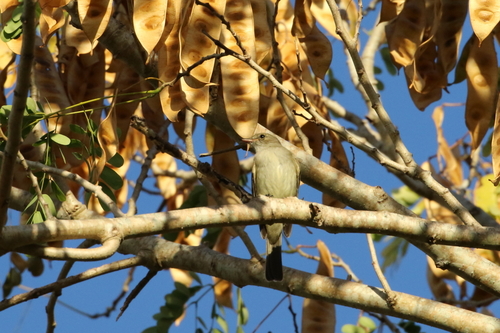
カリブシラギクタイランチョウ (Elaenia martinica) カリブシラギクタイランチョウ
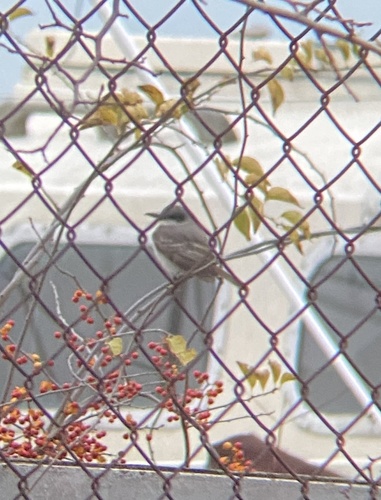
ハイイロタイランチョウ (Tyrannus dominicensis) ハイイロタイランチョウ

メディア

読み込み中…

要点

カリブシラギクタイランチョウとハイイロタイランチョウを区別する最も信頼できるフィールドマークは、全体的なサイズと構造です:ハイイロタイランチョウははるかに大きく、頑丈で重いクチバシと長い尾を持ち、カリブシラギクタイランチョウは小さく、ふさふさした冠羽を持ち、よりコンパクトです。すべての羽色において、ハイイロタイランチョウは目を通して強い暗いマスクと鮮明な白い腹部を示し、カリブシラギクタイランチョウはかすかなアイリング、淡い中央ストライプのあるふさふさした冠羽、腹部と尾の下側に黄色がかった洗いが見られます。幼鳥のハイイロタイランチョウは翼と尾に赤褐色の縁を示すことがありますが、カリブシラギクタイランチョウにはありません。両種は重複する生息地で見られますが、サイズ、頭の模様、クチバシの形は双眼鏡で見ると一貫して診断的です。

識別のコツ

  1. Size and structure: ハイイロタイランチョウはカリブシラギクタイランチョウのほぼ2倍の重さで、はるかに長いです。鳥が大きく、長い尾を持ち、頑丈に見える場合、特に他の捕虫性の鳥と比較して、タイランチョウである可能性が高いです。シラギクタイランチョウはコンパクトで小さいです。
  2. Bill shape: ハイイロタイランチョウは厚く、重く、深い基部のクチバシを持ち、ほぼシュライクのように見えます。カリブシラギクタイランチョウのクチバシはより細く、短く、深さが少ないです。
  3. Crest and head shape: カリブシラギクタイランチョウは、淡い中央ストライプのあるふさふさした、しばしば立ち上がった冠羽を持ち(良い光の中で時々見える)、尖った外観を与えます。ハイイロタイランチョウの冠は滑らかで、フィールドではめったに見られない隠れた黄色のストライプがあります。
  4. Facial pattern: ハイイロタイランチョウは常に目を通して大胆で暗いマスクを示し、淡い灰色の顔と対照的です。カリブシラギクタイランチョウはかすかな白っぽいアイリングとロアを持ちますが、マスクはありません;その顔はまだらの灰褐色で、見た目がはるかに柔らかいです。
  5. Wing pattern (juveniles): 幼鳥のハイイロタイランチョウは翼の覆羽、尾、尾に赤褐色の縁を持っています。すべての年齢のカリブシラギクタイランチョウはこれらの赤褐色のトーンを欠き、代わりに飛行羽に黄色がかったまたは白っぽい縁と2つの淡い翼帯を示します。
  6. Underparts color: ハイイロタイランチョウは下側が白で、わずかに灰色の胸を持っています。カリブシラギクタイランチョウは胸が淡い灰色ですが、腹部と尾の下側は明確に黄色がかったまたは鈍い黄色で、特にいくつかの亜種では顕著です。
  7. Upperparts color: ハイイロタイランチョウは上が単色の灰色で、翼と尾は茶色がかっています。カリブシラギクタイランチョウは上が鈍いオリーブ色から茶色がかったオリーブ色で、時々緑がかった色合いを持ち、タイランチョウのクリーンな灰色の外観を欠いています。
  8. Tail: ハイイロタイランチョウの尾は長くて暗く、広げるとわずかに分かれたように見えることがよくあります。カリブシラギクタイランチョウの尾は暗いですが、短くてより四角いです。
  9. Iris, legs, and feet: 両者ともに暗い虹彩と黒い脚/足を持っているため、これらは区別には役立ちません。
  10. Behavior: ハイイロタイランチョウは大胆、直立し、しばしば開けた場所に止まり、昆虫を捕まえたり、より大きな鳥を追い回したりします。カリブシラギクタイランチョウはより控えめで、葉の中で餌を探し、冠羽を振ります。
  11. Habitat: 両者は重複することができますが、ハイイロタイランチョウは露出した止まり木のある開けた、沿岸、または都市部を好み、カリブシラギクタイランチョウはより密な、低木のある、または森林の生息地を好みます。
  12. Voice: 大きく、転がるような「ピピリ、ピピリ」という声が聞こえたら、それはハイイロタイランチョウです。カリブシラギクタイランチョウの呼び声はここでは説明されていないので、タイランチョウの声をポジティブな識別として使用してください。
  13. Sexes: 両種は性別的に単形であるため、性別はフィールドマークに影響を与えません。
  14. Season: 幼鳥のハイイロタイランチョウ(赤褐色の縁のある翼/尾)はカリブシラギクタイランチョウと混同されることがありますが、サイズ、クチバシ、マスクは診断的です。カリブシラギクタイランチョウの黄色がかった腹部は、ほとんどの亜種で年間を通じて存在します。
  15. Pitfalls: 遠くからの視界や逆光の視界は、タイランチョウのマスクやシラギクタイランチョウの冠羽を隠す可能性があります;常に頭の側面の視界とサイズ感を試みてください。赤褐色のトーンを持つ幼鳥のタイランチョウに注意してくださいが、構造的な違いを忘れないでください。

大きさ

ハイイロタイランチョウはカリブシラギクタイランチョウ(体重約21.3g、長さ14〜18cm)よりもかなり大きく、重いです(体重約43.8g、長さ23cm)。タイランチョウのサイズは、遠くからでも明らかで、より長い体、尾、特にはるかに頑丈で深い基部のクチバシを持っています。カリブシラギクタイランチョウは明らかに小さく、よりコンパクトで丸みを帯びた外観と細いクチバシを持っています。混合した群れの中や互いに近くで見られると、サイズのギャップは際立っています。

羽色

幼鳥のハイイロタイランチョウは翼の覆羽、尾、尾に赤褐色の縁を持っており、これはカリブシラギクタイランチョウのどの年齢にも存在しない特徴です。成鳥のハイイロタイランチョウは上が灰色で、目を通して強い暗いマスクを持ち、隠れた黄色の冠ストライプ、茶色がかった翼と尾、灰色の胸を持つ白い腹部を持っています。すべての亜種の成鳥のカリブシラギクタイランチョウは、淡い中央ストライプのあるふさふさしたオリーブ色または茶色がかったオリーブ色の冠羽、かすかな白っぽいアイリング、鈍いオリーブ色から茶色がかった上面を示します。彼らの翼は暗く、2つの淡い翼帯と飛行羽に黄色がかったまたは白っぽい縁があります。下側は淡い灰色から黄色がかっており、特に腹部と尾の下側で顕著です。タイランチョウの下側は常に白(わずかに灰色の胸を持つ)ですが、シラギクタイランチョウの下側はより汚れており、しばしば黄色がかっています。タイランチョウのマスクと重いクチバシは、シラギクタイランチョウの柔らかい顔の模様と細いクチバシと対照的です。

行動

ハイイロタイランチョウは大胆で攻撃的で、しばしば露出した止まり木から飛び出し、はるかに大きな鳥や哺乳類を積極的に追い回す姿が見られます。直立して止まり、開けた場所で目立ちます。カリブシラギクタイランチョウはより控えめで、通常は樹木や低木の中で餌を探し、他の種に対してオープンに挑戦することは少ないです。その動きはより控えめで、しばしばふさふさした冠羽を振ります。

生息環境

両種は西インド諸島に生息し、エッジ、開けた森林、低木の生息地で重複することがあります。ハイイロタイランチョウは開けた場所、沿岸、道路脇、人間の居住地の近くで見つかる可能性が高く、しばしばワイヤーや露出した枝に止まります。カリブシラギクタイランチョウは低木や森林のある地域を好み、時々庭に出かけますが、通常はより密な植生の中に留まります。生息地だけでは重複のために常に診断的ではありません。

声

ハイイロタイランチョウは「ピピリ、ピピリ」と表現される大きく、転がるようなトリルを持ち、特に繁殖期に頻繁に聞かれる特徴的な声です。カリブシラギクタイランチョウの鳴き声は提供されたメモには記載されていないため、声はタイランチョウの特徴的な呼び声が聞こえた場合のみ診断的です。

より良い説明を送る

比較と同じ項目を使ってください。文章はすぐに公開されます。

The most reliable field mark to separate Caribbean Elaenia from Grey Kingbird is overall size and structure: Grey Kingbird is much larger, with a robust, heavy bill and a longer tail, while Caribbean Elaenia is smaller, bushier-crested, and more compact. In all plumages, Grey Kingbird shows a strong dark mask through the eye and crisp white underparts, while Caribbean Elaenia has a faint eyering, bushy crest with a pale central stripe, and yellowish wash on the belly and undertail. Juvenile Grey Kingbirds may show rufous edges on the wings and tail, which Caribbean Elaenia lacks. Both species can be found in overlapping habitats, but their size, head pattern, and bill shape are consistently diagnostic with binocular views.

  1. Size and structure: Grey Kingbird is nearly twice as heavy and much longer than Caribbean Elaenia. If the bird looks large, long-tailed, and robust, especially compared to other flycatchers, it is likely a kingbird. Elaenia is compact and small.
  2. Bill shape: Grey Kingbird has a thick, heavy, deep-based bill that appears almost shrike-like. Caribbean Elaenia's bill is finer, shorter, and less deep.
  3. Crest and head shape: Caribbean Elaenia has a bushy, often raised crest with a pale central stripe (sometimes visible in good light), giving it a peaked look. Grey Kingbird's crown is smooth, with a concealed yellow stripe rarely seen in the field.
  4. Facial pattern: Grey Kingbird always shows a bold, dusky mask through the eye, contrasting with its pale gray face. Caribbean Elaenia has a faint whitish eyering and lores, but no mask; its face is mottled gray-brown and much softer in appearance.
  5. Wing pattern (juveniles): Juvenile Grey Kingbirds have rufous edges on wing coverts, rump, and tail. Caribbean Elaenia of all ages lacks these rufous tones, showing instead yellowish to whitish edges on the flight feathers and two pale wingbars.
  6. Underparts color: Grey Kingbird is white below with a slight gray chest. Caribbean Elaenia is pale gray on the breast, but the belly and undertail are distinctly yellowish to dull yellow, especially in some subspecies.
  7. Upperparts color: Grey Kingbird is plain gray above with brownish wings and tail. Caribbean Elaenia is dull olive to brownish olive above, sometimes with a greenish tinge, and lacks the kingbird's clean gray look.
  8. Tail: Grey Kingbird's tail is longer and darker, often appearing slightly forked when spread. Caribbean Elaenia's tail is dusky but shorter and more squared.
  9. Iris, legs, and feet: Both have dark irises and black legs/feet, so these are not helpful for separation.
  10. Behavior: Grey Kingbird is bold, upright, and often perches in the open, sallying for insects and mobbing larger birds. Caribbean Elaenia is more retiring, foraging within foliage and flicking its crest.
  11. Habitat: While both can overlap, Grey Kingbird favors open, coastal, or urban areas with exposed perches; Caribbean Elaenia prefers denser, shrubby, or wooded habitats.
  12. Voice: If you hear a loud, rolling 'pipiri, pipiri,' it's Grey Kingbird. Caribbean Elaenia's call is not described here, so use kingbird's voice as a positive ID.
  13. Sexes: Both species are sexually monomorphic, so sex does not affect field marks.
  14. Season: Juvenile Grey Kingbirds (rufous-edged wings/tail) may be confused with elaenias, but the size, bill, and mask remain diagnostic. Elaenia's yellowish belly is present year-round in most subspecies.
  15. Pitfalls: Distant or backlit views may obscure the kingbird's mask or the elaenia's crest; always try for a side view of the head and a sense of size. Beware of juvenile kingbirds with rufous tones, but remember the structural differences.

Grey Kingbird is substantially larger and heavier (body mass ~43.8 g, length 23 cm) than Caribbean Elaenia (body mass ~21.3 g, length 14–18 cm). The kingbird's size is obvious even at a distance, with a longer body, tail, and especially a much more robust, deep-based bill. Caribbean Elaenia is noticeably smaller, with a more compact, rounded appearance and a finer bill. In mixed flocks or when seen near each other, the size gap is striking.

Juvenile Grey Kingbirds have rufous edges to the wing coverts, rump, and tail, a feature not present in any age of Caribbean Elaenia. Adult Grey Kingbirds are gray above with a strong dusky mask through the eye, a concealed yellow crown stripe, brownish wings and tail, and white underparts with a grayish chest. Caribbean Elaenia adults of all subspecies show a bushy olive or brownish-olive crest with a pale central stripe, a faint whitish eyering, and dull olive to brownish upperparts. Their wings are dusky with two pale wingbars and yellowish to whitish edges on the flight feathers. Underparts are pale gray to yellowish, especially on the belly and undertail. The kingbird's underparts are always white (with a slight gray chest), while the elaenia's are dingier and often yellowish. The kingbird's mask and heavier bill contrast with the elaenia's softer facial pattern and finer bill.

Grey Kingbird is bold and aggressive, often seen sallying from exposed perches and actively mobbing much larger birds and mammals. It perches upright and is conspicuous in open areas. Caribbean Elaenia is more retiring, typically foraging in trees or shrubs, and is less likely to be seen openly challenging other species. Its movements are more reserved, and it often flicks its bushy crest.

Both species occur in the West Indies and can overlap in edge, open woodland, and scrubby habitats. Grey Kingbird is more likely to be found in open areas, along coasts, roadsides, and near human habitation, often perched on wires or exposed branches. Caribbean Elaenia prefers shrubby or wooded areas, sometimes venturing into gardens but usually staying within denser vegetation. Habitat alone is not always diagnostic due to overlap.

Grey Kingbird has a loud, rolling trill described as 'pipiri, pipiri,' which is distinctive and frequently heard, especially in the breeding season. Caribbean Elaenia's vocalizations are not described in the provided notes, so voice is only diagnostic if the kingbird's characteristic call is heard.

変更を破棄しますか?

保存していない編集があります。今離れると失われます。

カリブシラギクタイランチョウ · ハイイロタイランチョウ · 苦手な鳥