

Caribbean Elaenia vs Gray Kingbird
Elaenia martinica contro Tyrannus dominicensis
Fai un quiz con Caribbean Elaenia e Gray Kingbird
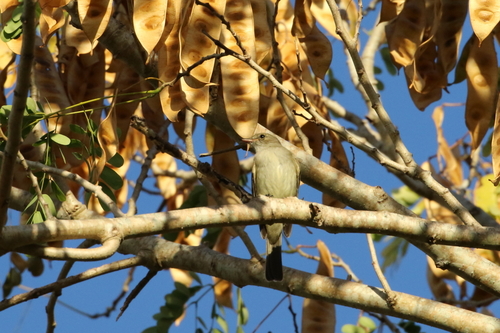 Caribbean Elaenia
 Gray Kingbird
In breve
Il segno distintivo più affidabile per separare Caribbean Elaenia da Gray Kingbird è la dimensione e la struttura complessiva: Gray Kingbird è molto più grande, con un becco robusto e pesante e una coda più lunga, mentre Caribbean Elaenia è più piccola, con una cresta più cespugliosa e più compatta. In tutte le livree, Gray Kingbird mostra una forte maschera scura attraverso l'occhio e parti inferiori bianche nette, mentre Caribbean Elaenia ha un anello oculare debole, una cresta cespugliosa con una striscia centrale chiara e un lavaggio giallastro sul ventre e sull'undertail. I giovani Gray Kingbird possono mostrare bordi rugginosi sulle ali e sulla coda, che Caribbean Elaenia non ha. Entrambe le specie possono essere trovate in habitat sovrapposti, ma la loro dimensione, il modello della testa e la forma del becco sono costantemente diagnostici con visioni binoculare.
Consigli di identificazione
- Dimensione e struttura: Gray Kingbird è quasi due volte più pesante e molto più lungo di Caribbean Elaenia. Se l'uccello sembra grande, con una coda lunga e robusta, specialmente rispetto ad altri moschettieri, è probabile che sia un kingbird. Elaenia è compatta e piccola.
- Forma del becco: Gray Kingbird ha un becco spesso, pesante e profondo che appare quasi simile a quello di un lanius. Il becco di Caribbean Elaenia è più fine, più corto e meno profondo.
- Cresta e forma della testa: Caribbean Elaenia ha una cresta cespugliosa, spesso sollevata, con una striscia centrale chiara (a volte visibile in buona luce), che le conferisce un aspetto appuntito. La corona di Gray Kingbird è liscia, con una striscia gialla nascosta raramente vista sul campo.
- Modello facciale: Gray Kingbird mostra sempre una maschera scura e audace attraverso l'occhio, in contrasto con il suo volto grigio chiaro. Caribbean Elaenia ha un anello oculare biancastro e lore deboli, ma nessuna maschera; il suo volto è maculato di grigio-marrone e appare molto più morbido.
- Modello delle ali (giovani): I giovani Gray Kingbird hanno bordi rugginosi sulle copritrici delle ali, sul dorso e sulla coda. Caribbean Elaenia di tutte le età manca di questi toni rugginosi, mostrando invece bordi giallastri a bianchi sulle piume da volo e due barre alari chiare.
- Colore delle parti inferiori: Gray Kingbird è bianco sotto con un leggero petto grigio. Caribbean Elaenia è grigio chiaro sul petto, ma il ventre e l'undertail sono distintamente giallastri a giallo opaco, specialmente in alcune sottospecie.
- Colore delle parti superiori: Gray Kingbird è grigio uniforme sopra con ali e coda marroni. Caribbean Elaenia è di un olivastro opaco a olivastro marrone sopra, a volte con una sfumatura verdognola, e manca dell'aspetto grigio pulito del kingbird.
- Coda: La coda di Gray Kingbird è più lunga e scura, spesso apparendo leggermente biforcuta quando è aperta. La coda di Caribbean Elaenia è scura ma più corta e più squadrata.
- Iride, gambe e piedi: Entrambi hanno iridi scure e gambe/piedi neri, quindi questi non sono utili per la separazione.
- Comportamento: Gray Kingbird è audace, eretto e spesso si posiziona in modo aperto, lanciandosi per insetti e infastidendo uccelli più grandi. Caribbean Elaenia è più ritirata, cercando cibo tra il fogliame e muovendo la sua cresta.
- Habitat: Anche se entrambi possono sovrapporsi, Gray Kingbird preferisce aree aperte, costiere o urbane con posatoi esposti; Caribbean Elaenia preferisce habitat più densi, cespugliosi o boschivi.
- Voce: Se senti un forte, rotolante 'pipiri, pipiri,' è Gray Kingbird. Il richiamo di Caribbean Elaenia non è descritto qui, quindi usa la voce del kingbird come identificazione positiva.
- Sessi: Entrambe le specie sono sessualmente monomorfiche, quindi il sesso non influisce sui segni sul campo.
- Stagione: I giovani Gray Kingbird (ali/coda con bordi rugginosi) possono essere confusi con le elaenia, ma la dimensione, il becco e la maschera rimangono diagnostici. Il ventre giallastro di Elaenia è presente tutto l'anno nella maggior parte delle sottospecie.
- Insidie: Visioni distanti o retroilluminate possono oscurare la maschera del kingbird o la cresta dell'elaenia; cerca sempre una vista laterale della testa e una percezione della dimensione. Fai attenzione ai giovani kingbird con toni rugginosi, ma ricorda le differenze strutturali.
Taglia
Gray Kingbird è sostanzialmente più grande e più pesante (massa corporea ~43,8 g, lunghezza 23 cm) rispetto a Caribbean Elaenia (massa corporea ~21,3 g, lunghezza 14–18 cm). La dimensione del kingbird è ovvia anche a distanza, con un corpo, una coda e soprattutto un becco molto più robusto e profondo. Caribbean Elaenia è visibilmente più piccola, con un aspetto più compatto e arrotondato e un becco più fine. In stormi misti o quando visti vicini, il divario di dimensione è sorprendente.
Piumaggio
I giovani Gray Kingbird hanno bordi rugginosi sulle copritrici delle ali, sul dorso e sulla coda, una caratteristica assente in qualsiasi età di Caribbean Elaenia. Gli adulti di Gray Kingbird sono grigi sopra con una forte maschera scura attraverso l'occhio, una striscia gialla nascosta sulla corona, ali e coda marroni e parti inferiori bianche con un petto grigio. Gli adulti di Caribbean Elaenia di tutte le sottospecie mostrano una cresta cespugliosa olivastra o marrone-olivastra con una striscia centrale chiara, un anello oculare biancastro debole e parti superiori opache olivastre a marrone-olivastre. Le loro ali sono scure con due barre alari chiare e bordi giallastri a bianchi sulle piume da volo. Le parti inferiori sono grigie chiare a giallastre, specialmente sul ventre e sull'undertail. Le parti inferiori del kingbird sono sempre bianche (con un leggero petto grigio), mentre quelle dell'elaenia sono più sporche e spesso giallastre. La maschera del kingbird e il becco più pesante contrastano con il modello facciale più morbido e il becco più fine dell'elaenia.
Comportamento
Gray Kingbird è audace e aggressivo, spesso visto lanciarsi da posatoi esposti e infastidendo uccelli e mammiferi molto più grandi. Si posiziona eretto ed è evidente in aree aperte. Caribbean Elaenia è più ritirata, tipicamente cerca cibo tra alberi o cespugli, ed è meno probabile che venga vista sfidare apertamente altre specie. I suoi movimenti sono più riservati e spesso muove la sua cresta cespugliosa.
Habitat
Entrambe le specie si trovano nelle Indie Occidentali e possono sovrapporsi in habitat di margine, boschi aperti e cespugli. Gray Kingbird è più probabile che venga trovato in aree aperte, lungo le coste, ai lati delle strade e vicino agli insediamenti umani, spesso posato su fili o rami esposti. Caribbean Elaenia preferisce aree cespugliose o boschive, a volte avventurandosi nei giardini ma di solito rimanendo all'interno di vegetazione più densa. L'habitat da solo non è sempre diagnostico a causa della sovrapposizione.
Voce
Gray Kingbird ha un forte trill rotolante descritto come 'pipiri, pipiri,' che è distintivo e frequentemente udito, specialmente nella stagione riproduttiva. Le vocalizzazioni di Caribbean Elaenia non sono descritte nelle note fornite, quindi la voce è diagnostica solo se si sente il richiamo caratteristico del kingbird.
Caribbean Elaenia · Gray Kingbird · I miei uccelli difficili