

カナリアズアオアトリ 対 グランカナリーアオアトリ
Fringilla canariensis 対 Fringilla polatzeki
カナリアズアオアトリとグランカナリーアオアトリのクイズ
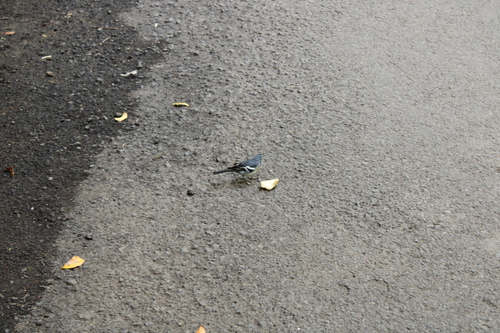 カナリアズアオアトリ
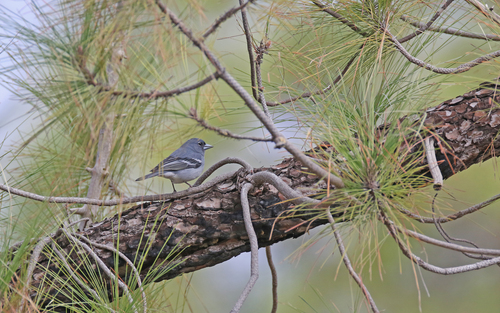 グランカナリーアオアトリ
要点
The most reliable field mark between Canary Islands Chaffinch and Gran Canaria Blue Chaffinch is the male's overall coloration: male Canary Islands Chaffinch shows a dark blue-grey mantle with a pink face and breast, while male Gran Canaria Blue Chaffinch is much more uniformly blue-toned and lacks pink. Both species have white in the wings, but Gran Canaria Blue Chaffinch males show two distinct white wingbars, a feature not emphasized in Canary Islands Chaffinch. Females of both are dull and brownish, but Gran Canaria Blue Chaffinch females are greyer. Size is similar, but Gran Canaria Blue Chaffinch is slightly heavier. Habitat is a strong clue: Gran Canaria Blue Chaffinch is restricted to mature pine forests of highland Gran Canaria, while Canary Islands Chaffinch is more widespread across the Canary Islands.
識別のコツ
- Male coloration is key: Male Canary Islands Chaffinch shows a dark blue-grey mantle and a pinkish face and breast, while Gran Canaria Blue Chaffinch males are more uniformly blue without pink.
- Wingbars in males: Gran Canaria Blue Chaffinch males have two bold white wingbars; Canary Islands Chaffinch has white in the wings but not as clearly in two bands. Use this mark especially on perched or flying males.
- Belly color: Both can show a white belly, but Gran Canaria Blue Chaffinch is described as having a whiter belly with less blue than the related Tenerife Blue Chaffinch; Canary Islands Chaffinch males have a whiter belly contrasting with pinkish breast.
- Female confusion: Females of both are dull, but Gran Canaria Blue Chaffinch females are more grey-brown (colder), while Canary Islands Chaffinch females are browner. This is subtle and unreliable at distance.
- Bill shape: Both have similar bills, so do not rely on bill size or shape for separation.
- Size: Gran Canaria Blue Chaffinch is slightly heavier, but this is not a practical field mark.
- Habitat: Gran Canaria Blue Chaffinch is only found in mature pine forests at high elevation on Gran Canaria. If you are not in this habitat, it is almost certainly not this species.
- Range: Canary Islands Chaffinch is widespread across the Canary Islands; Gran Canaria Blue Chaffinch is endemic and extremely localized to Gran Canaria.
- Flight views: Look for the two white wingbars on Gran Canaria Blue Chaffinch in flight; Canary Islands Chaffinch will not show such clear double wingbars.
- Jizz: Both are typical Fringilla finches in structure and movement; no distinctive differences are noted in flight style or posture.
- Season: Both are resident and non-migratory, so season is not a major separator.
- Voice: No distinguishing vocal differences are described in the sources; do not rely on voice for separation.
- Juvenile/Immature birds: No specific field marks for young birds are described, so focus on habitat and overall coloration.
- Pitfalls: Female and immature birds are much harder to separate; use habitat and location as primary clues if plumage is ambiguous.
- Context: Gran Canaria Blue Chaffinch is critically endangered and extremely rare; any sighting outside its known range/habitat is highly unlikely.
大きさ
Both species are similar in length (around 15–16 cm for Canary Islands Chaffinch), but Gran Canaria Blue Chaffinch is slightly heavier, with males weighing 27–29 g and females 26–28 g. This difference is subtle and not likely to be useful in the field unless handling birds. Structurally, both are typical Fringilla finches with similar bills (not notably large or small compared to each other), and no distinctive differences in tail or wing shape are noted.
羽色
- Juvenile/Immature/Non-breeding: No specific juvenile or immature wing pattern differences are described for these two species, so focus is on adult male and female plumage.
- Adult Males: Canary Islands Chaffinch males have a dark blue-grey mantle, lighter pink face and breast, and a whiter belly and undertail. Gran Canaria Blue Chaffinch males are more uniformly blue (less pink), with a whiter belly and two prominent white wingbars.
- Adult Females: Both are dull, but Canary Islands Chaffinch females are brownish, while Gran Canaria Blue Chaffinch females are dull grey-brown, possibly appearing colder-toned.
- Wings: Gran Canaria Blue Chaffinch males have two distinct white wingbars, a key field mark. Canary Islands Chaffinch has white in the wings but not as clearly in two bands.
- Bill: Both have similar bills, not distinctly large or small compared to each other.
行動
Both species are largely resident and non-migratory. Gran Canaria Blue Chaffinch feeds primarily on Canary Island pine seeds and is more specialized, while Canary Islands Chaffinch likely has a broader diet (though not detailed here). Both feed young on insects. No major differences in flight style or foraging behavior are described.
生息環境
Habitat is a strong separator: Gran Canaria Blue Chaffinch is restricted to highland pine forests (especially the Inagua Natural Reserve) at around 1,000 m altitude on Gran Canaria, and is extremely localized and rare. Canary Islands Chaffinch is more widespread across the Canary Islands and not restricted to pine forest or high elevations. If you are outside mature pine forest in highland Gran Canaria, Gran Canaria Blue Chaffinch is very unlikely.