

Motmot

カナダガン 対 ナキハクチョウ

Branta canadensis 対 Cygnus buccinator

カナダガンとナキハクチョウのクイズ
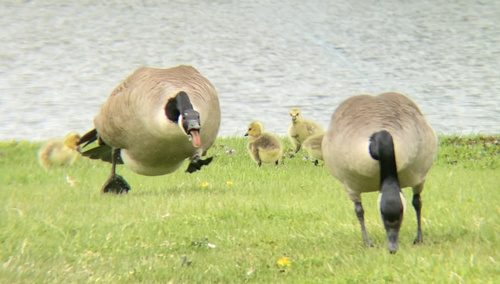
カナダガン (Branta canadensis) カナダガン
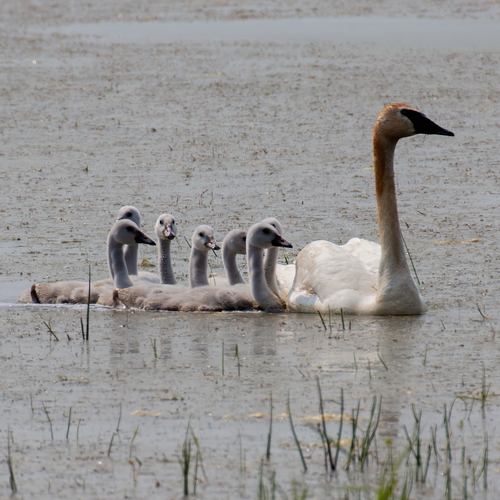
ナキハクチョウ (Cygnus buccinator) ナキハクチョウ

メディア

読み込み中…

要点

カナダガンとナキハクチョウを区別する最も信頼できる方法は、全体の羽色によるものです:成鳥のナキハクチョウは完全に白いのに対し、カナダガンは黒い首と頭を持つ茶色の体と特徴的な白い顎ひもを持っています。幼鳥のナキハクチョウは淡い灰色ですが、いかなるカナダガンよりもはるかに淡いです。構造も重要です:ナキハクチョウははるかに大きく、長くまっすぐな首と巨大でくさび形の黒いくちばしを持ち、カナダガンの短い首と小さく三角形の黒いくちばしと比較されます。飛行中または水上では、白い外観とその大きさは明確であり、カナダガンは茶色の上面と対照的な黒と白の頭の模様を示します。両種は大きな水域で一緒に見られることがありますが、サイズ、形状、色彩の違いは、何を探すべきかを知っていると際立っています。

識別のコツ

  1. 羽色:成鳥のナキハクチョウは純白で、カナダガンは黒い首と頭、白い顎ひもを持つ茶色です。これはすべての季節で最も信頼できるフィールドマークです。
  2. 幼鳥の羽:若いナキハクチョウは淡い灰色で、決して茶色や黒ではありません;カナダガンの幼鳥は成鳥に似ていますが、より淡い茶色で、決して全体が灰色や白ではありません。
  3. くちばしのサイズと形:ナキハクチョウは巨大でくさび形の黒いくちばしを持ち、カナダガンの小さく三角形のくちばしよりもはるかに長く深いです。近距離では、これは重要な構造的違いです。
  4. 首の長さと姿勢:ハクチョウは非常に長くまっすぐな首を持ち、しばしば直立して保持されます;カナダガンは短い首を持ち、通常は穏やかなS字曲線で保持されます。
  5. サイズ:ナキハクチョウは巨大で、カナダガンの約三倍の質量を持ち、体と翼のスパンがはるかに長いです。混合群では、サイズの違いは明らかです。
  6. 頭の模様:カナダガンは常に黒い頭と首に白い頬の斑点(顎ひも)を示します;ナキハクチョウは黒いくちばしとロアを持つ完全に白い頭を持ち、頬の斑点はありません。
  7. 足の色:ナキハクチョウは灰色がかったピンクから黒っぽい足を持ち;カナダガンは黒い足を持っています。これは微妙ですが、近距離で役立つことがあります。
  8. 飛行のシルエット:ハクチョウは長くまっすぐな首と巨大な翼を示し;ガンは短い首と比例的に短い翼を持っています。ハクチョウの翼の拍動は遅く、深いです。
  9. 鳴き声:ハクチョウは深くトランペットのような鳴き声を出し;ガンは飛行中や水上でホーンや「ヒュン」と鳴きます。鳴き声はよく聞くと特徴的です。
  10. 生息地:ハクチョウは未開発の湿地を好み;ガンは都市公園や農地で一般的です。文脈は役立つことがありますが、決定的ではありません。
  11. 群れの行動:カナダガンはしばしば大きく騒がしい群れを形成します;ナキハクチョウは通常、ペアまたは小さな家族グループで、全体的に声が少ないです。
  12. 白化個体:珍しい白または淡いカナダガンは典型的な茶色や黒を欠くことがありますが、通常は暗い斑点を保持し、ハクチョウのサイズやくちばしの構造には合致しません。
  13. くちばしの色:ナキハクチョウは均一に黒いくちばしを持ち、時々口元にピンクがかった線があります;カナダガンは常に黒いくちばしを持ち、ピンクはありません。
  14. 飛行中の翼の模様:両種は無地の上翼を持ち(ガンは茶色、ハクチョウは白);区別に使える特徴的な「W」や後縁のマークはありません。
  15. 季節変化:どちらの種にも混乱を引き起こすような重要な季節的羽毛の変化はありません;両性は各種で似ています。

大きさ

ナキハクチョウは北アメリカの在来鳥の中で最も重く、平均で10 kg(10,850 g)を超え、カナダガン(3,564 g)の約三倍の質量です。ハクチョウはまた、カナダガンの75–110 cmに対して138–165 cmとずっと長く、翼のスパンも185–305 cmに対して127–185 cmと大きいです。最大のカナダガンでさえ、ナキハクチョウにはかないません。混合群では、ハクチョウのサイズと長い首はすぐに明らかで、距離があってもハクチョウの大きさと細長いシルエットは際立っています。

羽色

成鳥のナキハクチョウは完全に白く、体、翼、首に暗い斑点はありません。幼鳥(シグネット)のハクチョウは淡い灰色で、ピンクがかった足を持ち、年齢とともに徐々に白くなりますが、カナダガンの茶色の体や黒い首は決して示しません。すべての年齢のカナダガンは茶色の体、黒い首と頭、白い頬の斑点(顎ひも)を持っています。カナダガンは、白化個体でさえ、完全に白くなることはありません。飛行中、カナダガンは茶色の上翼と黒い首を示し、ナキハクチョウは全体が白です。両種には混乱を引き起こすような年齢特有の上翼の模様はありません。唯一の混乱の可能性は非常に淡いまたは白化したカナダガンですが、これらは珍しく、依然としていくつかの茶色または黒い部分を示します。

行動

両種はしばしば水上で泳いだり、陸で草を食べたりするのが見られますが、ナキハクチョウは首をよりまっすぐ高く保つ傾向があり、より直立した威厳のある姿勢を与えます。カナダガンはより水平な姿勢を持ち、首はしばしば穏やかなS字曲線で保持されます。飛行中、ハクチョウは遅く深い翼の拍動とまっすぐな首を示し、ガンは速い翼の拍動と短い首を持っています。ハクチョウはカナダガンと比較して、大きく騒がしい群れで見られる可能性が低く、特に渡りや冬の間はカナダガンが非常に社交的です。

生息環境

両種は湖、池、湿地を利用しますが、ナキハクチョウは特に繁殖のためにより純粋で未開発の生息地を好み、人間の干渉にはあまり耐性がありません。カナダガンは非常に適応力があり、都市公園、ゴルフコース、農地、野生の湿地でもよく見られます。冬には、両種が大きな氷のない水域で一緒に見られることがありますが、カナダガンは開発されたまたは干渉された地域で見られる可能性がはるかに高いです。

声

ナキハクチョウは深く共鳴するトランペットのような鳴き声を持ち、長距離にわたって響き渡り、カナダガンの馴染みのあるホーンとはかなり異なります。カナダガンは二音節のホーン(オス)または高音の「ヒュン」(メス)を生成し、特に飛行中に合唱することがよくあります。ハクチョウは群れの中で一般的に静かですが、ガンは非常に声が大きく、特に警戒したり渡ったりする際には騒がしいです。

より良い説明を送る

比較と同じ項目を使ってください。文章はすぐに公開されます。

The most reliable way to separate Canada Goose from Trumpeter Swan is by overall plumage color: adult Trumpeter Swans are entirely white, while Canada Geese have brown bodies with black necks and heads and a distinctive white chinstrap. Juvenile Trumpeter Swans are pale gray, but still much paler than any Canada Goose. Structure is also key: Trumpeter Swans are much larger, with a long, straight neck and a massive, wedge-shaped black bill, compared to the shorter neck and smaller, triangular black bill of the Canada Goose. In flight or on water, the swan's all-white appearance and sheer bulk are unmistakable, while Canada Geese show brown upperparts and a contrasting black-and-white head pattern. Both species may be found together on large water bodies, but their differences in size, shape, and coloration are striking once you know what to look for.

  1. Plumage color: Adult Trumpeter Swans are pure white; Canada Geese are brown with a black neck and head and a white chinstrap. This is the single most reliable field mark in all seasons.
  2. Juvenile plumage: Young Trumpeter Swans are pale gray, never brown or black; Canada Goose juveniles resemble adults but may be paler brown, never gray or white overall.
  3. Bill size and shape: Trumpeter Swans have a huge, wedge-shaped black bill, much longer and deeper than the small, triangular bill of Canada Goose. At close range, this is a key structural difference.
  4. Neck length and posture: Swans have extremely long, straight necks, often held upright; Canada Geese have shorter necks, usually held in a gentle S-curve.
  5. Size: Trumpeter Swans are enormous, nearly three times the mass of a Canada Goose, with a much longer body and wingspan. In mixed groups, the size difference is obvious.
  6. Head pattern: Canada Geese always show a white cheek patch (chinstrap) on a black head and neck; Trumpeter Swans have an all-white head with a black bill and lores, lacking any cheek patch.
  7. Leg color: Trumpeter Swans have gray-pink to blackish legs; Canada Geese have black legs. This is subtle but can help at close range.
  8. Flight silhouette: Swans show a long, straight neck and massive wings; geese have a shorter neck and proportionally shorter wings. Swans' wingbeats are slower and deeper.
  9. Vocalizations: Swans give a deep, trumpet-like call; geese honk or 'hrink' in flight and on water. Calls are distinctive if heard well.
  10. Habitat: Swans prefer undisturbed wetlands; geese are common in urban parks and fields. Context can help, but is not definitive.
  11. Group behavior: Canada Geese often form large, noisy flocks; Trumpeter Swans are usually in pairs or small family groups, less vocal overall.
  12. Leucistic individuals: Rare white or pale Canada Geese may lack typical brown or black, but usually retain some dark markings and do not match the size or bill structure of a swan.
  13. Bill color: Trumpeter Swans have a uniformly black bill, sometimes with a pinkish line at the mouth; Canada Geese always have a black bill with no pink.
  14. Wing pattern in flight: Both species have plain upperwings (brown in goose, white in swan); there are no distinctive 'W' or trailing edge marks to use for separation.
  15. Seasonal variation: No significant seasonal plumage change in either species that would cause confusion; both sexes are similar in each species.

Trumpeter Swan is the heaviest native North American bird, averaging over 10 kg (10,850 g), nearly three times the mass of a Canada Goose (3,564 g). Swans are also much longer (138–165 cm vs. 75–110 cm for Canada Goose) and have a much greater wingspan (185–305 cm vs. 127–185 cm). Even the largest Canada Goose is dwarfed by a Trumpeter Swan. In mixed flocks, the swan's size and long neck are immediately obvious, and even at a distance, the swan's bulk and elongated silhouette stand out.

Adult Trumpeter Swans are entirely white, with no dark markings on the body, wings, or neck. Juvenile (cygnet) swans are pale gray with pinkish legs, gradually whitening as they age, but never show the brown body or black neck of a Canada Goose. Canada Geese of all ages have a brown body, black neck and head, and a white cheek patch (chinstrap). No Canada Goose, even leucistic individuals, is ever fully white. In flight, Canada Geese show brown upperwings and a black neck, while Trumpeter Swans are white throughout. There are no age-specific upperwing patterns in either species that are diagnostic for confusion between these two. The only possible confusion is with very pale or leucistic Canada Geese, but these are rare and still show some brown or black areas.

Both species are often seen swimming on water or grazing on land, but Trumpeter Swans tend to hold their necks straighter and higher, giving a more upright and regal posture. Canada Geese have a more horizontal stance, with the neck often held at a gentle S-curve. In flight, swans show slow, deep wingbeats and a straight neck, while geese have faster wingbeats and a shorter neck. Swans are less likely to be seen in large, noisy flocks compared to Canada Geese, which are highly gregarious, especially during migration and winter.

Both species use lakes, ponds, and wetlands, but Trumpeter Swans prefer more pristine, undisturbed habitats, especially for breeding, and are less tolerant of human disturbance. Canada Geese are highly adaptable and often found in urban parks, golf courses, and agricultural fields, as well as wild wetlands. In winter, both may be seen together on large, ice-free bodies of water, but Canada Geese are far more likely in developed or disturbed areas.

Trumpeter Swans have a deep, resonant, trumpet-like call that carries over long distances and is quite different from the familiar honking of Canada Geese. Canada Geese produce a two-syllable honk (males) or higher-pitched 'hrink' (females), often in chorus, especially in flight. Swans are generally quieter in flocks, while geese are highly vocal and noisy, especially when alarmed or migrating.

変更を破棄しますか?

保存していない編集があります。今離れると失われます。

カナダガン · ナキハクチョウ · 苦手な鳥