

Oca canadese maggiore vs Trumpeter Swan
Branta canadensis contro Cygnus buccinator
Fai un quiz con Oca canadese maggiore e Trumpeter Swan
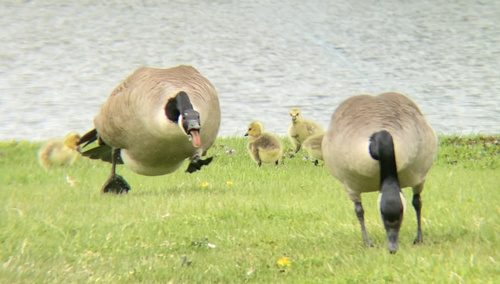 Oca canadese maggiore
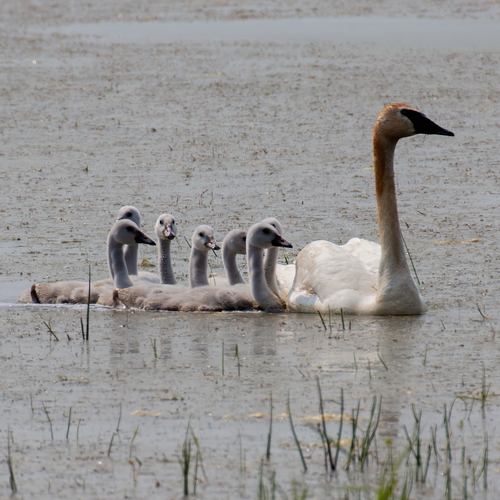 Trumpeter Swan
In breve
Il modo più affidabile per separare l'Oca canadese maggiore dal Trumpeter Swan è il colore complessivo del piumaggio: i Trumpeter Swans adulti sono completamente bianchi, mentre le Oche canadesi hanno corpi marroni con colli e teste neri e una distintiva striscia bianca sul mento. I Trumpeter Swans juvenili sono grigi chiari, ma comunque molto più chiari di qualsiasi Oca canadese maggiore. Anche la struttura è fondamentale: i Trumpeter Swans sono molto più grandi, con un collo lungo e dritto e un becco nero massiccio a forma di cuneo, rispetto al collo più corto e al becco nero triangolare più piccolo dell'Oca canadese maggiore. In volo o sull'acqua, l'aspetto completamente bianco del cigno e la sua massa sono inconfondibili, mentre le Oche canadesi mostrano parti superiori marroni e un modello di testa contrastante bianco e nero. Entrambe le specie possono essere trovate insieme su grandi corpi d'acqua, ma le loro differenze in dimensioni, forma e colorazione sono sorprendenti una volta che sai cosa cercare.
Consigli di identificazione
- Colore del piumaggio: I Trumpeter Swans adulti sono bianchi puri; le Oche canadesi sono marroni con un collo e una testa neri e una striscia bianca sul mento. Questo è il segno di campo più affidabile in tutte le stagioni.
- Piumaggio giovanile: I giovani Trumpeter Swans sono grigi chiari, mai marroni o neri; i giovani Oche canadesi assomigliano agli adulti ma possono essere marroni più chiare, mai grigi o bianchi nel complesso.
- Dimensione e forma del becco: I Trumpeter Swans hanno un enorme becco nero a forma di cuneo, molto più lungo e profondo rispetto al piccolo becco triangolare dell'Oca canadese maggiore. Da vicino, questa è una differenza strutturale chiave.
- Lunghezza del collo e postura: I cigni hanno colli estremamente lunghi e dritti, spesso tenuti in posizione verticale; le Oche canadesi hanno colli più corti, di solito tenuti in una dolce curva a S.
- Dimensioni: I Trumpeter Swans sono enormi, quasi tre volte la massa di un'Oca canadese maggiore, con un corpo e un'apertura alare molto più lunghi. Nei gruppi misti, la differenza di dimensioni è ovvia.
- Modello della testa: Le Oche canadesi mostrano sempre una macchia bianca sulla guancia (striscia sul mento) su una testa e un collo neri; i Trumpeter Swans hanno una testa completamente bianca con un becco e lore neri, privi di qualsiasi macchia sulla guancia.
- Colore delle gambe: I Trumpeter Swans hanno gambe grigio-rosate o nerastre; le Oche canadesi hanno gambe nere. Questo è sottile ma può aiutare da vicino.
- Silhouette in volo: I cigni mostrano un collo lungo e dritto e ali massicce; le oche hanno un collo più corto e ali proporzionalmente più corte. I battiti d'ali dei cigni sono più lenti e profondi.
- Vocalizzazioni: I cigni emettono un richiamo profondo, simile a un trombetta; le oche starnazzano o 'hrink' in volo e sull'acqua. I richiami sono distintivi se ascoltati bene.
- Habitat: I cigni preferiscono zone umide non disturbate; le oche sono comuni nei parchi urbani e nei campi. Il contesto può aiutare, ma non è definitivo.
- Comportamento di gruppo: Le Oche canadesi formano spesso grandi stormi rumorosi; i Trumpeter Swans sono di solito in coppie o piccoli gruppi familiari, meno vocali nel complesso.
- Individui leucistici: Rare Oche canadesi bianche o chiare possono mancare di tipico marrone o nero, ma di solito mantengono alcune marcature scure e non corrispondono alla dimensione o alla struttura del becco di un cigno.
- Colore del becco: I Trumpeter Swans hanno un becco uniformemente nero, a volte con una linea rosata alla bocca; le Oche canadesi hanno sempre un becco nero senza rosa.
- Modello delle ali in volo: Entrambe le specie hanno ali superiori semplici (marroni nell'oca, bianche nel cigno); non ci sono segni distintivi 'W' o di margine posteriore da usare per la separazione.
- Variazione stagionale: Nessun cambiamento significativo del piumaggio stagionale in nessuna delle due specie che possa causare confusione; entrambi i sessi sono simili in ciascuna specie.
Taglia
Il Trumpeter Swan è l'uccello nativo nordamericano più pesante, con un peso medio superiore a 10 kg (10.850 g), quasi tre volte la massa di un'Oca canadese maggiore (3.564 g). I cigni sono anche molto più lunghi (138–165 cm contro 75–110 cm per l'Oca canadese maggiore) e hanno un'apertura alare molto maggiore (185–305 cm contro 127–185 cm). Anche la più grande Oca canadese maggiore è piccola rispetto a un Trumpeter Swan. Nei gruppi misti, la dimensione del cigno e il collo lungo sono immediatamente evidenti, e anche a distanza, la massa e la silhouette allungata del cigno si distinguono.
Piumaggio
I Trumpeter Swans adulti sono completamente bianchi, senza marcature scure sul corpo, sulle ali o sul collo. I cigni giovanili (cygnet) sono grigi chiari con gambe rosate, che diventano gradualmente bianche con l'età, ma non mostrano mai il corpo marrone o il collo nero di un'Oca canadese maggiore. Le Oche canadesi di tutte le età hanno un corpo marrone, collo e testa neri, e una macchia bianca sulla guancia (striscia sul mento). Nessuna Oca canadese maggiore, nemmeno gli individui leucistici, è mai completamente bianca. In volo, le Oche canadesi mostrano ali superiori marroni e un collo nero, mentre i Trumpeter Swans sono bianchi in tutto. Non ci sono modelli specifici per età nelle ali superiori di nessuna delle due specie che siano diagnostici per la confusione tra queste due. L'unica possibile confusione è con Oche canadesi molto chiare o leucistiche, ma queste sono rare e mostrano comunque alcune aree marroni o nere.
Comportamento
Entrambe le specie sono spesso viste nuotare sull'acqua o pascolare sulla terra, ma i Trumpeter Swans tendono a tenere i loro colli più dritti e alti, dando una postura più eretta e regale. Le Oche canadesi hanno una postura più orizzontale, con il collo spesso tenuto in una dolce curva a S. In volo, i cigni mostrano battiti d'ali lenti e profondi e un collo dritto, mentre le oche hanno battiti d'ali più veloci e un collo più corto. I cigni sono meno probabili da vedere in grandi stormi rumorosi rispetto alle Oche canadesi, che sono altamente gregarie, specialmente durante la migrazione e l'inverno.
Habitat
Entrambe le specie utilizzano laghi, stagni e zone umide, ma i Trumpeter Swans preferiscono habitat più pristini e non disturbati, specialmente per la riproduzione, e sono meno tolleranti nei confronti delle perturbazioni umane. Le Oche canadesi sono altamente adattabili e spesso si trovano in parchi urbani, campi da golf e campi agricoli, così come in zone umide selvagge. In inverno, entrambe possono essere viste insieme su grandi corpi d'acqua privi di ghiaccio, ma le Oche canadesi sono molto più probabili in aree sviluppate o disturbate.
Voce
I Trumpeter Swans hanno un richiamo profondo, risonante, simile a una tromba che si sente a lunghe distanze ed è molto diverso dal familiare starnazzare delle Oche canadesi. Le Oche canadesi producono un starnazzare a due sillabe (maschi) o un 'hrink' di tono più alto (femmine), spesso in coro, specialmente in volo. I cigni sono generalmente più silenziosi nei gruppi, mentre le oche sono altamente vocali e rumorose, specialmente quando allarmate o in migrazione.
Oca canadese maggiore · Trumpeter Swan · I miei uccelli difficili