

Motmot

キマユカマドドリ 対 チャイロマユカマドドリ

Syndactyla rufosuperciliata 対 Syndactyla dimidiata

キマユカマドドリとチャイロマユカマドドリのクイズ
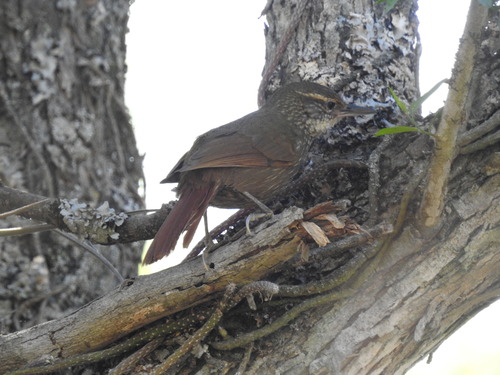
キマユカマドドリ (Syndactyla rufosuperciliata) キマユカマドドリ
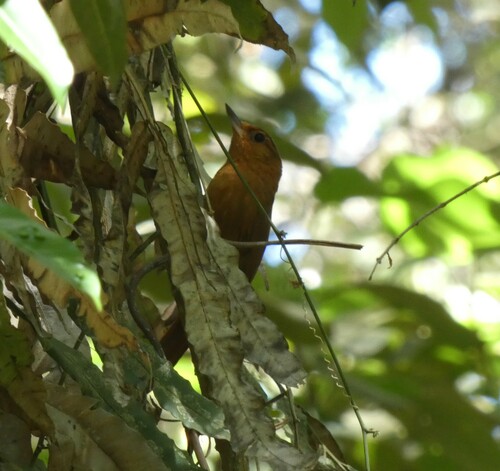
チャイロマユカマドドリ (Syndactyla dimidiata) チャイロマユカマドドリ

メディア

読み込み中…

要点

キマユカマドドリとチャイロマユカマドドリの最も信頼できるフィールドマークは、キマユカマドドリの強い淡いバフ色のスーペルシリウムと、チャイロマユカマドドリの深いルフェセントオレンジの顔とスーペルシリウムの違いです。キマユカマドドリは(年齢によって異なる)腹部にストライプまたはスポットパターンを示しますが、チャイロマユカマドドリは主に無地のオクラ色のルフスで、成鳥にはわずかな胸のストライプがあり、幼鳥には茶色のバーニングがあります。くちばしの形と色も微妙に異なり、キマユカマドドリは厚く、わずかに上向きのくちばしを持ち、チャイロマユカマドドリは長く、尖ったものです。両種はブラジルとパラグアイで分布が重なりますが、キマユカマドドリははるかに広範囲に分布しています。フィールドでは、顔のパターンと腹部のマーキングに焦点を当てて、最も明確な区別を行ってください。

識別のコツ

  1. Face pattern is key: キマユカマドドリは淡いバフ色のスーペルシリウムとアイリングを示し、茶色がかった顔と対照的です。チャイロマユカマドドリは深いルフェセントオレンジの顔とスーペルシリウムを持ち、耳の覆羽は暗いです。これはすべての年齢で最も信頼できるマークです。
  2. Underpart markings: キマユカマドドリの成鳥は、特に胸と腹部にストライプまたはスカロップ状の腹部を持ち、幼鳥はスポットがあります。チャイロマユカマドドリの成鳥は、主に無地のオクラ色のルフスで、わずかな淡い胸のストライプしかありません。幼鳥は胸に茶色のバーがあり、喉は白っぽいです。
  3. Bill shape: キマユカマドドリのくちばしは厚く、わずかに上向きですが、チャイロマユカマドドリのくちばしは長く、より尖っています。これは微妙ですが、良い視界では役立ちます。
  4. Crown and upperparts: キマユカマドドリは、ぼんやりした白っぽいストライプのある鈍いオリーブブラウンの冠と、無地のオリーブブラウンの背中を持っています。チャイロマユカマドドリは、シナモン色の色合いを持つ明るいルフェセントブラウンの冠と上面を持っています。
  5. Tail color: キマユカマドドリの尾は鈍いルフス色です。チャイロマユカマドドリの尾は、より豊かなルフスチェスナット色で、時には上尾覆羽にチェスナットの洗いがかかっています。
  6. Throat color: キマユカマドドリは、茶色がかった羽毛の先端を持つ白っぽい喉を持っています。チャイロマユカマドドリの成鳥は無地のオクラ色のルフスの喉を持ち、幼鳥は白っぽい喉を持っています。
  7. Breast and belly: キマユカマドドリの腹部には、後方に向かって消えていく広くぼやけたバフ色の白っぽいストライプがあります。チャイロマユカマドドリは主に無地です。
  8. Juvenile marks: スポットのある(ストライプではない)胸を持つ鳥を見たら、それは幼鳥のキマユカマドドリです。胸がバー状で喉が白っぽい場合、それは幼鳥のチャイロマユカマドドリです。
  9. Supercilium extension: キマユカマドドリの淡いスーペルシリウムはうなじまで伸びています。チャイロマユカマドドリのものは深いルフェセントで、そこまで伸びていません。
  10. Leg color: 両者はオリーブから茶色がかった灰色の脚を持ち、強い区別にはなりません。
  11. Habitat context: ブラジルとパラグアイでは、キマユカマドドリはより広範囲に分布し、乱れた森林に耐性があります。チャイロマユカマドドリはより希少で、あまり乱れていない閉じた森林やセラードのギャラリー森林を好みます。
  12. Vocalization: 上昇する「ツジェク」という音の連続を聞いたら、チャイロマユカマドドリを疑ってください。キマユカマドドリの声は、情報源には記載されていません。
  13. Range: ブラジルと東パラグアイの外では、どのSyndactylaもほぼ確実にキマユカマドドリです。
  14. Mixed flocks: 両種は混合群れに参加するため、コンテキストは区別にはなりません。
  15. Sexes similar: 両種は羽毛において性差がなく、識別のために性別に頼らないでください。

大きさ

両種は中型のカマドドリですが、チャイロマユカマドドリはわずかに重く(平均29.0g対キマユカマドドリの25.6g)で、長さは似ています(両方とも約17〜18cm)。このサイズの違いは微妙で、フィールドでは通常診断的ではありませんが、チャイロマユカマドドリは特に長く尖ったくちばしで、やや頑丈に見えることがあります。

羽色

行動

両種は森林の下層から中層で採餌し、しばしばペアでまたは混合種の群れの一部として行動します。チャイロマユカマドドリは非常に乱れた森林を耐えられないことで知られており、その分布全体で希少と見なされていますが、キマユカマドドリはより広範囲に分布し、さまざまな森林タイプで遭遇することがあります。採餌行動はそれ以外は似ており、診断的ではありません。

生息環境

キマユカマドドリは、アルゼンチンとボリビアからブラジル、パラグアイ、ペルー、エクアドル、ウルグアイまで広範囲に分布し、さまざまな森林生息地に適応しています。チャイロマユカマドドリ(プラナルト)は、主に低地の熱帯常緑樹林、ギャラリー森林、セラード内の森林に制限され、標高100〜1200mで見られます。重なり合う地域では、生息地だけでは診断的ではありませんが、チャイロマユカマドドリは乱れに対してより敏感で、重度に変化した森林では見られにくいです。

声

チャイロマユカマドドリの歌は、短いまたは非常に長い「ツジェク」という音の連続で、開始と終了時に上昇し、つまずくと説明されています。その接触音は大きく、鼻にかかった「チェ」です。情報源にはキマユカマドドリの声に関する詳細は提供されていないため、チャイロマユカマドドリの独特な歌が聞かれない限り、声は信頼できる区別にはなりません。

より良い説明を送る

比較と同じ項目を使ってください。文章はすぐに公開されます。

The most reliable field mark between Buff-browed and Russet-mantled Foliage-gleaners is the strong, pale buff supercilium of Buff-browed versus the deep rufescent-orange face and supercilium of Russet-mantled. Buff-browed shows a streaked or spotted pattern on the underparts (depending on age), while Russet-mantled is mostly unmarked ochraceous rufous below, with only faint breast streaks in adults and brown barring in juveniles. Bill shape and color also differ subtly, with Buff-browed having a thick, slightly upcurved bill and Russet-mantled a longer, pointed one. Both species overlap in range in Brazil and Paraguay, but Buff-browed is much more widespread. In the field, focus on face pattern and underpart markings for the clearest separation.

  1. Face pattern is key: Buff-browed shows a pale buff supercilium and eye ring, contrasting with a brownish face; Russet-mantled has a deep rufescent-orange face and supercilium, with darker ear coverts. This is the most reliable mark in all ages.
  2. Underpart markings: Buff-browed adults have streaked or scalloped underparts, especially on the breast and belly; juveniles are spotted. Russet-mantled adults are mostly unmarked ochraceous rufous below, with only faint pale breast streaks; juveniles have brown bars on the breast and a whitish throat.
  3. Bill shape: Buff-browed's bill is thick and slightly upcurved, while Russet-mantled's is longer and more pointed. This can be subtle but is useful in good views.
  4. Crown and upperparts: Buff-browed has a dull olive-brown crown with vague whitish streaks and plain olive-brown back; Russet-mantled has a bright rufescent brown crown and upperparts with a cinnamon tinge.
  5. Tail color: Buff-browed's tail is dull rufous; Russet-mantled's is richer rufous-chestnut, sometimes with a chestnut wash on the uppertail coverts.
  6. Throat color: Buff-browed has a whitish throat with brownish feather tips; Russet-mantled adults have an unmarked ochraceous rufous throat, while juveniles have a whitish throat.
  7. Breast and belly: Look for the wide, blurry buffy-whitish streaks on Buff-browed's belly, fading toward the rear; Russet-mantled is mostly plain below.
  8. Juvenile marks: If you see a bird with a spotted (not streaked) breast, it's a juvenile Buff-browed; if the breast is barred and the throat is whitish, it's a juvenile Russet-mantled.
  9. Supercilium extension: Buff-browed's pale supercilium extends to the nape; Russet-mantled's is deeper rufescent and does not extend as far.
  10. Leg color: Both have olive to brownish gray legs, not a strong separator.
  11. Habitat context: In Brazil and Paraguay, Buff-browed is more widespread and tolerant of disturbed forest; Russet-mantled is rarer and prefers less disturbed, closed forest or gallery forest in the cerrado.
  12. Vocalization: If you hear a series of ascending 'tsjek' notes with stuttering, suspect Russet-mantled; Buff-browed's voice is not described in the sources.
  13. Range: Outside Brazil and eastern Paraguay, any Syndactyla is almost certainly Buff-browed.
  14. Mixed flocks: Both species join mixed flocks, so context is not a separator.
  15. Sexes similar: Both species show no sexual dimorphism in plumage, so do not rely on sex for identification.

Both species are medium-sized foliage-gleaners, but Russet-mantled is slightly heavier (average 29.0 g vs. 25.6 g for Buff-browed) and similar in length (about 17–18 cm for both). This size difference is subtle and not usually diagnostic in the field, but Russet-mantled may appear a bit more robust, especially with its longer, pointed bill.

  • Juveniles: Buff-browed juveniles show spotted underparts, while Russet-mantled juveniles have a whitish throat and brown bars on the breast. These differences are most obvious in fresh juvenile plumage.
  • Adults: Buff-browed has a tawny-buff eye ring and a pale supercilium extending to the nape, with a brownish face and vague crown streaks. Underparts are streaked or scalloped with buffy-whitish and olive-brown, especially on the breast and belly. Russet-mantled adults have a deep rufescent-orange face, especially on the supercilium and ear coverts, and a bright rufescent brown crown and upperparts. Their underparts are mostly unmarked ochraceous rufous, with only faint pale streaks on the breast and an olive cast on the flanks. The tail of Buff-browed is dull rufous, while Russet-mantled's is richer rufous-chestnut. Subtle differences in wing color exist, but are less useful than face and underpart patterns.

Both species forage in the forest understory to mid-story, often in pairs or as part of mixed-species flocks. Russet-mantled is noted for not tolerating very disturbed forest and is considered rare across its range, while Buff-browed is more widespread and may be encountered in a wider range of forest types. Foraging behavior is otherwise similar and not diagnostic.

Buff-browed Foliage-gleaner has a much broader range, found from Argentina and Bolivia through Brazil, Paraguay, Peru, Ecuador, and Uruguay, and is adaptable to various forested habitats. Russet-mantled (Planalto) Foliage-gleaner is restricted to Brazil and eastern Paraguay, mainly in lowland tropical evergreen forest, gallery forest, and woodlands within the cerrado, from 100 to 1200 m elevation. In areas of overlap, habitat alone is not diagnostic, but Russet-mantled is more sensitive to disturbance and less likely in heavily altered forests.

Russet-mantled's song is described as a short or very long series of 'tsjek' notes, ascending and stuttering at the start and end, and its contact call is a loud, nasal 'cheh'. No vocal details are provided for Buff-browed in the sources, so voice is not a reliable separator unless Russet-mantled's distinctive song is heard.

変更を破棄しますか?

保存していない編集があります。今離れると失われます。

キマユカマドドリ · チャイロマユカマドドリ · 苦手な鳥