

Motmot

ホオジロマユミソサザイ 対 ハイムネモリミソサザイ

Cantorchilus leucotis 対 Henicorhina leucophrys

ホオジロマユミソサザイとハイムネモリミソサザイのクイズ
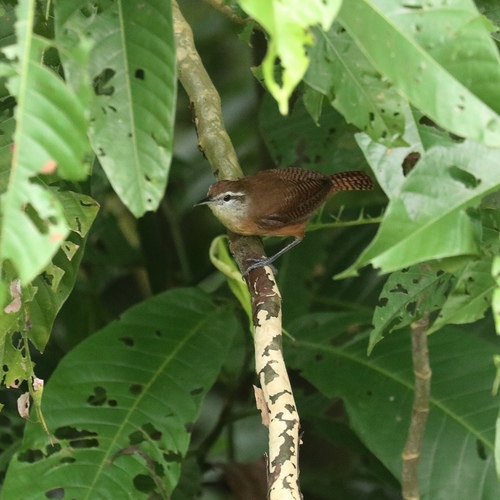
ホオジロマユミソサザイ (Cantorchilus leucotis) ホオジロマユミソサザイ
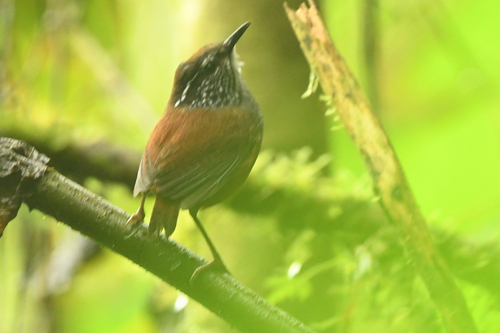
ハイムネモリミソサザイ (Henicorhina leucophrys) ハイムネモリミソサザイ

メディア

読み込み中…

要点

ホオジロマユミソサザイとハイムネモリミソサザイの最も信頼できるフィールドマークは、腹部の色です:ホオジロマユミソサザイは明確にバフィーからシナモン色の胸と腹を示し、ハイムネモリミソサザイは灰色の胸で、側面にのみバフの色が見られます。ホオジロマユミソサザイの幼鳥はより淡く鈍いですが、依然としてバフ色の胸を示し、ハイムネモリミソサザイの幼鳥は灰色の腹部で成鳥に似ています。両種ともに縞模様の尾を持っていますが、ホオジロマユミソサザイの尾はより重く広く縞模様が入っています。構造的には、ホオジロマユミソサザイはやや大きくてがっしりしており、より赤褐色の上面を持っていますが、ハイムネモリミソサザイは小さく、尾が短く、顔の模様がより対照的です。生息地も役立ちます:ホオジロマユミソサザイは低地の茂みや森林の縁を好み、ハイムネモリミソサザイは湿った山地の森林により頻繁に見られます。

識別のコツ

  1. 腹部の色は最も一貫したマークです: ホオジロマユミソサザイはバフィーからシナモン色の胸と腹を持ち、ハイムネモリミソサザイは灰色の胸で、側面にのみバフが見られます。これはすべての年齢と性別に適用されます。
  2. 幼鳥の羽毛: 幼鳥のホオジロマユミソサザイは鈍いですが、依然として淡いバフ色の胸を示し、幼鳥のハイムネモリミソサザイは灰色の胸で成鳥に一致します。
  3. 尾の模様: 両者ともに縞模様の尾を持っていますが、ホオジロマユミソサザイの尾はより重く広く縞模様が入っており、ハイムネモリミソサザイの尾は栗色で細かい黒っぽい縞があります。
  4. 顔の模様: ハイムネモリミソサザイは強い灰白色の眉斑、広い黒い後眼帯、淡い灰色の縞が入った黒い頬を持ち、より対照的な顔をしています。ホオジロマユミソサザイの顔はよりシンプルで、眉斑があまりはっきりせず、全体的に対照が少ないです。
  5. 上面: ホオジロマユミソサザイは赤褐色から灰褐色の上面を持ち、ハイムネモリミソサザイは後頭部と肩がより暗いオリーブ色で、栗色の尾と尾羽を持っています。
  6. サイズと構造: ホオジロマユミソサザイはより大きくてがっしりしており、尾が長いです。ハイムネモリミソサザイは小さく、よりコンパクトで、尾が短いです。これは微妙で、直接比較で最もよく使われます。
  7. 止まり方: ホオジロマユミソサザイはしばしばより直立して止まり、オープンで歌っているのが見られることがありますが、ハイムネモリミソサザイはより隠れていて、密なカバーの中で低く留まります。
  8. 生息地: ホオジロマユミソサザイは低地の茂み、森林の縁、二次成長を好みます。ハイムネモリミソサザイは湿った山地の森林や雲霧林の下層に典型的です。
  9. 採餌行動: ハイムネモリミソサザイはアリの群れを追いかけ、地面近くで採餌することがあります。ホオジロマユミソサザイは低くて密な植生の中でペアや家族グループで採餌しているのが見られることが多いです。
  10. 分布の文脈: アマゾン盆地やギアナの低地にいる場合、ホオジロマユミソサザイが期待されます。メキシコからボリビアの山地の森林では、ハイムネモリミソサザイが候補となります。
  11. 性差: 両種ともに羽毛において性別が同形であるため、性別は有用なフィールドマークではありません。
  12. 巣の構造はフィールドマークではありません: 両種ともにドーム型の巣を作りますが、これはフィールド識別には役立ちません。
  13. 声はメモに詳細がないため、羽毛と構造に頼ってください。
  14. 季節変化は最小限です: 両種ともに季節による羽毛の変化は少ないため、年齢と生息地に焦点を当ててください。
  15. 疑わしい場合は、腹部の色と顔の対照を優先し、その後に生息地と分布を考慮してください。

大きさ

ホオジロマユミソサザイは二種の中で大きい方です:オスは18.5–22.8 g、メスは16.0–19.5 gです [wikipedia]。ハイムネモリミソサザイは小さく、13.5–17.7 gです [wikipedia]。フィールドでは、ホオジロマユミソサザイはしばしばよりがっしりとして尾が長く見え、ハイムネモリミソサザイはよりコンパクトで尾が短く見えます。両者は小さなミソサザイですが、サイズの違いは微妙で、補助的なマークとして最もよく使われます。

羽色

幼鳥:ホオジロマユミソサザイの雛は成鳥よりも全体的に鈍いですが、依然として淡いバフ色の胸を示し、常に灰色の胸を持つ幼鳥のハイムネモリミソサザイと対照的です。両年齢において、ホオジロマユミソサザイは赤褐色から灰褐色の上面と重い縞模様の尾を示し、ハイムネモリミソサザイはより暗いオリーブ色の後頭部と肩、栗色の尾と尾羽、そして黒っぽい縞のある尾を持っています。顔の模様はハイムネモリミソサザイの方がより際立っており、長い灰白色の眉斑、広い黒い後眼帯、淡い灰色の縞が入った黒い頬を持っています。ホオジロマユミソサザイの顔はよりシンプルで、白っぽいから灰褐色の眉斑と対照が少ないです。腹部は重要なポイントです:ホオジロマユミソサザイはバフ色の胸とシナモン色の腹を持ち、ハイムネモリミソサザイは灰色の胸で、下側の側面と腹の側面にのみ暗いバフが見られます。これらの違いは成鳥と幼鳥の両方に当てはまります。

行動

ホオジロマユミソサザイはしばしばペアや家族グループで見られ、低い密な茂みや縁の植生の中で採餌し、時には止まって歌うこともあります。ハイムネモリミソサザイは単独または小グループで採餌し、通常は地面近くまたは密な下層で2メートルまでの高さで見られ、アリの群れを追うことが知られています。両種ともに活発で秘密主義ですが、ホオジロマユミソサザイはオープンで歌うために止まる可能性が高いのに対し、ハイムネモリミソサザイは厚いカバーの中に隠れている傾向があります。

生息環境

ホオジロマユミソサザイは低地のアマゾンおよびギアナの森林、ならびにベネズエラ、コロンビア、東パナマの非アマゾン地域に見られ、密な茂み、森林の縁、二次成長を好みます。ハイムネモリミソサザイはメキシコからボリビアまで分布していますが、湿った山地の森林、雲霧林、および高地の密な下層で最もよく見られます。低地の茂みにいる場合、ホオジロマユミソサザイがより可能性が高く、湿った山地の森林ではハイムネモリミソサザイが期待されます。

より良い説明を送る

比較と同じ項目を使ってください。文章はすぐに公開されます。

The most reliable field mark between Buff-breasted Wren and Grey-breasted Wood-Wren is the color of the underparts: Buff-breasted Wren shows a distinctly buffy to cinnamon chest and belly, while Grey-breasted Wood-Wren is gray-breasted with only the flanks showing some buff. Juveniles of Buff-breasted Wren are paler and duller but still show a buff chest, while Grey-breasted Wood-Wren juveniles resemble adults in their gray underparts. Both species have barred tails, but the Buff-breasted Wren’s tail is more heavily and broadly barred. Structurally, Buff-breasted Wren is slightly larger and stockier, with more rufescent upperparts, while Grey-breasted Wood-Wren is smaller, shorter-tailed, and has a more contrasting facial pattern. Habitat can also help: Buff-breasted Wren favors lowland thickets and forest edges, while Grey-breasted Wood-Wren is more often in humid montane forests.

  1. Underpart color is the most consistent mark: Buff-breasted Wren has a buffy to cinnamon chest and belly, while Grey-breasted Wood-Wren is gray-breasted with only the flanks showing buff. This works for all ages and sexes.
  2. Juvenile plumage: Juvenile Buff-breasted Wrens are duller but still show a pale buff chest, while juvenile Grey-breasted Wood-Wrens are gray-breasted, matching adults.
  3. Tail pattern: Both have barred tails, but Buff-breasted Wren’s tail is more heavily and broadly barred, while Grey-breasted Wood-Wren’s tail is chestnut with finer blackish bars.
  4. Facial pattern: Grey-breasted Wood-Wren has a strong gray-white supercilium, a wide black post-ocular stripe, and black cheeks streaked with pale gray, giving a more contrasting face. Buff-breasted Wren’s face is plainer, with a less distinct supercilium and less contrast overall.
  5. Upperparts: Buff-breasted Wren is rufescent to grayish-brown above; Grey-breasted Wood-Wren is darker olive-brown on the nape and shoulders, with a chestnut rump and tail.
  6. Size and structure: Buff-breasted Wren is larger and bulkier, with a longer tail. Grey-breasted Wood-Wren is smaller, more compact, and shorter-tailed. This is subtle and best used in direct comparison.
  7. Perched posture: Buff-breasted Wren often perches more upright and may be seen singing in the open, while Grey-breasted Wood-Wren is more skulking and stays low in dense cover.
  8. Habitat: Buff-breasted Wren prefers lowland thickets, forest edge, and secondary growth. Grey-breasted Wood-Wren is typical of humid montane forest and cloud forest understory.
  9. Foraging behavior: Grey-breasted Wood-Wren may follow army ant swarms and forages close to the ground; Buff-breasted Wren is more likely to be seen in pairs or family groups foraging in low, dense vegetation.
  10. Range context: If you are in the Amazon Basin or Guianas lowlands, Buff-breasted Wren is expected. In montane forests from Mexico to Bolivia, Grey-breasted Wood-Wren is the likely candidate.
  11. Sex differences: Both species are sexually monomorphic in plumage, so sex is not a useful field mark.
  12. Nest structure is not a field mark: Both species build domed nests, but this is not useful for field identification.
  13. Voice is not detailed in the notes, so rely on plumage and structure.
  14. Seasonal variation is minimal: Both species show little seasonal plumage change, so focus on age and habitat.
  15. When in doubt, prioritize underpart color and facial contrast, then habitat and range.

Buff-breasted Wren is the larger of the two: males weigh 18.5–22.8 g and females 16.0–19.5 g [wikipedia]. Grey-breasted Wood-Wren is smaller, at 13.5–17.7 g [wikipedia]. In the field, Buff-breasted Wren often looks bulkier and longer-tailed, while Grey-breasted Wood-Wren appears more compact and short-tailed. Both are small wrens, but the size difference is subtle and best used as a supporting mark.

Juveniles: Buff-breasted Wren fledglings are duller overall than adults, but still show a paler buff chest, which is diagnostic against the always gray-breasted juvenile Grey-breasted Wood-Wren. In both ages, Buff-breasted Wren shows rufescent to grayish-brown upperparts and a heavily barred tail, while Grey-breasted Wood-Wren has a darker olive-brown nape and shoulders, chestnut rump and tail, and a tail with blackish bars. The face pattern is more striking in Grey-breasted Wood-Wren, with a long gray-white supercilium, wide black post-ocular stripe, and black cheeks streaked pale gray. Buff-breasted Wren’s face is plainer, with a whitish to gray-brown supercilium and less contrast. Underparts are the key: Buff-breasted Wren has a buffy chest and cinnamon belly, while Grey-breasted Wood-Wren is gray-breasted with only the lower flanks and sides of the belly showing dark buff. These differences hold for adults and immatures.

Buff-breasted Wren is often seen in pairs or family groups, foraging low in dense thickets or edge vegetation, sometimes perching up to sing. Grey-breasted Wood-Wren forages singly or in small groups, usually close to the ground or up to 2 m in dense understory, and is known to follow army ant swarms. Both species are active and secretive, but Buff-breasted Wren may be more likely to perch in the open to sing, while Grey-breasted Wood-Wren tends to stay hidden in thick cover.

Buff-breasted Wren is found in lowland Amazonian and Guianan forests, as well as non-Amazonian regions of Venezuela, Colombia, and eastern Panama, favoring dense thickets, forest edges, and secondary growth. Grey-breasted Wood-Wren ranges from Mexico to Bolivia, but is most often found in humid montane forests, cloud forests, and dense undergrowth at higher elevations. If you are in lowland thickets, Buff-breasted Wren is more likely; in humid mountain forest, expect Grey-breasted Wood-Wren.

変更を破棄しますか?

保存していない編集があります。今離れると失われます。

ホオジロマユミソサザイ · ハイムネモリミソサザイ · 苦手な鳥