

Motmot

ハネナガインコ 対 ムラクモインコ

Poicephalus fuscicollis 対 Poicephalus meyeri

ハネナガインコとムラクモインコのクイズ
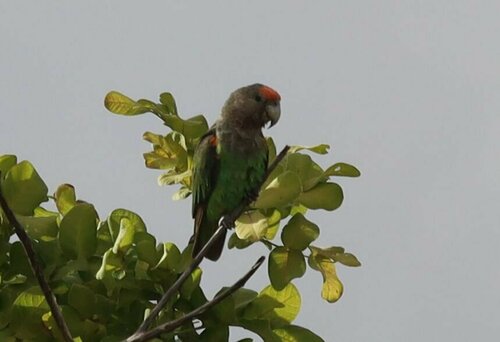
ハネナガインコ (Poicephalus fuscicollis) ハネナガインコ
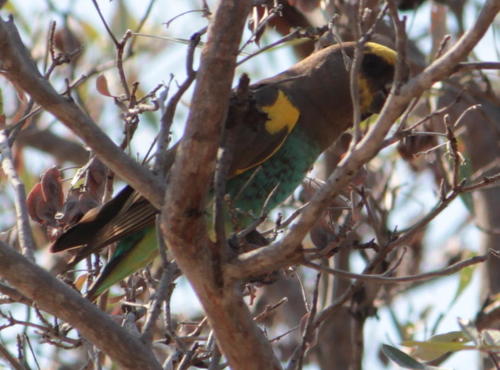
ムラクモインコ (Poicephalus meyeri) ムラクモインコ

メディア

読み込み中…

要点

ブラウンネックパロットとマイヤーズパロットを区別する最も信頼できるフィールドマークは、全体のサイズと頭部/くちばしの構造です:ブラウンネックははるかに大きく、ずっしりとしており、頭とくちばしが目に見えて大きいです。フィールドでは、マイヤーズパロットは明るい黄色の手首の斑点と、ほとんどの亜種での頭頂の黄色、さらにターコイズ色の腹部と青い尾で際立ちます。対照的に、ブラウンネックパロットは明るい灰色の頭、黄緑色の上面を示し、マイヤーズの強い黄色と青のコントラストが欠けています。両者はポイセファルス属のオウムであり、外見上は似ていることがありますが、サイズ、頭の色、翼のパターンに注意を払うことで確実に区別できます。

識別のコツ

  1. サイズと構造: ブラウンネックパロットはマイヤーズよりもはるかに大きく、ずっしりとしており、相対的に大きな頭と重いくちばしを持っています。これは、特に止まっているときや飛んでいるときに最初の手がかりとなることが多いです。サイズは、両方の種がその地域で知られている場合に信頼できますが、孤立した鳥や視界が悪い場合には注意が必要です。
  2. 頭の色: ブラウンネックは淡い灰色の頭を持ち、黄緑色の上面と対照的です。マイヤーズパロットは暗い(黒っぽい)頭を持ち、ほとんどの亜種で頭頂に黄色があります。頭に黄色があることは、マイヤーズの強い指標です。
  3. 手首(翼の曲がり)斑点: マイヤーズパロットは、翼の手首の関節に明るい黄色の斑点を示し、休んでいるときも飛んでいるときも見えます。ブラウンネックパロットは翼に黄色がありません。
  4. 腹部と尾の色: マイヤーズパロットはターコイズ色の腹部と青い尾を持ち、飛んでいるときや羽繕いをしているときに色のフラッシュとして見えることがあります。ブラウンネックパロットの腹部は緑がかっており、青やターコイズのハイライトがありません。
  5. 上面: ブラウンネックパロットは黄緑色の上面を持ち、(名義亜種では)青い光沢がある可能性がありますが、マイヤーズの強い青は決してありません。
  6. くちばしのサイズ: ブラウンネックのくちばしは、マイヤーズのものよりも明らかに大きくて重いです。マイヤーズのくちばしはより控えめで、小さな頭に対して比例しています。
  7. 頭の黄色: 頭頂に黄色が見える場合、それはほぼ確実にマイヤーズパロットです。ブラウンネックはこの特徴を示しません。
  8. 均一性: ブラウンネックパロットは全体的により均一で muted に見え、マイヤーズのコントラストのある色の斑点が欠けています。
  9. 亜種の変異: マイヤーズパロットの亜種は、黄色と青の量に変異がありますが、すべて手首の関節に少なくともいくつかの黄色と尾に青を示します。
  10. 生息地の文脈: 診断的ではありませんが、マイヤーズは乱れた森林にいる可能性が高く、一般的により一般的です。ブラウンネックは特定のサバンナやあまり乱されていない生息地に制限される可能性があります。
  11. 飛行中の視界: 飛行中は、マイヤーズの黄色の手首の斑点と青い尾を探してください。ブラウンネックはより大きく見え、これらの色のフラッシュが欠けています。
  12. 羽毛の落とし穴: 未熟または摩耗したマイヤーズは黄色が減少することがありますが、青い尾と小さいサイズは依然としてブラウンネックと区別します。ブラウンネックは決して黄色や青の斑点を持ちません。
  13. 年齢特有の翼のパターンはない: 分離を助けるための幼鳥/未熟な上翼パターンは記載されていません。サイズと色に依存してください。
  14. 止まっていると飛んでいるとき: 両方の種は止まっているか飛んでいるのを見ることができますが、マイヤーズの色の斑点は飛行中により明白であることが多いです。
  15. 声: 利用可能なノートには診断的な音声の違いは記載されていないため、分離のために呼び声に依存しないでください。

大きさ

ブラウンネックパロットはその属の中で最大のメンバーで、ずっしりした体型、大きな頭、重いくちばしを持っています [wikipedia]。マイヤーズパロットは明らかに小さく、軽い体型です。直接比較すると、ブラウンネックははるかにずっしりとしており、頑丈に見えますが、マイヤーズはコンパクトで威圧感が少ないです。このサイズの違いは、同じ地域で両方の種が知られている場合には、距離や飛行中でもしばしば明らかです。

羽色

利用可能なノートには、どちらの種についても年齢特有の幼鳥または未熟な上翼パターンは記載されていません。成鳥の場合、ブラウンネックパロットは明るい灰色の頭(茶色や黒っぽくはない)、黄緑色の上面、緑がかった腹部を持っています。名義亜種は青い光沢を示すことがありますが、マイヤーズの強い青やターコイズは決してありません。マイヤーズパロットははるかにカラフルです:成鳥(およびほとんどの亜種)は黒っぽい羽毛、ターコイズ色の腹部、青い尾を示し、ほとんどが翼の手首の関節(翼の曲がり)やしばしば頭頂に明るい黄色を持っています。これらの2種の中で、黄色の翼と頭頂の斑点はマイヤーズに特有であり、青/ターコイズの腹部と尾も特徴的です。ブラウンネックはこれらの明るい斑点をすべて欠いており、より muted で均一に見えます。マイヤーズの亜種の変異は、黄色と青の範囲と強度に影響しますが、黄色の手首の斑点と青い尾の組み合わせは一貫しています。

行動

ノートには直接的な行動の違いは記載されていません。両者は典型的なポイセファルス属のオウムであり、止まっているか直接飛んでいるのが見られる可能性が高いですが、特に目立った飛行スタイルの違いは記載されていません。

生息環境

両方の種はアフリカ原産で、分布が重なることがありますが、ブラウンネックパロットは一部の亜種でサバンナに生息すると記載されており、マイヤーズパロットは森林に広く分布し一般的です。マイヤーズは生息地の乱れに対してより耐性があり、多くの地域で一般的に見られますが、ブラウンネックはより局所的である可能性があります。しかし、生息地だけでは両方が存在する場所での信頼できる区別にはなりません。

より良い説明を送る

比較と同じ項目を使ってください。文章はすぐに公開されます。

The most reliable field mark to separate Brown-necked Parrot from Meyer's Parrot is overall size and head/bill structure: Brown-necked is much larger and bulkier, with a noticeably bigger head and bill. In the field, Meyer's Parrot stands out by its bright yellow carpal patches and, in most subspecies, yellow on the crown, as well as a turquoise belly and blue rump. Brown-necked Parrot, by contrast, shows a light grey head, yellow-green upperparts, and lacks the strong yellow and blue contrasts of Meyer's. Both are Poicephalus parrots and can appear superficially similar, but careful attention to size, head color, and wing pattern will reliably separate them.

  1. Size and structure: Brown-necked Parrot is much larger and bulkier than Meyer's, with a proportionally bigger head and heavier bill. This is often the first clue, especially when seen perched or in flight. Size is reliable when both species are known from the area, but beware lone birds or poor views.
  2. Head color: Brown-necked has a pale grey head, contrasting with its yellow-green upperparts. Meyer's Parrot has a darker (blackish) head, often with yellow on the crown in most subspecies. The presence of yellow on the head is a strong pointer to Meyer's.
  3. Carpal (wing bend) patch: Meyer's Parrot shows a bright yellow patch at the carpal joint of the wing, visible both at rest and in flight. Brown-necked Parrot lacks any yellow on the wing.
  4. Belly and rump color: Meyer's Parrot has a turquoise belly and blue rump, which can show as a flash of color in flight or when the bird is preening. Brown-necked Parrot's underparts are greenish, and it lacks any blue or turquoise highlights.
  5. Upperparts: Brown-necked Parrot has yellow-green upperparts with a possible blue sheen (in nominate), but never the strong blue of Meyer's.
  6. Bill size: The bill of Brown-necked is noticeably larger and heavier than that of Meyer's, which is more modest and proportionate to its smaller head.
  7. Yellow on the head: If you see yellow on the crown, it's almost certainly Meyer's Parrot; Brown-necked never shows this feature.
  8. Uniformity: Brown-necked Parrot appears more uniform and muted overall, lacking the contrasting color patches of Meyer's.
  9. Subspecific variation: Meyer's Parrot subspecies vary in the amount of yellow and blue, but all show at least some yellow at the carpal joint and blue on the rump.
  10. Habitat context: While not diagnostic, Meyer's is more likely in disturbed woodlands and is generally more common; Brown-necked may be more restricted to certain savanna or less disturbed habitats.
  11. Flight views: In flight, look for the yellow carpal patch and blue rump of Meyer's; Brown-necked will appear larger and lack these color flashes.
  12. Plumage pitfalls: Immature or worn Meyer's may show reduced yellow, but the blue rump and smaller size still separate them from Brown-necked. Brown-necked never acquires yellow or blue patches.
  13. No age-specific wing pattern: There are no described juvenile/immature upperwing patterns that aid separation; rely on size and color.
  14. Perched vs. flight: Both species can be seen perched or flying, but the color patches of Meyer's are often more obvious in flight.
  15. Voice: No diagnostic vocal differences are described in the available notes, so do not rely on calls for separation.

Brown-necked Parrot is the largest member of its genus, with a stocky build, large head, and heavy bill [wikipedia]. Meyer's Parrot is distinctly smaller and more lightly built. In direct comparison, Brown-necked appears much bulkier and more robust, while Meyer's is compact and less imposing. This size difference is often obvious even at a distance or in flight, especially if both species are known from the same area.

No age-specific juvenile or immature upperwing patterns are described for either species in the available notes. For adults, Brown-necked Parrot has a light grey head (not brown or blackish), yellow-green upperparts, and greenish underparts. The nominate subspecies can show a bluer sheen, but never the strong blue or turquoise of Meyer's. Meyer's Parrot is much more colorful: adults (and most subspecies) show blackish feathers, a turquoise belly, blue rump, and most have bright yellow on the carpal joint (bend of the wing) and often the crown. The yellow wing and crown patches are unique to Meyer's among these two, and the blue/turquoise underparts and rump are also distinctive. Brown-necked lacks all these bright patches, appearing more muted and uniform. Subspecific variation in Meyer's affects the extent and intensity of yellow and blue, but the combination of yellow carpal patch and blue rump is consistent.

No direct behavioral differences are described in the notes. Both are typical Poicephalus parrots, likely to be seen perched or in direct flight, but no jizz or flight style differences are noted.

Both species are native to Africa and can overlap in range, but Brown-necked Parrot is described as savanna-dwelling in some subspecies, while Meyer's Parrot is widespread and common in woodlands. Meyer's is more tolerant of habitat disturbance and remains common in many areas, while Brown-necked may be more localized. However, habitat alone is not a reliable separator where both occur.

変更を破棄しますか?

保存していない編集があります。今離れると失われます。

ハネナガインコ · ムラクモインコ · 苦手な鳥