

Brown-necked Parrot vs Meyer's Parrot
Poicephalus fuscicollis contro Poicephalus meyeri
Fai un quiz con Brown-necked Parrot e Meyer's Parrot
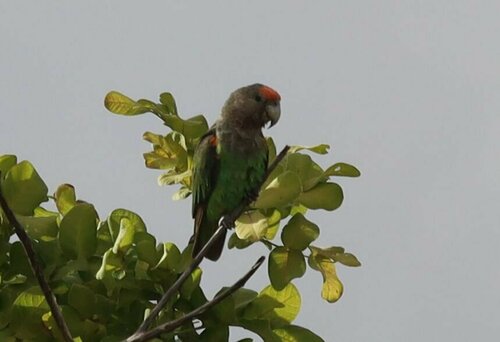 Brown-necked Parrot
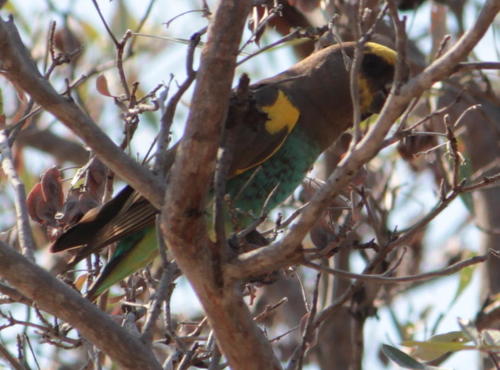 Meyer's Parrot
In breve
Il segno di campo più affidabile per separare il Brown-necked Parrot dal Meyer's Parrot è la dimensione complessiva e la struttura della testa/becco: il Brown-necked è molto più grande e massiccio, con una testa e un becco visibilmente più grandi. Sul campo, il Meyer's Parrot si distingue per le sue chiazze carapali gialle brillanti e, nella maggior parte delle sottospecie, il giallo sulla corona, oltre a un ventre turchese e un sottocoda blu. Il Brown-necked Parrot, al contrario, mostra una testa grigia chiara, parti superiori giallo-verdi e manca dei forti contrasti gialli e blu del Meyer's. Entrambi sono pappagalli Poicephalus e possono apparire superficialmente simili, ma un'attenta attenzione alla dimensione, al colore della testa e al motivo delle ali li separerà in modo affidabile.
Consigli di identificazione
- Dimensione e struttura: Il Brown-necked Parrot è molto più grande e massiccio del Meyer's, con una testa proporzionalmente più grande e un becco più pesante. Questo è spesso il primo indizio, specialmente quando si vede appollaiato o in volo. La dimensione è affidabile quando entrambe le specie sono conosciute nell'area, ma fai attenzione agli uccelli solitari o alle viste scarse.
- Colore della testa: Il Brown-necked ha una testa grigia chiara, in contrasto con le sue parti superiori giallo-verdi. Il Meyer's Parrot ha una testa più scura (nerastra), spesso con giallo sulla corona nella maggior parte delle sottospecie. La presenza di giallo sulla testa è un forte indicatore del Meyer's.
- Chiazze carapali (pieghe dell'ala): Il Meyer's Parrot mostra una chiazza gialla brillante all'articolazione carapale dell'ala, visibile sia a riposo che in volo. Il Brown-necked Parrot non ha giallo sull'ala.
- Colore del ventre e del sottocoda: Il Meyer's Parrot ha un ventre turchese e un sottocoda blu, che possono apparire come un lampo di colore in volo o quando l'uccello si pulisce. Le parti inferiori del Brown-necked Parrot sono verdastre e manca di qualsiasi evidenza blu o turchese.
- Parti superiori: Il Brown-necked Parrot ha parti superiori giallo-verdi con una possibile lucentezza blu (nella nominata), ma mai il forte blu del Meyer's.
- Dimensione del becco: Il becco del Brown-necked è visibilmente più grande e pesante di quello del Meyer's, che è più modesto e proporzionato alla sua testa più piccola.
- Giallo sulla testa: Se vedi giallo sulla corona, è quasi certamente il Meyer's Parrot; il Brown-necked non mostra mai questa caratteristica.
- Uniformità: Il Brown-necked Parrot appare più uniforme e attenuato nel complesso, mancando delle chiazze di colore contrastanti del Meyer's.
- Variazione sottospecifica: Le sottospecie del Meyer's Parrot variano nella quantità di giallo e blu, ma tutte mostrano almeno un po' di giallo all'articolazione carapale e blu sul sottocoda.
- Contesto dell'habitat: Anche se non diagnostico, il Meyer's è più probabile in boschi disturbati ed è generalmente più comune; il Brown-necked potrebbe essere più ristretto a determinate savane o habitat meno disturbati.
- Viste in volo: In volo, cerca la chiazza carapale gialla e il sottocoda blu del Meyer's; il Brown-necked apparirà più grande e mancherà di questi lampi di colore.
- Trappole del piumaggio: I Meyer's immaturi o usurati possono mostrare giallo ridotto, ma il sottocoda blu e la dimensione più piccola li separano ancora dal Brown-necked. Il Brown-necked non acquisisce mai chiazze gialle o blu.
- Nessun motivo di ala specifico per età: Non ci sono motivi di ala superiori giovanili/immaturi descritti che aiutino la separazione; fai affidamento su dimensione e colore.
- Appollaiato vs. volo: Entrambe le specie possono essere viste appollaiate o volare, ma le chiazze di colore del Meyer's sono spesso più evidenti in volo.
- Voce: Non ci sono differenze vocali diagnostiche descritte nelle note disponibili, quindi non fare affidamento sui richiami per la separazione.
Taglia
Il Brown-necked Parrot è il membro più grande del suo genere, con una corporatura robusta, una grande testa e un becco pesante [wikipedia]. Il Meyer's Parrot è decisamente più piccolo e più leggero. In confronto diretto, il Brown-necked appare molto più massiccio e robusto, mentre il Meyer's è compatto e meno imponente. Questa differenza di dimensione è spesso ovvia anche a distanza o in volo, specialmente se entrambe le specie sono conosciute dalla stessa area.
Piumaggio
Non ci sono motivi di ala superiori giovanili o immaturi specifici per età descritti per nessuna delle due specie nelle note disponibili. Per gli adulti, il Brown-necked Parrot ha una testa grigia chiara (non marrone o nerastra), parti superiori giallo-verdi e parti inferiori verdastre. La sottospecie nominata può mostrare una lucentezza più blu, ma mai il forte blu o turchese del Meyer's. Il Meyer's Parrot è molto più colorato: gli adulti (e la maggior parte delle sottospecie) mostrano piume nerastre, un ventre turchese, un sottocoda blu e la maggior parte ha un giallo brillante all'articolazione carapale (pieghe dell'ala) e spesso sulla corona. Le chiazze gialle sulle ali e sulla corona sono uniche per il Meyer's tra queste due, e le parti inferiori blu/turchese e il sottocoda sono anche distintivi. Il Brown-necked manca di tutte queste chiazze brillanti, apparendo più attenuato e uniforme. La variazione sottospecifica nel Meyer's influisce sull'estensione e sull'intensità di giallo e blu, ma la combinazione di chiazza carapale gialla e sottocoda blu è coerente.
Comportamento
Non ci sono differenze comportamentali dirette descritte nelle note. Entrambi sono tipici pappagalli Poicephalus, probabilmente visti appollaiati o in volo diretto, ma non sono state notate differenze di jizz o stile di volo.
Habitat
Entrambe le specie sono native dell'Africa e possono sovrapporsi nell'areale, ma il Brown-necked Parrot è descritto come abitante delle savane in alcune sottospecie, mentre il Meyer's Parrot è diffuso e comune nei boschi. Il Meyer's è più tollerante ai disturbi dell'habitat e rimane comune in molte aree, mentre il Brown-necked potrebbe essere più localizzato. Tuttavia, l'habitat da solo non è un separatore affidabile dove entrambe si trovano.
Brown-necked Parrot · Meyer's Parrot · I miei uccelli difficili