

Motmot

クイナ 対 マミジロクイナ

Rallus indicus 対 Poliolimnas cinereus

クイナとマミジロクイナのクイズ
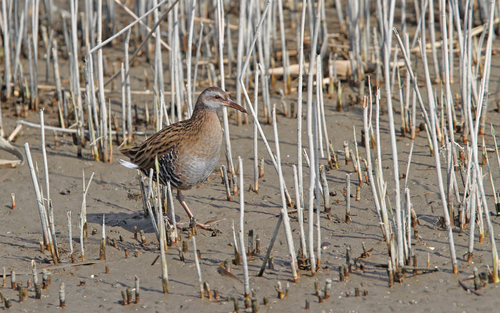
クイナ (Rallus indicus) クイナ
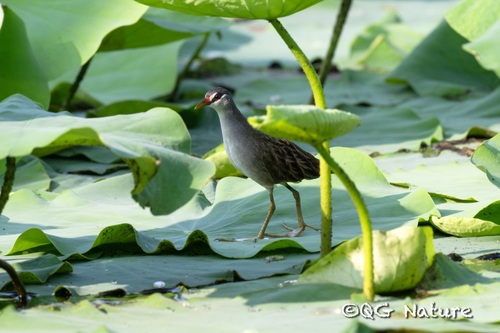
マミジロクイナ (Poliolimnas cinereus) マミジロクイナ

メディア

読み込み中…

要点

クイナとマミジロクイナの最も信頼できるフィールドマークは、クイナの太い茶色のアイストライプと茶色がかった腹部であり、マミジロクイナの目立つ白い眉と一般的により淡い、対照的な顔のパターンと比較されます。クイナはより大きく、ずんぐりした体形で、より長いくちばしとより muted な茶色の全体的な外観を持っています。飛んでいる時や休んでいる時には、クイナの茶色の頬と胸を探してください。対して、クイナのシャープな白いスーペルシリウムとより繊細な体つきを見つけることができます。生息地も役立ちます:クイナは北部の湿地や葦原を好み、マミジロクイナは熱帯のマングローブや湿地でより頻繁に見られます。声の違いは顕著ですが、鳥が鳴いていない限り、フィールドで診断的である可能性は低いです。

識別のコツ

  1. 茶色のアイストライプ vs. 白い眉: クイナは常に目を通る茶色のストライプを示し、茶色がかった腹部と融合しています。マミジロクイナは目の上にシャープな白いスーペルシリウムを持ち、より対照的な顔のパターンを与えます。これは、どの年齢でも彼らを分ける最も迅速な方法です。
  2. 腹部の色: クイナは茶色がかった腹部と胸を持ち、特にマミジロクイナのより淡い、茶色が少ない腹部と比較されます。
  3. 喉の色: クイナは茶色の胸と対照的な白い喉を示し、マミジロクイナの喉と顔は一般的により淡く、より明確に定義されています。
  4. サイズと構造: クイナははるかに大きく、ずんぐりした体形で、より長いくちばしと重い体を持っています。マミジロクイナはより小さく、軽く、より繊細な体つきをしています。
  5. 生息地の文脈: 鳥が北部の温帯湿地や葦原にいる場合、特にモンゴル、シベリア、または北日本では、クイナの可能性が高いです。東南アジア、オーストラリア、または太平洋の熱帯マングローブや湿地では、マミジロクイナが好まれます。
  6. 行動: クイナはより遅く、意図的に動く傾向があり、しばしば葦の中を歩きます。マミジロクイナはより敏捷で、時には浮遊植物の上やマングローブの根の間を歩くことがあります。
  7. 声: 聞こえた場合、クイナは鋭い「キュウ」という呼び声と金属的な「シュリンク、シュリンク」という音を出します。これらはマミジロクイナには見られません。
  8. 上面の色調: クイナは関連するクイナに比べて上面が淡いですが、一般的にはマミジロクイナよりも茶色がかっています。マミジロクイナはより灰色または中立的に見えることがあります。
  9. 分布: クイナは渡り鳥で、主に北アジアに見られ、冬は東南アジアに渡ります。マミジロクイナは、より広範な熱帯地域で定住または局所的に渡りを行います。
  10. 顔の対比: マミジロクイナの顔はよりシャープなパターンを持ち、白いスーペルシリウムが際立っています。クイナの顔は全体的により muted で茶色がかっています。
  11. くちばしの長さ: クイナはマミジロクイナよりも明らかに長いくちばしを持っており、マミジロクイナはより短く、より繊細なくちばしを持っています。
  12. 羽毛の一貫性: どちらの種にも年齢特有の飛行や翼のパターンマークは記載されていないため、すべての年齢で頭と腹部の色に依存してください。
  13. 季節的な混乱: 両種は冬に日本や東南アジアで発生する可能性があるため、これらの地域では範囲だけでなく羽毛と構造を使用してください。
  14. 潜在的な落とし穴: 未熟なクイナは上面がより淡く見えることがありますが、常に茶色のアイストライプを保持します。マミジロクイナは、幼鳥であっても茶色のアイストライプを示しません。
  15. 性差: どちらの種にも強い性的二形性は記載されていないため、すべてのマークは両性に適用されます。

大きさ

クイナは明らかに大きく、長さは23〜29 cm、体重は75〜190 gです [wikipedia]。マミジロクイナよりもずんぐりしており、くちばしが長いように見えます [wikipedia]。直接比較では、クイナはマミジロクイナよりも頑丈で、より華奢に見えます。マミジロクイナは小型のクイナに典型的なコンパクトで細長い外観を持っています。

羽色

どちらの種にも年齢特有の上翼や飛行パターンマークは記載されていないため、頭と体の羽毛に焦点を当てます。すべての年齢のクイナは、目を通る特徴的な茶色のアイストライプ、茶色がかった腹部、関連するクイナに比べて淡い上面を示します。喉は白く、茶色の胸と対照的です。対照的に、マミジロクイナは目の上に目立つ白い眉(スーペルシリウム)を持ち、顔により対照的でシャープな外観を与えます。マミジロクイナの腹部は一般的により淡く、茶色が少なく、顔のパターンははるかに明確に定義されています。これらの違いは年齢にわたって一貫しており、どちらの種にも幼鳥特有のマークは記載されていません。

行動

両種は秘密主義で、密な湿地の植生の中に隠れていますが、クイナは葦や湿地の中を歩いたり走ったりしているのが見られる可能性が高く、時には開けた泥や水の端に出てくることがあります。マミジロクイナはしばしばマングローブで見られ、浮遊植物の上やマングローブの根の間を歩いているのが見られます。両方ともシャイでフラッシュしにくいですが、クイナの大きなサイズと遅く、意図的な動きが手がかりになる場合があります。一方、マミジロクイナはより敏捷で足が速く見えることがあります。

生息環境

クイナは北モンゴル、東シベリア、北東中国、韓国、北日本で繁殖し、淡水湿地や葦原を好みます [wikipedia]。冬には東南アジアに渡りますが、湿地の生息地に結びついています。マミジロクイナは熱帯および亜熱帯でより広範囲に分布し、オーストラリアから東南アジア、太平洋の島々まで見られ、特にマングローブの森や湿地に関連しています [wikipedia]。マングローブや熱帯沿岸の湿地で見られた場合、マミジロクイナの可能性が高く、温帯や北部の湿地ではクイナが好まれます。

声

クイナは鋭い「キュウ」という求愛の呼び声を持ち、ヨーロッパクイナよりも長く、明瞭で、金属的でスラングの「シュリンク、シュリンク」という音を連続して出します [wikipedia]。その呼び声はヨーロッパクイナのものとはかなり異なり、その種には反応されません。マミジロクイナの声は提供されたメモには記載されていないため、聞こえた場合、クイナの特有の呼び声を出しているときのみ診断的です。

より良い説明を送る

比較と同じ項目を使ってください。文章はすぐに公開されます。

The most reliable field mark between Brown-cheeked Rail and White-browed Crake is the bold brown eyestripe and brown-tinged underparts of the Brown-cheeked Rail, compared to the White-browed Crake’s striking white eyebrow and generally paler, more contrasting facial pattern. Brown-cheeked Rail is larger and bulkier, with a longer bill and a more muted, brownish overall appearance. In flight or at rest, look for the Brown-cheeked Rail’s brown cheek and breast, versus the Crake’s crisp white supercilium and more delicate build. Habitat can also help: Brown-cheeked Rail prefers northern marshes and reedbeds, while White-browed Crake is more often found in tropical mangroves and wetlands. Vocalizations differ markedly, but are less likely to be diagnostic in the field unless the birds are calling.

  1. Brown eyestripe vs. white eyebrow: Brown-cheeked Rail always shows a brown stripe through the eye, blending into brown-tinged underparts; White-browed Crake has a crisp white supercilium above the eye, giving a much more contrasting facial pattern. This is the quickest way to separate them at any age.
  2. Underparts color: Brown-cheeked Rail has brown-tinged underparts and breast, especially compared to the paler, less brownish underparts of White-browed Crake.
  3. Throat color: Brown-cheeked Rail shows a white throat contrasting with the brown breast, while White-browed Crake’s throat and face are generally paler and more sharply defined.
  4. Size and structure: Brown-cheeked Rail is much larger and bulkier, with a longer bill and heavier body; White-browed Crake is smaller, lighter, and more delicate in build.
  5. Habitat context: If the bird is in a northern temperate marsh or reedbed, especially in Mongolia, Siberia, or northern Japan, Brown-cheeked Rail is more likely. In tropical mangroves or wetlands in Southeast Asia, Australia, or the Pacific, White-browed Crake is favored.
  6. Behavior: Brown-cheeked Rail tends to move more slowly and deliberately, often walking through reeds; White-browed Crake is more agile, sometimes walking on floating vegetation or among mangrove roots.
  7. Vocalizations: If heard, Brown-cheeked Rail gives a sharp 'kyu' call and metallic 'shrink, shrink' notes; these are not matched by White-browed Crake.
  8. Upperparts tone: Brown-cheeked Rail has paler upperparts compared to related rails, but is still generally browner above than the White-browed Crake, which may appear grayer or more neutral.
  9. Distribution: Brown-cheeked Rail is migratory and mostly found in northern Asia, wintering in southeast Asia; White-browed Crake is resident or locally migratory across a much broader tropical range.
  10. Facial contrast: The face of White-browed Crake is more sharply patterned, with the white supercilium standing out; Brown-cheeked Rail’s face is more muted and brownish overall.
  11. Bill length: Brown-cheeked Rail has a noticeably longer bill than White-browed Crake, which has a shorter, more delicate bill.
  12. Plumage consistency: No age-specific flight or wing pattern marks are described for either species, so rely on head and underparts color at all ages.
  13. Seasonal confusion: Both species can occur in Japan and Southeast Asia in winter, so use plumage and structure rather than range alone in these regions.
  14. Potential pitfalls: Immature Brown-cheeked Rails may appear paler above, but always retain the brown eyestripe; White-browed Crake never shows a brown eyestripe, even as a juvenile.
  15. Sex differences: No strong sexual dimorphism is described for either species, so all marks apply to both sexes.

Brown-cheeked Rail is significantly larger, measuring 23–29 cm in length and weighing 75–190 g [wikipedia]. It appears bulkier and longer-billed than the White-browed Crake, which is smaller and lighter overall [wikipedia]. In direct comparison, expect the Rail to look more robust and less dainty than the Crake, which has a more compact, slender appearance typical of small crakes.

No age-specific upperwing or flight pattern marks are described for either species, so focus is on head and body plumage. Brown-cheeked Rail of all ages shows a distinctive brown eyestripe running through the eye, brown-tinged underparts, and paler upperparts compared to related rails. The throat is white, contrasting with the brown breast. White-browed Crake, by contrast, has a prominent white eyebrow (supercilium) above the eye, giving the face a more contrasting and crisp look. The Crake’s underparts are generally paler and less brown-tinged, and its facial pattern is much more sharply defined. These differences are consistent across ages, as no juvenile-specific marks are noted for either species.

Both species are secretive and skulk in dense wetland vegetation, but Brown-cheeked Rail is more likely to be seen walking or running through reeds and marshes, occasionally venturing into open mud or water edges. White-browed Crake is often found in mangroves and can be seen walking on floating vegetation or among mangrove roots. Both can be shy and difficult to flush, but the Rail’s larger size and slower, more deliberate movements can be a clue, while the Crake may appear more agile and quick-footed.

Brown-cheeked Rail breeds in northern Mongolia, eastern Siberia, northeast China, Korea, and northern Japan, favoring freshwater marshes and reedbeds [wikipedia]. In winter, it migrates to southeast Asia but remains tied to marshy habitats. White-browed Crake is much more widespread in the tropics and subtropics, found from Australia to Southeast Asia and the Pacific islands, and is particularly associated with mangrove forests and wetlands [wikipedia]. If seen in a mangrove or tropical coastal wetland, White-browed Crake is more likely; in temperate or northern marshes, Brown-cheeked Rail is favored.

Brown-cheeked Rail has a sharp piping 'kyu' courtship call, longer and clearer than the European Water Rail, and a song of metallic, slurred 'shrink, shrink' notes repeated in series [wikipedia]. Its calls are quite different from those of the Water Rail and are not responded to by that species. White-browed Crake’s vocalizations are not described in the provided notes, so voice is only diagnostic for Brown-cheeked Rail if heard giving its distinctive calls.

変更を破棄しますか?

保存していない編集があります。今離れると失われます。

クイナ · マミジロクイナ · 苦手な鳥