

Motmot

クイナ 対 ヤンバルクイナ

Rallus indicus 対 Gallirallus okinawae

クイナとヤンバルクイナのクイズ
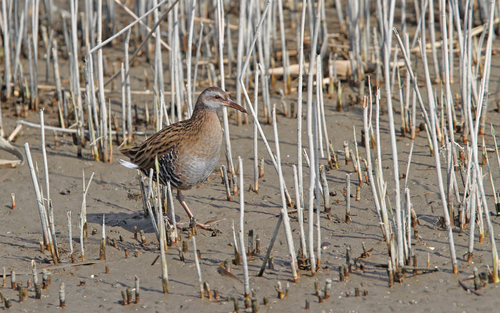
クイナ (Rallus indicus) クイナ
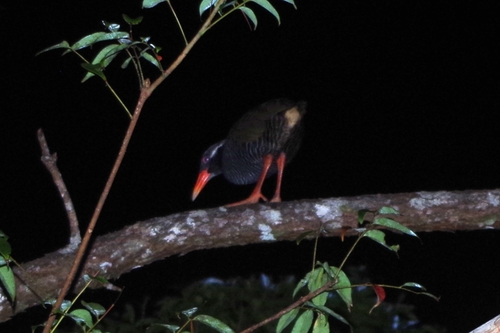
ヤンバルクイナ (Gallirallus okinawae) ヤンバルクイナ

メディア

読み込み中…

要点

クイナとヤンバルクイナの最も信頼できるフィールドマークは、後者の赤いくちばしと足、白黒の縞模様の腹部、ほとんど飛べない短い翼の構造の際立った組み合わせです。クイナはスリムで、飛ぶ能力が高く、薄い茶色がかった腹部を示し、茶色の目のストライプがあり、強い縞模様はありません。幼鳥のヤンバルクイナは腹部が薄く、まだがっしりとした短い翼の構造を示し、クイナの顔の模様は欠けています。生息地は強い手がかりです:クイナは北東アジアの湿地の移動性種であり、ヤンバルクイナは北沖縄島の森林に厳密に固有です。赤いくちばしと足、縞模様の腹部、貧弱な飛行のクイナを見たら、それはヤンバルクイナです;もしその鳥がスリムで、茶色の顔のストライプとより典型的なクイナの飛行を示しているなら、それはクイナです。

識別のコツ

  1. くちばしと足の色(幼鳥のヤンバルクイナを除く全ての年齢): 成鳥のヤンバルクイナは大きく明るい赤いくちばしと白っぽい先端、赤い足を持っています;クイナは鈍いくちばしと足を持ち、決して明るい赤ではありません。幼鳥のヤンバルクイナは茶色がかった裸の部分を持っているため、このマークは彼らにはあまり信頼できません。
  2. 腹部の模様(全ての年齢): ヤンバルクイナの成鳥は黒い腹部に狭い白い縞模様があります;クイナは平坦な茶色がかった腹部を持ち、決して縞模様はありません。幼鳥のヤンバルクイナは白くまだらな腹部を持ち、縞模様はありませんが、クイナの茶色がかった外観は欠けています。
  3. 顔の模様(成鳥): クイナは目を通る茶色のストライプと白い喉を示します;ヤンバルクイナは黒い顔を持ち、くちばしと目の間に白い斑点、目の後ろに白い線があります。幼鳥のヤンバルクイナの顔のマークはあまりはっきりしていませんが、茶色の目のストライプは欠けています。
  4. 翼と尾の構造: ヤンバルクイナは非常に短い翼と尾を持ち、丸みを帯びた、ほとんど尾のない外観を与え、ほぼ飛べません。クイナは通常のクイナの翼と尾を持ち、強い飛行が可能です。
  5. 飛行行動: クイナは刺激を受けると飛び立ち、典型的なクイナの飛行を示します。ヤンバルクイナはめったに飛ばず、走ったり隠れたりすることを好みます;もし飛ぶ場合は、弱く、短い距離だけです。
  6. サイズと体型: ヤンバルクイナはクイナよりも大きく、はるかに重い(約435 g)で、より頑丈でずんぐりした外観を持っています。クイナはスリムで、より細長いです。
  7. 生息地: クイナは北東アジアの湿地や葦原で見られ、特に移動中や冬に見られます。ヤンバルクイナは北沖縄島の森林に厳密に限られており、この地域の外にいるクイナはヤンバルクイナではありません。
  8. 幼鳥の混乱: 幼鳥のヤンバルクイナは腹部が薄く白くまだらで、茶色がかった裸の部分とあまりはっきりしない顔の模様を持っていますが、短い翼と地上生活の習性を示します。クイナの幼鳥は詳細には記述されていませんが、強い縞模様や赤い裸の部分は欠けているはずです。
  9. 鳴き声: クイナは鋭く金属的な「キュウ」と「シュリンク」という鳴き声を出し、ヨーロッパクイナとは異なります。ヤンバルクイナは非常に騒がしく、大きな鳴き声を持ち、特に夜明けや夕暮れ時にグループで鳴くことがよくあります。
  10. 行動: ヤンバルクイナはしばしば地面を走ったり、開けた場所で水浴びをしたり、木に止まったりするのが見られます;クイナはより秘密主義で、すぐに飛び立ち、木の中で見られる可能性は低いです。
  11. 文脈と範囲: 沖縄島の外にいる場合、ほぼ確実にクイナまたは他のクイナを見ており、ヤンバルクイナではありません。特にその鳥がほとんど飛べない場合、北沖縄の密林にいる場合は、ヤンバルクイナの可能性が高いです。
  12. 目と目の輪: ヤンバルクイナの成鳥は赤い虹彩と目の輪を持ち、明るい顔の外観を加えています;クイナはこの特徴がありません。
  13. 尾の模様: ヤンバルクイナは淡い縞模様のある暗い茶色の尾羽の覆いを持っています;クイナの尾羽は縞模様があるとは記述されていません。
  14. 止まり行動: ヤンバルクイナはしばしば木に止まり、登って寝ることがあります;クイナは湿地の植生の中で巣を作り、地面に止まります。
  15. グループの呼びかけ: ヤンバルクイナのペアやグループはしばしば一緒に呼びかけ、時には一度に12羽まで呼びかけます;クイナは鳴き声がより孤独です。

大きさ

クイナは小さくて軽い:長さ23〜29 cm、重さ75〜190 g [wikipedia]。ヤンバルクイナは大きくてはるかに重い:約30 cm、435 g、翼幅48〜50 cm [wikipedia]。ヤンバルクイナの体格と短い翼は、クイナよりも頑丈で機敏さが欠けているように見えます。

羽色

行動

ヤンバルクイナはほとんど飛べず、急速に走りますが、めったに飛びません。しばしば木に登って止まります。騒がしく、地面や低い止まり木から呼びかけることが多く、通常は密なカバーの中で見られますが、水浴びのために出てくることがあります。クイナは強力な移動性種で、長距離の飛行が可能で、刺激を受けると飛び立つ可能性が高いです。両種は地面で餌を探しますが、ヤンバルクイナはより地上生活的で、開けた湿地で見られる可能性は低いです。

生息環境

クイナは北モンゴル、東シベリア、北東中国、韓国、北日本の湿地や湿地帯で繁殖し、東南アジアで越冬します。移動性種であり、淡水の湿地、葦原、湿地の縁で見られます。ヤンバルクイナは日本の北沖縄島の亜熱帯湿潤森林に厳密に固有であり、この制限された範囲の外には存在しません。密な森林のカバーを好み、時には小川や森林の縁の近くにいますが、開けた湿地や沖縄の外には存在しません。

声

クイナは特徴的な鳴き声を持っています:鋭い「キュウ」という求愛の鳴き声は、ヨーロッパクイナよりも長く、明瞭です。また、金属的で不明瞭な「シュリンク、シュリンク」という音の連続があります。クイナの鳴き声はヨーロッパクイナの再生に反応しないほど異なります。ヤンバルクイナは非常に騒がしく、さまざまな大きな鳴き声を持ち、特に夜明けや夕暮れ時にデュエットや合唱で鳴くことがよくあります。ヤンバルクイナの鳴き声の特定の質は詳細には記載されていませんが、その文脈(騒がしい、グループで呼びかける、しばしば地面や木から)で特徴的です。

より良い説明を送る

比較と同じ項目を使ってください。文章はすぐに公開されます。

The most reliable field mark between Brown-cheeked Rail and Okinawa Rail is the latter's striking combination of a red bill and legs, black-and-white barred underparts, and almost flightless, short-winged structure. Brown-cheeked Rail is slimmer, more capable of flight, and shows paler, brown-tinged underparts with a brown eyestripe and no strong barring. Juvenile Okinawa Rails are paler and mottled below, but still show a stouter, short-winged build and lack the brown-cheeked's facial pattern. Habitat is a strong clue: Brown-cheeked Rail is a migrant of marshes across northeast Asia, while Okinawa Rail is strictly endemic to the forests of northern Okinawa Island. If you see a rail with a red bill and legs, barred underparts, and poor flight, it is Okinawa Rail; if the bird is slimmer, with a brown face-stripe and more typical rail flight, it is Brown-cheeked Rail.

  1. Bill and leg color (all ages except juvenile Okinawa Rail): Adult Okinawa Rail has a large, bright red bill with a whitish tip and red legs; Brown-cheeked Rail has a duller bill and legs, never bright red. Juvenile Okinawa Rail has brownish bare parts, so this mark is less reliable for them.
  2. Underpart pattern (all ages): Okinawa Rail adults have black underparts with narrow white bars; Brown-cheeked Rail has plain brown-tinged underparts, never barred. Juvenile Okinawa Rail is mottled white below, not barred, but still lacks the brown-tinged look of Brown-cheeked Rail.
  3. Facial pattern (adults): Brown-cheeked Rail shows a brown stripe through the eye and a white throat; Okinawa Rail has a black face with a white spot between bill and eye, and a white line behind the eye. Juvenile Okinawa Rail's facial marks are less distinct but still lack the brown eyestripe.
  4. Wing and tail structure: Okinawa Rail has very short wings and tail, giving it a rounded, almost tailless look and making it nearly flightless. Brown-cheeked Rail has normal rail wings and tail, and is capable of strong flight.
  5. Flight behavior: Brown-cheeked Rail will flush and fly when disturbed, often showing a typical rail flight. Okinawa Rail rarely flies, preferring to run or hide; if it does fly, it is weak and for short distances only.
  6. Size and build: Okinawa Rail is larger and much heavier (about 435 g) than Brown-cheeked Rail (75–190 g), and appears more robust and chunky. Brown-cheeked Rail is slimmer and more elongated.
  7. Habitat: Brown-cheeked Rail is found in marshes and reedbeds across northeast Asia, especially during migration and winter. Okinawa Rail is strictly limited to the forests of northern Okinawa Island; any rail outside this area is not Okinawa Rail.
  8. Juvenile confusion: Juvenile Okinawa Rail is paler below with white mottling, brownish bare parts, and a less distinct facial pattern, but still shows the short wings and terrestrial habits. Brown-cheeked Rail juveniles are not described in detail, but should lack strong barring or red bare parts.
  9. Vocalizations: Brown-cheeked Rail gives sharp, metallic "kyu" and "shrink" calls, distinct from Water Rail. Okinawa Rail is extremely noisy, with loud calls often given in groups, especially at dawn/dusk and sometimes from trees.
  10. Behavior: Okinawa Rail is often seen running on the ground, bathing in open, or roosting in trees; Brown-cheeked Rail is more secretive, flushes readily, and is less likely to be seen in trees.
  11. Context and range: If you are outside Okinawa Island, you are almost certainly seeing Brown-cheeked Rail or another rail, not Okinawa Rail. If in dense forest on northern Okinawa, especially if the bird is nearly flightless, it is likely Okinawa Rail.
  12. Eyes and eye-ring: Okinawa Rail adults have a red iris and eye-ring, adding to the bright facial appearance; Brown-cheeked Rail lacks this feature.
  13. Tail pattern: Okinawa Rail has dark brown undertail-coverts with pale bars; Brown-cheeked Rail's undertail is not described as barred.
  14. Roosting behavior: Okinawa Rail often roosts in trees, climbing up to sleep; Brown-cheeked Rail nests and roosts on the ground in marsh vegetation.
  15. Group calling: Okinawa Rail pairs and groups often call together, sometimes up to 12 birds at once; Brown-cheeked Rail is more solitary in vocalizations.

Brown-cheeked Rail is smaller and lighter: 23–29 cm in length, 75–190 g in weight [wikipedia]. Okinawa Rail is larger and much heavier: about 30 cm long, 435 g, with a wingspan of 48–50 cm [wikipedia]. The Okinawa Rail's bulk and short wings make it appear more robust and less agile than the Brown-cheeked Rail, which is slimmer and built for longer flights.

  • Juvenile/immature plumage: Juvenile Okinawa Rails are paler than adults, with white mottling below (not barred), a brownish spot in front of the eye, and a shorter post-ocular stripe. Their bill and iris are brownish, and legs/feet yellow-ochre, lacking the adult's bright red. Brown-cheeked Rail juveniles are not described in detail, but no mention of strong barring or red bare parts.

  • Adult plumage: Okinawa Rail adults are olive-brown above, black below with narrow white bars, and have a black face with a white spot between bill and eye plus a white line behind the eye. The bill and legs are bright red. Brown-cheeked Rail adults are paler above, brown-tinged below (not barred), with a brown eyestripe, white throat, and no red on bill or legs. The brown-cheeked's underparts are plain or lightly tinged, not boldly patterned like Okinawa Rail. Both species have some white on the throat, but only Okinawa Rail has a clear facial spot and stripe pattern.

  • Wings and tail: Okinawa Rail has very short wings and tail, almost flightless. Brown-cheeked Rail has normal rail wings and tail, capable of sustained flight.

Okinawa Rail is almost flightless, running rapidly but rarely flying, and often roosts in trees by climbing. It is noisy, often calling from the ground or low perches, and is usually seen in dense cover but may come out to bathe. Brown-cheeked Rail is a strong migrant, capable of long flights, and is more likely to flush and fly when disturbed. Both species forage on the ground, but Okinawa Rail is more terrestrial and less likely to be seen in open marshes.

Brown-cheeked Rail breeds in marshes and wetlands across northern Mongolia, eastern Siberia, northeast China, Korea, and northern Japan, wintering in southeast Asia. It is a migrant, found in freshwater marshes, reedbeds, and wetland edges. Okinawa Rail is strictly endemic to the subtropical moist forests of northern Okinawa Island, Japan, and does not occur outside this restricted range. It prefers dense forest cover, sometimes near streams or forest edges, but never in open marshes or outside Okinawa.

Brown-cheeked Rail has distinctive vocalizations: a sharp piping "kyu" courtship call, longer and clearer than Water Rail, and a series of metallic, slurred "shrink, shrink" notes. Its calls are different enough from Water Rail that it does not respond to the European species' playback. Okinawa Rail is very noisy, with a variety of loud calls, often given in duet or chorus, especially at dawn and dusk. The specific quality of Okinawa Rail's calls is not detailed, but the context (noisy, group-calling, often from the ground or trees) is distinctive.

変更を破棄しますか?

保存していない編集があります。今離れると失われます。

クイナ · ヤンバルクイナ · 苦手な鳥