

Brown-cheeked Rail vs Okinawa Rail
Rallus indicus contro Gallirallus okinawae
Fai un quiz con Brown-cheeked Rail e Okinawa Rail
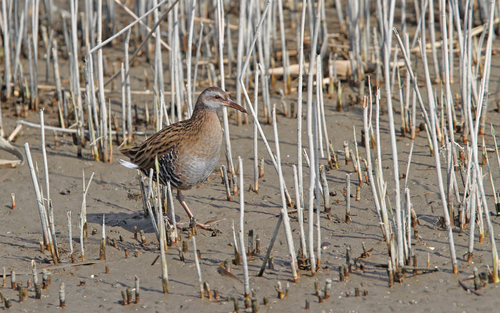 Brown-cheeked Rail
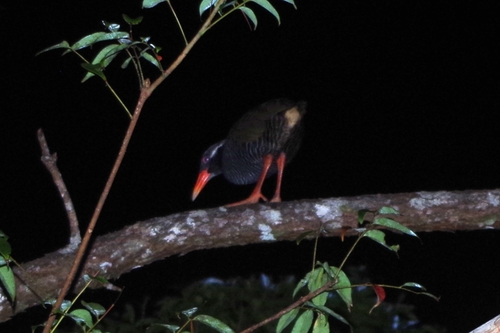 Okinawa Rail
In breve
Il segno di campo più affidabile tra il Porciglione e l'Okinawa Rail è la combinazione sorprendente di quest'ultimo di un becco e zampe rossi, parti inferiori a strisce bianche e nere, e una struttura quasi incapace di volare, con ali corte. Il Porciglione è più snello, più capace di volare e mostra parti inferiori più chiare, con una sfumatura marrone, una striscia sopra l'occhio e nessuna forte striatura. I giovani Okinawa Rails sono più chiari e maculati sotto, ma mostrano comunque una struttura più robusta e con ali corte e mancano del motivo facciale del Porciglione. L'habitat è un indizio forte: il Porciglione è un migrante delle paludi dell'Asia nord-orientale, mentre l'Okinawa Rail è strettamente endemico delle foreste dell'isola di Okinawa settentrionale. Se vedi un rail con un becco e zampe rossi, parti inferiori a strisce e un volo scarso, è un Okinawa Rail; se l'uccello è più snello, con una striscia facciale marrone e un volo più tipico dei rail, è un Porciglione.
Consigli di identificazione
- Colore del becco e delle zampe (tutte le età tranne i giovani Okinawa Rail): L'Okinawa Rail adulto ha un grande becco rosso brillante con una punta bianca e zampe rosse; il Porciglione ha un becco e zampe più opachi, mai rossi brillanti. I giovani Okinawa Rail hanno parti nude marroni, quindi questo segno è meno affidabile per loro.
- Schema delle parti inferiori (tutte le età): Gli Okinawa Rail adulti hanno parti inferiori nere con strisce bianche strette; il Porciglione ha parti inferiori marroni semplici, mai a strisce. I giovani Okinawa Rail sono maculati di bianco sotto, non a strisce, ma mancano comunque dell'aspetto marrone del Porciglione.
- Schema facciale (adulti): Il Porciglione mostra una striscia marrone attraverso l'occhio e una gola bianca; l'Okinawa Rail ha un volto nero con una macchia bianca tra il becco e l'occhio, e una linea bianca dietro l'occhio. I segni facciali dei giovani Okinawa Rail sono meno distinti ma mancano comunque della striscia sopra l'occhio marrone.
- Struttura delle ali e della coda: L'Okinawa Rail ha ali e coda molto corte, dando un aspetto arrotondato, quasi senza coda, e rendendolo quasi incapace di volare. Il Porciglione ha ali e coda normali per un rail ed è capace di un volo forte.
- Comportamento di volo: Il Porciglione si alzerà in volo quando disturbato, mostrando spesso un volo tipico dei rail. L'Okinawa Rail vola raramente, preferendo correre o nascondersi; se vola, è debole e solo per brevi distanze.
- Dimensioni e struttura: L'Okinawa Rail è più grande e molto più pesante (circa 435 g) rispetto al Porciglione (75–190 g), e appare più robusto e massiccio. Il Porciglione è più snello e più allungato.
- Habitat: Il Porciglione si trova in paludi e canneti dell'Asia nord-orientale, specialmente durante la migrazione e l'inverno. L'Okinawa Rail è strettamente limitato alle foreste dell'isola di Okinawa settentrionale; qualsiasi rail al di fuori di quest'area non è un Okinawa Rail.
- Confusione giovanile: Il giovane Okinawa Rail è più chiaro sotto con maculature bianche, parti nude marroni e un motivo facciale meno distintivo, ma mostra comunque le ali corte e le abitudini terrestri. I giovani Porciglione non sono descritti in dettaglio, ma dovrebbero mancare di forti striature o parti nude rosse.
- Vocalizzazioni: Il Porciglione emette richiami acuti e metallici "kyu" e "shrink", distinti dal Porciglione d'acqua. L'Okinawa Rail è estremamente rumoroso, con richiami forti spesso emessi in gruppi, specialmente all'alba e al tramonto e talvolta dagli alberi.
- Comportamento: L'Okinawa Rail è spesso visto correre a terra, fare il bagno in spazi aperti o riposare sugli alberi; il Porciglione è più segreto, si alza in volo facilmente ed è meno probabile che venga visto sugli alberi.
- Contesto e distribuzione: Se sei al di fuori dell'isola di Okinawa, stai quasi certamente vedendo un Porciglione o un altro rail, non un Okinawa Rail. Se sei in una foresta densa nel nord di Okinawa, specialmente se l'uccello è quasi incapace di volare, è probabile che sia un Okinawa Rail.
- Occhi e anello oculare: Gli Okinawa Rail adulti hanno un'iride rossa e un anello oculare, che aggiunge all'aspetto facciale brillante; il Porciglione manca di questa caratteristica.
- Schema della coda: L'Okinawa Rail ha copritail scuri marroni con strisce chiare; la coda del Porciglione non è descritta come a strisce.
- Comportamento di riposo: L'Okinawa Rail spesso riposa sugli alberi, arrampicandosi per dormire; il Porciglione nidifica e riposa a terra nella vegetazione palustre.
- Richiami di gruppo: Le coppie e i gruppi di Okinawa Rail spesso chiamano insieme, a volte fino a 12 uccelli contemporaneamente; il Porciglione è più solitario nelle vocalizzazioni.
Taglia
Il Porciglione è più piccolo e leggero: 23–29 cm di lunghezza, 75–190 g di peso [wikipedia]. L'Okinawa Rail è più grande e molto più pesante: circa 30 cm di lunghezza, 435 g, con un'apertura alare di 48–50 cm [wikipedia]. La massa e le ali corte dell'Okinawa Rail lo fanno apparire più robusto e meno agile rispetto al Porciglione, che è più snello e costruito per voli più lunghi.
Piumaggio
-
Piumaggio giovanile/immaturo: I giovani Okinawa Rails sono più chiari degli adulti, con maculature bianche sotto (non a strisce), una macchia marrone davanti all'occhio e una striscia post-oculare più corta. Il loro becco e l'iride sono marroni, e le zampe/dita sono giallo-ocra, mancando del rosso brillante degli adulti. I giovani Porciglione non sono descritti in dettaglio, ma non si fa menzione di forti striature o parti nude rosse.
-
Piumaggio adulto: Gli Okinawa Rail adulti sono marrone oliva sopra, neri sotto con strisce bianche strette, e hanno un volto nero con una macchia bianca tra il becco e l'occhio più una linea bianca dietro l'occhio. Il becco e le zampe sono rossi brillanti. Gli adulti del Porciglione sono più chiari sopra, con parti inferiori marrone-tingenti (non a strisce), con una striscia sopra l'occhio marrone, gola bianca e nessun rosso su becco o zampe. Le parti inferiori del Porciglione sono semplici o leggermente tinte, non audacemente decorate come l'Okinawa Rail. Entrambe le specie hanno un po' di bianco sulla gola, ma solo l'Okinawa Rail ha una chiara macchia facciale e un motivo a strisce.
-
Ali e coda: L'Okinawa Rail ha ali e coda molto corte, quasi incapace di volare. Il Porciglione ha ali e coda normali per un rail, capace di volo sostenuto.
Comportamento
L'Okinawa Rail è quasi incapace di volare, corre rapidamente ma vola raramente, e spesso riposa sugli alberi arrampicandosi. È rumoroso, spesso chiama da terra o da posatoi bassi, e di solito viene visto in copertura densa ma può uscire per fare il bagno. Il Porciglione è un forte migrante, capace di voli lunghi, ed è più probabile che si alzi in volo quando disturbato. Entrambe le specie si nutrono a terra, ma l'Okinawa Rail è più terrestre e meno probabile che venga visto in paludi aperte.
Habitat
Il Porciglione nidifica in paludi e zone umide dell'Asia settentrionale, Siberia orientale, nord-est della Cina, Corea e Giappone settentrionale, svernando nel sud-est asiatico. È un migrante, trovato in paludi d'acqua dolce, canneti e margini di zone umide. L'Okinawa Rail è strettamente endemico delle foreste subtropicali umide dell'isola di Okinawa settentrionale, Giappone, e non si verifica al di fuori di questo range ristretto. Preferisce copertura forestale densa, a volte vicino a corsi d'acqua o margini forestali, ma mai in paludi aperte o al di fuori di Okinawa.
Voce
Il Porciglione ha vocalizzazioni distintive: un richiamo di corteggiamento acuto e fischiante "kyu", più lungo e chiaro del Porciglione d'acqua, e una serie di note metalliche e slavate "shrink, shrink". I suoi richiami sono abbastanza diversi dal Porciglione d'acqua da non rispondere alla riproduzione della specie europea. L'Okinawa Rail è molto rumoroso, con una varietà di richiami forti, spesso emessi in duetto o coro, specialmente all'alba e al tramonto. La qualità specifica dei richiami dell'Okinawa Rail non è dettagliata, ma il contesto (rumoroso, chiamate di gruppo, spesso da terra o alberi) è distintivo.
Brown-cheeked Rail · Okinawa Rail · I miei uccelli difficili