

Motmot

ヒロハシハチクイモドキ 対 ズアカアリフウキンチョウ

Electron platyrhynchum 対 Habia rubica

ヒロハシハチクイモドキとズアカアリフウキンチョウのクイズ
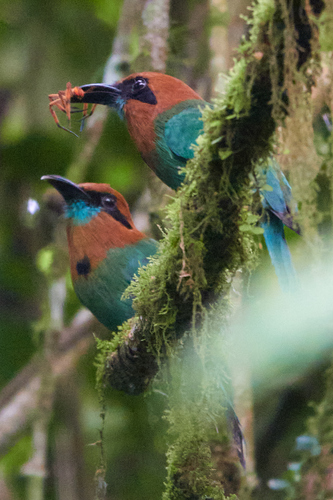
ヒロハシハチクイモドキ (Electron platyrhynchum) ヒロハシハチクイモドキ
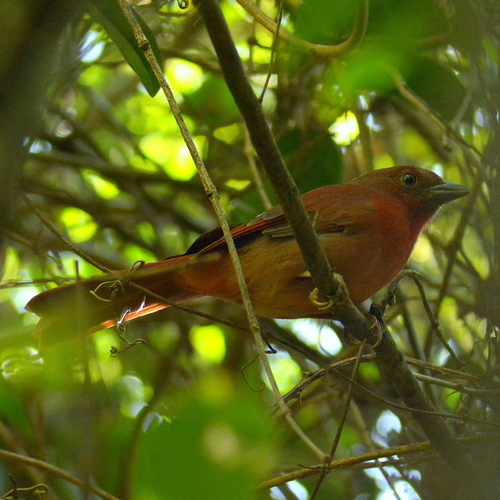
ズアカアリフウキンチョウ (Habia rubica) ズアカアリフウキンチョウ

メディア

読み込み中…

要点

ヒロハシハチクイモドキとズアカアリフウキンチョウを区別する最も信頼できるフィールドマークは、ヒロハシハチクイモドキの長いラケット型の尾と広く平らなくちばしであり、これはズアカアリフウキンチョウには見られません。未成熟のヒロハシハチクイモドキは鈍い色合いと青緑のアイストライプを示すことがありますが、独特の尾の形状は保持しています。それに対して、ズアカアリフウキンチョウは尾のラケットを欠き、はるかに細く、典型的なスズメ目のくちばしを持っています。ヒロハシハチクイモドキは直立して動かずに止まりますが、ズアカアリフウキンチョウはより活発で、小さな群れで見られることが多いです。シナモン色の頭を持つ鳥を見たら、色だけに頼る前に独特の尾とくちばしの構造を確認してください。

識別のコツ

  1. Tail shape is diagnostic: ヒロハシハチクイモドキは、2本の中央のラケット型の羽を持つ長い尾を持ち、これは稀なプレーンテールの亜種や幼鳥を除いてすべてに見られます。ズアカアリフウキンチョウはラケットの先端を示すことはありません; その尾は短く均一です。
  2. Bill structure: ヒロハシハチクイモドキのくちばしは広く、平らで、黒く、鋸歯状の縁とキールを持っています; ズアカアリフウキンチョウのくちばしは細く、円錐形で、典型的な歌鳥のものです。これは良い双眼鏡で遠くからでも見ることができます。
  3. Perched jizz: ヒロハシハチクイモドキは直立して動かずに止まり、しばしば単独またはペアで見られますが、ズアカアリフウキンチョウはより活発で、小さな群れで移動します。
  4. Plumage – head and chest: 両者はシナモン色の頭を持つように見えることがありますが、ヒロハシハチクイモドキは胸と頬に大きな黒い斑点と青緑のあごを持っています。ズアカアリフウキンチョウのオスは赤い冠の斑点を示すことがあります(常に見えるわけではありません)が、ヒロハシハチクイモドキの黒い顔/胸の斑点は決して示しません。
  5. Juvenile marks: 若いヒロハシハチクイモドキは鈍く暗い色合いで、青緑のアイストライプとくちばしにいくつかの白を持っていますが、長い尾と広いくちばしは示します。幼いズアカアリフウキンチョウはこれらの特徴を完全に欠いています。
  6. Upperparts and underparts: ヒロハシハチクイモドキの上面はシナモン色から赤褐色で、下は緑がかった青色にグラデーションします。ズアカアリフウキンチョウは一般的に鈍く、青緑のあごや黒い胸の斑点はありません。
  7. Size and bulk: ヒロハシハチクイモドキはほぼ2倍の重さで、尾のために長く見えます。ズアカアリフウキンチョウはよりコンパクトで軽いです。
  8. Habitat context: ヒロハシハチクイモドキは密で湿った森林の内部を好みます; ズアカアリフウキンチョウは開けた森林、エッジ、または二次成長の方が多く見られ、しばしば群れでいます。
  9. Behavior at rest: ヒロハシハチクイモドキは長時間静かに座っています; ズアカアリフウキンチョウは落ち着きがなく社交的です。
  10. Vocalizations: 聞こえた場合、ヒロハシハチクイモドキの鼻の「クワー」は特徴的です; ズアカアリフウキンチョウの呼び声はここでは詳しく説明されていません。
  11. Feeding behavior: ヒロハシハチクイモドキは止まり木から飛び出して狩りをし、果物は食べません; ズアカアリフウキンチョウはより活発に餌を探し、アリの群れを追うことがあります。
  12. Sexual dimorphism: ヒロハシハチクイモドキのオスとメスは似ています; ズアカアリフウキンチョウのオスは赤い冠を示すことがありますが、これは常に見えるわけではなく、メスや未成熟の個体にはありません。
  13. Bill color: ヒロハシハチクイモドキのくちばしは常に黒い(幼鳥にはいくつかの白があります); ズアカアリフウキンチョウのくちばしはより淡く、典型的なカーディナル科のものです。
  14. Facial pattern: ヒロハシハチクイモドキには黒い頬/耳の斑点があります; ズアカアリフウキンチョウにはこの特徴がありません。
  15. When in doubt: シナモン色の頭を持つ長く奇妙な形の尾と広いくちばしの鳥を見たら、それはヒロハシハチクイモドキです。もしその鳥が小さく、通常の尾とくちばしを持ち、特に群れにいるなら、それはズアカアリフウキンチョウです。

大きさ

ヒロハシハチクイモドキはズアカアリフウキンチョウよりもかなり重く(62g対32.5g)長い(約12インチ/30 cm)です。ヒロハシハチクイモドキのサイズは長い尾、特に伸びたラケット型の中央の羽によって強調されます。ズアカアリフウキンチョウはよりコンパクトで、典型的な歌鳥のシルエットとずっと短い尾を持っています。フィールドでは、ヒロハシハチクイモドキはより大きく見え、特に止まっているときに長く見えます。

羽色

幼いヒロハシハチクイモドキは大人よりも鈍く暗い色合いで、目の上に青緑のストライプとくちばしにいくつかの白を持っていますが、若い鳥でも長いラケット型の尾(稀なプレーンテールの亜種を除く)を示します。大人はシナモン色の頭、首、胸を持ち、胸と頬に大きな黒い斑点があり、緑がかった青色の下部を持っています。くちばしは広く、黒く、平らです。対照的に、ズアカアリフウキンチョウはどの年齢でもラケット型の尾羽を持たず、くちばしは細く円錐形です。オスは赤い冠の斑点を持っています(常に見えるわけではありません)が、メスや未成熟の個体は鈍く、ヒロハシハチクイモドキの黒い顔/胸の斑点と青緑のあごの組み合わせを示すことはありません。両種はシナモン色の頭を持つように見えることがありますが、ヒロハシハチクイモドキだけが目を引く尾とくちばしの構造を持っています。

行動

ヒロハシハチクイモドキは通常、単独またはペアで見られ、長時間静かに直立して座り、獲物を探してから飛び出し、同じ止まり木に戻ります。彼らは一般的に静止して目立たずにいます。ズアカアリフウキンチョウはより活発で、しばしば小さな群れで、森林の下層から中層を移動し、時にはアリの群れを追います。彼らの餌探しは、ヒロハシハチクイモドキの孤独で静かな態度に比べて、より落ち着きがなく社交的です。

生息環境

両種は中央アメリカと南アメリカの森林に生息していますが、ヒロハシハチクイモドキは密で湿った森林の内部とエッジに厳密に関連しており、しばしば水の近くや日陰の渓谷にいます。ズアカアリフウキンチョウは、二次成長、森林のエッジ、時にはより開けた地域を含む、より広範な森林の生息地に見られます。もし鳥が深く、手つかずの森林にいて動かずに止まっているなら、ヒロハシハチクイモドキの可能性が高いです; もしそれがより開けた森林の群れにいるなら、ズアカアリフウキンチョウが好まれます。

声

ヒロハシハチクイモドキの主な歌は、夜明けに繰り返される鼻音の「クワー」で、時にはデュエットで、静かな「トゥク」という音の連続がラトルに発展することがあります。ズアカアリフウキンチョウの鳴き声は提供されたメモには記載されていないため、ヒロハシハチクイモドキの特徴的な夜明けの歌が聞こえない限り、声は区別のためにあまり信頼できません。

より良い説明を送る

比較と同じ項目を使ってください。文章はすぐに公開されます。

The most reliable field mark separating Broad-billed Motmot from Red-crowned Ant-Tanager is the motmot’s long, racquet-tipped tail and broad, flattened bill, which are never seen on the ant-tanager. Immature motmots may show duller colors and a blue-green eye-stripe, but still retain the distinctive tail shape. In contrast, the ant-tanager lacks any tail racquets and has a much slimmer, more typical passerine bill. Motmots perch upright and motionless, while ant-tanagers are more active and often found in small groups. If you see a bird with a cinnamon head, check for the unique tail and bill structure before relying on color alone.

  1. Tail shape is diagnostic: Broad-billed Motmot has a long tail with two central racquet-tipped feathers, visible in all but rare plain-tailed subspecies and even in juveniles. Red-crowned Ant-Tanager never shows racquet tips; its tail is short and even.
  2. Bill structure: Motmot’s bill is broad, flattened, and black with serrated edges and a keel; ant-tanager’s bill is slim, conical, and typical of a songbird. This is visible even at a distance with good binoculars.
  3. Perched jizz: Motmots perch upright and motionless, often alone or in pairs, while ant-tanagers are more active, moving in small groups.
  4. Plumage – head and chest: Both can appear rufous-headed, but motmot has a large black patch on the chest and cheeks, and a blue-green chin. Ant-tanager males may show a red crown patch (not always visible), but never the motmot’s black facial/chest patches.
  5. Juvenile marks: Young motmots are duller and darker, with a blue-green eye-stripe and some white on the bill, but still show the long tail and broad bill. Juvenile ant-tanagers lack these features entirely.
  6. Upperparts and underparts: Motmot’s upperparts are cinnamon-rufous, grading to greenish and then bluish below. Ant-tanager is generally duller, with no blue-green chin or black chest patch.
  7. Size and bulk: Motmot is almost twice as heavy and appears longer due to its tail. Ant-tanager is more compact and lighter.
  8. Habitat context: Motmot prefers dense, humid forest interiors; ant-tanager is more likely in open woodland, edges, or secondary growth, and often in groups.
  9. Behavior at rest: Motmot sits quietly for long periods; ant-tanager is restless and social.
  10. Vocalizations: If heard, motmot’s nasal "cwaah" at dawn is distinctive; ant-tanager’s calls are not detailed here.
  11. Feeding behavior: Motmot hunts by sallying from a perch and does not eat fruit; ant-tanager forages more actively and may follow ant swarms.
  12. Sexual dimorphism: Motmot sexes look alike; ant-tanager males may show a red crown, but this is not always visible and is absent in females/immatures.
  13. Bill color: Motmot’s bill is always black (with some white in juveniles); ant-tanager’s bill is paler and more typical of a cardinalid.
  14. Facial pattern: Motmot has a black cheek/auricular patch; ant-tanager lacks this feature.
  15. When in doubt: If you see a rufous-headed bird with a long, odd-shaped tail and a broad bill, it is a motmot. If the bird is smaller, with a normal tail and bill, and especially if in a group, it is an ant-tanager.

Broad-billed Motmot is significantly heavier (62g vs 32.5g) and longer (about 12 inches/30 cm) than Red-crowned Ant-Tanager, which is a medium-sized songbird. The motmot’s size is accentuated by its long tail, especially the elongated racquet-tipped central feathers. The ant-tanager is more compact, with a typical songbird silhouette and much shorter tail. In the field, the motmot will appear bulkier and more elongated, especially when perched.

Juvenile Broad-billed Motmots are duller and darker than adults, with a blue-green streak over the eye and some white on the bill, but even young birds show the long, racquet-tipped tail (except for the rare plain-tailed subspecies). Adults have a cinnamon-rufous head, neck, and chest, with a large black patch on the chest and cheeks, and greenish to bluish underparts. The bill is broad, black, and flattened. Red-crowned Ant-Tanager, by contrast, does not have racquet-tipped tail feathers at any age, and its bill is slender and conical. Males have a red crown patch (not always visible), while females and immatures are duller, but never show the motmot’s combination of black facial/chest patches and blue-green chin. Both species can appear rufous-headed, but only the motmot has the striking tail and bill structure.

Broad-billed Motmots are typically seen singly or in pairs, sitting quietly and upright for long periods, scanning for prey before sallying out and returning to the same perch. They are generally sedentary and unobtrusive. Red-crowned Ant-Tanagers are more active, often in small groups, and move about in the lower to mid-levels of the forest, sometimes following ant swarms. Their foraging is more restless and social compared to the motmot’s solitary and still demeanor.

Both species occur in Central and South American forests, but Broad-billed Motmot is more strictly associated with dense, humid forest interiors and edges, often near water or in shady ravines. Red-crowned Ant-Tanager is found in a wider range of wooded habitats, including secondary growth, forest edges, and sometimes more open areas. If the bird is in deep, undisturbed forest and perched motionless, motmot is more likely; if it is in a group in more open woodland, ant-tanager is favored.

Broad-billed Motmot’s main song is a nasal, repeated "cwaah" given at dawn, sometimes in duets, and a quieter series of "tuk" notes that can develop into a rattle. Red-crowned Ant-Tanager’s vocalizations are not described in the provided notes, so voice is less reliable for separation unless the motmot’s distinctive dawn song is heard.

変更を破棄しますか?

保存していない編集があります。今離れると失われます。

ヒロハシハチクイモドキ · ズアカアリフウキンチョウ · 苦手な鳥