

Broad-billed Motmot vs Red-crowned Ant-Tanager
Electron platyrhynchum contro Habia rubica
Fai un quiz con Broad-billed Motmot e Red-crowned Ant-Tanager
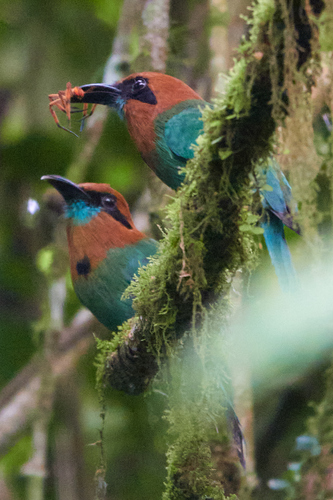 Broad-billed Motmot
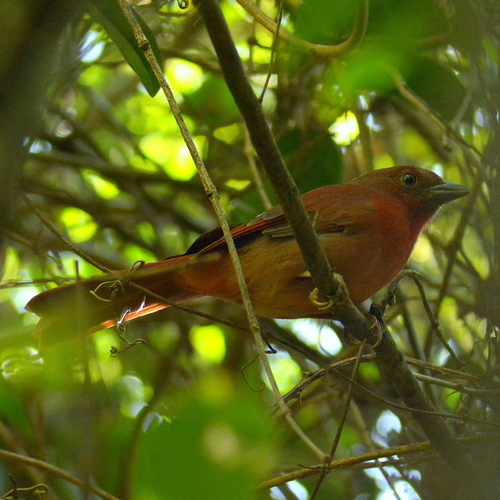 Red-crowned Ant-Tanager
In breve
Il segno distintivo più affidabile che separa il Broad-billed Motmot dal Red-crowned Ant-Tanager è la lunga coda a forma di racchetta e il becco largo e appiattito del motmot, che non si vedono mai nell'ant-tanager. I motmot immaturi possono mostrare colori più opachi e una striscia oculare blu-verde, ma mantengono comunque la forma distintiva della coda. Al contrario, l'ant-tanager non ha racchette sulla coda e ha un becco molto più snello, tipico dei passeriformi. I motmot si posano dritti e immobili, mentre gli ant-tanager sono più attivi e spesso si trovano in piccoli gruppi. Se vedi un uccello con una testa cannella, controlla la struttura unica della coda e del becco prima di fare affidamento solo sul colore.
Consigli di identificazione
- La forma della coda è diagnostica: Il Broad-billed Motmot ha una lunga coda con due piume centrali a forma di racchetta, visibili in tutte le sottospecie a coda semplice rare e anche nei giovani. Il Red-crowned Ant-Tanager non mostra mai punte a racchetta; la sua coda è corta e uniforme.
- Struttura del becco: Il becco del motmot è largo, appiattito, e nero con bordi seghettati e un chiglia; il becco dell'ant-tanager è snello, conico e tipico di un uccello canoro. Questo è visibile anche da lontano con buoni binocoli.
- Postura in perching: I motmot si posano dritti e immobili, spesso da soli o in coppie, mentre gli ant-tanagers sono più attivi, muovendosi in piccoli gruppi.
- Piumaggio – testa e petto: Entrambi possono apparire con testa rugginosa, ma il motmot ha una grande macchia nera sul petto e sulle guance, e un mento blu-verde. I maschi dell'ant-tanager possono mostrare una macchia rossa sulla corona (non sempre visibile), ma mai le macchie nere facciali/pettorali del motmot.
- Segni giovanili: I giovani motmot sono più opachi e scuri, con una striscia oculare blu-verde e un po' di bianco sul becco, ma mostrano comunque la lunga coda e il becco largo. Gli ant-tanagers giovanili mancano completamente di queste caratteristiche.
- Parte superiore e parte inferiore: Le parti superiori del motmot sono rugginose-cannella, che sfumano in verde e poi in blu sotto. L'ant-tanager è generalmente più opaco, senza mento blu-verde o macchia nera sul petto.
- Dimensioni e massa: Il motmot è quasi due volte più pesante e appare più lungo a causa della sua coda. L'ant-tanager è più compatto e leggero.
- Contesto dell'habitat: Il motmot preferisce interni di foreste dense e umide; l'ant-tanager è più probabile in boschi aperti, bordi, o crescita secondaria, e spesso in gruppi.
- Comportamento a riposo: Il motmot si siede tranquillamente per lunghi periodi; l'ant-tanager è irrequieto e sociale.
- Vocalizzazioni: Se sentito, il "cwaah" nasale del motmot all'alba è distintivo; le chiamate dell'ant-tanager non sono dettagliate qui.
- Comportamento alimentare: Il motmot caccia lanciandosi da un posatoio e non mangia frutta; l'ant-tanager cerca cibo in modo più attivo e può seguire sciami di formiche.
- Dimorfismo sessuale: I sessi del motmot si assomigliano; i maschi dell'ant-tanager possono mostrare una corona rossa, ma questo non è sempre visibile ed è assente nelle femmine/neonati.
- Colore del becco: Il becco del motmot è sempre nero (con un po' di bianco nei giovani); il becco dell'ant-tanager è più chiaro e più tipico di un cardinalide.
- Schema facciale: Il motmot ha una macchia nera sulla guancia/auricolare; l'ant-tanager manca di questa caratteristica.
- Quando in dubbio: Se vedi un uccello con testa rugginosa, una lunga coda di forma strana e un becco largo, è un motmot. Se l'uccello è più piccolo, con una coda e un becco normali, e soprattutto se in un gruppo, è un ant-tanager.
Taglia
Il Broad-billed Motmot è significativamente più pesante (62g vs 32.5g) e più lungo (circa 12 pollici/30 cm) rispetto al Red-crowned Ant-Tanager, che è un uccello canoro di dimensioni medie. La dimensione del motmot è accentuata dalla sua lunga coda, specialmente le piume centrali allungate a forma di racchetta. L'ant-tanager è più compatto, con un profilo tipico di un uccello canoro e una coda molto più corta. Sul campo, il motmot apparirà più massiccio e più allungato, specialmente quando è posato.
Piumaggio
I giovani Broad-billed Motmots sono più opachi e scuri rispetto agli adulti, con una striscia blu-verde sopra l'occhio e un po' di bianco sul becco, ma anche i giovani mostrano la lunga coda a forma di racchetta (eccetto per le rare sottospecie a coda semplice). Gli adulti hanno una testa, un collo e un petto rugginosi-cannella, con una grande macchia nera sul petto e sulle guance, e parti inferiori che vanno dal verde al blu. Il becco è largo, nero e appiattito. Il Red-crowned Ant-Tanager, al contrario, non ha piume della coda a forma di racchetta a nessuna età, e il suo becco è snello e conico. I maschi hanno una macchia rossa sulla corona (non sempre visibile), mentre le femmine e i giovani sono più opachi, ma non mostrano mai la combinazione di macchie nere facciali/pettorali e mento blu-verde del motmot. Entrambe le specie possono apparire con testa rugginosa, ma solo il motmot ha la struttura di coda e becco sorprendente.
Comportamento
I Broad-billed Motmots sono tipicamente visti singolarmente o in coppie, seduti tranquillamente e dritti per lunghi periodi, osservando le prede prima di lanciarsi e tornare allo stesso posatoio. Sono generalmente sedentari e discreti. Gli ant-tanager Red-crowned sono più attivi, spesso in piccoli gruppi, e si muovono nei livelli inferiori e medi della foresta, a volte seguendo sciami di formiche. La loro ricerca di cibo è più irrequieta e sociale rispetto al comportamento solitario e immobile del motmot.
Habitat
Entrambe le specie si trovano nelle foreste dell'America Centrale e Meridionale, ma il Broad-billed Motmot è più strettamente associato agli interni e ai bordi delle foreste dense e umide, spesso vicino all'acqua o in gole ombreggiate. Il Red-crowned Ant-Tanager si trova in una gamma più ampia di habitat boschivi, inclusi la crescita secondaria, i bordi delle foreste e talvolta aree più aperte. Se l'uccello si trova in una foresta profonda e indisturbata e posato immobile, è più probabile che sia un motmot; se è in un gruppo in un bosco più aperto, è favorito l'ant-tanager.
Voce
Il canto principale del Broad-billed Motmot è un "cwaah" nasale, ripetuto, dato all'alba, a volte in duetti, e una serie più silenziosa di note "tuk" che possono svilupparsi in un rumore. Le vocalizzazioni del Red-crowned Ant-Tanager non sono descritte nelle note fornite, quindi la voce è meno affidabile per la separazione a meno che non si senta il distintivo canto dell'alba del motmot.
Broad-billed Motmot · Red-crowned Ant-Tanager · I miei uccelli difficili