

Motmot

ニシカンムリコサイチョウ 対 ミナミキバシコサイチョウ

Lophoceros bradfieldi 対 Tockus leucomelas

ニシカンムリコサイチョウとミナミキバシコサイチョウのクイズ
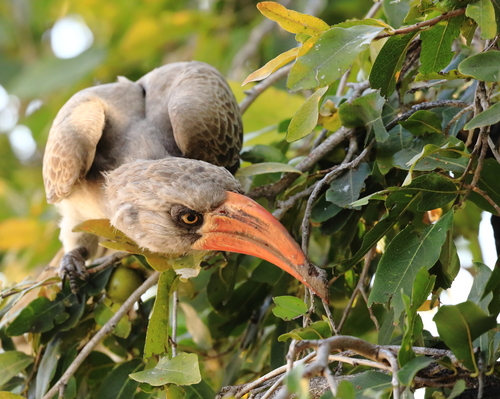
ニシカンムリコサイチョウ (Lophoceros bradfieldi) ニシカンムリコサイチョウ
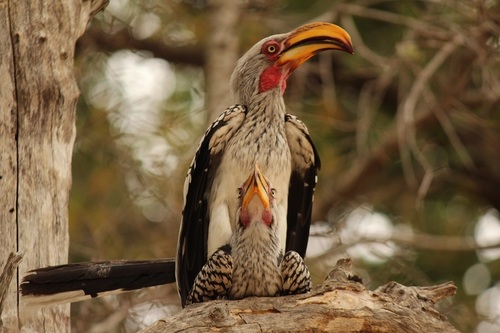
ミナミキバシコサイチョウ (Tockus leucomelas) ミナミキバシコサイチョウ

メディア

読み込み中…

要点

ブラッドフィールドカンムリコサイチョウとミナミキバシコサイチョウを区別する最も信頼できる方法は、くちばしの色と顔の皮膚です:ブラッドフィールドは長い赤いくちばしを持ち、カスケはなく、雌はターコイズ色の顔の皮膚を持っています。一方、ミナミキバシコサイチョウは、特にオスでは小さなカスケを持つ巨大で明るい黄色のくちばしと、目の周りにピンク色の皮膚を示します。両種ともに黒い背中と翼を持ち、白い腹部がありますが、ミナミキバシコサイチョウは上部に白い斑点とストライプがより多く見られます。野外では、ミナミキバシコサイチョウは一般的で、地面で餌を探しているのがよく見られますが、ブラッドフィールドははるかに頻繁には遭遇せず、モパネ林を好みます。尾の先端の色(ブラッドフィールドでは白)や顔の皮膚とくちばしの構造の微妙な違いは、止まっているまたは飛んでいる鳥を識別するための重要なポイントです。

識別のコツ

  1. くちばしの色と形: ブラッドフィールドカンムリコサイチョウは長い赤いくちばしを持ち、カスケはありませんが、ミナミキバシコサイチョウは巨大で明るい黄色のくちばしを持ち、小さなカスケがあります(特にオスの場合)。これは成鳥にとって最も即時かつ信頼できるフィールドマークです。
  2. 顔の皮膚の色(雌ブラッドフィールド): 雌のブラッドフィールドカンムリコサイチョウは、ミナミキバシコサイチョウには見られない独特のターコイズ色の顔の皮膚を示します。ミナミキバシコサイチョウの顔の皮膚は目の周りと頬のストライプがピンク色です。
  3. くちばしのカスケ: ミナミキバシコサイチョウのオスは、くちばしの長さのほとんどを覆う小さなカスケを持っていますが、ブラッドフィールドカンムリコサイチョウはカスケが全くありません。雌の場合、カスケはあまり目立ちませんが、ミナミキバシコサイチョウにはまだ存在します。
  4. 尾の先端の色: ブラッドフィールドカンムリコサイチョウは白い尾羽を持ち、止まっている時や飛んでいる時に目立つことがあります。ミナミキバシコサイチョウにはこの特徴はありません。
  5. 上面の模様: ミナミキバシコサイチョウは上部に白い斑点とストライプが豊富に見られ、黒い背中と翼に対してより強くマーキングされています。ブラッドフィールドは上部がより均一に黒いです。
  6. 腹部と胸部: 両種ともに白い腹部を持っていますが、ミナミキバシコサイチョウの胸部は黒い縞模様が軽く見られ、首は斑点のある灰色です。ブラッドフィールドはよりクリーンな白い腹部を持ち、胸の縞模様については言及されていません。
  7. 目の色: 両種ともに通常は黄色い目を持っていますが、ミナミキバシコサイチョウは時々茶色い目を示すことがあります。これは信頼できる区別ではありませんが、稀な場合には役立つかもしれません。
  8. 顔の皮膚(一般): ミナミキバシコサイチョウは目の周りと頬のストライプがピンク色の皮膚を持っていますが、ブラッドフィールドはこれを持っているとは記述されていません(雌のターコイズを除く)。
  9. 飛行スタイル: ミナミキバシコサイチョウは滑空と重い羽ばたきを交互に行い、飛行中は力強いと記述されています。ブラッドフィールドの飛行スタイルは記述されていないため、これはあくまで小さな補助的なマークです。
  10. 翼の下の羽: ミナミキバシコサイチョウは翼の下の羽が欠けており、飛行中の翼の下の見た目に影響を与える可能性がありますが、これは実用的なフィールドマークとしては記述されていません。
  11. 餌を探す行動: ミナミキバシコサイチョウは開けた場所で地面を餌を探しているのがよく見られますが、ブラッドフィールドは地面で見られることは少なく、モパネ林の樹上生活を好みます。
  12. 生息地と豊富さ: 鳥が乾燥したトゲのある草地や広葉樹の林にいて一般的であれば、ミナミキバシコサイチョウの可能性が高いです。ブラッドフィールドははるかに一般的ではなく、生息地に制限があります。
  13. 性的二形性: オスのミナミキバシコサイチョウは雌よりも大きなくちばしとより目立つカスケを持っていますが、両性ともに黄色いくちばしを持っています。ブラッドフィールドでは、雌は小さくターコイズ色の顔の皮膚を持っていますが、両性ともに赤いくちばしを持っています。
  14. 幼鳥/未成熟の羽毛: これらの種に特有の幼鳥または未成熟の上翼や飛行パターンの違いは記述されていないため、これを区別のために頼らないでください。
  15. 落とし穴: 両種ともに黒い背中と翼、白い腹部、長い尾を持っているため、一般的な色のパターンだけに頼らないでください。常にくちばしの色、顔の皮膚、尾の先端の色を確認して、確実な識別を行ってください。

大きさ

両種ともに中型のカンムリコサイチョウで、長さにかなりの重複があります:ブラッドフィールドカンムリコサイチョウは50〜57 cm、ミナミキバシコサイチョウは48〜60 cmの長さです。ミナミキバシコサイチョウは平均約189.5 gの質量を持っていますが、ブラッドフィールドの直接的な質量データは利用できません。実際には、サイズは信頼できる区別ではなく、両種ともに重複があり、両性ともにサイズが似ていることがありますが、オスのミナミキバシコサイチョウは比例的に大きなくちばしのためにより大きく見えることがあります。

羽色

両種に特有の年齢別の飛行や上翼のパターンの違いは記述されていないため、成鳥と一般的な羽毛に焦点を当てます。ブラッドフィールドカンムリコサイチョウは主に黒い背中と翼を持ち、クリーンな白い腹部と白い尾を持っています。くちばしは赤く、カスケはなく、目は黄色です。雌はターコイズ色の顔の皮膚を示し、これはこの2種の中でユニークです。ミナミキバシコサイチョウも上部は黒く、下部は白いですが、上面は白い斑点とストライプでより強くマーキングされています。くちばしは明るい黄色で非常に大きく、オスではより目立つ小さなカスケがあります。目の周りと頬のストライプはピンク色で、目は通常黄色ですが、茶色になることもあります。首は斑点のある灰色で、胸は黒い縞模様が軽く見られます。両種ともに長い尾を持っていますが、ブラッドフィールドだけが白い尾の先端を持っていると記述されています。ミナミキバシコサイチョウは翼の下の羽が欠けており、飛行中の翼の下の見た目に微妙に影響を与える可能性がありますが、これはフィールドマークとしては記述されていません。

行動

ミナミキバシコサイチョウは、種子、昆虫、クモ、サソリを探して地面で餌を探しているのがよく見られ、一般的に目立ちやすく接近しやすいです。その飛行は力強く、滑空と重い羽ばたきを交互に行います。ブラッドフィールドカンムリコサイチョウはあまり見られず、モパネ林や混合トゲのある草地に留まる傾向があり、果物、大きな昆虫、ナッツ、小さな爬虫類を食べます。両種ともに木に止まりますが、ミナミキバシコサイチョウは開けた場所で地面を歩いているのが見られる可能性が高いです。

生息環境

ブラッドフィールドカンムリコサイチョウは、主にナミビア北東部、ボツワナ北部、アンゴラ南部、ジンバブエ東部のモパネ林や混合トゲのある草地の珍しい住民です。ミナミキバシコサイチョウは、南アフリカ全体の乾燥したトゲのある草地や広葉樹の林に一般的で広く分布しています。典型的な乾燥したトゲのある草地や開けた林にいる場合、特にブラッドフィールドの生息域の外では、ミナミキバシコサイチョウを見る可能性がはるかに高いです。

より良い説明を送る

比較と同じ項目を使ってください。文章はすぐに公開されます。

The most reliable way to separate Bradfield's Hornbill from Southern Yellow-billed Hornbill is by bill color and facial skin: Bradfield's has a long, red bill with no casque and turquoise facial skin in females, while Southern Yellow-billed Hornbill shows a massive, bright yellow bill with a small casque (especially in males) and pinkish skin around the eyes. Both have black backs and wings with white bellies, but Southern Yellow-billed Hornbill is more heavily marked with white spots and stripes above. In the field, Southern Yellow-billed Hornbill is common and often seen foraging on the ground, while Bradfield's is much less frequently encountered and prefers mopane woodlands. Tail tip color (white in Bradfield's) and subtle differences in facial skin and bill structure are key for tricky perched or flying birds.

  1. Bill color and shape: Bradfield's Hornbill has a long, red bill with no casque, while Southern Yellow-billed Hornbill has a huge, bright yellow bill with a small casque (especially in males). This is the most immediate and reliable field mark for adults.
  2. Facial skin color (female Bradfield's): Female Bradfield's Hornbill shows distinctive turquoise facial skin, never seen in Southern Yellow-billed Hornbill, whose facial skin is pinkish around the eyes and malar stripe.
  3. Bill casque: Southern Yellow-billed Hornbill males have a small casque that covers most of the bill's length; Bradfield's Hornbill lacks a casque entirely. In females, the casque is less obvious but still present in Southern Yellow-billed Hornbill.
  4. Tail tip color: Bradfield's Hornbill has white-tipped tail feathers, which can be conspicuous when perched or in flight. Southern Yellow-billed Hornbill does not have this feature.
  5. Upperparts pattern: Southern Yellow-billed Hornbill is more heavily marked above, with abundant white spots and stripes on the black back and wings. Bradfield's is more uniformly black above.
  6. Belly and chest: Both have white bellies, but Southern Yellow-billed Hornbill's chest is lightly streaked with black, and the neck is gray with spots. Bradfield's has a cleaner white belly and no mention of chest streaking.
  7. Eye color: Both usually have yellow eyes, but Southern Yellow-billed Hornbill can sometimes show brown eyes. This is not a reliable separator but may help in rare cases.
  8. Facial skin (general): Southern Yellow-billed Hornbill has pinkish skin around the eyes and malar stripe; Bradfield's is not described as having this, except for the turquoise in females.
  9. Flight style: Southern Yellow-billed Hornbill alternates gliding and heavy wingbeats and is described as powerful in flight. Bradfield's flight style is not described, so this is only a minor supporting mark.
  10. Underwing coverts: Southern Yellow-billed Hornbill lacks underwing coverts, which may affect the look of the underwing in flight, but this is not described as a practical field mark.
  11. Foraging behavior: Southern Yellow-billed Hornbill is often seen foraging on the ground in open areas; Bradfield's is less often seen on the ground and is more arboreal in mopane woodland.
  12. Habitat and abundance: If the bird is in dry thornveld or broad-leafed woodland and is common, it is likely Southern Yellow-billed Hornbill. Bradfield's is much less common and more habitat-restricted.
  13. Sexual dimorphism: Male Southern Yellow-billed Hornbills have larger bills and more prominent casques than females, but both sexes have yellow bills. In Bradfield's, females are smaller and have turquoise facial skin, but both sexes have red bills.
  14. Juvenile/immature plumage: No distinctive juvenile or immature upperwing or flight pattern differences are described for these species, so do not rely on this for separation.
  15. Pitfalls: Both species have black backs and wings with white bellies and long tails, so do not rely on general color pattern alone. Always check bill color, facial skin, and tail tip color for a confident ID.

Both are medium-sized hornbills with considerable overlap in length: Bradfield's Hornbill measures 50–57 cm, while Southern Yellow-billed Hornbill ranges from 48–60 cm in length. Southern Yellow-billed Hornbill averages about 189.5 g in mass [wikidata], but no direct mass data is available for Bradfield's. In practice, size is not a reliable separator, as both overlap and both sexes can be similar in size, though male Southern Yellow-billed Hornbills may appear bulkier due to their proportionally larger bill.

No age-specific flight or upperwing pattern differences are described for either species, so focus is on adult and general plumage. Bradfield's Hornbill is mostly black above (back and wings), with a clean white belly and long tail tipped with white. The bill is red and lacks a casque, and the eyes are yellow. Females show turquoise facial skin, which is unique among these two. Southern Yellow-billed Hornbill is also black above and white below, but the upperparts are more heavily marked with white spots and stripes, especially on the back and wings. Its bill is bright yellow, very large, and has a small casque that is more prominent in males. The skin around the eyes and malar stripe is pinkish, and the eyes are usually yellow but can be brown. The neck is gray with spots, and the chest is lightly streaked with black. Both species have long tails, but only Bradfield's is described as having white tail tips. Southern Yellow-billed Hornbill lacks underwing coverts, which may subtly affect the appearance of the underwing in flight, but this is not described as a field mark.

Southern Yellow-billed Hornbill is often seen foraging on the ground for seeds, insects, spiders, and scorpions, and is generally conspicuous and approachable. Its flight is powerful, alternating glides and heavy wingbeats. Bradfield's Hornbill is less commonly seen and tends to stay in mopane woodlands and mixed thorn fields, feeding on fruits, large insects, nuts, and small reptiles. Both species perch in trees, but Southern Yellow-billed Hornbill is more likely to be seen walking on the ground in open areas.

Bradfield's Hornbill is an uncommon resident of mopane woodlands and mixed thorn fields, mainly in northeastern Namibia, northern Botswana, southern Angola, and eastern Zimbabwe. Southern Yellow-billed Hornbill is common and widespread in dry thornveld and broad-leafed woodlands across southern Africa. If you are in a typical dry thornveld or open woodland, especially outside Bradfield's range, you are far more likely to see Southern Yellow-billed Hornbill.

変更を破棄しますか?

保存していない編集があります。今離れると失われます。

ニシカンムリコサイチョウ · ミナミキバシコサイチョウ · 苦手な鳥