

Bradfield's Hornbill vs Southern Yellow-billed Hornbill
Lophoceros bradfieldi contro Tockus leucomelas
Fai un quiz con Bradfield's Hornbill e Southern Yellow-billed Hornbill
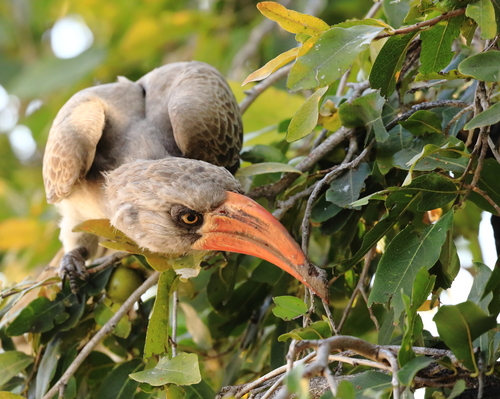 Bradfield's Hornbill
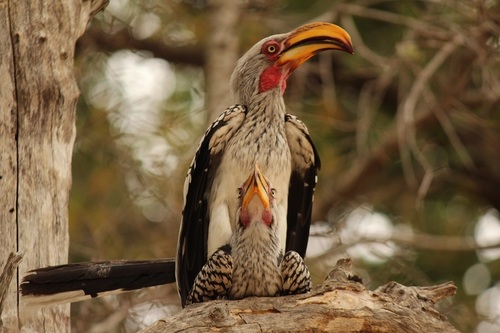 Southern Yellow-billed Hornbill
In breve
Il modo più affidabile per separare il Bradfield's Hornbill dal Southern Yellow-billed Hornbill è il colore del becco e la pelle facciale: il Bradfield's ha un lungo becco rosso senza casco e pelle facciale turchese nelle femmine, mentre il Southern Yellow-billed Hornbill mostra un enorme becco giallo brillante con un piccolo casco (specialmente nei maschi) e pelle rosa attorno agli occhi. Entrambi hanno schiene e ali nere con pance bianche, ma il Southern Yellow-billed Hornbill è più pesantemente marcato con macchie e strisce bianche sopra. Sul campo, il Southern Yellow-billed Hornbill è comune e spesso visto cercare cibo a terra, mentre il Bradfield's è molto meno frequentemente incontrato e preferisce le foreste di mopane. Il colore della punta della coda (bianco nel Bradfield's) e le sottili differenze nella pelle facciale e nella struttura del becco sono fondamentali per identificare uccelli appollaiati o in volo.
Consigli di identificazione
- Colore e forma del becco: Il Bradfield's Hornbill ha un lungo becco rosso senza casco, mentre il Southern Yellow-billed Hornbill ha un enorme becco giallo brillante con un piccolo casco (specialmente nei maschi). Questo è il segno di campo più immediato e affidabile per gli adulti.
- Colore della pelle facciale (femmina di Bradfield's): La femmina del Bradfield's Hornbill mostra una pelle facciale turchese distintiva, mai vista nel Southern Yellow-billed Hornbill, la cui pelle facciale è rosa attorno agli occhi e alla striscia malare.
- Casco del becco: I maschi del Southern Yellow-billed Hornbill hanno un piccolo casco che copre la maggior parte della lunghezza del becco; il Bradfield's Hornbill non ha affatto un casco. Nelle femmine, il casco è meno evidente ma comunque presente nel Southern Yellow-billed Hornbill.
- Colore della punta della coda: Il Bradfield's Hornbill ha piume della coda con punta bianca, che possono essere evidenti quando è appollaiato o in volo. Il Southern Yellow-billed Hornbill non ha questa caratteristica.
- Motivo delle parti superiori: Il Southern Yellow-billed Hornbill è più pesantemente marcato sopra, con abbondanti macchie e strisce bianche sulla schiena e sulle ali nere. Il Bradfield's è più uniformemente nero sopra.
- Pancia e petto: Entrambi hanno pance bianche, ma il petto del Southern Yellow-billed Hornbill è leggermente striato di nero, e il collo è grigio con macchie. Il Bradfield's ha una pancia bianca più pulita e non si menziona la striatura del petto.
- Colore degli occhi: Entrambi di solito hanno occhi gialli, ma il Southern Yellow-billed Hornbill può talvolta mostrare occhi marroni. Questo non è un separatore affidabile ma può aiutare in rari casi.
- Pelle facciale (generale): Il Southern Yellow-billed Hornbill ha pelle rosa attorno agli occhi e alla striscia malare; il Bradfield's non è descritto come avente questo, eccetto per il turchese nelle femmine.
- Stile di volo: Il Southern Yellow-billed Hornbill alterna planate e forti battiti d'ali ed è descritto come potente in volo. Lo stile di volo del Bradfield's non è descritto, quindi questo è solo un segno di supporto minore.
- Copritrici sottoala: Il Southern Yellow-billed Hornbill manca di copritrici sottoala, il che può influenzare l'aspetto della sottoala in volo, ma questo non è descritto come un segno di campo pratico.
- Comportamento di foraggiamento: Il Southern Yellow-billed Hornbill è spesso visto cercare cibo a terra in aree aperte; il Bradfield's è meno spesso visto a terra ed è più arboricolo nelle foreste di mopane.
- Habitat e abbondanza: Se l'uccello si trova in un secco thornveld o in una foresta a foglia larga ed è comune, è probabile che sia un Southern Yellow-billed Hornbill. Il Bradfield's è molto meno comune e più limitato nell'habitat.
- Dimorfismo sessuale: I maschi del Southern Yellow-billed Hornbill hanno becchi più grandi e caschi più prominenti rispetto alle femmine, ma entrambi i sessi hanno becchi gialli. Nel Bradfield's, le femmine sono più piccole e hanno pelle facciale turchese, ma entrambi i sessi hanno becchi rossi.
- Piumaggio giovanile/immaturo: Non sono descritte differenze distintive nel piumaggio o nel modello di volo per questi uccelli, quindi non fare affidamento su questo per la separazione.
- Trappole: Entrambe le specie hanno schiene e ali nere con pance bianche e lunghe code, quindi non fare affidamento solo sul modello di colore generale. Controlla sempre il colore del becco, la pelle facciale e il colore della punta della coda per un'identificazione sicura.
Taglia
Entrambi sono hornbill di dimensioni medie con un notevole sovrapposizione nella lunghezza: il Bradfield's Hornbill misura 50–57 cm, mentre il Southern Yellow-billed Hornbill varia da 48–60 cm in lunghezza. Il Southern Yellow-billed Hornbill pesa in media circa 189,5 g [wikidata], ma non sono disponibili dati diretti sul peso per il Bradfield's. In pratica, la dimensione non è un separatore affidabile, poiché entrambi si sovrappongono e entrambi i sessi possono essere simili in dimensione, anche se i maschi del Southern Yellow-billed Hornbill possono apparire più robusti a causa del loro becco proporzionalmente più grande.
Piumaggio
Non sono descritte differenze specifiche di volo o di modello delle ali superiori per età per nessuna delle due specie, quindi ci si concentra sul piumaggio adulto e generale. Il Bradfield's Hornbill è per lo più nero sopra (schiena e ali), con una pancia bianca pulita e una lunga coda con punta bianca. Il becco è rosso e privo di casco, e gli occhi sono gialli. Le femmine mostrano pelle facciale turchese, che è unica tra questi due. Il Southern Yellow-billed Hornbill è anch'esso nero sopra e bianco sotto, ma le parti superiori sono più pesantemente marcate con macchie e strisce bianche, specialmente sulla schiena e sulle ali. Il suo becco è giallo brillante, molto grande, e ha un piccolo casco che è più prominente nei maschi. La pelle attorno agli occhi e la striscia malare è rosa, e gli occhi sono di solito gialli ma possono essere marroni. Il collo è grigio con macchie, e il petto è leggermente striato di nero. Entrambe le specie hanno lunghe code, ma solo il Bradfield's è descritto come avente punte bianche sulla coda. Il Southern Yellow-billed Hornbill manca di copritrici sottoala, il che può influenzare sottilmente l'aspetto della sottoala in volo, ma questo non è descritto come un segno di campo.
Comportamento
Il Southern Yellow-billed Hornbill è spesso visto cercare cibo a terra per semi, insetti, ragni e scorpioni, ed è generalmente evidente e avvicinabile. Il suo volo è potente, alternando planate e forti battiti d'ali. Il Bradfield's Hornbill è meno comunemente visto e tende a rimanere nelle foreste di mopane e nei campi misti di spine, nutrendosi di frutti, grandi insetti, noci e piccoli rettili. Entrambe le specie si appollaiano sugli alberi, ma il Southern Yellow-billed Hornbill è più probabile essere visto camminare a terra in aree aperte.
Habitat
Il Bradfield's Hornbill è un residente poco comune delle foreste di mopane e dei campi misti di spine, principalmente nel nord-est della Namibia, nel nord del Botswana, nel sud dell'Angola e nell'est dello Zimbabwe. Il Southern Yellow-billed Hornbill è comune e diffuso nel secco thornveld e nelle foreste a foglia larga in tutta l'Africa meridionale. Se ti trovi in un tipico thornveld secco o in una foresta aperta, specialmente al di fuori dell'areale del Bradfield's, è molto più probabile che tu veda il Southern Yellow-billed Hornbill.
Bradfield's Hornbill · Southern Yellow-billed Hornbill · I miei uccelli difficili