

Motmot

ムナフクモカリドリ 対 アカハラコノハドリ

Arachnothera everetti 対 Chloropsis hardwickii

ムナフクモカリドリとアカハラコノハドリのクイズ
ムナフクモカリドリ (Arachnothera everetti) ムナフクモカリドリ
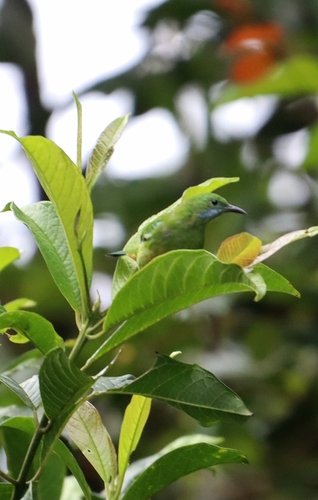
アカハラコノハドリ (Chloropsis hardwickii) アカハラコノハドリ

メディア

読み込み中…

要点

ボルネオクモカリドリとアカハラコノハドリを区別する最も信頼できる方法は、全体的な羽色と構造です:アカハラコノハドリは鮮やかな色合いの鳥で、目を引くオレンジ色の腹、緑色の背中、青い尾と飛行羽、そして特徴的な黒と青の喉の斑点を持っていますが、クモカリドリはこれらの鮮やかな色を欠いており、明るい模様としては説明されていません。アカハラコノハドリは、クモカリドリの典型的に非常に長い下向きのくちばしと比べて、わずかに短いが依然として長い曲がったくちばしを持っています。強いオレンジ色の腹と青い尾を持つ鳥を見たら、それはアカハラコノハドリです;より控えめで色が少ない、非常に長いくちばしを持つ鳥はクモカリドリを指します。両種は蜜や昆虫を食べることがありますが、彼らの外見と構造が最良の手がかりです。

識別のコツ

  1. オレンジ色の腹と青い尾(アカハラコノハドリのみ): 明るいオレンジ色の腹と青い尾または飛行羽を持つ鳥を見たら、それはアカハラコノハドリです。クモカリドリはどの年齢や性別でもこれらの色を示しません。
  2. 黒と青の喉の斑点(アカハラコノハドリのみ): アカハラコノハドリは喉と胸に特徴的な黒と青の斑点を持っており、クモカリドリにはありません。これは止まっている鳥における重要な特徴で、両性に見られます。
  3. 全体的な緑と青の色合い(アカハラコノハドリ): アカハラコノハドリの背中は緑色で、尾と飛行羽は青色で、鮮やかで多色の外観を作り出しています。クモカリドリはこれらの明るい色を欠いており、全体的に控えめです。
  4. 非常に長い下向きのくちばし(クモカリドリ): ボルネオクモカリドリは通常、アカハラコノハドリよりもはるかに長く、強く下向きのくちばしを示します。くちばしが特に長く下向きに見える場合、クモカリドリの可能性が高いです。
  5. 短い曲がったくちばし(アカハラコノハドリ): アカハラコノハドリのくちばしも曲がっていますが、クモカリドリのものよりも短くて頑丈で、よりコンパクトな頭と顔に合っています。
  6. 分布と場所: ボルネオにいる場合はクモカリドリを期待してください;ヒマラヤや東南アジア北部ではアカハラコノハドリを期待してください。分布は強力な区別要因です。
  7. 明るい色の欠如(クモカリドリ): 鳥がオレンジ、青、または緑を欠いていて、より地味に見える場合はクモカリドリを考慮してください。
  8. 年齢特有の翼の模様なし: 両種は特徴的な幼鳥や未熟な上翼または飛行の印があるとは説明されていないため、分離のために飛行中の翼の模様に頼らないでください。
  9. 止まっている時と採餌時の印象: 両種は活発に採餌することがありますが、クモカリドリは長いくちばしとおそらく長い体の比率のためにより細長く見えることがあります。
  10. 巣の構造(稀に観察される): 根や繊維で作られた吊り下げ式の巣を枝の先端で見た場合、それはアカハラコノハドリを指しますが、これはフィールドマークとしては稀です。
  11. 性差: アカハラコノハドリの両性は鮮やかな色を持っていますが、オスはより強く模様が入っています;クモカリドリはこのような性的二形性を示しません。
  12. 採餌行動: 両種は蜜や昆虫を食べることがあるため、採餌行動だけでは彼らを区別できません。
  13. 声の手がかりなし: メモには特徴的な鳴き声や歌は説明されていないため、分離のために声に頼らないでください。
  14. 文脈的手がかり: 混成種の群れでは、アカハラコノハドリの明るい色が目立ち、クモカリドリは葉の中に溶け込むことがあります。
  15. 複数の特徴を確認: くちばしの形、腹と喉の色、全体的な明るさの組み合わせを常に使用して、特に視界が短いまたは部分的に遮られている場合はIDを確認してください。

大きさ

アカハラコノハドリのみが文書化された平均体重(33 g [wikidata])を持っています;ボルネオクモカリドリの測定値は利用できませんが、両者は中型のスズメ目の鳥です。フィールドでは、サイズだけではこれら二種を信頼できる区別要因とはなりません。彼らの体重はおそらく似ており、両者とも葉の中で細長く見えることがあります。

羽色

アカハラコノハドリは成鳥の羽色において間違いなく識別可能です:明るいオレンジ色の腹、鮮やかな緑色の背中、青い尾と飛行羽、そしてはっきりとした黒と青の喉の斑点を探してください。これらの色は両性に存在しますが、オスは通常より強く模様が入っています。一方、ボルネオクモカリドリは明るい色としては説明されておらず、オレンジ、青、緑の組み合わせを欠いています。メモには両種の幼鳥や未熟な羽色についての詳細はありませんが、クモカリドリにおける大胆な色合いと喉の模様の欠如は年齢に関係なく一貫しています。両種について年齢特有の上翼や飛行の模様の印は説明されていないため、すべての年齢で全体的な色合いと喉の模様に頼ってください。

行動

両種は蜜や昆虫を食べ、しばしば葉の中で活発に採餌します。アカハラコノハドリは枝の先端で根や繊維から吊り下げ式の巣を作ることで知られていますが、これは巣でない限りフィールドで観察される可能性は低いです。両者は樹冠を通ってエネルギッシュに移動するのが見られますが、行動だけでは強力な区別要因とはなりません。

生息環境

アカハラコノハドリは中央および東ヒマラヤ、雲南、東南アジア北部に生息しており、一方ボルネオクモカリドリはその名が示すようにボルネオ特産です。ボルネオでバードウォッチングをしている場合、クモカリドリが地元の種です;ヒマラヤや東南アジア北部の他の場所ではアカハラコノハドリが期待されます。生息地の重複は彼らの異なる分布のため最小限です。

より良い説明を送る

比較と同じ項目を使ってください。文章はすぐに公開されます。

The most reliable way to separate Bornean Spiderhunter from Orange-bellied Leafbird is by overall plumage and structure: the leafbird is a vividly colored bird with a striking orange belly, green back, blue tail and flight feathers, and a distinctive black-and-blue throat patch, while the spiderhunter lacks these bold colors and is not described as brightly marked. The leafbird also has a slightly shorter, but still long, curved bill compared to the spiderhunter's typically very long, decurved bill. If you see a bird with a strong orange belly and blue tail, it's the leafbird; a more subdued, less colorful bird with a very long bill points to spiderhunter. Both species may feed on nectar and insects, but their appearance and structure are the best clues.

  1. Orange belly and blue tail (leafbird only): If you see a bird with a bright orange belly and blue tail or flight feathers, it's an Orange-bellied Leafbird. The spiderhunter does not show these colors at any age or sex.
  2. Black-and-blue throat patch (leafbird only): The leafbird has a distinctive black-and-blue patch over its throat and chest, which is absent in spiderhunter. This is a key mark in perched birds and is visible in both sexes.
  3. Overall green and blue coloration (leafbird): The leafbird's back is green, and its tail and flight feathers are blue, creating a vivid, multi-colored appearance. The spiderhunter lacks these bright colors and is more subdued overall.
  4. Very long, decurved bill (spiderhunter): Bornean Spiderhunter typically shows a much longer, more strongly decurved bill than the leafbird. If the bill looks exceptionally long and downcurved, spiderhunter is more likely.
  5. Shorter, curved bill (leafbird): While the leafbird's bill is also curved, it is shorter and stouter than the spiderhunter's, matching its more compact head and face.
  6. Range and location: If you are in Borneo, expect spiderhunter; in the Himalayas or northern Southeast Asia, expect leafbird. Range is a strong separator.
  7. Lack of bright colors (spiderhunter): If the bird lacks any orange, blue, or green and appears more drab, consider spiderhunter.
  8. No age-specific wing pattern: Neither species is described as having distinctive juvenile or immature upperwing or flight marks, so do not rely on wing pattern in flight for separation.
  9. Perched vs. foraging jizz: Both species may forage actively, but the spiderhunter may appear more elongated due to its long bill and possibly longer body proportions.
  10. Nest structure (rarely observed): If you see a suspended nest made from roots and fibers at the tip of a branch, it points to leafbird, but this is rarely a field mark.
  11. Sex differences: Both sexes of leafbird are brightly colored, though males are more intensely marked; spiderhunter does not show such sexual dimorphism in the notes.
  12. Feeding behavior: Both may be seen feeding on nectar and insects, so feeding behavior alone does not separate them.
  13. No vocalization cues: No distinctive calls or songs are described in the notes, so do not rely on voice for separation.
  14. Contextual clues: In mixed-species flocks, the leafbird's bright colors will stand out, while spiderhunter may blend in more with foliage.
  15. Check multiple features: Always use a combination of bill shape, belly and throat color, and overall brightness to confirm your ID, especially if the view is brief or partially obscured.

Only the Orange-bellied Leafbird has a documented average mass (33 g [wikidata]); no measurement is available for Bornean Spiderhunter, but both are medium-sized passerines. In the field, size alone is not a reliable separator between these two, as their masses are likely similar and both can appear slender and active among foliage.

The Orange-bellied Leafbird is unmistakable in adult plumage: look for a bright orange belly, vivid green back, blue tail and flight feathers, and a sharply defined black-and-blue throat patch. These colors are present in both sexes, though males are usually more intensely marked. The Bornean Spiderhunter, by contrast, is not described as brightly colored and lacks the orange, blue, and green combination. Juvenile or immature plumages are not detailed for either species in the notes, but the absence of bold coloration and throat pattern in spiderhunter is consistent across ages. No age-specific upperwing or flight pattern marks are described for either species, so rely on overall coloration and throat pattern at all ages.

Both species feed on nectar and insects, often foraging actively among foliage. The leafbird is noted for constructing suspended nests from roots and fibers at branch tips, but this is unlikely to be observed in the field unless at a nest. Both may be seen moving energetically through the canopy, but behavior alone is not a strong separator.

The Orange-bellied Leafbird is native to the central and eastern Himalayas, Yunnan, and northern parts of Southeast Asia, while the Bornean Spiderhunter is, as its name suggests, endemic to Borneo. If you are birding in Borneo, spiderhunter is the local species; elsewhere in the Himalayas or northern Southeast Asia, leafbird is expected. Habitat overlap is minimal due to their different ranges.

変更を破棄しますか?

保存していない編集があります。今離れると失われます。

ムナフクモカリドリ · アカハラコノハドリ · 苦手な鳥