

Bornean Spiderhunter vs Orange-bellied Leafbird
Arachnothera everetti contro Chloropsis hardwickii
Fai un quiz con Bornean Spiderhunter e Orange-bellied Leafbird
 Bornean Spiderhunter
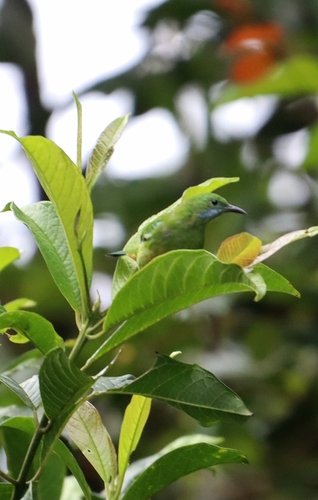 Orange-bellied Leafbird
In breve
Il modo più affidabile per separare il Bornean Spiderhunter dall'Orange-bellied Leafbird è attraverso il piumaggio e la struttura complessivi: il leafbird è un uccello dai colori vivaci con un ventre arancione sorprendente, dorso verde, coda blu e penne alari, e una distintiva macchia nera e blu sulla gola, mentre lo spiderhunter manca di questi colori audaci e non è descritto come marcato vivacemente. Il leafbird ha anche un becco leggermente più corto, ma comunque lungo, e curvo rispetto al becco tipicamente molto lungo e decurvato dello spiderhunter. Se vedi un uccello con un forte ventre arancione e coda blu, è il leafbird; un uccello più sobrio, meno colorato con un becco molto lungo indica lo spiderhunter. Entrambe le specie possono nutrirsi di nettare e insetti, ma il loro aspetto e struttura sono i migliori indizi.
Consigli di identificazione
- Ventre arancione e coda blu (solo leafbird): Se vedi un uccello con un ventre arancione brillante e coda o penne alari blu, è un Orange-bellied Leafbird. Lo spiderhunter non mostra questi colori in nessuna età o sesso.
- Macchia nera e blu sulla gola (solo leafbird): Il leafbird ha una distintiva macchia nera e blu sulla gola e sul petto, assente nello spiderhunter. Questo è un segno chiave negli uccelli in posato e visibile in entrambi i sessi.
- Colorazione verde e blu complessiva (leafbird): Il dorso del leafbird è verde, e la sua coda e penne alari sono blu, creando un aspetto vivace e multicolore. Lo spiderhunter manca di questi colori brillanti ed è più sobrio nel complesso.
- Becco molto lungo e decurvato (spiderhunter): Il Bornean Spiderhunter mostra tipicamente un becco molto più lungo e fortemente decurvato rispetto al leafbird. Se il becco appare eccezionalmente lungo e curvato verso il basso, è più probabile che sia uno spiderhunter.
- Becco più corto e curvo (leafbird): Sebbene il becco del leafbird sia anch'esso curvo, è più corto e robusto rispetto a quello dello spiderhunter, corrispondendo alla sua testa e faccia più compatte.
- Distribuzione e posizione: Se sei a Borneo, aspettati lo spiderhunter; nell'Himalaya o nel nord del Sud-est asiatico, aspettati il leafbird. La distribuzione è un forte separatore.
- Mancanza di colori brillanti (spiderhunter): Se l'uccello non presenta alcun arancione, blu o verde e appare più grigio, considera lo spiderhunter.
- Nessun modello di ali specifico per età: Nessuna delle due specie è descritta come avente segni distintivi di ali superiori o segni di volo giovanili o immaturi, quindi non fare affidamento sul modello delle ali in volo per la separazione.
- Aspetto in posato vs. in cerca di cibo: Entrambe le specie possono cercare attivamente cibo, ma lo spiderhunter può apparire più allungato a causa del suo lungo becco e possibilmente proporzioni corporee più lunghe.
- Struttura del nido (raramente osservata): Se vedi un nido sospeso fatto di radici e fibre all'estremità di un ramo, indica il leafbird, ma questo è raramente un segno di campo.
- Differenze sessuali: Entrambi i sessi del leafbird sono colorati vivacemente, anche se i maschi sono più intensamente marcati; lo spiderhunter non mostra tale dimorfismo sessuale nelle note.
- Comportamento alimentare: Entrambi possono essere visti nutrirsi di nettare e insetti, quindi il comportamento alimentare da solo non li separa.
- Nessun indizio di vocalizzazione: Nessun richiamo o canto distintivo è descritto nelle note, quindi non fare affidamento sulla voce per la separazione.
- Indizi contestuali: In stormi di specie miste, i colori brillanti del leafbird si faranno notare, mentre lo spiderhunter potrebbe mimetizzarsi di più con il fogliame.
- Controlla più caratteristiche: Usa sempre una combinazione di forma del becco, colore del ventre e della gola, e luminosità complessiva per confermare la tua identificazione, specialmente se la vista è breve o parzialmente ostruita.
Taglia
Solo l'Orange-bellied Leafbird ha una massa media documentata (33 g [wikidata]); non è disponibile alcuna misura per il Bornean Spiderhunter, ma entrambi sono passeriformi di dimensioni medie. Sul campo, la dimensione da sola non è un separatore affidabile tra questi due, poiché le loro masse sono probabilmente simili e entrambi possono apparire snelli e attivi tra il fogliame.
Piumaggio
L'Orange-bellied Leafbird è inconfondibile nel piumaggio adulto: cerca un ventre arancione brillante, un dorso verde vivido, una coda blu e penne alari blu, e una macchia nera e blu sulla gola ben definita. Questi colori sono presenti in entrambi i sessi, anche se i maschi sono di solito più intensamente marcati. Il Bornean Spiderhunter, al contrario, non è descritto come colorato vivacemente e manca della combinazione di arancione, blu e verde. I piumaggi giovanili o immaturi non sono dettagliati per nessuna delle due specie nelle note, ma l'assenza di colorazione audace e di modello sulla gola nello spiderhunter è coerente in tutte le età. Non sono descritti segni specifici per età sulle ali superiori o sul volo per nessuna delle due specie, quindi fai affidamento sulla colorazione complessiva e sul modello della gola in tutte le età.
Comportamento
Entrambe le specie si nutrono di nettare e insetti, spesso cercando attivamente tra il fogliame. Il leafbird è noto per costruire nidi sospesi da radici e fibre all'estremità dei rami, ma questo è improbabile da osservare sul campo a meno che non si sia vicino a un nido. Entrambi possono essere visti muoversi energicamente attraverso la chioma, ma il comportamento da solo non è un forte separatore.
Habitat
L'Orange-bellied Leafbird è nativo delle Himalaya centrali ed orientali, Yunnan e delle parti settentrionali del Sud-est asiatico, mentre il Bornean Spiderhunter è, come suggerisce il suo nome, endemico di Borneo. Se stai osservando uccelli a Borneo, lo spiderhunter è la specie locale; altrove negli Himalaya o nel nord del Sud-est asiatico, ci si aspetta il leafbird. La sovrapposizione degli habitat è minima a causa delle loro diverse distribuzioni.
Bornean Spiderhunter · Orange-bellied Leafbird · I miei uccelli difficili