

Motmot

ヤブヨシキリ 対 ニシオオヨシキリ

Acrocephalus dumetorum 対 Acrocephalus arundinaceus

ヤブヨシキリとニシオオヨシキリのクイズ
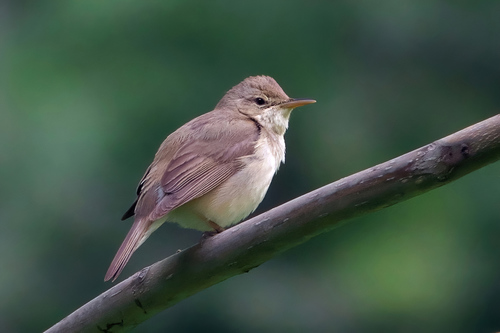
ヤブヨシキリ (Acrocephalus dumetorum) ヤブヨシキリ
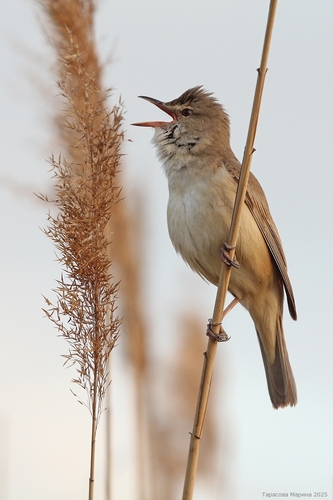
ニシオオヨシキリ (Acrocephalus arundinaceus) ニシオオヨシキリ

メディア

読み込み中…

要点

ヤブヨシキリとニシオオヨシキリの最も信頼できるフィールドマークはサイズです:Great Reedははるかに大きく、ほぼツグミサイズで、Blyth'sはスリムで小さなウグイスです。飛んでいるところや止まっているところで見た場合、Great Reedの体格、長い翼、強いくちばしはすぐに明らかですが、Blyth's Reedはより繊細で、短く丸い翼と長く細いくちばしを持っています。両者は上面が無地の茶色で、下面が淡いですが、Great Reedはより目立つ眉斑と平らな額を示します。幼鳥のニシオオヨシキリは下面がよりリッチなバフ色ですが、Blyth's Reedはより地味です。生息地と声も役立ちます:Great Reedはほぼ常にヨシ原にいて、大きな声で歌うことが多いですが、Blyth's Reedは森林の端や低木を好みます。

識別のコツ

  1. Size is the most immediate clue: ニシオオヨシキリはヤブヨシキリのほぼ2倍の長さと体重です;もしその鳥がツグミサイズに見えるか、ウグイスとしては著しく大きい場合、それはGreat Reedです。これはすべての年齢と季節に当てはまります。
  2. Bill structure: Great Reedは強く、太く、尖ったくちばしを持ち、その頑丈な頭に合っています;Blyth's Reedは長く、細いですが、基部が太いくちばしを持ち、下顎の基部は淡いピンクがかった茶色です。良い光の下ではくちばしの色が役立ちます。
  3. Supercilium (eyebrow): ニシオオヨシキリは目の前に特に目立つ、強く、長い白っぽい眉斑を示します;Blyth's Reedの眉斑は短く、淡く、くちばしの基部と目の間に限られています。これは成鳥とほとんどの幼鳥において信頼できます。
  4. Head shape: Great Reedは平らな額と重い、ブロック状の頭のプロファイルを持っています;Blyth's Reedの頭はスリムでより丸みを帯びています。
  5. Wing shape: Blyth's Reedは短く丸い翼を持ち、コンパクトな外観を与えます;Great Reedの翼は長く広く、全体のサイズに合っています。
  6. Plumage tone: Blyth's Reedは上面が無地のオリーブ茶色で、下面がオフホワイトで、暖かいまたは赤褐色のトーンがありません;Great Reedは上面がストライプのない茶色ですが、幼鳥は下面がよりリッチなバフ色です。Blyth's Reedは常により地味で冷たいトーンに見えます。
  7. Leg and foot color: Blyth's Reedは淡いピンクがかった茶色の足と足を持ち、下顎の基部に合っています;Great Reedの足の色はあまり特徴的ではありませんが、そこまで淡くはありません。
  8. Habitat context: 繁殖期には、ヨシ原にいる大きなウグイスはほぼ確実にGreat Reedです;Blyth's Reedは純粋なヨシ原を避け、森林の端、低木、または庭を好みます。
  9. Song: Great Reedの歌は非常に大きく、厳しく、遠くまで届き、しばしばヨシの露出した止まり木から歌われます。Blyth's Reedの歌はより静かで、変動があり、ティックやホイッスルを含みます;それはめったに大きくも持続的でもありません。
  10. Behavior: Great Reedは大胆で、しばしば直立してオープンな場所で歌います;Blyth's Reedはより隠れがちで、オープンな場所で見られる可能性が低いです。
  11. Juvenile plumage: 幼鳥のGreat Reedは下面がよりリッチなバフ色ですが、Blyth's Reedは地味で淡いままです;これは晩夏と秋に役立ちます。
  12. Flight jizz: Great Reedは飛行中に重くて遅く見え、広い翼と長い尾を持っています;Blyth's Reedはより速く、より敏捷で、コンパクトです。
  13. Distribution: Blyth's Reedはヨーロッパで西に拡大していますが、西部のヨシ原ではGreat Reedよりもはるかに一般的ではありません;疑わしい場合は、eBirdで地元の豊富さを確認してください。
  14. Sexes: 両種は羽毛において性別が同じであるため、分離のために性別に頼らないでください。
  15. When in doubt: もしその鳥がヨシ原から大きな声で歌っていて大きく見えるなら、それはほぼ確実にGreat Reedです。もしそれが小さく、地味で、森林の端や庭にいるなら、それはおそらくBlyth's Reedです。

大きさ

ニシオオヨシキリは劇的に大きいです:長さ16〜21 cm、体重22〜38 g、翼幅は25〜30 cmです。ヤブヨシキリははるかに小さく、長さ12〜14 cm、体重8〜16 gです。フィールドでは、Great Reedはほぼツグミと同じくらい大きく、Blyth's Reedを圧倒しています。このサイズの違いは、スケール感があればどんな距離でも信頼できます、特に両者がヨシや止まり木の近くで見られるときに。

羽色

どちらの種にも特徴的な幼鳥または未成熟の上翼パターンは記載されていないため、分離は全体の色合いと微妙な詳細に依存します。成鳥のヤブヨシキリは上面が無地のオリーブ茶色で、短く丸い翼と短く淡い白っぽい眉斑を持ち、下面は無地のオフホワイトです。ニシオオヨシキリの成鳥は上面がストライプのない茶色ですが、はるかに強く、長い眉斑と平らな額を持ち、下面は鈍いバフがかった白色で、くちばしは特に強く尖っています。幼鳥のGreat Reed Warblersは下面がよりリッチなバフ色ですが、幼鳥のBlyth's Reedはかなり地味なままです。すべての羽毛において、Blyth's ReedはGreat Reedの「暖かい」トーンと強い顔のパターンを欠いています。Blyth's Reedの足と下顎は淡いピンクがかった茶色で、くちばしの基部に合っていますが、Great Reedのくちばしは単に強く尖っています。

行動

ニシオオヨシキリはしばしば目立ち、大きな声でヨシの茎から歌ったり、ヨシの中を不器用に動いたりし、高く直立して止まることもあります。ヤブヨシキリはより秘密主義で、低い植生、森林の端、または低木の中を移動し、オープンな場所で見られる可能性が低いです。両者は昆虫食性で領土意識がありますが、Great Reedの行動はより大胆で明白であり、特に歌っているときに顕著です。

生息環境

ニシオオヨシキリは繁殖期にヨシ原に強く結びついており、広範なヨシの群落から離れて見つかることは稀で、冬にはヨシ原、低木の茂み、稲作地、または森林の開けた場所にいることがあります。ヤブヨシキリは森林の端、開けた場所、公園、庭、低木を好み、純粋なヨシ原ではめったに見られません。もしヨシ原から歌っている大きなウグイスを見つけたら、それはほぼ確実にGreat Reedです;森林の端や庭にいる小さく地味なウグイスはおそらくBlyth's Reedです。

声

ニシオオヨシキリの歌は非常に大きく、厳しく、遠くまで届き、チャタリングやクローク音("carr-carr-cree-cree-cree-jet-jet")といくつかの模倣を含みます。ヤブヨシキリの歌はより変動があり、静かで、厳しいティック、チャク、チュルをメロディックなホイッスルや模倣と混ぜています。フィールドでは、Great Reedの歌がヨシ原を支配し、Blyth's Reedはより控えめで、遠くで聞かれる可能性が低いです。

より良い説明を送る

比較と同じ項目を使ってください。文章はすぐに公開されます。

The most reliable field mark between Blyth's Reed Warbler and Great Reed Warbler is size: Great Reed is much larger, almost thrush-sized, while Blyth's is a slim, small warbler. If seen in flight or perched, Great Reed's bulk, long wings, and strong bill are immediately obvious, while Blyth's Reed is daintier, with short, rounded wings and a long, fine bill. Both are plain brown above and pale below, but Great Reed shows a more prominent supercilium and a flattened forehead. Juvenile Great Reed Warblers are richer buff below, while Blyth's Reed remains plainer. Habitat and voice can help: Great Reed is almost always in reedbeds, often singing loudly, while Blyth's Reed prefers woodland edges and scrub.

  1. Size is the most immediate clue: Great Reed Warbler is nearly twice the length and weight of Blyth's Reed Warbler; if the bird looks thrush-sized or notably large for a warbler, it's Great Reed. This holds for all ages and seasons.
  2. Bill structure: Great Reed has a strong, thick, and pointed bill, matching its robust head; Blyth's Reed has a long, fine, but thick-based bill with a pale pinkish-brown base on the lower mandible. Bill color can be useful in good light.
  3. Supercilium (eyebrow): Great Reed Warbler shows a strong, long, and prominent whitish supercilium, especially in front of the eye; Blyth's Reed's supercilium is short, faint, and limited to between bill base and eye. This is reliable in adults and most immatures.
  4. Head shape: Great Reed has a flattened forehead and a heavy, blocky head profile; Blyth's Reed's head is slimmer and more rounded.
  5. Wing shape: Blyth's Reed has short, rounded wings, giving a compact look; Great Reed's wings are long and broad, matching its overall size.
  6. Plumage tone: Blyth's Reed is plain olive-brown above and off-white below, lacking warm or rufous tones; Great Reed is unstreaked brown above, but juveniles are richer buff below. Blyth's Reed always looks plainer and colder-toned.
  7. Leg and foot color: Blyth's Reed has pale pinkish-brown legs and feet, matching the base of the lower mandible; Great Reed's leg color is less distinctive but not as pale.
  8. Habitat context: In breeding season, a large warbler in a reedbed is almost certainly Great Reed; Blyth's Reed avoids pure reedbeds, preferring woodland edge, scrub, or gardens.
  9. Song: Great Reed's song is extremely loud, harsh, and far-carrying, often delivered from exposed perches in reeds. Blyth's Reed's song is quieter, more variable, and includes ticks and whistles; it is rarely as loud or as persistent.
  10. Behavior: Great Reed is bold, often perching upright and singing in the open; Blyth's Reed is more skulking and less likely to be seen out in the open.
  11. Juvenile plumage: Juvenile Great Reed is richer buff below, while Blyth's Reed remains plain and pale; this is helpful in late summer and autumn.
  12. Flight jizz: Great Reed appears heavy and slow in flight, with broad wings and a long tail; Blyth's Reed is quicker, more agile, and compact.
  13. Distribution: Blyth's Reed is expanding westward in Europe but remains much less common than Great Reed in western reedbeds; check local abundance on eBird if in doubt.
  14. Sexes: Both species are sexually monomorphic in plumage, so do not rely on sex for separation.
  15. When in doubt: If the bird is singing loudly from a reedbed and appears large, it's almost certainly Great Reed. If it's small, plain, and in woodland edge or garden, it's likely Blyth's Reed.

Great Reed Warbler is dramatically larger: 16–21 cm in length and 22–38 g in weight, with a wingspan of 25–30 cm. Blyth's Reed Warbler is much smaller, 12–14 cm long and 8–16 g. In the field, Great Reed appears almost as big as a thrush, towering over Blyth's Reed. This size difference is reliable at any distance if you have a sense of scale, especially when both are seen near reeds or perches.

No distinctive juvenile or immature upperwing pattern is described for either species, so separation relies on overall coloration and subtle details. Adult Blyth's Reed Warbler is plain olive-brown above with short, rounded wings and a short, faint whitish supercilium; underparts are plain off-white. Great Reed Warbler adults are unstreaked brown above, but with a much stronger, longer supercilium and a flattened forehead; underparts are dull buffish-white, and the bill is notably strong and pointed. Juvenile Great Reed Warblers are richer buff below, while juvenile Blyth's Reed remain rather plain. In all plumages, Blyth's Reed lacks the 'warm' tones and strong face pattern of Great Reed. The legs and lower mandible of Blyth's Reed are pale pinkish-brown, matching the base of the bill, while Great Reed's bill is simply strong and pointed.

Great Reed Warbler is often conspicuous, singing loudly from reed stems or moving clumsily through reeds, sometimes perching high and upright. Blyth's Reed Warbler is more secretive, moving through lower vegetation, woodland edges, or scrub, and is less likely to be seen out in the open. Both are insectivorous and territorial, but Great Reed's behavior is bolder and more obvious, especially during singing.

Great Reed Warbler is strongly tied to reedbeds in breeding season, rarely found away from extensive stands of reeds, and in winter can be in reedbeds, bush thickets, rice fields, or forest clearings. Blyth's Reed Warbler prefers woodland edges, clearings, parks, gardens, and scrub, and is rarely found in pure reedbeds. If you find a large warbler singing from a reedbed, it's almost certainly Great Reed; a small, plain warbler in woodland edge or garden is likely Blyth's Reed.

Great Reed Warbler's song is very loud, harsh, and far-carrying, with chattering and croaking notes ("carr-carr-cree-cree-cree-jet-jet") and some mimicry. Blyth's Reed Warbler's song is more variable and quieter, mixing harsh ticks, chaks, and churrs with melodious whistles and mimicry. In the field, Great Reed's song dominates reedbeds, while Blyth's Reed is more subdued and less likely to be heard at long distance.

変更を破棄しますか?

保存していない編集があります。今離れると失われます。

ヤブヨシキリ · ニシオオヨシキリ · 苦手な鳥