

Cannaiola di Blyth vs Cannareccione
Acrocephalus dumetorum contro Acrocephalus arundinaceus
Fai un quiz con Cannaiola di Blyth e Cannareccione
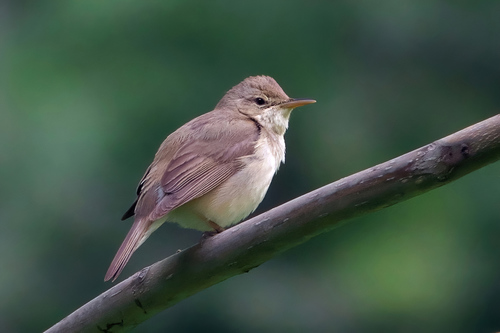 Cannaiola di Blyth
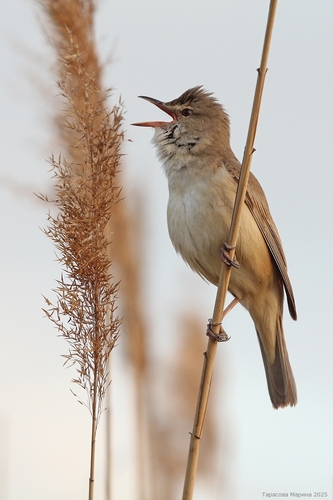 Cannareccione
In breve
Il segno di campo più affidabile tra la Cannaiola di Blyth e il Cannareccione è la dimensione: il Cannareccione è molto più grande, quasi delle dimensioni di un tordo, mentre la Cannaiola di Blyth è una piccola e snella cannaiola. Se vista in volo o posata, la massa del Cannareccione, le lunghe ali e il becco robusto sono immediatamente evidenti, mentre la Cannaiola di Blyth è più delicata, con ali corte e arrotondate e un becco lungo e fine. Entrambi sono di un marrone uniforme sopra e chiaro sotto, ma il Cannareccione mostra un supercilium più prominente e una fronte appiattita. I giovani Cannareccioni sono di un buffo più ricco sotto, mentre la Cannaiola di Blyth rimane più semplice. L'habitat e la voce possono aiutare: il Cannareccione si trova quasi sempre nei canneti, cantando spesso ad alta voce, mentre la Cannaiola di Blyth preferisce i margini dei boschi e i cespugli.
Consigli di identificazione
- La dimensione è l'indizio più immediato: Il Cannareccione è quasi il doppio della lunghezza e del peso della Cannaiola di Blyth; se l'uccello appare delle dimensioni di un tordo o notevolmente grande per una cannaiola, è un Cannareccione. Questo vale per tutte le età e stagioni.
- Struttura del becco: Il Cannareccione ha un becco robusto, spesso e appuntito, che corrisponde alla sua testa robusta; la Cannaiola di Blyth ha un becco lungo, fine, ma con una base spessa e una base di colore rosa chiaro-marrone sulla mandibola inferiore. Il colore del becco può essere utile in buona luce.
- Supercilium (sopracciglio): La Cannaiola di Blyth mostra un supercilium bianco forte, lungo e prominente, specialmente davanti all'occhio; il supercilium della Cannaiola di Blyth è corto, debole e limitato tra la base del becco e l'occhio. Questo è affidabile negli adulti e nella maggior parte degli immaturi.
- Forma della testa: Il Cannareccione ha una fronte appiattita e un profilo della testa pesante e squadrato; la testa della Cannaiola di Blyth è più snella e arrotondata.
- Forma delle ali: La Cannaiola di Blyth ha ali corte e arrotondate, dando un aspetto compatto; le ali del Cannareccione sono lunghe e larghe, corrispondenti alla sua dimensione complessiva.
- Tono del piumaggio: La Cannaiola di Blyth è di un marrone oliva uniforme sopra e bianco sporco sotto, priva di toni caldi o rufous; il Cannareccione è marrone non striato sopra, ma i giovani sono di un buffo più ricco sotto. La Cannaiola di Blyth appare sempre più semplice e con toni più freddi.
- Colore delle gambe e dei piedi: La Cannaiola di Blyth ha gambe e piedi di un rosa chiaro-marrone, che corrispondono alla base della mandibola inferiore; il colore delle gambe del Cannareccione è meno distintivo ma non così chiaro.
- Contesto dell'habitat: Durante la stagione di nidificazione, una grande cannaiola in un canneto è quasi certamente un Cannareccione; la Cannaiola di Blyth evita i canneti puri, preferendo i margini dei boschi, i cespugli o i giardini.
- Canto: Il canto del Cannareccione è estremamente forte, aspro e lontano, spesso emesso da posatoi esposti nei canneti. Il canto della Cannaiola di Blyth è più silenzioso, più variabile e include ticchettii e fischi; raramente è così forte o persistente.
- Comportamento: Il Cannareccione è audace, spesso posandosi eretto e cantando in aperto; la Cannaiola di Blyth è più schiva e meno probabile da vedere all'aperto.
- Piumaggio giovanile: Il giovane Cannareccione è di un buffo più ricco sotto, mentre la Cannaiola di Blyth rimane semplice e chiara; questo è utile a fine estate e autunno.
- Volo: Il Cannareccione appare pesante e lento in volo, con ali larghe e una lunga coda; la Cannaiola di Blyth è più veloce, più agile e compatta.
- Distribuzione: La Cannaiola di Blyth si sta espandendo verso ovest in Europa ma rimane molto meno comune del Cannareccione nei canneti occidentali; controlla l'abbondanza locale su eBird se hai dubbi.
- Sessi: Entrambe le specie sono sessualmente monomorfiche nel piumaggio, quindi non fare affidamento sul sesso per la separazione.
- Quando hai dubbi: Se l'uccello canta ad alta voce da un canneto e appare grande, è quasi certamente un Cannareccione. Se è piccolo, semplice e in un margine di bosco o giardino, è probabile che sia una Cannaiola di Blyth.
Taglia
Il Cannareccione è drammaticamente più grande: 16–21 cm di lunghezza e 22–38 g di peso, con un'apertura alare di 25–30 cm. La Cannaiola di Blyth è molto più piccola, 12–14 cm di lunghezza e 8–16 g. Sul campo, il Cannareccione appare quasi grande come un tordo, sovrastando la Cannaiola di Blyth. Questa differenza di dimensione è affidabile a qualsiasi distanza se hai un senso di scala, specialmente quando entrambi sono visti vicino ai canneti o ai posatoi.
Piumaggio
Nessun modello distintivo di ala superiore giovanile o immaturo è descritto per entrambe le specie, quindi la separazione si basa sulla colorazione generale e sui dettagli sottili. L'adulto della Cannaiola di Blyth è di un marrone oliva uniforme sopra con ali corte e arrotondate e un supercilium bianco debole e corto; le parti inferiori sono di un bianco sporco uniforme. Gli adulti del Cannareccione sono marroni non striati sopra, ma con un supercilium molto più forte e lungo e una fronte appiattita; le parti inferiori sono di un bianco sporco, e il becco è notevolmente robusto e appuntito. I giovani Cannareccioni sono di un buffo più ricco sotto, mentre i giovani della Cannaiola di Blyth rimangono piuttosto semplici. In tutti i piumaggi, la Cannaiola di Blyth manca dei toni 'caldi' e del forte modello facciale del Cannareccione. Le gambe e la mandibola inferiore della Cannaiola di Blyth sono di un rosa chiaro-marrone, che corrisponde alla base del becco, mentre il becco del Cannareccione è semplicemente robusto e appuntito.
Comportamento
Il Cannareccione è spesso evidente, cantando ad alta voce dai fusti di canna o muovendosi goffamente tra le canne, a volte posandosi in alto e eretto. La Cannaiola di Blyth è più segreta, muovendosi attraverso la vegetazione bassa, i margini dei boschi o i cespugli, ed è meno probabile da vedere all'aperto. Entrambi sono insetti e territoriali, ma il comportamento del Cannareccione è più audace e ovvio, specialmente durante il canto.
Habitat
Il Cannareccione è fortemente legato ai canneti durante la stagione di nidificazione, raramente trovato lontano da ampie distese di canne, e in inverno può trovarsi in canneti, cespugli, risaie o radure forestali. La Cannaiola di Blyth preferisce i margini dei boschi, le radure, i parchi, i giardini e i cespugli, e raramente si trova in canneti puri. Se trovi una grande cannaiola che canta da un canneto, è quasi certamente un Cannareccione; una piccola cannaiola semplice in un margine di bosco o giardino è probabilmente una Cannaiola di Blyth.
Voce
Il canto del Cannareccione è molto forte, aspro e lontano, con note di chiacchierio e gracidii ("carr-carr-cree-cree-cree-jet-jet") e alcune imitazioni. Il canto della Cannaiola di Blyth è più variabile e silenzioso, mescolando ticchettii aspri, chaks e churrs con fischi melodiosi e imitazioni. Sul campo, il canto del Cannareccione domina i canneti, mentre la Cannaiola di Blyth è più sommessa e meno probabile da sentire a lunga distanza.
Cannaiola di Blyth · Cannareccione · I miei uccelli difficili