

Motmot

アメリカクロウミツバメ 対 オーストンウミツバメ

Hydrobates melania 対 Hydrobates tristrami

アメリカクロウミツバメとオーストンウミツバメのクイズ
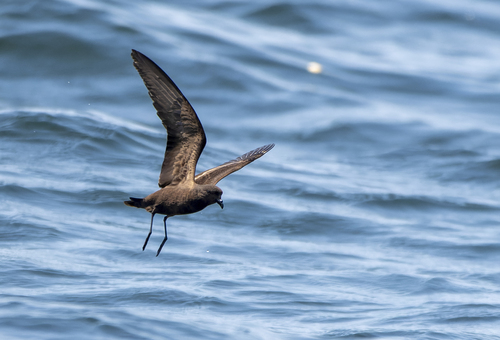
アメリカクロウミツバメ (Hydrobates melania) アメリカクロウミツバメ
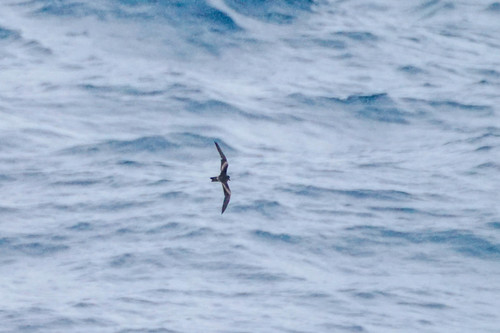
オーストンウミツバメ (Hydrobates tristrami) オーストンウミツバメ

メディア

読み込み中…

要点

アメリカクロウミツバメとオーストンウミツバメを区別する最も信頼できるフィールドマークは、サイズと翼の構造です:オーストンは明らかに大きく、より長く、より角ばった翼と太いくちばしを持っています。飛行中、オーストンはしばしばわずかに淡い尾羽と上翼に淡い灰色の帯を示しますが、アメリカクロウミツバメは均一に暗いです。両者は全体が暗い嵐のウミツバメですが、オーストンの独特の翼のパターンとよりがっしりした体型が重要です。上翼に淡い帯と淡い尾羽のヒントがあり、特に大きくて長い翼に見える嵐のウミツバメを見たら、それはオーストンです;より小さく、均一に暗い鳥はアメリカクロウミツバメです。

識別のコツ

  1. 淡い上翼の帯(オーストンのみ): 飛行中に上翼に淡い灰色の帯を探してください;オーストンウミツバメはすべての年齢でこれを示しますが、アメリカクロウミツバメは決して示しません。
  2. 淡い尾羽(オーストンのみ): オーストンはわずかに淡い尾羽を持ち、時には微妙ですが、アメリカは均一に暗いです。
  3. 全体のサイズ: オーストンはアメリカよりもはるかに大きく、がっしりしています;スケール感があれば、これは強い手がかりです。
  4. 翼の形: オーストンの翼はより長く、より角ばっており、アメリカの短く、より丸みを帯びた翼とより速い翼のビートに比べて、より滑空するような、あまり羽ばたかない飛行を提供します。
  5. くちばしの構造: オーストンは太いくちばしを持っていますが、これは海上で非常によく見ない限り、診断的ではありません。
  6. 均一な暗さ(アメリカのみ): アメリカクロウミツバメは上面と下面がすべて暗い茶色がかった黒で、尾羽や翼に淡い部分がありません。
  7. 飛行スタイル: オーストンはより滑空し、より緩やかに見えますが、アメリカはより羽ばたきが速く、敏捷です。
  8. 地理的文脈: 北西太平洋やハワイ諸島近くで見られた場合、オーストンの可能性が高いです;アメリカは東太平洋でより期待されます。
  9. 強い季節的または性差はない: 両種は、記載されたフィールドマークにおいて、季節や性別に関して類似しています。
  10. 幼鳥/未熟な混乱: オーストンの淡い上翼の帯と淡い尾羽はすべての年齢に存在するため、未熟な個体もアメリカクロウミツバメと区別できます。
  11. 声の手がかりはない: 声の発声は海上での区別に役立つとは記載されていません。
  12. コロニーへの出席: オーストンはコロニーで厳密に夜行性ですが、これは海上でのフィールドマークではありません。
  13. 照明に注意: 照明が悪い場合、オーストンの淡い翼の帯と尾羽は見えにくいかもしれないので、サイズと構造に頼ってください。
  14. 白い尾羽はない: 両種とも明るい白い尾羽は持っていないため、リーチのウミツバメや他の白い尾羽の嵐のウミツバメと混同しないでください。
  15. 直接比較: 両種が存在する場合、オーストンはより大きく、長い翼を持ち、淡い翼の鳥として際立ちます。

大きさ

オーストンウミツバメはすべての次元でかなり大きいです:長さ(24.5–27 cm 対 23 cm)、翼幅(54–57 cm 対 46–51 cm)、特に体重(平均 84 g 対 61.5 g)。フィールドでは、オーストンはよりがっしりしており、より細長く見え、より長く、より角ばった翼を持っていますが、アメリカクロウミツバメはよりコンパクトで軽いです。このサイズの違いは、同時に見たり、他の嵐のウミツバメと一緒に見たりすると明らかです。

羽色

すべての年齢のオーストンウミツバメは主に暗い羽毛を示しますが、わずかに淡い尾羽と上翼に淡い灰色の帯が特徴的で、特に飛行中に目立ちます。この淡い翼の帯は重要なマークであり、アメリカクロウミツバメにはどの年齢でも存在しません。アメリカクロウミツバメは上面と下面が均一に暗い茶色がかった黒で、淡い翼の帯や尾羽がありません。両種は全体が暗いですが、オーストンだけが淡い上翼の帯と淡い尾羽を持っています。これらのマークは、幼鳥と成鳥のオーストンの両方に見られ、良い光の中や鳥がバンクする時に最もよく見えます。くちばしの色と足の色は、これらのメモでは有用とは記載されていません。

行動

オーストンウミツバメは、飛行中により緩やかで滑空するように見え、長く角ばった翼を使って、より少ない羽ばたきでより多くの距離をカバーします。アメリカクロウミツバメは、より小さく、軽いため、より速く、羽ばたきが多い飛行スタイルを示します。両種は外洋性で、コロニーを除いて陸上で見られることはほとんどありません。オーストンは繁殖地でコロニーを形成し、夜行性ですが、これらの行動は海上では簡単に観察できません。

生息環境

両種は外洋性の嵐のウミツバメですが、オーストンは主に北太平洋、特に熱帯海域に制限されており、北西ハワイ諸島や日本南部の島々で繁殖します。アメリカクロウミツバメは東太平洋に見られます。重複する地域では、海上での生息地は強い区別要因ではありませんが、オーストンは北西太平洋の繁殖島の近くでより可能性が高いです。

より良い説明を送る

比較と同じ項目を使ってください。文章はすぐに公開されます。

The most reliable field mark to separate Black Storm-Petrel from Tristram's Storm-Petrel is size and wing structure: Tristram's is noticeably larger, with longer, more angular wings and a stouter bill. In flight, Tristram's often shows a slightly pale rump and a pale grey bar on the upperwing, while Black Storm-Petrel is uniformly dark. Both are all-dark storm-petrels, but Tristram's unique wing pattern and bulkier build are key. If you see a storm-petrel with a pale upperwing bar and a hint of a pale rump, especially if it looks big and long-winged, it's Tristram's; a smaller, more uniformly dark bird is Black.

  1. Pale upperwing bar (Tristram's only): Look for a pale grey bar across the upperwing in flight; Tristram's Storm-Petrel shows this at all ages, while Black Storm-Petrel never does.
  2. Pale rump (Tristram's only): Tristram's has a slightly paler rump, sometimes subtle, but Black is uniformly dark.
  3. Overall size: Tristram's is much larger and bulkier than Black; if you have a sense of scale, this is a strong clue.
  4. Wing shape: Tristram's wings are longer and more angular, giving a more gliding, less fluttery flight compared to Black's shorter, more rounded wings and quicker wingbeats.
  5. Bill structure: Tristram's has a stouter bill, but this is rarely diagnostic at sea unless seen very well.
  6. Uniform darkness (Black only): Black Storm-Petrel is all dark brownish-black above and below, lacking any pale on the rump or wings.
  7. Flight style: Tristram's glides more and appears more languid, while Black is more fluttery and agile.
  8. Geographic context: If seen in the northwestern Pacific or near the Hawaiian Islands, Tristram's is more likely; Black is more expected in the eastern Pacific.
  9. No strong seasonal or sex differences: Both species are similar across seasons and sexes in the field marks described.
  10. Juvenile/immature confusion: The pale upperwing bar and paler rump of Tristram's are present in all ages, so immatures are still separable from Black Storm-Petrel.
  11. No voice cues: Vocalizations are not described as useful for separation at sea.
  12. Colony attendance: Tristram's is strictly nocturnal at colonies, but this is not a field mark at sea.
  13. Beware lighting: In poor light, Tristram's pale wing bar and rump may be hard to see, so rely on size and structure as backup.
  14. No white rump: Neither species has a bright white rump, so don't confuse them with Leach's or other white-rumped storm-petrels.
  15. Direct comparison: If both species are present, Tristram's will stand out as the larger, longer-winged, paler-winged bird.

Tristram's Storm-Petrel is significantly larger in every dimension: length (24.5–27 cm vs 23 cm), wingspan (54–57 cm vs 46–51 cm), and especially body mass (average 84 g vs 61.5 g). In the field, Tristram's looks bulkier and more elongated, with longer, more angular wings, while Black Storm-Petrel is more compact and lighter. This size difference is often apparent when seen together or with other storm-petrels for scale.

Tristram's Storm-Petrel of all ages shows a mostly dark plumage but is distinctive for its slightly pale rump and a pale grey bar across the upperwing, especially visible in flight. This pale wing bar is a crucial mark and is not present in Black Storm-Petrel at any age. Black Storm-Petrel is uniformly dark brownish-black above and below, lacking any pale wing bar or rump. Both species are all-dark overall, but only Tristram's has the pale upperwing bar and paler rump. These marks are visible in both juvenile and adult Tristram's, and are best seen in good light or when the bird banks. Bill color and leg color are not described as useful in these notes.

Tristram's Storm-Petrel tends to appear more languid and gliding in flight, using its long, angular wings to cover more distance with fewer wingbeats. Black Storm-Petrel, being smaller and lighter, shows a quicker, more fluttery flight style. Both species are pelagic and rarely seen on land except at colonies. Tristram's is colonial and nocturnal at breeding sites, but these behaviors are not easily observed at sea.

Both species are pelagic storm-petrels, but Tristram's is largely restricted to the north Pacific, especially tropical seas, and breeds on islands in the Northwest Hawaiian Islands and south of Japan. Black Storm-Petrel is found in the eastern Pacific. In areas of overlap, habitat is not a strong separator at sea, but Tristram's is more likely near its breeding islands in the northwestern Pacific.

変更を破棄しますか?

保存していない編集があります。今離れると失われます。

アメリカクロウミツバメ · オーストンウミツバメ · 苦手な鳥