

Black Storm-Petrel vs Tristram's Storm-Petrel
Hydrobates melania contro Hydrobates tristrami
Fai un quiz con Black Storm-Petrel e Tristram's Storm-Petrel
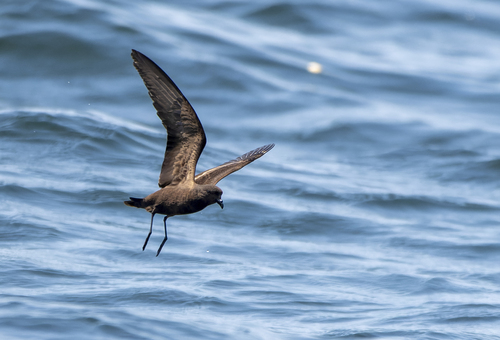 Black Storm-Petrel
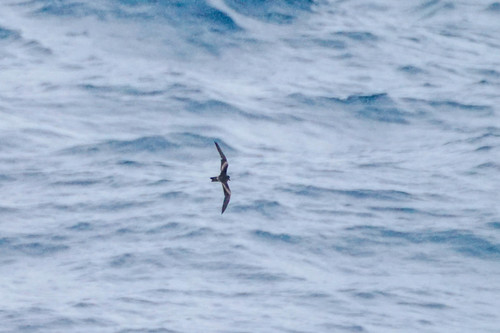 Tristram's Storm-Petrel
In breve
Il segno di campo più affidabile per separare il Black Storm-Petrel dal Tristram's Storm-Petrel è la dimensione e la struttura delle ali: il Tristram's è notevolmente più grande, con ali più lunghe e angolari e un becco più robusto. In volo, il Tristram's mostra spesso un sottile sottocoda chiaro e una barra grigia chiara sulla parte superiore dell'ala, mentre il Black Storm-Petrel è uniformemente scuro. Entrambi sono storm-petrels completamente scuri, ma il motivo unico delle ali del Tristram's e la sua corporatura più robusta sono fondamentali. Se vedi uno storm-petrel con una barra chiara sulla parte superiore dell'ala e un accenno di sottocoda chiara, specialmente se sembra grande e con ali lunghe, è il Tristram's; un uccello più piccolo e uniformemente scuro è il Black.
Consigli di identificazione
- Pale upperwing bar (Tristram's only): Cerca una barra grigia chiara sulla parte superiore dell'ala in volo; il Tristram's Storm-Petrel mostra questo a tutte le età, mentre il Black Storm-Petrel non lo fa mai.
- Pale rump (Tristram's only): Il Tristram's ha un sottocoda leggermente più chiaro, a volte sottile, ma il Black è uniformemente scuro.
- Overall size: Il Tristram's è molto più grande e robusto del Black; se hai un senso della scala, questo è un forte indizio.
- Wing shape: Le ali del Tristram's sono più lunghe e angolari, dando un volo più planato e meno frenetico rispetto alle ali più corte e arrotondate del Black e ai battiti d'ala più rapidi.
- Bill structure: Il Tristram's ha un becco più robusto, ma questo è raramente diagnostico in mare a meno che non venga visto molto bene.
- Uniform darkness (Black only): Il Black Storm-Petrel è completamente scuro marrone-nerastro sopra e sotto, privo di qualsiasi chiaro sul sottocoda o sulle ali.
- Flight style: Il Tristram's plana di più e appare più languido, mentre il Black è più frenetico e agile.
- Geographic context: Se visto nel Pacifico nord-occidentale o vicino alle Isole Hawaii, è più probabile che sia il Tristram's; il Black è più atteso nel Pacifico orientale.
- No strong seasonal or sex differences: Entrambe le specie sono simili attraverso le stagioni e i sessi nei segni di campo descritti.
- Juvenile/immature confusion: La barra chiara sulla parte superiore dell'ala e il sottocoda più chiaro del Tristram's sono presenti in tutte le età, quindi gli immaturi sono ancora separabili dal Black Storm-Petrel.
- No voice cues: Le vocalizzazioni non sono descritte come utili per la separazione in mare.
- Colony attendance: Il Tristram's è strettamente notturno nelle colonie, ma questo non è un segno di campo in mare.
- Beware lighting: In scarsa illuminazione, la barra chiara dell'ala e il sottocoda del Tristram's possono essere difficili da vedere, quindi fai affidamento su dimensione e struttura come backup.
- No white rump: Nessuna delle due specie ha un sottocoda bianco brillante, quindi non confonderle con il Leach's o altri storm-petrels con sottocoda bianca.
- Direct comparison: Se entrambe le specie sono presenti, il Tristram's si distinguerà come l'uccello più grande, con ali più lunghe e ali più chiare.
Taglia
Il Tristram's Storm-Petrel è significativamente più grande in ogni dimensione: lunghezza (24.5–27 cm vs 23 cm), apertura alare (54–57 cm vs 46–51 cm), e soprattutto massa corporea (media 84 g vs 61.5 g). Sul campo, il Tristram's appare più robusto e allungato, con ali più lunghe e angolari, mentre il Black Storm-Petrel è più compatto e leggero. Questa differenza di dimensione è spesso evidente quando vengono visti insieme o con altri storm-petrels per scala.
Piumaggio
Il Tristram's Storm-Petrel di tutte le età mostra un piumaggio per lo più scuro ma è distintivo per il suo sottocoda leggermente chiaro e una barra grigia chiara sulla parte superiore dell'ala, particolarmente visibile in volo. Questa barra chiara dell'ala è un segno cruciale e non è presente nel Black Storm-Petrel a nessuna età. Il Black Storm-Petrel è uniformemente scuro marrone-nerastro sopra e sotto, privo di qualsiasi barra chiara dell'ala o sottocoda. Entrambe le specie sono completamente scure nel complesso, ma solo il Tristram's ha la barra chiara sulla parte superiore dell'ala e il sottocoda più chiaro. Questi segni sono visibili sia nei Tristram's giovani che adulti, e sono meglio visti in buona luce o quando l'uccello si inclina. Il colore del becco e il colore delle gambe non sono descritti come utili in queste note.
Comportamento
Il Tristram's Storm-Petrel tende ad apparire più languido e planato in volo, utilizzando le sue lunghe ali angolari per coprire più distanza con meno battiti d'ala. Il Black Storm-Petrel, essendo più piccolo e leggero, mostra uno stile di volo più rapido e frenetico. Entrambe le specie sono pelagiche e raramente viste sulla terraferma tranne che nelle colonie. Il Tristram's è coloniale e notturno nei siti di nidificazione, ma questi comportamenti non sono facilmente osservabili in mare.
Habitat
Entrambe le specie sono storm-petrels pelagici, ma il Tristram's è in gran parte ristretto al Pacifico settentrionale, specialmente ai mari tropicali, e nidifica su isole nelle Isole Hawaii nord-occidentali e a sud del Giappone. Il Black Storm-Petrel si trova nel Pacifico orientale. Nelle aree di sovrapposizione, l'habitat non è un forte separatore in mare, ma il Tristram's è più probabile vicino alle sue isole di nidificazione nel Pacifico nord-occidentale.
Black Storm-Petrel · Tristram's Storm-Petrel · I miei uccelli difficili