

Motmot

チャタムヒタキ 対 キタニュージーラドコマヒタキ

Petroica traversi 対 Petroica longipes

チャタムヒタキとキタニュージーラドコマヒタキのクイズ

チャタムヒタキ (Petroica traversi) チャタムヒタキ
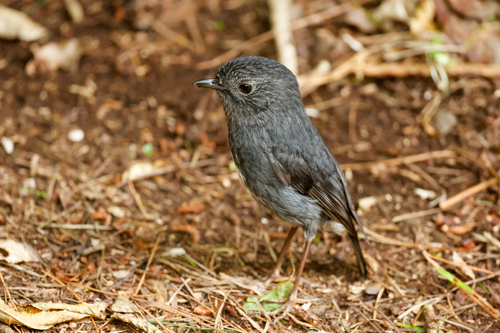
キタニュージーラドコマヒタキ (Petroica longipes) キタニュージーラドコマヒタキ

メディア

読み込み中…

要点

ブラックロビンとキタニュージーラドコマヒタキを区別するための最も信頼できるフィールドマークは、淡い腹部の広がりとコントラストです:キタニュージーラドコマヒタキは明確な淡い腹部と胸の斑点を示します(ただし、ミナミニュージーランドコマヒタキのものより小さいですが)、一方、ブラックロビンは全体的にずっと暗く、下部に淡い部分がほとんどありません。両種は暗くてずんぐりしたロビンですが、キタニュージーラドコマヒタキはしばしば上面に淡い筋模様を示し、時にはくちばしの基部に隠れた白い斑点を見せることがあります。キタニュージーラドコマヒタキのオスはメスよりも暗く、いくつかの変動を加えます。フィールドでは、淡い腹部と微妙な淡い筋模様を探してキタニュージーラドコマヒタキを見つけてください;下部にコントラストがほとんどない均一に暗い鳥は、ブラックロビンの可能性が高いです。

識別のコツ

  1. 淡い腹部と胸の斑点:キタニュージーラドコマヒタキは腹部と胸に明確な淡い部分を示しますが、ミナミニュージーランドコマヒタキのものより小さいです。ブラックロビンは下部がずっと均一に暗いです。これはすべての年齢と性別において最も有用なフィールドマークです。
  2. 上面の淡い筋模様:キタニュージーラドコマヒタキは上面に細い淡い筋模様を持つことが多く、特に良い光の下で目立ちます。ブラックロビンはこの筋模様がなく、より均一に暗く見えます。
  3. くちばしの基部に隠れた白い羽の斑点:キタニュージーラドコマヒタキは相互作用中にくちばしの基部に隠れた白い斑点を見せることがあります。この行動を見た場合、それはキタニュージーラドコマヒタキを示します;ブラックロビンはこの特徴を示しません。
  4. キタニュージーラドコマヒタキの性的二形性:オスはメスよりも暗いため、いくつかのキタニュージーラドコマヒタキはかなり暗く見えることがありますが、通常は淡い腹部の斑点を示します。ブラックロビンはこの性に基づく変動を示しません。
  5. ブラックロビンの均一な暗さ:鳥が完全に暗く、ほとんどすすけたように見え、下部に明らかな淡い部分や筋模様がない場合、ブラックロビンの可能性が高いです。
  6. 特徴的な年齢特有の翼の模様がない:どちらの種も強い幼鳥や未成熟の上翼または飛行マークを持つとは記述されていないため、下部と上部の色合いに焦点を当ててください。
  7. 構造と姿勢:両者は丸い体型で直立したロビンで、比例が似ています;構造だけでは信頼できる区別にはなりません。
  8. 生息地と範囲:北島本土で見られるロビンはすべてキタニュージーラドコマヒタキです。ブラックロビンはチャタム諸島のいくつかの小さな島にのみ生息しており、ニュージーランド本土では見られません;場所は決定的な手がかりとなります。
  9. 行動の手がかり:キタニュージーラドコマヒタキは社交的な状況で白いくちばしの基部の斑点を見せることがありますが、それ以外は両種の行動は似ています。
  10. 暗いキタニュージーラドコマヒタキの落とし穴:一部のオスのキタニュージーラドコマヒタキは特に悪い光の中でかなり暗く見えることがありますが、通常は淡い腹部の斑点を保持しています。ブラックロビンと仮定する前に、このコントラストを常に確認してください。
  11. 強い季節的または年齢に基づく混乱がない:利用可能なノートには、これら二種の間で混乱を引き起こすような大きな季節的または未成熟の羽毛の変化は記述されていません。
  12. 文脈的手がかり:管理された保護区や沖合の島にいる場合は、看板や種リストを確認してください—ブラックロビンは非常に範囲が制限されており、知られている場所以外で遭遇する可能性は低いです。
  13. 鳴き声:ノートには診断的な鳴き声の違いは提供されていないため、分離のために歌や呼び声に頼らないでください。
  14. 直接比較:両者を一緒に見る珍しい機会がある場合(例:保全の文脈で)、ブラックロビンは常により暗く均一に見え、キタニュージーラドコマヒタキの淡い腹部と筋模様が欠けています。

大きさ

両種は全体的な構造が似ており、小さくて丸い体型のロビンで、比較的短い尾と直立した姿勢を持っています。キタニュージーラドコマヒタキのオスはメスよりもやや大きいですが、両種間のサイズの違いはフィールドで強く診断的ではありません。直接の並べての比較がない限り、サイズは信頼できる区別にはなりません。

羽色

すべての年齢において、キタニュージーラドコマヒタキは上面が暗い灰色から黒で、腹部と胸に明らかに淡い部分がありますが、この淡い斑点はミナミニュージーランドコマヒタキのものより小さいです。上面には淡い筋模様もあり、微妙ですが近距離や良い光の下でよく見えます。くちばしの基部には、キタニュージーラドコマヒタキが社会的相互作用中に見せることがある隠れた白い羽の斑点があります。オスは全体的にメスよりも暗いです。対照的に、ブラックロビンはずっと均一に暗く、下部に淡い部分がほとんどなく、上面の淡い筋模様がありません。どちらの種にも特徴的な年齢特有の上翼や飛行マークは記述されていないため、止まっている姿と下部のコントラストが最も有用です。利用可能なノートには、幼鳥や未成熟特有の羽毛の違いは詳細に記述されていません。

行動

両種は典型的なペトロイカのロビンで、地面や低い止まり木で跳ねているのがよく見られ、どちらも親しみやすく見えることがあります。キタニュージーラドコマヒタキは相互作用中にくちばしの基部で白い羽の斑点を見せることがありますが、ブラックロビンにはこの行動は記述されていません。それ以外は、彼らの動きや採餌スタイルは似ており、フィールドで信頼できる区別にはなりません。

生息環境

キタニュージーラドコマヒタキはニュージーランドの北島に特有で、原生林や時には再生中のブッシュに生息しています。ブラックロビンはチャタム諸島のいくつかの小さな島に制限されており、ニュージーランド本土では見られません。したがって、場所は強い文脈的手がかりとなります:北島本土で見られるロビンはすべてキタニュージーラドコマヒタキであり、ブラックロビンはその小さな沖合の範囲にのみ見られます。

より良い説明を送る

比較と同じ項目を使ってください。文章はすぐに公開されます。

The most reliable field mark for separating Black Robin from North Island Robin is the extent and contrast of pale underparts: North Island Robin shows a distinct pale belly and breast patch (though smaller than its South Island relative), while Black Robin is overall much darker with little to no pale below. Both species are dark, dumpy robins, but North Island Robin often shows pale streaking on the upperparts and sometimes flashes a hidden white patch at the base of the bill. Males are darker than females in North Island Robin, adding some variability. In the field, look for the pale belly and subtle pale streaking to pick out North Island Robin; a uniformly dark bird with little contrast below is likely a Black Robin.

  1. Pale belly and breast patch: North Island Robin shows a distinct pale area on the belly and breast, though smaller than in South Island Robin. Black Robin is much more uniformly dark below. This is the single most useful field mark in all ages and sexes.
  2. Pale streaking on upperparts: North Island Robin often has fine pale streaks on the upperparts, especially visible in good light. Black Robin lacks this streaking and appears more uniformly dark.
  3. Hidden white feather patch at bill base: North Island Robin can flash a concealed white patch at the base of the bill during interactions. If you see this behavior, it points to North Island Robin; Black Robin does not show this feature.
  4. Sexual dimorphism in North Island Robin: Males are darker than females, so some North Island Robins may appear quite dark, but still usually show the pale belly patch. Black Robin does not show this sex-based variation.
  5. Uniform darkness in Black Robin: If the bird appears entirely dark, almost sooty, with no obvious pale below or streaking above, Black Robin is much more likely.
  6. No distinctive age-specific wing pattern: Neither species is described as having strong juvenile or immature upperwing or flight marks, so focus on underpart and upperpart coloration.
  7. Structure and posture: Both are round-bodied, upright robins with similar proportions; structure alone is not a reliable separator.
  8. Habitat and range: Any robin seen on the North Island mainland is a North Island Robin. Black Robin is only found on a few small Chatham Islands; location can be definitive.
  9. Behavioral clues: North Island Robin may flash the white bill-base patch in social situations, but otherwise, both species behave similarly.
  10. Pitfalls with dark North Island Robins: Some male North Island Robins can appear quite dark, especially in poor light, but usually retain the pale belly patch. Always check for this contrast before assuming Black Robin.
  11. No strong seasonal or age-based confusion: Available notes do not describe major seasonal or immature plumage changes that would cause confusion between these two species.
  12. Contextual clues: If you are in a managed sanctuary or offshore island, check signage and species lists—Black Robin is extremely range-restricted and unlikely to be encountered outside its known sites.
  13. Vocalizations: No diagnostic vocal differences are provided in the notes, so do not rely on song or call for separation.
  14. Direct comparison: If you have the rare opportunity to see both together (e.g., in a conservation context), the Black Robin will always appear darker and more uniform, lacking the pale belly and streaking of North Island Robin.

Both species are similar in overall structure, being small, round-bodied robins with relatively short tails and upright postures. North Island Robin males are slightly larger than females, but the size difference between the two species is not strongly diagnostic in the field. Without direct side-by-side comparison, size is not a reliable separator.

For all ages, North Island Robin is dark grey-black above with a noticeably paler area on the belly and breast, though this pale patch is smaller than in South Island Robin. There is also pale streaking on the upperparts, which can be subtle but is often visible at close range or in good light. At the base of the bill, North Island Robin has a concealed white feather patch that may be flashed in social interactions. Males are darker overall than females. In contrast, Black Robin is much more uniformly dark, with little to no pale on the underparts and lacking the pale streaking above. No distinctive age-specific upperwing or flight marks are described for either species, so perched views and underpart contrast are most useful. Juvenile or immature-specific plumage differences are not detailed in the available notes.

Both species are typical Petroica robins, often seen hopping on the ground or low perches, and both can appear confiding. North Island Robin may occasionally flash its white feather patch at the bill base during interactions, a behavior not described for Black Robin. Otherwise, their movements and foraging style are similar and not reliably separable in the field.

North Island Robin is endemic to the North Island of New Zealand and is found in native forests and sometimes regenerating bush. Black Robin is restricted to a few small islands in the Chatham Islands group and is not found on the New Zealand mainland. Thus, location is a strong context clue: any robin seen on the North Island mainland is a North Island Robin, while Black Robin is only found in its tiny offshore range.

変更を破棄しますか?

保存していない編集があります。今離れると失われます。

チャタムヒタキ · キタニュージーラドコマヒタキ · 苦手な鳥