

Black Robin vs North Island Robin
Petroica traversi contro Petroica longipes
Fai un quiz con Black Robin e North Island Robin
 Black Robin
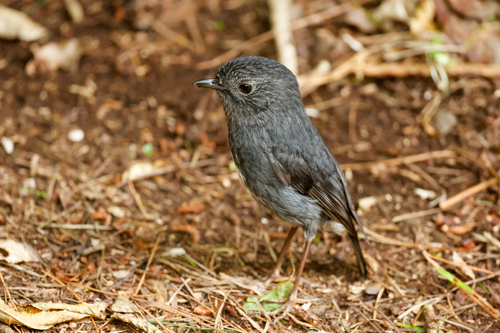 North Island Robin
In breve
Il segno di campo più affidabile per separare il Black Robin dal North Island Robin è l'estensione e il contrasto delle parti inferiori chiare: il North Island Robin mostra un ventre e una macchia sul petto distintamente chiari (anche se più piccoli rispetto al suo parente del South Island), mentre il Black Robin è complessivamente molto più scuro con poco o nessun chiaro sotto. Entrambe le specie sono robins scuri e tozzi, ma il North Island Robin mostra spesso striature chiare sulle parti superiori e a volte lampeggia una macchia bianca nascosta alla base del becco. I maschi sono più scuri delle femmine nel North Island Robin, aggiungendo una certa variabilità. Sul campo, cerca il ventre chiaro e le sottili striature chiare per individuare il North Island Robin; un uccello uniformemente scuro con poco contrasto sotto è probabilmente un Black Robin.
Consigli di identificazione
- Ventre e macchia sul petto chiari: il North Island Robin mostra un'area chiara distintiva sul ventre e sul petto, anche se più piccola rispetto al South Island Robin. Il Black Robin è molto più uniformemente scuro sotto. Questo è il segno di campo più utile in tutte le età e sessi.
- Striature chiare sulle parti superiori: il North Island Robin ha spesso sottili striature chiare sulle parti superiori, specialmente visibili in buona luce. Il Black Robin manca di queste striature e appare più uniformemente scuro.
- Macchia di piume bianche nascoste alla base del becco: il North Island Robin può lampeggiare una macchia bianca nascosta alla base del becco durante le interazioni. Se vedi questo comportamento, indica il North Island Robin; il Black Robin non mostra questa caratteristica.
- Dimorfismo sessuale nel North Island Robin: i maschi sono più scuri delle femmine, quindi alcuni North Island Robins possono apparire piuttosto scuri, ma di solito mostrano ancora la macchia chiara sul ventre. Il Black Robin non mostra questa variazione basata sul sesso.
- Uniformità di oscurità nel Black Robin: se l'uccello appare completamente scuro, quasi fuligginoso, senza chiaro evidente sotto o striature sopra, è molto più probabile che sia un Black Robin.
- Nessun modello di ali distintivo specifico per età: nessuna delle due specie è descritta come avente forti segni di ali superiori o di volo giovanili o immaturi, quindi concentrati sulla colorazione delle parti inferiori e superiori.
- Struttura e postura: entrambi sono robins tozzi e dritti con proporzioni simili; la struttura da sola non è un separatore affidabile.
- Habitat e distribuzione: qualsiasi robin visto sulla terraferma dell'Isola del Nord è un North Island Robin. Il Black Robin si trova solo su alcune piccole isole delle Chatham Islands; la posizione può essere definitiva.
- Indizi comportamentali: il North Island Robin può lampeggiare la macchia bianca alla base del becco in situazioni sociali, ma altrimenti, entrambe le specie si comportano in modo simile.
- Insidie con i North Island Robins scuri: alcuni maschi North Island Robins possono apparire piuttosto scuri, specialmente in scarsa luce, ma di solito mantengono la macchia chiara sul ventre. Controlla sempre questo contrasto prima di assumere che sia un Black Robin.
- Nessuna forte confusione stagionale o basata sull'età: le note disponibili non descrivono cambiamenti significativi nel piumaggio stagionale o immaturo che causerebbero confusione tra queste due specie.
- Indizi contestuali: se ti trovi in un santuario gestito o su un'isola al largo, controlla la segnaletica e le liste delle specie—il Black Robin è estremamente ristretto nella sua distribuzione e improbabile da incontrare al di fuori dei suoi siti noti.
- Vocalizzazioni: non sono fornite differenze vocali diagnostiche nelle note, quindi non fare affidamento sul canto o sul richiamo per la separazione.
- Confronto diretto: se hai la rara opportunità di vedere entrambi insieme (ad esempio, in un contesto di conservazione), il Black Robin apparirà sempre più scuro e uniforme, privo della macchia chiara sul ventre e delle striature del North Island Robin.
Taglia
Entrambe le specie sono simili nella struttura complessiva, essendo robins piccoli e tozzi con code relativamente corte e posture erette. I maschi del North Island Robin sono leggermente più grandi delle femmine, ma la differenza di dimensioni tra le due specie non è fortemente diagnostica sul campo. Senza un confronto diretto affiancato, la dimensione non è un separatore affidabile.
Piumaggio
Per tutte le età, il North Island Robin è di un grigio-nero scuro sopra con un'area visibilmente più chiara sul ventre e sul petto, anche se questa macchia chiara è più piccola rispetto al South Island Robin. Ci sono anche striature chiare sulle parti superiori, che possono essere sottili ma spesso visibili a distanza ravvicinata o in buona luce. Alla base del becco, il North Island Robin ha una macchia di piume bianche nascoste che può essere lampeggiata durante le interazioni sociali. I maschi sono complessivamente più scuri delle femmine. Al contrario, il Black Robin è molto più uniformemente scuro, con poco o nessun chiaro sulle parti inferiori e privo delle striature chiare sopra. Non sono descritti segni distintivi specifici per età sulle ali superiori o di volo per nessuna delle due specie, quindi le viste in perching e il contrasto delle parti inferiori sono più utili. Le differenze nel piumaggio specifiche per i giovani o immaturi non sono dettagliate nelle note disponibili.
Comportamento
Entrambe le specie sono tipici robins del genere Petroica, spesso visti saltellare a terra o su posatoi bassi, e entrambe possono apparire confidenziali. Il North Island Robin può occasionalmente lampeggiare la sua macchia di piume bianche alla base del becco durante le interazioni, un comportamento non descritto per il Black Robin. Altrimenti, i loro movimenti e stile di foraggiamento sono simili e non separabili in modo affidabile sul campo.
Habitat
Il North Island Robin è endemico dell'Isola del Nord della Nuova Zelanda e si trova in foreste native e talvolta in cespugli in rigenerazione. Il Black Robin è ristretto a poche piccole isole nel gruppo delle Chatham Islands e non si trova sulla terraferma della Nuova Zelanda. Pertanto, la posizione è un forte indizio contestuale: qualsiasi robin visto sulla terraferma dell'Isola del Nord è un North Island Robin, mentre il Black Robin si trova solo nella sua piccola area offshore.