

Motmot

ズグロスズメヒバリ 対 アラビアヒバリ

Eremopterix nigriceps 対 Eremalauda eremodites

ズグロスズメヒバリとアラビアヒバリのクイズ
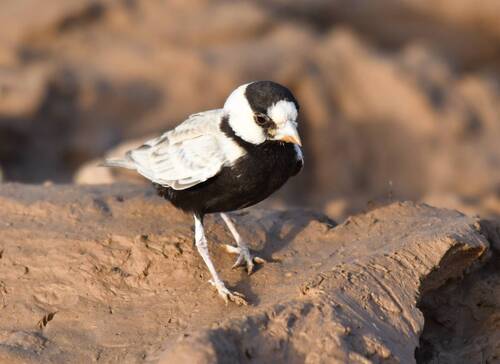
ズグロスズメヒバリ (Eremopterix nigriceps) ズグロスズメヒバリ
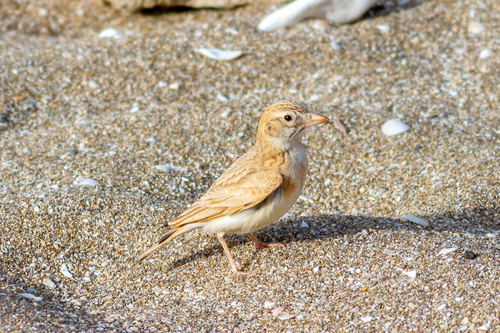
アラビアヒバリ (Eremalauda eremodites) アラビアヒバリ

メディア

読み込み中…

要点

最も信頼できるフィールドマークは、オスのズグロスズメヒバリの目を引く黒と白の頭の模様と黒い腹部であり、これはアラビアヒバリには見られません。ズグロスズメヒバリの雌と幼鳥はずっと地味ですが、飛んでいるときには黒い下翼の覆羽を示しますが、アラビアヒバリは常に強い頭のコントラストが欠けており、特徴的なピンク色で膨らんだくちばしと、飛んでいるときに見える黒っぽい外尾羽を持っています。もし、顔が地味で膨らんだピンクのくちばしを持つ砂褐色のヒバリを見たら、それはアラビアヒバリです。もし、頭に大胆な黒と白があるか、黒い下翼を見たら、それはズグロスズメヒバリです。両種は乾燥した開けた国に生息しますが、構造と動きに微妙な違いがあります。

識別のコツ

  1. オスのズグロスズメヒバリは間違いなく識別可能: 大胆な黒い冠、白い額と頬、そして胸の側面に白い斑点のある黒い腹部を探してください。アラビアヒバリは、どの年齢や季節でもこのパターンを示しません。
  2. 雌と幼鳥のズグロスズメヒバリは飛んでいるときに黒い下翼の覆羽を示します: 停止しているときは、これらの鳥は砂褐色で地味ですが、飛んでいるときには黒い下翼が診断的です。アラビアヒバリは決して黒い下翼を示しません。
  3. アラビアヒバリは飛んでいるときに見える黒っぽい外尾羽を持っています: これはすべての年齢と性別にとって重要なマークであり、特に鳥が飛び立つときに顕著です。ズグロスズメヒバリの尾も暗いですが、コントラストが少なく、バフ色の縁があります。
  4. くちばしの形と色: アラビアヒバリは大きく、膨らんだ均一なピンクのくちばしを持っていますが、ズグロスズメヒバリのくちばしはスリムで角色です。これは近距離または良い光の下で最もよく見えます。
  5. 顔の模様: ズグロスズメヒバリの雌と幼鳥は目と首の周りに淡い斑点を持っていますが、決して暗い口ひげはありません。アラビアヒバリは暗い口ひげのようなストライプを持ち、その他は地味な顔です。
  6. 上面の縞模様: 雌と幼鳥のズグロスズメヒバリは冠に淡い縞模様がありますが、アラビアヒバリの上面は地味な砂褐色で、淡い模様がわずかに見られます。
  7. 構造: アラビアヒバリは特にくちばしのために、よりがっしりとした印象を与えます。ズグロスズメヒバリは全体的により繊細です。
  8. 行動: ズグロスズメヒバリは繁殖期以外に特に大きな群れを形成することがあり、時には日陰や巣穴に避難することも知られています。アラビアヒバリは通常一羽またはペアで見られ、地面で短いバーストで走ります。
  9. 生息地: 両種は乾燥した開けた国を好みますが、アラビアヒバリはより厳密に砂漠の専門家であり、ズグロスズメヒバリは乾燥したサバンナでも見られます。
  10. 鳴き声: ズグロスズメヒバリからの短く甘い音の一連を聞いて、アラビアヒバリの穏やかなバーブルのフレーズや柔らかい笛の音と対比してください。
  11. 止まり木と飛行の視点: 止まり木の視点では、頭の模様とくちばしの形に依存してください; 飛行中は下翼(ズグロスズメヒバリでは黒、アラビアヒバリでは決して黒くない)と尾(アラビアヒバリでは黒っぽい外羽)を確認してください。
  12. 季節的な文脈: 大きな群れは繁殖期以外のズグロスズメヒバリを示唆します; アラビアヒバリは大きな群れで見られることは稀です。
  13. 性差: オスのズグロスズメヒバリだけが大胆に白黒の模様を持っています; 雌と幼鳥はずっと地味ですが、黒い下翼を示します。
  14. 幼鳥の混乱: 幼鳥のズグロスズメヒバリはバフ色の先端のある頭羽と黒い下翼の覆羽を持っていますが、幼鳥のアラビアヒバリは暗い口ひげと黒っぽい外尾羽を持って地味です。
  15. 疑わしい場合: 下翼やくちばしがはっきり見えない場合は、優しく鳥を飛び立たせて黒い下翼(ズグロスズメヒバリ)または黒っぽい外尾羽(アラビアヒバリ)を確認してください。

大きさ

両種は全体的に似たサイズで、ズグロスズメヒバリは約11.5〜12.5 cmの長さです [wikipedia]。アラビアヒバリはがっしりとして大きなくちばしを持つと説明されていますが、直接比較のための正確な測定値は示されていません。フィールドでは、アラビアヒバリは膨らんだくちばしと頑丈な体格のためにわずかにがっしりと見えることがありますが、サイズだけでは信頼できる区別にはなりません。

羽色

行動

ズグロスズメヒバリは繁殖期以外に特に大きな群れを形成することがあり、日中の暑さから日陰や巣穴に避難することが知られています。足をぶら下げて飛んだり、翼を垂らして止まったりして涼むことがあります。アラビアヒバリは繁殖期には通常一羽またはペアで見られ、それ以外では小さな群れを形成します。地面では、アラビアヒバリは短いバーストで動き、急に走ったり止まったりし、一般的にズグロスズメヒバリよりも社交的ではありません。

生息環境

両種は乾燥した開けた風景に生息します。ズグロスズメヒバリは北アフリカから中東、北西インドまで広く分布し、乾燥したサバンナや半砂漠を好みます。アラビアヒバリはアラビア半島の砂漠により制限されており、シリアやヨルダンからサウジアラビア、オマーンまで分布しています。中東では重複が可能ですが、アラビアヒバリはより厳密に砂漠の専門家です。

声

ズグロスズメヒバリの歌は、止まり木からまたは飛行ディスプレイ中に発せられる短い一連のシンプルで甘い音です。アラビアヒバリの歌は、地面またはディスプレイ飛行中に発せられる穏やかなバーブルのフレーズの一連で、低いガラガラ音や柔らかい二音の笛の呼び声が含まれます。両者は飛行中に歌うことができますが、アラビアヒバリの鳴き声はより柔らかく、より複雑であり、ズグロスズメヒバリの鳴き声はよりシンプルで甘いです。

より良い説明を送る

比較と同じ項目を使ってください。文章はすぐに公開されます。

The most reliable field mark is the male Black-crowned Sparrow-Lark’s striking black-and-white head pattern and black underparts, which are never matched by Arabian Lark. Females and juveniles of Black-crowned Sparrow-Lark are much plainer but still show black underwing coverts in flight, while Arabian Lark always lacks strong head contrasts and has a distinctive pink, swollen bill and blackish outer tail feathers visible in flight. If you see a sandy-brown lark with a plain face and a bulky pink bill, it’s Arabian Lark; if you see bold black-and-white on the head or black underwings, it’s Black-crowned Sparrow-Lark. Both species occur in arid, open country but differ subtly in structure and movement.

  1. Male Black-crowned Sparrow-Lark is unmistakable: Look for a bold black crown, white forehead and cheeks, and black underparts with a white patch at the sides of the breast. No Arabian Lark shows this pattern at any age or season.
  2. Female and juvenile Black-crowned Sparrow-Lark show black underwing coverts in flight: Even when perched, these birds are sandy-brown and plain, but in flight, the black underwing is diagnostic. Arabian Lark never shows black underwings.
  3. Arabian Lark has blackish outer tail feathers visible in flight: This is a key mark for all ages and sexes, especially when the bird flushes. Black-crowned Sparrow-Lark’s tail is also dark but less contrasting and edged buff.
  4. Bill shape and color: Arabian Lark has a large, swollen, uniformly pink bill, while Black-crowned Sparrow-Lark’s bill is slimmer and horn-colored. This is best seen at close range or in good light.
  5. Facial pattern: Black-crowned Sparrow-Lark females and juveniles have pale patches around the eye and neck, but never a dark moustache. Arabian Lark has a dark moustache-like stripe and otherwise plain face.
  6. Upperpart streaking: Female and juvenile Black-crowned Sparrow-Lark have faint streaking on the crown, while Arabian Lark’s upperparts are plain sandy-brown with only faint pale patterning.
  7. Structure: Arabian Lark appears stockier and more robust, especially due to its bill. Black-crowned Sparrow-Lark is more delicate overall.
  8. Behavior: Black-crowned Sparrow-Lark may be seen in large flocks, especially outside breeding season, and sometimes shelters in shade or burrows. Arabian Lark is usually solitary or in pairs, running in short bursts on the ground.
  9. Habitat: Both prefer arid, open country, but Arabian Lark is more strictly a desert specialist, while Black-crowned Sparrow-Lark can be found in dry savanna as well.
  10. Vocalizations: Listen for a short, sweet series of notes from Black-crowned Sparrow-Lark versus the gentle burbling phrases and soft whistles of Arabian Lark.
  11. Perched versus flight views: In perched views, rely on head pattern and bill shape; in flight, check underwing (black in Black-crowned Sparrow-Lark, never in Arabian Lark) and tail (blackish outer feathers in Arabian Lark).
  12. Seasonal context: Large flocks suggest Black-crowned Sparrow-Lark outside breeding season; Arabian Lark is rarely seen in large groups.
  13. Sex differences: Only male Black-crowned Sparrow-Lark is boldly pied; females and juveniles are much plainer but still show black underwings.
  14. Juvenile confusion: Juvenile Black-crowned Sparrow-Lark has buff-tipped head feathers and black underwing coverts, while juvenile Arabian Lark is plain with a dark moustache and blackish outer tail feathers.
  15. When in doubt: If you cannot see the underwing or bill clearly, try to flush the bird gently to check for black underwing (Black-crowned Sparrow-Lark) or blackish outer tail feathers (Arabian Lark).

Both species are similar in overall size, with Black-crowned Sparrow-Lark measuring about 11.5–12.5 cm in length [wikipedia]. Arabian Lark is described as stocky and large-billed, but no precise measurement is given for direct comparison. In the field, Arabian Lark may appear slightly bulkier due to its swollen bill and robust build, but size alone is not a reliable separator.

  • Juveniles and Females: Juvenile and female Black-crowned Sparrow-Lark are sandy-brown above with faint streaking and pale facial patches, but always show black underwing coverts in flight. Arabian Lark juveniles and adults are sandy-brown above, paler below, with faint pale patterning and a dark moustache stripe, but lack any black on the underwing; instead, look for blackish outer tail feathers in flight.
  • Adult Males: Male Black-crowned Sparrow-Lark is unmistakable with a black crown, white forehead and cheek patches, black underparts, and a white patch at the sides of the breast. Arabian Lark never shows such bold head or underpart contrast; its face is plain except for a dark moustache, and its underparts are pale with faint markings.
  • Bills: Arabian Lark has a uniformly pink, swollen bill, while Black-crowned Sparrow-Lark’s bill is horn-colored and slimmer.
  • Tail: Both species have dark outer tail feathers, but this is more prominent in Arabian Lark, especially in flight. Black-crowned Sparrow-Lark’s tail is blackish with buff edges and grey central feathers.

Black-crowned Sparrow-Lark often forms flocks, sometimes very large outside the breeding season, and is known to seek shade or even shelter in burrows during midday heat. It may fly with legs dangling or perch with wings drooped to cool off. Arabian Lark is more often seen alone or in pairs during breeding, forming only small groups otherwise. On the ground, Arabian Lark moves in short bursts, running and stopping abruptly, and is generally less gregarious than Black-crowned Sparrow-Lark.

Both species inhabit arid, open landscapes. Black-crowned Sparrow-Lark ranges widely from North Africa through the Middle East to northwestern India, favoring dry savanna and semi-desert. Arabian Lark is more restricted to the deserts of the Arabian Peninsula, from Syria and Jordan through Saudi Arabia to Oman. Overlap is possible in the Middle East, but Arabian Lark is more strictly a desert specialist.

Black-crowned Sparrow-Lark’s song is a short series of simple, sweet notes, delivered from a perch or during a flight display. Arabian Lark’s song is a series of gentle burbling phrases, given from the ground or in display flight, with calls including a low rattle and a soft two-note whistle. While both can sing in flight, Arabian Lark’s vocalizations are softer and more complex, whereas Black-crowned Sparrow-Lark’s are simpler and sweeter.

変更を破棄しますか?

保存していない編集があります。今離れると失われます。

ズグロスズメヒバリ · アラビアヒバリ · 苦手な鳥