

Black-crowned Sparrow-Lark vs Arabian Lark
Eremopterix nigriceps contro Eremalauda eremodites
Fai un quiz con Black-crowned Sparrow-Lark e Arabian Lark
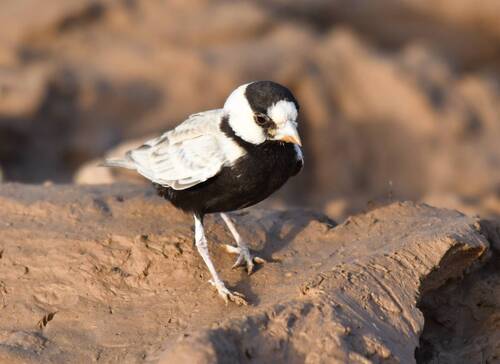 Black-crowned Sparrow-Lark
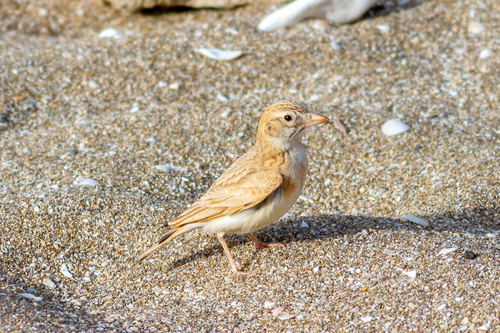 Arabian Lark
In breve
Il segno distintivo più affidabile è il colpo d'occhio del maschio Black-crowned Sparrow-Lark, con il suo sorprendente motivo della testa bianco e nero e il ventre nero, che non è mai eguagliato dall'Arabian Lark. Le femmine e i giovani di Black-crowned Sparrow-Lark sono molto più semplici ma mostrano comunque copritrici nere sotto le ali in volo, mentre l'Arabian Lark manca sempre di forti contrasti sulla testa e ha un becco distintivo, gonfio e rosa e piume della coda esterne nerastre visibili in volo. Se vedi un'allodola marrone sabbioso con un volto semplice e un becco rosa massiccio, è un'Arabian Lark; se vedi un audace bianco e nero sulla testa o ali nere, è un Black-crowned Sparrow-Lark. Entrambe le specie si trovano in paesaggi aridi e aperti, ma differiscono sottilmente nella struttura e nel movimento.
Consigli di identificazione
- Il maschio Black-crowned Sparrow-Lark è inconfondibile: Cerca una corona nera audace, una fronte e guance bianche e un ventre nero con una macchia bianca ai lati del petto. Nessun Arabian Lark mostra questo motivo a qualsiasi età o stagione.
- Le femmine e i giovani di Black-crowned Sparrow-Lark mostrano copritrici nere sotto le ali in volo: Anche quando sono posati, questi uccelli sono marrone sabbioso e semplici, ma in volo, il nero sotto l'ala è diagnostico. L'Arabian Lark non mostra mai ali nere.
- L'Arabian Lark ha piume esterne della coda nerastre visibili in volo: Questo è un segno chiave per tutte le età e i sessi, specialmente quando l'uccello si spaventa. La coda del Black-crowned Sparrow-Lark è anch'essa scura ma meno contrastante e bordata di buff.
- Forma e colore del becco: L'Arabian Lark ha un becco grande, gonfio e uniformemente rosa, mentre il becco del Black-crowned Sparrow-Lark è più snello e color corno. Questo è meglio visibile da vicino o in buona luce.
- Motivo facciale: Le femmine e i giovani di Black-crowned Sparrow-Lark hanno macchie chiare attorno all'occhio e al collo, ma mai un baffo scuro. L'Arabian Lark ha una striscia scura simile a un baffo e un volto altrimenti semplice.
- Striature sulla parte superiore: Le femmine e i giovani di Black-crowned Sparrow-Lark hanno striature deboli sulla corona, mentre le parti superiori dell'Arabian Lark sono semplici marrone sabbioso con solo un lieve motivo chiaro.
- Struttura: L'Arabian Lark appare più robusto e massiccio, specialmente a causa del suo becco. Il Black-crowned Sparrow-Lark è più delicato nel complesso.
- Comportamento: Il Black-crowned Sparrow-Lark può essere visto in grandi stormi, specialmente al di fuori della stagione di riproduzione, e a volte si ripara all'ombra o in tane. L'Arabian Lark è di solito solitario o in coppie, correndo in brevi scatti sul terreno.
- Habitat: Entrambi preferiscono paesaggi aridi e aperti, ma l'Arabian Lark è più strettamente un specialista del deserto, mentre il Black-crowned Sparrow-Lark può essere trovato anche in savane secche.
- Vocalizzazioni: Ascolta una breve e dolce serie di note dal Black-crowned Sparrow-Lark rispetto alle frasi gorgoglianti gentili e ai fischi morbidi dell'Arabian Lark.
- Viste posate rispetto a quelle in volo: Nelle viste posate, fai affidamento sul motivo della testa e sulla forma del becco; in volo, controlla sotto l'ala (nero nel Black-crowned Sparrow-Lark, mai nell'Arabian Lark) e la coda (piume esterne nerastre nell'Arabian Lark).
- Contesto stagionale: Grandi stormi suggeriscono Black-crowned Sparrow-Lark al di fuori della stagione di riproduzione; l'Arabian Lark è raramente visto in grandi gruppi.
- Differenze sessuali: Solo il maschio Black-crowned Sparrow-Lark è audacemente maculato; le femmine e i giovani sono molto più semplici ma mostrano comunque ali nere.
- Confusione giovanile: Il giovane Black-crowned Sparrow-Lark ha piume della testa con punte color buff e copritrici nere sotto le ali, mentre il giovane Arabian Lark è semplice con un baffo scuro e piume esterne della coda nerastre.
- Quando hai dubbi: Se non riesci a vedere chiaramente l'ala o il becco, prova a spaventare delicatamente l'uccello per controllare la presenza di ali nere (Black-crowned Sparrow-Lark) o piume esterne della coda nerastre (Arabian Lark).
Taglia
Entrambe le specie sono simili in dimensioni complessive, con il Black-crowned Sparrow-Lark che misura circa 11,5–12,5 cm di lunghezza [wikipedia]. L'Arabian Lark è descritto come massiccio e con un becco grande, ma non viene fornita alcuna misura precisa per un confronto diretto. Sul campo, l'Arabian Lark può apparire leggermente più massiccio a causa del suo becco gonfio e della sua struttura robusta, ma la dimensione da sola non è un separatore affidabile.
Piumaggio
- Giovani e Femmine: Il giovane e la femmina di Black-crowned Sparrow-Lark sono marrone sabbioso sopra con striature deboli e macchie facciali chiare, ma mostrano sempre copritrici nere sotto le ali in volo. I giovani e gli adulti di Arabian Lark sono marrone sabbioso sopra, più chiari sotto, con un motivo chiaro e una striscia scura simile a un baffo, ma mancano di qualsiasi nero sotto l'ala; invece, cerca piume esterne della coda nerastre in volo.
- Maschi Adulti: Il maschio Black-crowned Sparrow-Lark è inconfondibile con una corona nera, fronte e macchie guanciali bianche, ventre nero e una macchia bianca ai lati del petto. L'Arabian Lark non mostra mai un tale contrasto audace sulla testa o sul ventre; il suo volto è semplice tranne che per un baffo scuro, e il suo ventre è chiaro con segni deboli.
- Becco: L'Arabian Lark ha un becco uniformemente rosa e gonfio, mentre il becco del Black-crowned Sparrow-Lark è color corno e più snello.
- Coda: Entrambe le specie hanno piume esterne della coda scure, ma questo è più prominente nell'Arabian Lark, specialmente in volo. La coda del Black-crowned Sparrow-Lark è nerastra con bordi buff e piume centrali grigie.
Comportamento
Il Black-crowned Sparrow-Lark forma spesso stormi, a volte molto grandi al di fuori della stagione di riproduzione, ed è noto per cercare ombra o addirittura riparo in tane durante il caldo di mezzogiorno. Può volare con le gambe penzoloni o posarsi con le ali abbassate per rinfrescarsi. L'Arabian Lark è più spesso visto solo o in coppie durante la riproduzione, formando solo piccoli gruppi altrimenti. Sul terreno, l'Arabian Lark si muove in brevi scatti, correndo e fermandosi bruscamente, ed è generalmente meno gregario del Black-crowned Sparrow-Lark.
Habitat
Entrambe le specie abitano paesaggi aridi e aperti. Il Black-crowned Sparrow-Lark si estende ampiamente dal Nord Africa attraverso il Medio Oriente fino al nord-ovest dell'India, preferendo savane secche e semi-deserto. L'Arabian Lark è più ristretto ai deserti della Penisola Arabica, dalla Siria e Giordania attraverso l'Arabia Saudita fino all'Oman. È possibile un sovrapposizione nel Medio Oriente, ma l'Arabian Lark è più strettamente un specialista del deserto.
Voce
Il canto del Black-crowned Sparrow-Lark è una breve serie di note semplici e dolci, emesse da un posatoio o durante una dimostrazione di volo. Il canto dell'Arabian Lark è una serie di frasi gorgoglianti gentili, emesse dal terreno o in volo di esibizione, con richiami che includono un basso rumore e un morbido fischio a due note. Mentre entrambi possono cantare in volo, le vocalizzazioni dell'Arabian Lark sono più morbide e complesse, mentre quelle del Black-crowned Sparrow-Lark sono più semplici e dolci.
Black-crowned Sparrow-Lark · Arabian Lark · I miei uccelli difficili