

Motmot

クロネコマネドリ 対 オナガクロムクドリモドキ

Melanoptila glabrirostris 対 Quiscalus mexicanus

クロネコマネドリとオナガクロムクドリモドキのクイズ
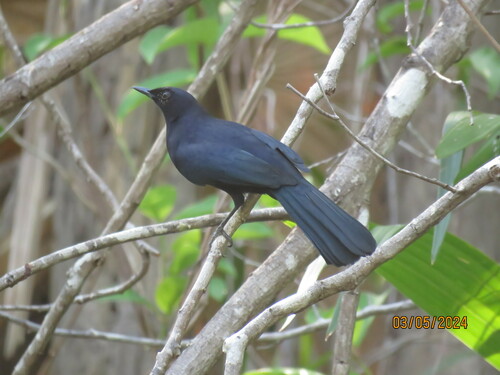
クロネコマネドリ (Melanoptila glabrirostris) クロネコマネドリ
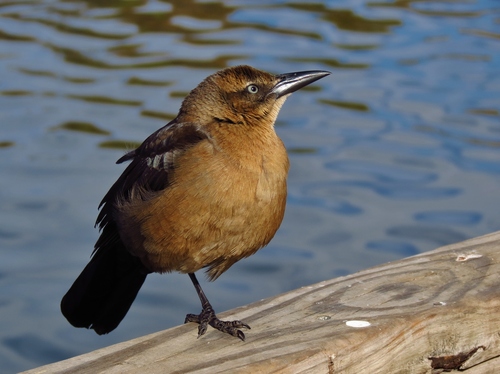
オナガクロムクドリモドキ (Quiscalus mexicanus) オナガクロムクドリモドキ

メディア

読み込み中…

要点

ブラックキャットバードとオナガクロムクドリモドキを区別する最も信頼できるフィールドマークは、全体のサイズと構造です:キャットバードははるかに小さく、よりコンパクトで、短く丸い翼と中程度の長さの尾を持っているのに対し、クロムクドリモドキは大きく、細長く、特にオスは長い尾を持っています。成鳥のブラックキャットバードは均一に光沢のある黒で、紫がかったまたは緑がかった光沢と暗い目を持っていますが、成鳥のオスのクロムクドリモドキは虹色の黒で、青紫の光沢と目を引く黄色の目を持っています。メスのクロムクドリモドキは茶色で、全体が黒になることはありません。幼鳥のブラックキャットバードは茶色がかった灰色で斑点があり、幼鳥のクロムクドリモドキは茶色のメスに似ています。飛行中、クロムクドリモドキの長いキール状の尾と大きなサイズは目を引きます。両種はユカタン地域で見られることがありますが、クロムクドリモドキは開けた都市部や攪乱された生息地にいる可能性が高く、キャットバードは密な植生を好みます。

識別のコツ

  1. サイズが最初のチェックです: 鳥がほぼロビンサイズまたはそれ以下であれば、ブラックキャットバードです。カラスサイズまたはスターリングより大きければ、オナガクロムクドリモドキです。これはすべての年齢と性別に当てはまります。
  2. 尾の形と長さ: クロムクドリモドリのオスは非常に長いキール状の尾を持ち、飛行中やディスプレイ中にしばしば垂直に折りたたまれています(V字型)。キャットバードの尾は中程度の長さで、この形を示すことはありません。メスのクロムクドリモドリも長い尾を持っていますが、あまり劇的ではありません。
  3. くちばしの構造: ブラックキャットバードは短く、まっすぐな黒いくちばしを持ち、先端がわずかに下向きになっています。クロムクドリモドリのくちばしはより長く、頑丈で、特にオスでは均等に曲がっています。
  4. 目の色: 成鳥のブラックキャットバードは暗い赤褐色の目を持ち(明るい黄色ではありません)、成鳥のクロムクドリモドリは明るい黄色の目を持っています。幼鳥のキャットバードは灰色の目を持ち、幼鳥のクロムクドリモドリは茶色の目を持っています。
  5. 羽毛の光沢: キャットバードは光沢のある黒で、特にカバーと尾に紫がかったまたは緑がかった光沢があります。クロムクドリモドリのオスは虹色で、特に頭部と上面に青紫の光沢があります。メスのクロムクドリモドリは茶色で、決して黒ではありません。
  6. 幼鳥の羽毛: 幼鳥のキャットバードは茶色がかった灰色で、下部に斑点があります。幼鳥のクロムクドリモドリはメスのように茶色で、いくつかの縞模様がありますが、全体が黒になることはありません。密な茂みの中にいる小さく茶色がかった斑点のある鳥は、キャットバードの幼鳥である可能性が高いです。
  7. 性差の二形性: キャットバードはほとんど性差がありません。両性は似ており、メスはわずかに光沢が少ないです。クロムクドリモドリは強い二形性を示し、オスは大きく光沢のある黒で、メスは小さく茶色です。
  8. 飛行プロファイル: クロムクドリモドリは飛行中、長い翼を持ち、細長く、長いV字型の尾を示します。キャットバードはコンパクトで、短く丸い翼と中程度の尾を持っています。
  9. 行動: キャットバードは秘密主義で、密な植生の中を移動したり、隠れた止まり木から歌ったりします。クロムクドリモドリは大胆で、しばしば群れで行動し、開けた場所で採餌します。
  10. 生息地: 密な藪や森林の端はキャットバードを示し、開けた野原、都市公園、または駐車場はクロムクドリモドリを示します。
  11. 鳴き声: キャットバードの歌は、厳しい、さえずり、フルートのような音の混合で、金属的なブザー音を伴い、他の種を模倣することはありません。クロムクドリモドリははるかに大きく、さまざまな音を持ち、しばしば社会的なグループで鳴きます。
  12. 止まり方: キャットバードは直立して止まり、しばしば低く部分的に隠れています。クロムクドリモドリは背筋を伸ばして立ち、しばしば露出した場所にいて、時には尾を広げたり折りたたんだりします。
  13. 群れのサイズ: キャットバードは通常一羽またはペアでいますが、クロムクドリモドリはしばしば騒がしい群れでいます。
  14. 文脈: 忙しい人間が支配する地域で黒い鳥を見た場合、それはほぼ確実にクロムクドリモドリです。キャットバードはそのような場所を避けます。
  15. 落とし穴: 「黒い鳥」だけに頼らないでください。メスのクロムクドリモドリは茶色で、キャットバードは決してクロムクドリモドリほど大きくも長い尾を持つことはありません。幼鳥の混乱は、斑点(キャットバード)と無地の茶色(クロムクドリモドリ)を見分けることで最もよく解決されます。

大きさ

ブラックキャットバードは劇的に小さく、質量は約35g、長さは19〜20.5cmで、その範囲で最も小さなミミドリです。オナガクロムクドリモドキははるかに大きく、オスは平均168.7g(最大265g)で、長さは38〜46cm、翼幅は48〜58cmです。メスのクロムクドリモドリでさえ、115〜142gで、キャットバードの3倍以上の重さです。フィールドでは、このサイズの違いはすぐに明らかで、特に並んで見たり、スケールのために馴染みのある鳥と一緒に見たりするときに顕著です。

羽色

行動

ブラックキャットバードは通常孤独またはペアで、密な植生の中を移動し、低く隠れた止まり木から歌います。模倣は知られておらず、目立たない傾向があります。オナガクロムクドリモドキは非常に社交的で、騒がしい群れで見られることが多く、開けた場所で目立ち、しばしば露出した場所に止まります。クロムクドリモドリは大胆で、都市部、駐車場、または開けた野原で採餌することが多く、その行動は秘密主義のキャットバードよりもはるかに社交的で目立ちます。

生息環境

ブラックキャットバードはユカタン半島と近隣の島々の密な低木、藪、森林の端に制限され、密で絡み合った植生と低い止まり木を好みます。オナガクロムクドリモドキは開けた生息地、都市部、農業地、公園、湿地に一般的で、人間が改変した風景で見つかる可能性がはるかに高いです。もし鳥が忙しい町の広場、駐車場、または開けた野原にいる場合、それはほぼ確実にクロムクドリモドリです。キャットバードはそのような生息地を避けます。

声

ブラックキャットバードの歌は、厳しい音やかすれた音からさえずりやフルートのような音までの繰り返しのフレーズの混合で、金属的なクリック音を伴いますが、他の種を模倣することはありません。その呼び声は厳しいまたは鼻にかかった音で、時にはグレーキャットバードを思い起こさせます。オナガクロムクドリモドキは非常に声が大きく、厳しい、きしむ、さまざまな呼び声の幅広い範囲を持ち、しばしば笛、ガラガラ、鳴き声として説明されます。クロムクドリモドリの鳴き声はより大きく、より多様で、しばしば社会的な場面で行われ、キャットバードはより控えめで多様性が少ないです。

より良い説明を送る

比較と同じ項目を使ってください。文章はすぐに公開されます。

The most reliable field mark to separate Black Catbird from Great-tailed Grackle is overall size and structure: the catbird is much smaller and more compact, with a short, rounded wing and medium-length tail, while the grackle is large, lanky, and long-tailed, especially in males. Adult Black Catbirds are uniformly glossy black with a purplish or greenish sheen and dark eyes, while adult male grackles are iridescent black with a blue-purple gloss and striking yellow eyes; female grackles are brown and never all-black. Juvenile Black Catbirds are brownish-gray with mottling, while juvenile grackles resemble brown females. In flight, the grackle's long, keel-shaped tail and larger size are striking. Both species may be found in the Yucatán region, but grackles are more likely in open, urban, or disturbed habitats, while catbirds prefer dense vegetation.

  1. Size is the first check: If the bird is nearly robin-sized or smaller, it's a Black Catbird; if it's crow-sized or larger than a starling, it's a Great-tailed Grackle. This is true for all ages and sexes.
  2. Tail shape and length: Grackle males have a very long, keel-shaped tail that is often folded vertically (V-shaped) in flight or display; catbird's tail is medium-length and never shows this shape. Female grackles also have long tails, though less dramatic.
  3. Bill structure: Black Catbird has a short, straight, black bill with a slightly decurved tip; grackle's bill is longer, more robust, and evenly curved, especially in males.
  4. Eye color: Adult Black Catbird has dark reddish eyes (never bright yellow); adult grackles have bright yellow eyes. Juvenile catbirds have gray eyes, while juvenile grackles have brown eyes.
  5. Plumage gloss: Catbird is glossy black with a purplish or greenish sheen, especially on the coverts and tail; grackle males are iridescent with a blue-purple gloss, especially on the head and upperparts. Female grackles are brown, never black.
  6. Juvenile plumage: Juvenile catbirds are brownish-gray with mottling below; juvenile grackles are brown like females, with some streaking but no all-black phase. Any small, brownish, mottled bird in dense brush is likely a catbird juvenile.
  7. Sexual dimorphism: Catbird shows little to no sexual dimorphism; both sexes are similar, with females slightly less glossy. Grackle is strongly dimorphic: males are large, glossy black, females are smaller and brown.
  8. Flight profile: Grackle in flight is long-winged, lanky, and shows a long, V-shaped tail; catbird is compact, with short, rounded wings and a medium tail.
  9. Behavior: Catbird is secretive, moving through dense vegetation or singing from a hidden perch. Grackle is bold, often in flocks, and forages in open or urban areas.
  10. Habitat: Dense thicket or forest edge points to catbird; open field, urban park, or parking lot points to grackle.
  11. Vocalizations: Catbird's song is a mix of harsh, warbled, and flute-like notes with metallic buzzes, not mimicking other species. Grackle is much louder and more varied, with whistles, rattles, and squawks, often in social groups.
  12. Perched posture: Catbird perches upright, often low and partially hidden; grackle stands tall, often in exposed spots, sometimes with tail fanned or folded.
  13. Group size: Catbird is usually alone or in pairs; grackle is often in noisy flocks.
  14. Context: If you see a black bird in a busy, human-dominated area, it's almost certainly a grackle. Catbirds avoid such places.
  15. Pitfalls: Do not rely on 'black bird' alone—female grackles are brown, and catbirds are never as large or as long-tailed as any grackle. Juvenile confusion is best resolved by looking for mottling (catbird) vs. plain brown (grackle).

Black Catbird is dramatically smaller: about 35 g in mass and 19–20.5 cm long, making it the smallest mimid in its range. Great-tailed Grackle is much larger, with males averaging 168.7 g (and up to 265 g) and 38–46 cm in length, with a wingspan of 48–58 cm. Even female grackles, at 115–142 g, are over three times heavier than a catbird. In the field, this size difference is immediately obvious, especially when seen side-by-side or with familiar birds for scale.

  • Juveniles: Black Catbird juveniles are brownish-gray with mottling below and gray irises, while juvenile grackles are brown like adult females, with brown eyes and some streaking on the breast. There is no all-black juvenile grackle; any small, brownish, mottled bird is a catbird juvenile.
  • Adult males: Black Catbird is glossy black all over with a purplish sheen, greenish gloss on rectrices and coverts, and a duller blackish-brown on flight feathers. The bill and legs are black, and the eye is dark reddish. Great-tailed Grackle males are iridescent black with a blue-purple sheen, especially on the head and upper body, and have a bright yellow eye. Their tail is long and keel-shaped, often held in a V.
  • Adult females: Black Catbird females are similar to males but less glossy and still all-black. Female grackles are brown with darker wings and tail, never black overall, and have yellow eyes as adults.
  • Flight: Catbird has short, rounded wings and a medium tail, while grackle shows long wings and a dramatically long, keel-shaped tail, especially in males.

Black Catbird is typically solitary or in pairs, often skulking in dense vegetation and singing from low, hidden perches. It is not known for mimicry and tends to be unobtrusive. Great-tailed Grackle is highly social, often seen in noisy flocks, conspicuous in open areas, and frequently perches in exposed locations. Grackles are bold, often foraging in urban settings, parking lots, or open fields, and their behavior is much more gregarious and conspicuous than the secretive catbird.

Black Catbird is restricted to dense scrub, thickets, and forest edges in the Yucatán Peninsula and nearby islands, favoring dense, tangled vegetation and lower perches. Great-tailed Grackle is common in open habitats, including urban areas, agricultural fields, parks, and wetlands, and is much more likely to be found in human-modified landscapes. If the bird is in a busy town square, parking lot, or open field, it is almost certainly a grackle; catbirds avoid such habitats.

Black Catbird's song is a mix of repeated phrases, ranging from harsh and scratchy to warbled and flute-like, with metallic clicking buzzes, but it does not mimic other species. Its calls can be harsh or nasal, sometimes reminiscent of Gray Catbird. Great-tailed Grackle is extremely vocal, with a wide range of harsh, squeaky, and varied calls, often described as whistles, rattles, and squawks. Grackle vocalizations are louder, more varied, and often given in social settings, while catbird is more subdued and less varied.

変更を破棄しますか?

保存していない編集があります。今離れると失われます。

クロネコマネドリ · オナガクロムクドリモドキ · 苦手な鳥