

Motmot

マユグロアホウドリ 対 マミジロウ

Thalassarche melanophris 対 Phalacrocorax varius

マユグロアホウドリとマミジロウのクイズ
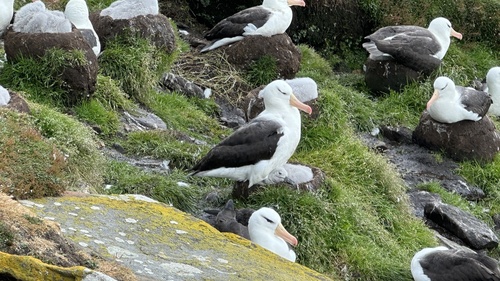
マユグロアホウドリ (Thalassarche melanophris) マユグロアホウドリ
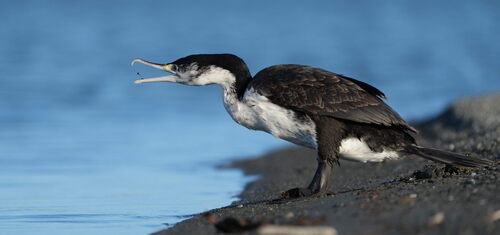
マミジロウ (Phalacrocorax varius) マミジロウ

メディア

読み込み中…

要点

ブラックブロウアホウドリとマミジロウを区別する最も信頼できるフィールドマークは、目を引くアンダーウイングパターンです:ブラックブロウアホウドリ(すべての年齢)は、主に白いアンダーウイングに広く不規則な黒い縁取りを示しますが、マミジロウは大胆な黒いエッジのない平坦な白いアンダーウイングを持っています。飛行中、アホウドリははるかに大きく、長く狭い翼と滑空する浮遊感のある飛行スタイルを持ち、マミジロウの短く広い翼とより労力を要する直接的な飛行と対照的です。止まっているとき、アホウドリのオレンジ色のくちばしと暗い眉が目立ち、マミジロウはフック状のくちばし、緑の目、黄色の顔の斑点を持っています。幼鳥のアホウドリはより暗いアンダーウイングとくちばしを持っていますが、それでも特徴的な翼のパターンを示します。生息地も助けになります:アホウドリは海洋性で、コロニーや稀な迷鳥としてしか岸近くで見られませんが、マミジロウは海岸や内陸の水域で一般的です。

識別のコツ

  1. Underwing pattern in flight (all ages): ブラックブロウアホウドリは、主に白いアンダーウイングに広く不規則な黒い縁取りを示し、幼鳥でも確認できます。マミジロウは大胆な黒いエッジのない平坦な白いアンダーウイングを持っており、これは飛行中の最も信頼できるマークです。
  2. Overall size and shape: アホウドリははるかに大きく、非常に長く狭い翼と長く先細りの体を持っています。マミジロウは小さく、短く広い翼とよりコンパクトな体を持っています。
  3. Flight style: アホウドリは、風の流れを利用して最小限の羽ばたきで長時間滑空します。マミジロウは安定して羽ばたき、あまり遠くまで滑空せず、しばしば水面近くを飛びます。
  4. Bill shape and color: 成鳥のアホウドリは、先端が暗い長く強いオレンジ色のくちばしを持ち、幼鳥は暗い角のようなくちばしを持っています。マミジロウのくちばしは短く、先端がフック状で、オレンジ色の色合いはなく、代わりに基部に黄色の顔の斑点を示します。
  5. Facial pattern: アホウドリは特徴的な暗い眉(「黒い眉」)と白い頭を持っています。マミジロウは眉がなく、代わりにくちばしと目の間に黄色の斑点を示し、緑の目と青いリングを持っています。
  6. Upperwing and back: アホウドリは暗い灰色のサドルとアッパーウイングを持ち、白い尻と対照的です。マミジロウの背中とアッパーウイングは黒ですが、白い尻との鋭い対比はありません。
  7. Perched posture: アホウドリは直立して立ち、しばしば開けた地面や崖の上にいます。マミジロウは岩、柱、または木に止まり、しばしば翼を広げて乾かします。
  8. Legs and feet: マミジロウは大きく黒い水かきのある足を持ち、止まっているときや泳いでいるときによく見えます。アホウドリの足はフィールドではあまり目立ちません。
  9. Habitat context: アホウドリは海洋性で、コロニーや稀な迷鳥としてしか岸近くで見られません。マミジロウは海岸、河口、内陸の水域で一般的です。
  10. Juvenile confusion: 幼鳥のアホウドリはより暗いくちばしと頭を持っていますが、それでも大胆なアンダーウイングパターンを示します。幼鳥のマミジロウはアホウドリのようなアンダーウイングパターンを持ちません。
  11. Tail: アホウドリの尾は短く丸みを帯びており、求愛行動に使用されます。マミジロウの尾は長くくさび形で、翼を乾かすときによく扇形になります。
  12. Voice: コロニーではのみ役立ちます—アホウドリは騒がしく、マミジロウは一般的に静かです。
  13. Eye color: マミジロウは緑の目と青いリングを持っています。アホウドリは暗い目を持っています(キャンベルアホウドリを除く、これはこの比較には含まれていません)。
  14. Bill tip: アホウドリのくちばしは先端が尖っており、暗い先端を持っています。マミジロウのくちばしは先端がフック状です。
  15. Behavior on water: マミジロウは水中に低く座り、しばしば潜ります。アホウドリはコロニーや海で休んでいるとき以外は岸近くの水に座ることはほとんどありません。

大きさ

ブラックブロウアホウドリはマミジロウよりもはるかに大きく重いです。アホウドリは長さ80〜95 cm、翼幅200〜240 cm、体重2.9〜4.7 kg([wikipedia]に記載)で、マミジロウは長さ65〜85 cm、翼幅110〜130 cm、体重約2 kg([wikidata]に記載)です。フィールドでは、アホウドリの翼は非常に長く狭く、飛行中と休息中の両方で、より印象的で優雅な外観を与えています。

羽色

行動

ブラックブロウアホウドリは動的な滑空者で、オープンオーシャン上で長時間無努力で舞い上がっているのがよく見られ、離陸や着陸時を除いてはほとんど羽ばたきません。その飛行は浮遊感があり、長く硬い翼の弧を描きます。止まっているときは直立して立ち、求愛行動に扇状の尾を使用することがあります。対照的に、マミジロウはより直接的で目的のある飛行を持ち、頻繁に羽ばたき、あまり滑空しません。しばしば水面近くを泳ぎ、魚を捕るために潜り、翼を広げて乾かすために止まっているのが見られます。マミジロウの行動は、海岸近くや淡水の鳥に典型的であり、アホウドリは繁殖地や稀な迷鳥を除いてほぼ完全に外洋性です。

生息環境

ブラックブロウアホウドリは真の海鳥であり、ほとんどの生活を陸から遠く離れて過ごし、遠隔の島で繁殖するためにのみ上陸し、稀に海岸の崖に迷い込むことがあります。陸近くでの目撃は繁殖コロニー以外では例外的です。マミジロウはオーストラレーシアの海岸、河口、内陸の水域で一般的で広く分布しており、水の近くの岩、桟橋、または木に止まっているのがよく見られます。内陸や淡水で見られた場合、ほぼ確実にマミジロウです。場所の文脈は強い手がかりです。

声

ブラックブロウアホウドリのコロニーは騒がしく、特に領土や求愛行動中には鳴き声や厳しいカッカッという声が聞かれます。マミジロウは巣から離れると一般的に静かで、フィールドでは大きな声や特徴的な声を出しません。したがって、鳴き声は繁殖地を除いて分離にはほとんど役立ちません。

より良い説明を送る

比較と同じ項目を使ってください。文章はすぐに公開されます。

The most reliable field mark separating Black-browed Albatross from Pied Cormorant is the striking underwing pattern: Black-browed Albatross (all ages) shows a broad, irregular black margin to a mostly white underwing, while Pied Cormorant has a plain white underwing without bold black edges. In flight, the albatross is much larger, with long, narrow wings and a gliding, buoyant flight style, contrasting with the cormorant's shorter, broader wings and more labored, direct flight. Perched, the albatross’s orange bill and dark eyebrow stand out, while the cormorant has a hooked bill, green eyes, and a yellow facial patch. Juvenile albatrosses have darker underwings and bills, but still show the distinctive wing pattern. Habitat also helps: albatrosses are oceanic, rarely seen near shore except at colonies or as rare vagrants, while cormorants are common around coasts and inland waters.

  1. Underwing pattern in flight (all ages): Black-browed Albatross shows a broad, irregular black margin to an otherwise white underwing, visible even in juveniles. Pied Cormorant has a plain white underwing with no bold black edge—this is the single most reliable mark in flight.
  2. Overall size and shape: Albatross is much larger, with extremely long, narrow wings and a long, tapering body. Cormorant is smaller, with shorter, broader wings and a more compact body.
  3. Flight style: Albatross glides for long periods with minimal flapping, using wind currents; cormorant flaps steadily and rarely glides far, often flying low over water.
  4. Bill shape and color: Adult albatross has a long, strong, orange bill with a darker tip; juveniles have a dark horn-colored bill. Cormorant’s bill is shorter, hooked at the tip, and lacks the orange coloration, instead showing a yellow facial patch at the base.
  5. Facial pattern: Albatross has a distinctive dark eyebrow (the 'black brow') and a white head. Cormorant lacks the eyebrow, instead showing a yellow patch between bill and eye and green eyes with a blue ring.
  6. Upperwing and back: Albatross has a dark grey saddle and upperwings contrasting with a white rump; cormorant’s back and upperwings are black, but without the sharp contrast to a white rump.
  7. Perched posture: Albatross stands upright, often on open ground or cliffs; cormorant perches on rocks, posts, or trees, often with wings spread to dry.
  8. Legs and feet: Cormorant has large, black, webbed feet, often visible when perched or swimming. Albatross’s feet are less conspicuous in the field.
  9. Habitat context: Albatross is oceanic, rarely seen near shore except at colonies or as a rare vagrant. Cormorant is common on coasts, estuaries, and inland waters.
  10. Juvenile confusion: Juvenile albatrosses have a darker bill and head, but still show the bold underwing pattern. Juvenile cormorants do not acquire any albatross-like underwing pattern.
  11. Tail: Albatross tail is short and rounded, used in courtship displays; cormorant tail is longer and wedge-shaped, often fanned when drying wings.
  12. Voice: Only useful at colonies—albatrosses are noisy, cormorants are generally silent.
  13. Eye color: Cormorant has green eyes with a blue ring; albatross has dark eyes (except for Campbell Albatross, which is not in this comparison).
  14. Bill tip: Albatross bill is pointed with a darker tip; cormorant’s bill is hooked at the tip.
  15. Behavior on water: Cormorant sits low in the water, often diving; albatross rarely sits on water near shore except at colonies or when resting at sea.

Black-browed Albatross is much larger and heavier than Pied Cormorant. The albatross measures 80–95 cm in length with a wingspan of 200–240 cm, and weighs 2.9–4.7 kg (noted in [wikipedia]), while Pied Cormorant is 65–85 cm long, with a wingspan of 110–130 cm and a body mass of about 2 kg ([wikidata]). In the field, the albatross’s wings are exceptionally long and narrow, giving it a much more imposing and graceful appearance both in flight and at rest.

  • Juvenile/immature Black-browed Albatross: Shows a broad, irregular black margin to the white underwing, a dark eyebrow, and a dark horn-colored bill with a dark tip. The head and collar are greyish, and the upperwings are dark, contrasting with the white rump and underparts. This bold underwing pattern is visible in all ages and is not matched by Pied Cormorant at any age.
  • Adult Black-browed Albatross: Retains the black eyebrow, white head, orange bill with a darker tip, and the diagnostic underwing pattern. The upperwing remains dark with a white rump.
  • Pied Cormorant (all ages): Has a black back and upperwings, white underparts, and a plain white underwing without bold black margins. The face shows a yellow patch between bill and eye, green eyes with a blue eye ring, and a hooked bill. No age or sex shows the bold black underwing border of the albatross. In perched birds, the cormorant’s black-and-white contrast is sharp but lacks the albatross’s facial pattern.

Black-browed Albatross is a dynamic glider, often seen soaring effortlessly for long periods over open ocean, rarely flapping except when taking off or landing. Its flight is buoyant, with long, stiff-winged arcs. When perched, it stands upright and may use its fanned tail in courtship displays. Pied Cormorant, by contrast, has a more direct, purposeful flight with frequent flapping and less gliding. It is often seen swimming low in the water, diving for fish, and perching with wings spread to dry. The cormorant’s behavior is more typical of nearshore or freshwater birds, while the albatross is almost exclusively pelagic except at breeding sites or as a rare vagrant.

Black-browed Albatross is a true seabird, spending most of its life far from land, only coming ashore to breed on remote islands or, rarely, as a vagrant to coastal cliffs. Sightings near land are exceptional outside breeding colonies. Pied Cormorant is common and widespread around Australasian coasts, estuaries, and inland waters, often seen perched on rocks, jetties, or trees near water. If seen inland or on freshwater, it is almost certainly a cormorant. Context of location is a strong clue.

Black-browed Albatross colonies are noisy, with braying and harsh cackling calls, especially during territorial or courtship displays. Pied Cormorant is generally silent away from the nest and does not produce loud or distinctive calls in the field. Thus, vocalizations are rarely useful for separation except at breeding sites.

変更を破棄しますか?

保存していない編集があります。今離れると失われます。

マユグロアホウドリ · マミジロウ · 苦手な鳥