

Motmot

シマバラマユミソサザイ 対 ムナジロモリミソサザイ

Cantorchilus nigricapillus 対 Henicorhina leucosticta

シマバラマユミソサザイとムナジロモリミソサザイのクイズ
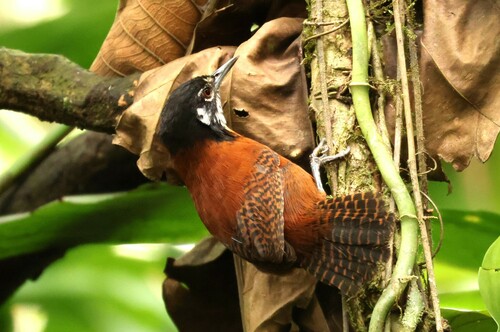
シマバラマユミソサザイ (Cantorchilus nigricapillus) シマバラマユミソサザイ
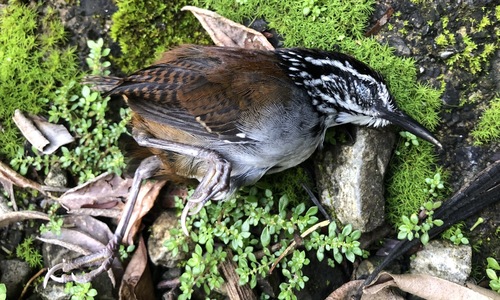
ムナジロモリミソサザイ (Henicorhina leucosticta) ムナジロモリミソサザイ

メディア

読み込み中…

要点

シマバラマユミソサザイとムナジロモリミソサザイを区別する最も信頼できるフィールドマークは、シマバラマユミソサザイの腹部と尾に見られる太い黒い縞模様であり、ムナジロモリミソサザイにはこの縞模様がないか、はるかに少ない。シマバラマユミソサザイは、狭い白い眉斑を持つ印象的な黒い顔を示すが、ムナジロモリミソサザイはより細かい縞模様の顔を持ち、一般的に色が薄く、対比が少ない外観をしている。両種の幼鳥は地味だが、シマバラマユミソサザイは依然としてムナジロモリミソサザイよりも多くの縞模様と対比を示す。構造とサイズは微妙に異なり、シマバラマユミソサザイはよりがっしりとして尾が長い。生息地の重複は一般的だが、シマバラマユミソサザイは水の近くの密な藪により結びついている。

識別のコツ

  1. Underpart barring (all ages): シマバラマユミソサザイは、幼鳥でも(薄いが)胸から肛門までの白い腹部に太い黒い縞模様を示す。ムナジロモリミソサザイにはこの縞模様がなく、腹部は清潔な白からバフ色で、時々淡い陰影があるが、決して縞模様はない。
  2. Tail barring: シマバラマユミソサザイの尾は豊かな茶色で、太い黒い縞模様があり、止まっている時も飛んでいる時も明らかである。ムナジロモリミソサザイの非常に短い尾も縞模様があるが、縞はより細かく、広がりが少なく、尾自体ははるかに短く目立たない。
  3. Face pattern: シマバラマユミソサザイは、狭い白い眉斑と白い頬の斑点を持つ印象的な黒い顔をしており、マスクのような外観を与える。ムナジロモリミソサザイはより薄い眉斑を持つが、顔はより細かい黒と白の縞模様で、太いマスクと頬の斑点が欠けている。
  4. Crown and nape: シマバラマユミソサザイの頭頂と後頭部は黒く、栗色の背中と対照的である。ムナジロモリミソサザイはより暗い頭頂を持つが、背中からはっきりと区別されていない。
  5. Upperparts color: シマバラマユミソサザイの上面は豊かな栗色であるのに対し、ムナジロモリミソサザイの上面は栗色だが、色が薄く、より均一である。
  6. Underparts color: シマバラマユミソサザイの白い喉と胸は、下腹部と側腹部で赤褐色に移行し、全体に黒い縞模様がある。ムナジロモリミソサザイの腹部は白で、下腹部でバフ色になり、縞模様はない。
  7. Juvenile plumage: 両方とも成鳥よりも地味だが、シマバラマユミソサザイの幼鳥は縞模様のパターンを保持している(薄いが)、一方ムナジロモリミソサザイの幼鳥は灰色がかった無縞の腹部を持つ。
  8. Tail length and structure: シマバラマユミソサザイはより長く、表現力豊かな尾を持ち、しばしば立てて扇状に広げるが、ムナジロモリミソサザイの尾は非常に短く、扇状になる可能性は低い。
  9. Size and bulk: シマバラマユミソサザイはより大きく、重い(23.9 g 対 16 g)、フィールドではよりがっしりとして尾が長く見える。ムナジロモリミソサザイはより小さく、よりコンパクトで丸みを帯びている。
  10. Habitat preference: シマバラマユミソサザイはほぼ常に水の近くの密な低木に生息している; 水から遠く離れているか、乾燥した森林にいる場合は、ムナジロモリミソサザイの方が見られる可能性が高い。
  11. Behavior: 両者は密なカバーの中で隠れているが、シマバラマユミソサザイは素早く、マウスのようなムナジロモリミソサザイよりも、より意図的で活動的でないように見えるかもしれない。
  12. Song: シマバラマユミソサザイの大きく、響く、迅速な口笛とトリルを聞いてみてください。ムナジロモリミソサザイの歌(ここでは説明されていない)は通常、より柔らかく、より複雑である; もし非常に大きく、豊かで、響く歌を聞いたら、シマバラマユミソサザイを疑ってください。
  13. Supercilium: シマバラマユミソサザイの眉斑は狭く白いが、ムナジロモリミソサザイの眉斑は薄いが、より広く、はっきりと定義されていない。
  14. Cheek patch: シマバラマユミソサザイだけが頬の後ろに明確な白い斑点を示す。
  15. Confusion risk: 照明が悪い場合や素早い視界では、まず腹部の縞模様と尾の長さ/縞模様に焦点を当ててください。顔のパターンは次に信頼できる; 生息地と歌は、羽毛が隠れている場合にIDを確定するのに役立つ。

大きさ

シマバラマユミソサザイは明らかに大きく、重く、平均約23.9 g [wikidata]、長さは12.6–15.6 cm [wikipedia]である。ムナジロモリミソサザイは小さく、軽く、約10 cmと16 g [wikipedia]である。フィールドでは、シマバラマユミソサザイはしばしばよりがっしりとして尾が長く見えるが、ムナジロモリミソサザイはよりコンパクトで短い尾を持っている。これらの違いは、距離や密な植生では微妙かもしれないが、良い視界では明らかである。

羽色

行動

両種は隠れており、密な植生を好み、しばしば絡まった藪の中で低く移動する。シマバラマユミソサザイは特に水の近くの密な低木に結びついており、ツルの絡まりや茂った空き地で餌を探しているのが見られる可能性が高い。ムナジロモリミソサザイも秘密主義だが、より広範な森林の下草、乾燥した地域でも見られる可能性がある。両者は、採餌や探査によって無脊椎動物を探すが、シマバラマユミソサザイはよりがっしりとして、動きがより意図的に見えるかもしれない。

生息環境

シマバラマユミソサザイは、水の近くの密な低木に密接に関連している—小川沿いの藪、茂った空き地、豊かな下草のある道路脇など。十分な下草があれば森林の内部にも生息するが、乾燥した開けた生息地では見られにくい。ムナジロモリミソサザイはより柔軟で、より広範な森林の下草、乾燥した地域や水から離れた場所に生息する。両者は二次成長の中に見られるが、シマバラマユミソサザイはより湿った、密な生息地に制限される。

声

シマバラマユミソサザイの歌は、大きく、迅速な一連の明確で、豊かな音色の、スラングの口笛、トリル、さえずりであり、時には対唱される。ムナジロモリミソサザイの歌はノートには記載されていないが、両者は複雑で音楽的な歌で知られている。フィールドでは、シマバラマユミソサザイの歌はしばしばより大きく、より響くが、ムナジロモリミソサザイの歌は通常、より柔らかく、より複雑である。呼び声は重なることがあるが、シマバラマユミソサザイはより力強く、高音ではない傾向がある。

より良い説明を送る

比較と同じ項目を使ってください。文章はすぐに公開されます。

The most reliable field mark to separate Bay Wren from White-breasted Wood-Wren is the bold black barring across the underparts and tail of the Bay Wren, which is absent or much less extensive in the Wood-Wren. Bay Wren also shows a striking black face with a narrow white supercilium, while the Wood-Wren has a more finely streaked face and a generally paler, less contrasting appearance. Juveniles of both species are duller, but the Bay Wren still shows more barring and contrast than the Wood-Wren. Structure and size differ subtly, with Bay Wren being bulkier and longer-tailed. Habitat overlap is common, but Bay Wren is more tied to dense thickets near water.

  1. Underpart barring (all ages): Bay Wren shows bold black barring across the white underparts from breast to vent, even in juveniles (though paler). White-breasted Wood-Wren lacks this barring; its underparts are clean white to buff, sometimes with faint shading but never barred.
  2. Tail barring: Bay Wren's tail is rich brown with bold black bars, obvious in both perched and flight views. Wood-Wren's very short tail is also barred, but the bars are finer, less extensive, and the tail itself is much shorter and less conspicuous.
  3. Face pattern: Bay Wren has a striking black face with a narrow white supercilium and a white cheek patch, giving a masked look. Wood-Wren has a paler supercilium, but the face is more finely streaked black-and-white and lacks the bold mask and cheek patch.
  4. Crown and nape: Bay Wren's crown and nape are black, contrasting with the chestnut back. Wood-Wren has a darker crown but not as sharply defined from the back.
  5. Upperparts color: Bay Wren's upperparts are rich chestnut, while Wood-Wren's are chestnut brown but less saturated and more uniform.
  6. Underparts color: Bay Wren's white throat and breast transition to rufous brown on the lower belly and flanks, with black barring throughout. Wood-Wren's underparts are white, becoming buff on the lower belly, with no barring.
  7. Juvenile plumage: Both are duller than adults, but Bay Wren juveniles retain the barred pattern (though paler), while Wood-Wren juveniles have greyish, unbarred underparts.
  8. Tail length and structure: Bay Wren has a longer, more expressive tail, often cocked and fanned, while Wood-Wren's tail is very short and less likely to be fanned.
  9. Size and bulk: Bay Wren is larger and heavier (23.9 g vs. 16 g), appearing bulkier and longer-tailed in the field. Wood-Wren is smaller, more compact, and rounder.
  10. Habitat preference: Bay Wren is almost always in dense, low vegetation near water; if you are far from water or in drier forest, Wood-Wren is more likely.
  11. Behavior: Both skulk in dense cover, but Bay Wren may seem more deliberate and less active than the quick, mouse-like Wood-Wren.
  12. Song: Listen for Bay Wren's loud, ringing, rapid whistles and trills, often antiphonal. Wood-Wren's song (not described here) is typically softer and more intricate; if you hear a very loud, rich, ringing song, suspect Bay Wren.
  13. Supercilium: Bay Wren's supercilium is narrow and white, while Wood-Wren's is pale but broader and less sharply defined.
  14. Cheek patch: Only Bay Wren shows a distinct white patch at the back of the cheek.
  15. Confusion risk: In poor light or quick views, focus on underpart barring and tail length/barring first. Face pattern is next most reliable; habitat and song can help clinch the ID if plumage is obscured.

Bay Wren is noticeably larger and heavier, averaging about 23.9 g [wikidata], and measuring 12.6–15.6 cm in length [wikipedia]. White-breasted Wood-Wren is smaller and lighter, at about 10 cm and 16 g [wikipedia]. In the field, Bay Wren often appears bulkier and longer-tailed, while Wood-Wren is more compact with a shorter tail. These differences may be subtle at a distance or in dense vegetation, but are apparent with good views.

  • Juveniles: Both species are duller than adults, but Bay Wren juveniles still show a paler version of the strong barring on the underparts and tail, while Wood-Wren juveniles have greyish underparts and lack strong barring.
  • Adults: Bay Wren has a black face, narrow white supercilium, and a white cheek patch, with a black crown/nape and rich chestnut upperparts. Its tail is boldly barred black, and the underparts are white with black bars from breast to vent, blending to rufous on the flanks. White-breasted Wood-Wren has chestnut brown upperparts, a darker crown, pale supercilium, and black-and-white streaked sides of the head/neck. Its underparts are white, becoming buff on the lower belly, and the wings and very short tail are barred with black, but the barring is less extensive and not present across the underparts. The face pattern is more finely streaked and less contrasting than Bay Wren's bold mask.
  • In flight: Both species show some wing and tail barring, but the Bay Wren's tail barring is broader and more obvious, and its underpart barring is visible even in brief views.

Both species are skulking and favor dense vegetation, often moving low in tangled thickets. Bay Wren is especially tied to dense, low vegetation near water and may be more likely to be seen foraging in vine tangles and overgrown clearings. White-breasted Wood-Wren is also secretive but may be found in a wider range of forest undergrowth, including drier areas. Both forage for invertebrates by gleaning and probing, but Bay Wren may appear bulkier and more deliberate in movement.

Bay Wren is closely associated with dense, low vegetation near water—such as thickets along streams, overgrown clearings, and roadsides with lush undergrowth. It can occur in forest interiors if there is sufficient undergrowth, but is less likely in dry or open habitats. White-breasted Wood-Wren is more flexible, occurring in a wider range of forest undergrowth, including drier areas and away from water. Both can be found in secondary growth, but Bay Wren is more restricted to wetter, denser habitats.

Bay Wren's song is a loud, rapid series of clear, rich-toned, slurred whistles, trills, and warbles, sometimes given antiphonally. White-breasted Wood-Wren's song is not described in the notes, but both are known for complex, musical songs. In the field, Bay Wren's song is often louder and more ringing, while Wood-Wren's is typically softer and more intricate. Calls may overlap, but Bay Wren tends to be more forceful and less high-pitched.

変更を破棄しますか?

保存していない編集があります。今離れると失われます。

シマバラマユミソサザイ · ムナジロモリミソサザイ · 苦手な鳥