

Bay Wren vs White-breasted Wood-Wren
Cantorchilus nigricapillus contro Henicorhina leucosticta
Fai un quiz con Bay Wren e White-breasted Wood-Wren
 Bay Wren
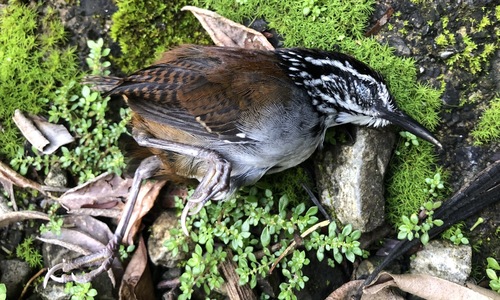 White-breasted Wood-Wren
In breve
Il segno distintivo più affidabile per separare il Bay Wren dal White-breasted Wood-Wren è la marcatura nera audace sulle parti inferiori e sulla coda del Bay Wren, che è assente o molto meno estesa nel Wood-Wren. Il Bay Wren mostra anche un volto nero sorprendente con un supercilium bianco stretto, mentre il Wood-Wren ha un volto più finemente striato e un aspetto generalmente più chiaro e meno contrastante. I giovani di entrambe le specie sono più opachi, ma il Bay Wren mostra ancora più marcature e contrasto rispetto al Wood-Wren. La struttura e la dimensione differiscono sottilmente, con il Bay Wren che è più robusto e con una coda più lunga. L'overlap degli habitat è comune, ma il Bay Wren è più legato a cespugli densi vicino all'acqua.
Consigli di identificazione
- Underpart barring (all ages): Il Bay Wren mostra marcature nere audaci sulle parti inferiori bianche dal petto al vent, anche nei giovani (sebbene più chiari). Il White-breasted Wood-Wren manca di queste marcature; le sue parti inferiori sono bianche pulite fino a beige, a volte con sfumature deboli ma mai barrate.
- Tail barring: La coda del Bay Wren è marrone ricco con barre nere audaci, evidenti sia in posizione percheggiata che in volo. La coda molto corta del Wood-Wren è anch'essa barrata, ma le barre sono più fini, meno estese, e la coda stessa è molto più corta e meno appariscente.
- Face pattern: Il Bay Wren ha un volto nero sorprendente con un supercilium bianco stretto e una macchia bianca sulla guancia, dando un aspetto mascherato. Il Wood-Wren ha un supercilium più chiaro, ma il volto è più finemente striato in bianco e nero e manca della maschera audace e della macchia sulla guancia.
- Crown and nape: La corona e la nuca del Bay Wren sono nere, in contrasto con il dorso castano. Il Wood-Wren ha una corona più scura ma non così nettamente definita rispetto al dorso.
- Upperparts color: Le parti superiori del Bay Wren sono di un castano ricco, mentre quelle del Wood-Wren sono marrone castano ma meno saturo e più uniforme.
- Underparts color: La gola e il petto bianchi del Bay Wren si trasformano in marrone ruggine sulla pancia inferiore e sui fianchi, con marcature nere in tutto. Le parti inferiori del Wood-Wren sono bianche, diventando beige sulla pancia inferiore, senza marcature.
- Juvenile plumage: Entrambi sono più opachi degli adulti, ma i giovani del Bay Wren mantengono il motivo barrato (sebbene più chiaro), mentre i giovani del Wood-Wren hanno parti inferiori grigiastre e mancano di marcature forti.
- Tail length and structure: Il Bay Wren ha una coda più lunga e più espressiva, spesso sollevata e aperta, mentre la coda del Wood-Wren è molto corta e meno probabile che venga aperta.
- Size and bulk: Il Bay Wren è più grande e più pesante (23.9 g vs. 16 g), apparendo più robusto e con una coda più lunga sul campo. Il Wood-Wren è più piccolo, più compatto e più rotondo.
- Habitat preference: Il Bay Wren si trova quasi sempre in vegetazione densa e bassa vicino all'acqua; se sei lontano dall'acqua o in una foresta più secca, è più probabile che tu incontri il Wood-Wren.
- Behavior: Entrambi si nascondono in copertura densa, ma il Bay Wren può sembrare più deliberato e meno attivo rispetto al veloce e simile a un topo Wood-Wren.
- Song: Ascolta i fischi e i trilli forti, chiari e rapidi del Bay Wren, spesso antifonali. Il canto del Wood-Wren (non descritto qui) è tipicamente più morbido e più intricato; se senti un canto molto forte, ricco e chiaro, sospetta il Bay Wren.
- Supercilium: Il supercilium del Bay Wren è stretto e bianco, mentre quello del Wood-Wren è chiaro ma più ampio e meno nettamente definito.
- Cheek patch: Solo il Bay Wren mostra una macchia bianca distinta sul retro della guancia.
- Confusion risk: In scarsa illuminazione o in visioni rapide, concentrati prima sulle marcature delle parti inferiori e sulla lunghezza/marcatura della coda. Il motivo del volto è il secondo più affidabile; l'habitat e il canto possono aiutare a confermare l'identificazione se il piumaggio è oscurato.
Taglia
Il Bay Wren è notevolmente più grande e più pesante, con una media di circa 23.9 g [wikidata], e misura 12.6–15.6 cm di lunghezza [wikipedia]. Il White-breasted Wood-Wren è più piccolo e più leggero, con circa 10 cm e 16 g [wikipedia]. Sul campo, il Bay Wren appare spesso più robusto e con una coda più lunga, mentre il Wood-Wren è più compatto con una coda più corta. Queste differenze possono essere sottili a distanza o in vegetazione densa, ma sono evidenti con buone visioni.
Piumaggio
- Juveniles: Entrambe le specie sono più opache degli adulti, ma i giovani del Bay Wren mostrano ancora una versione più chiara delle forti marcature sulle parti inferiori e sulla coda, mentre i giovani del Wood-Wren hanno parti inferiori grigiastre e mancano di marcature forti.
- Adults: Il Bay Wren ha un volto nero, un supercilium bianco stretto e una macchia bianca sulla guancia, con una corona/nuca nera e parti superiori di un castano ricco. La sua coda è audacemente barrata di nero, e le parti inferiori sono bianche con barre nere dal petto al vent, sfumando in ruggine sui fianchi. Il White-breasted Wood-Wren ha parti superiori di un marrone castano, una corona più scura, un supercilium chiaro e lati della testa/collo striati in bianco e nero. Le sue parti inferiori sono bianche, diventando beige sulla pancia inferiore, e le ali e la coda molto corta sono barrate di nero, ma le marcature sono meno estese e non presenti sulle parti inferiori. Il motivo del volto è più finemente striato e meno contrastante rispetto alla maschera audace del Bay Wren.
- In flight: Entrambe le specie mostrano alcune marcature sulle ali e sulla coda, ma le marcature sulla coda del Bay Wren sono più ampie e più evidenti, e le marcature sulle parti inferiori sono visibili anche in visioni brevi.
Comportamento
Entrambe le specie sono schive e favoriscono la vegetazione densa, spesso muovendosi basse in cespugli intricati. Il Bay Wren è particolarmente legato a vegetazione densa e bassa vicino all'acqua e potrebbe essere più probabile vederlo foraggiare in grovigli di viti e radure incolte. Il White-breasted Wood-Wren è anch'esso segreto ma può essere trovato in una gamma più ampia di sottobosco forestale, comprese aree più secche. Entrambi foraggiano per invertebrati raccogliendo e sondando, ma il Bay Wren può apparire più robusto e più deliberato nei movimenti.
Habitat
Il Bay Wren è strettamente associato a vegetazione densa e bassa vicino all'acqua—come cespugli lungo i corsi d'acqua, radure incolte e margini stradali con sottobosco lussureggiante. Può verificarsi negli interni forestali se c'è sufficiente sottobosco, ma è meno probabile in habitat secchi o aperti. Il White-breasted Wood-Wren è più flessibile, verificandosi in una gamma più ampia di sottobosco forestale, comprese aree più secche e lontano dall'acqua. Entrambi possono essere trovati in crescita secondaria, ma il Bay Wren è più ristretto a habitat più umidi e densi.
Voce
Il canto del Bay Wren è una serie forte e rapida di fischi, trilli e gorgheggi chiari e ricchi, a volte eseguiti in antiphona. Il canto del White-breasted Wood-Wren non è descritto nelle note, ma entrambi sono noti per canti complessi e musicali. Sul campo, il canto del Bay Wren è spesso più forte e più chiaro, mentre quello del Wood-Wren è tipicamente più morbido e più intricato. I richiami possono sovrapporsi, ma il Bay Wren tende ad essere più potente e meno acuto.
Bay Wren · White-breasted Wood-Wren · I miei uccelli difficili