

Motmot

シマバラマユミソサザイ 対 ハイムネモリミソサザイ

Cantorchilus nigricapillus 対 Henicorhina leucophrys

シマバラマユミソサザイとハイムネモリミソサザイのクイズ
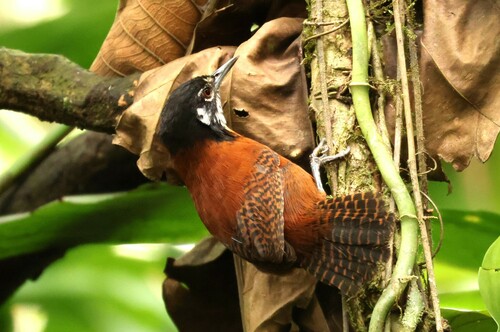
シマバラマユミソサザイ (Cantorchilus nigricapillus) シマバラマユミソサザイ
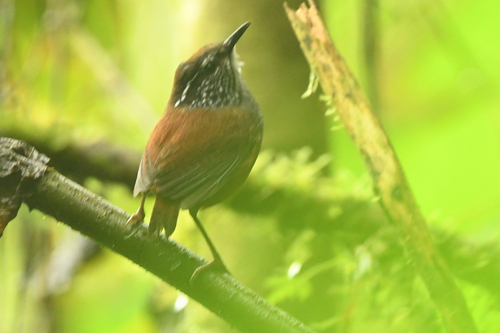
ハイムネモリミソサザイ (Henicorhina leucophrys) ハイムネモリミソサザイ

メディア

読み込み中…

要点

シマバラマユミソサザイとハイムネモリミソサザイを区別する最も信頼できるフィールドマークは、シマバラマユミソサザイの大胆で高コントラストの黒と白の顔のパターンと豊かな栗色の上面であり、ハイムネモリミソサザイのより控えめな灰色とオリーブ色のトーンおよび顔のマーキングがあまりはっきりしていないことと比較される。幼鳥のシマバラマユミソサザイはより淡いが、同じ顔のパターンを示し、幼鳥のハイムネモリミソサザイはそのような強いコントラストを欠く。フィールドでは、シマバラマユミソサザイはより大きくてがっしりしており、体格が重く、脇腹と腹部により広範囲な赤褐色が見られる。両種は密な植生の中で秘密主義的であることがあるが、構造と羽毛の違いは通常、よく見ることで確認できる。

識別のコツ

  1. Face Pattern (all ages): シマバラマユミソサザイは大胆な黒い顔を持ち、狭い白い眉斑、部分的なアイリング、頬の後ろに白い斑点がある。ハイムネモリミソサザイは長い灰白色の眉斑を持つが、顔はあまりはっきりとしたマーキングがなく、黒い頬は淡い灰色の筋が入っており、目の後ろには広い黒いストライプがある。
  2. Crown and Nape: シマバラマユミソサザイは黒い冠と後頭部を示し、豊かな栗色の上面と対照的である。ハイムネモリミソサザイの冠は鈍い黒で、暗い茶色の先端を持ち、暗いオリーブ色の後頭部と肩に溶け込んでいる。
  3. Upperparts Color: シマバラマユミソサザイの背中と上面は豊かな栗色であるのに対し、ハイムネモリミソサザイの上面は暗いオリーブ色(後頭部/肩)で、栗色は下背、尾羽、尾にのみ見られる。
  4. Tail Pattern: 両種ともに縞模様の尾を持つが、シマバラマユミソサザイの尾はより豊かな茶色で、より大胆な黒い縞模様がある。ハイムネモリミソサザイの尾は栗色で、黒っぽい縞模様があり、コントラストが少ない。
  5. Underparts: シマバラマユミソサザイは白い喉と胸を持ち、腹部と脇腹は赤褐色にグラデーションし、胸から肛門まで黒い縞模様がある。ハイムネモリミソサザイの下部は顎/喉が淡い灰色、胸/腹が暗い灰色、下脇腹が暗いバフ色で、赤褐色や広範囲な縞模様はない。
  6. Juvenile Plumage: 幼鳥のシマバラマユミソサザイはより淡いが、成鳥の顔のパターンと栗色のトーンを保持している。ハイムネモリミソサザイの幼鳥は詳細に記述されていないが、そのような大胆なコントラストを示す可能性は低い。
  7. Size and Structure: シマバラマユミソサザイはより大きく、重い(23.9 g、12.6–15.6 cm)で、よりがっしりとした外観を持つ。ハイムネモリミソサザイはより小さく、軽い(13.5–17.7 g、10–11.5 cm)で、しばしばより繊細に見える。
  8. Behavior: シマバラマユミソサザイは水の近くの絡み合った密な植生の中でしばしば採餌し、時にはペアや小グループで見られる。ハイムネモリミソサザイは単独または小グループで採餌し、通常は低い植生の中で、アリの群れを追うことがある。
  9. Habitat: シマバラマユミソサザイは水と密な河岸の茂みに密接に結びついている。ハイムネモリミソサザイは密な下草の中に見られるが、水の近くに特に見られるわけではない。
  10. Voice: シマバラマユミソサザイの歌は大きく、豊かで、響き渡る。ハイムネモリミソサザイの歌は一般的により音楽的で、響きが少ない(ここでは詳細に記述されていない)。
  11. Supercilium: シマバラマユミソサザイの眉斑は狭くて白い。ハイムネモリミソサザイの眉斑は長く、灰白色で、より拡散している。
  12. Cheek Patch: シマバラマユミソサザイは頬の後ろに特徴的な白い斑点を示し、ハイムネモリミソサザイにはない。
  13. Flank Color: シマバラマユミソサザイの脇腹は赤褐色で、ハイムネモリミソサザイの脇腹は暗いバフ色である。
  14. Barring: シマバラマユミソサザイは胸から肛門までの下部に黒い縞模様があるが、ハイムネモリミソサザイにはこの特徴がない。
  15. Pitfall: 照明が悪い場合や短い視界では、シマバラマユミソサザイとハイムネモリミソサザイの尾/尾羽の栗色のトーンが似て見えることがあるが、顔のパターンと下部の色は信頼できる区別要素である。

大きさ

シマバラマユミソサザイは明らかに大きくて重く、体重は約23.9 g、長さは12.6–15.6 cmであるのに対し、ハイムネモリミソサザイは小さくて軽く、長さは10–11.5 cm、体重は13.5–17.7 gである。このサイズの違いは、直接比較や両種が同じ生息地で見られるときにしばしば目立つ。シマバラマユミソサザイのがっしりした体格と長い体は、短い視界でも明らかになることがある。

羽色

行動

両種は密で低い植生の中で無脊椎動物を採餌する。シマバラマユミソサザイは水の近くに留まる傾向があり、絡み合った茂み、茂った空き地、または密な道路脇の植生の中でしばしば見られ、カバーが厚い場合には森林の下層にも入ることがある。ハイムネモリミソサザイは単独または小グループで採餌し、通常は地面から2メートルの高さまでで、アリの群れを追うことが知られている。シマバラマユミソサザイはよりがっしりとして意図的な動きに見えることがあるが、ハイムネモリミソサザイはより小さく、より活発で敏捷に見えることがある。

生息環境

シマバラマユミソサザイは水流の近くの密で低い植生、茂った空き地、二次森林の下層に密接に結びついているが、ニカラグアの乾燥した茂みでも見られることがある。一般的に、十分なカバーがない限り、開けた場所には存在しない。ハイムネモリミソサザイはより広範な範囲(メキシコからボリビア)を持ち、通常は密な下草の中に見られるが、水に特に結びついているわけではない。両種は厚いカバーを必要とするが、シマバラマユミソサザイの河岸や湿った生息地への好みは有用な手がかりである。

声

シマバラマユミソサザイの歌は大きく、速く、豊かな音色で、滑らかで響き渡る口笛、トリル、さえずりがあり、しばしば対唱で行われる。ハイムネモリミソサザイの歌はここでは記述されていないが、一般的に響きが少なく、より音楽的またはきらきらした音色である。両種ともにさまざまな鳴き声を持つが、シマバラマユミソサザイの声は通常、より強く、より響き渡る。

より良い説明を送る

比較と同じ項目を使ってください。文章はすぐに公開されます。

The most reliable field mark to separate Bay Wren from Grey-breasted Wood-Wren is the Bay Wren’s bold, high-contrast black-and-white face pattern and rich chestnut upperparts, compared to the Wood-Wren’s more muted gray and olive tones and less sharply defined facial markings. Juvenile Bay Wrens are paler but still show the same face pattern, while juvenile Wood-Wrens lack such strong contrasts. In the field, Bay Wren appears larger and stockier, with a heavier build and more extensive rufous on the flanks and belly. Both species can be secretive in dense vegetation, but their structure and plumage differences are usually visible with a good look.

  1. Face Pattern (all ages): Bay Wren has a bold black face with a narrow white supercilium, partial eyering, and a white patch at the rear of the cheek. Grey-breasted Wood-Wren has a long gray-white supercilium, but the face is less sharply marked, with black cheeks streaked pale gray and a wide black stripe behind the eye.
  2. Crown and Nape: Bay Wren shows a black crown and nape, contrasting with rich chestnut upperparts. Wood-Wren’s crown is dull black with dark brown tips, blending into dark olive brown nape and shoulders.
  3. Upperparts Color: Bay Wren’s back and upperparts are rich chestnut, while Wood-Wren’s are dark olive brown (nape/shoulders) and chestnut only on the lower back, rump, and tail.
  4. Tail Pattern: Both have barred tails, but Bay Wren’s is richer brown with bolder black bars; Wood-Wren’s tail is chestnut brown with blackish bars, less contrasting.
  5. Underparts: Bay Wren has white throat and breast, grading to rufous brown on the belly and flanks, with black bars from breast to vent. Wood-Wren’s underparts are pale gray on the chin/throat, darker gray on chest/belly, and dark buff on the lower flanks, without rufous or extensive barring.
  6. Juvenile Plumage: Juvenile Bay Wrens are paler but retain the adult’s face pattern and chestnut tones; Wood-Wren juveniles are not described but are unlikely to show such bold contrasts.
  7. Size and Structure: Bay Wren is larger and heavier (23.9 g, 12.6–15.6 cm) with a bulkier, more robust appearance. Wood-Wren is smaller and lighter (13.5–17.7 g, 10–11.5 cm), often appearing more delicate.
  8. Behavior: Bay Wren often forages in tangled, dense vegetation near water, sometimes in pairs or small groups. Wood-Wren forages singly or in small groups, usually low in vegetation, and may follow army ants.
  9. Habitat: Bay Wren is closely tied to water and dense riparian thickets; Wood-Wren is found in dense undergrowth but not specifically near water.
  10. Voice: Bay Wren’s song is loud, rich, and ringing; Wood-Wren’s is generally more musical and less resonant (not detailed here).
  11. Supercilium: Bay Wren’s supercilium is narrow and white; Wood-Wren’s is long, gray-white, and more diffuse.
  12. Cheek Patch: Bay Wren shows a distinctive white patch at the rear of the cheek, absent in Wood-Wren.
  13. Flank Color: Bay Wren’s flanks are rufous brown; Wood-Wren’s are dark buff.
  14. Barring: Bay Wren has black barring on underparts from breast to vent; Wood-Wren lacks this feature.
  15. Pitfall: In poor light or brief views, the chestnut tones of Bay Wren and Wood-Wren’s rump/tail can look similar, but the face pattern and underpart color are reliable separators.

Bay Wren is distinctly larger and heavier, averaging about 23.9 g in body mass and measuring 12.6–15.6 cm in length. In contrast, Grey-breasted Wood-Wren is smaller and lighter, at 10–11.5 cm long and 13.5–17.7 g. This size difference is often noticeable in direct comparison or when both species are seen in the same habitat. Bay Wren’s bulkier build and longer body can be apparent even in brief views.

  • Juveniles: Juvenile Bay Wrens resemble adults but are paler with less sharply defined markings; however, they still show the black-and-white facial pattern and chestnut upperparts. Juvenile Grey-breasted Wood-Wrens are not described in detail, but the species overall lacks the Bay Wren’s bold face and has more muted, blended colors.
  • Adults: Bay Wren has a striking black face with a narrow white supercilium, partial eyering, and a white patch at the rear of the cheek. The crown and nape are black, upperparts rich chestnut, and the tail is brown with bold black bars. Underparts are white on the throat and breast, grading to rufous brown on the belly and flanks, with black barring from breast to vent. Grey-breasted Wood-Wren has a dull black crown with dark brown tips, dark olive brown nape/shoulders, and chestnut brown lower back, rump, and tail (also with blackish bars). Its supercilium is long and gray-white, cheeks are black streaked with pale gray, and underparts are pale to darker gray with dark buff flanks. The Wood-Wren’s face is less sharply patterned, and its underparts lack the Bay Wren’s rufous and barring.
  • Tail: Both species have barred tails, but Bay Wren’s is richer brown and more boldly marked.

Both species forage for invertebrates in dense, low vegetation. Bay Wren tends to stay close to water and is often found in tangled thickets, overgrown clearings, or dense roadside vegetation, sometimes venturing into forest understory if cover is thick. Grey-breasted Wood-Wren forages singly or in small groups, usually from the ground up to 2 meters high, and is known to follow army ant swarms. Bay Wren may appear more robust and deliberate in movement, while Wood-Wren is smaller and may seem more active and agile.

Bay Wren is closely tied to dense, low vegetation near watercourses, overgrown clearings, and secondary forest understory, but can also be found in drier thickets in Nicaragua. It is generally absent from open areas unless there is sufficient cover. Grey-breasted Wood-Wren has a broader range (Mexico to Bolivia) and is typically found in dense undergrowth, but is not specifically tied to water. Both species require thick cover, but Bay Wren’s preference for riparian or wet habitats is a useful clue.

Bay Wren’s song is loud, rapid, and rich-toned, with slurred, ringing whistles, trills, and warbles, often given antiphonally. Grey-breasted Wood-Wren’s song is not described here, but is generally less ringing and more musical or tinkling in tone. Both have a variety of calls, but Bay Wren’s voice is typically stronger and more resonant.

変更を破棄しますか?

保存していない編集があります。今離れると失われます。

シマバラマユミソサザイ · ハイムネモリミソサザイ · 苦手な鳥