

Motmot

サザイカマドドリ 対 アカエボシカマドドリ

Spartonoica maluroides 対 Pseudoseisura unirufa

サザイカマドドリとアカエボシカマドドリのクイズ
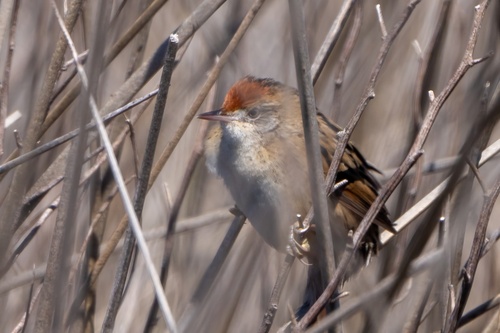
サザイカマドドリ (Spartonoica maluroides) サザイカマドドリ
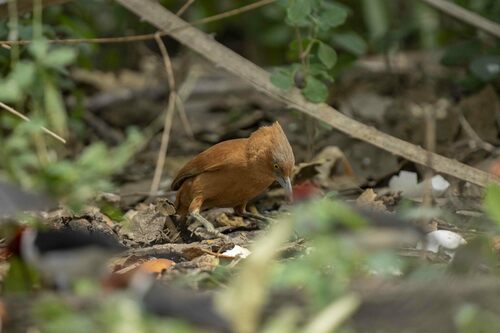
アカエボシカマドドリ (Pseudoseisura unirufa) アカエボシカマドドリ

メディア

読み込み中…

要点

サザイカマドドリとアカエボシカマドドリを区別する最も信頼できるフィールドマークは、全体のサイズと構造です:アカエボシカマドドリははるかに大きく、ずんぐりしており、目立つ冠を持っていますが、サザイカマドドリは小さく、スリムで、冠がありません。羽毛では、サザイカマドドリは対照的な白っぽいスーパシリウムと大胆に縞模様の上面を持つ赤褐色の冠を示しますが、アカエボシカマドドリは均一な明るい赤褐色で、変動する灰色または赤褐色の冠とほとんど模様がありません。サザイカマドドリは密な湿地の植生を好み、アカエボシカマドドリはより開けた森林の生息地に見られます。小さく、縞模様のある湿地に生息する鳥を見たら、それはサザイカマドドリです;大きく、冠のある、均一な赤褐色の鳥が木にいるのはアカエボシカマドドリです。

識別のコツ

  1. Size is decisive: 鳥が小さく、繊細で、サザイのように見える場合はサザイカマドドリです;大きく、ずんぐりしていて、ツグミのサイズの場合はアカエボシカマドドリです。これはすべての年齢と季節に当てはまります。
  2. Crest presence: アカエボシカマドドリは常に目立つ冠(赤褐色から灰色)を示し、幼鳥でも(短いですが)、サザイカマドドリには冠がありません。止まっているか警戒している鳥では、これは迅速なチェックです。
  3. Facial pattern: サザイカマドドリは大胆な白っぽいスーパシリウムと赤褐色の冠を持つ砂色の顔を持ち、強いコントラストを生み出します。アカエボシカマドドリの顔は均一な赤褐色で、スーパシリウムや鋭い顔の模様がありません。
  4. Back and nape streaking: サザイカマドドリは、良い光や近くの視界で見える、首と上背中に大胆な黒い縞模様を示します。アカエボシカマドドリの背中は平坦で、縞模様や模様がありません。
  5. Overall plumage tone: アカエボシカマドドリは上面と下面が豊かで均一な赤褐色(下面は淡い)ですが、サザイカマドドリは赤褐色の冠を持つ砂色からオリーブブラウンの上面と、淡い、バフ色の洗いのある下面を持っています。
  6. Tail structure: サザイカマドドリは、中央の羽に黒がある段階的で尖った尾を持っています;アカエボシカマドドリの尾は広く、先端にバーブがなく、均一に赤褐色です。
  7. Bill color and shape: サザイカマドドリは、草の中の昆虫を採取するのに適した細い黒っぽい上顎と淡い下顎を持っています。アカエボシカマドドリのくちばしは重く、青灰色から灰色で、淡い下顎を持ち、より一般的な食事を反映しています。
  8. Iris color: サザイカマドドリは鈍い白から淡い青色の虹彩を持っています;アカエボシカマドドリの虹彩は黄色からバフ黄色です。これは微妙ですが、近くで見ると役立ちます。
  9. Habitat context: 鳥が密な湿地や葦原にいる場合、特に低い植生の中にいる場合はサザイカマドドリを期待してください。開けた森林、低木、または木の高いところに止まっている場合は、ほぼ確実にアカエボシカマドドリです。
  10. Behavior: サザイカマドドリは秘密主義で、低く一人で採餌します;アカエボシカマドドリは目立ち、しばしば声を出し、オープンに止まります。
  11. Nest type: サザイカマドドリは湿地に低く開いたカップ型の巣を作ります;アカエボシカマドドリは木の高いところに大きな枝の巣を作ります。巣の構造と配置は観察された場合の手がかりになることがあります。
  12. Juvenile confusion: 幼鳥のアカエボシカマドドリは、より均一で短い冠を持っていますが、はるかに大きく、サザイカマドドリの縞模様のある背中と顔のコントラストがありません。
  13. Flight views: どちらの種にも特有の翼や飛行パターンは記載されていないため、飛行中はサイズ、構造、尾の形に頼ってください。
  14. Voice: サザイカマドドリの歌は長い昆虫のようなブンブン音です;アカエボシカマドドリははるかに大きく、より多様です。両種に慣れていない限り、注意して使用してください。
  15. Geographic overlap: 両種はパラグアイと南ブラジルで発生する可能性がありますが、彼らの生息地の好みはフィールドでの混乱を大幅に減少させます。

大きさ

サイズは大きな区別要因です:サザイカマドドリはアカエボシカマドドリよりもはるかに小さい(体重約11g、長さ13〜14.5cm)です。アカエボシカマドドリはほぼ4倍重く、明らかに長く、頑丈で重いくちばしを持っているように見えますが、サザイカマドドリは小さく、スリムで繊細です。フィールドでは、両種が同様の文脈で見られると、この違いはすぐに明らかです。

羽色

どちらの種にも年齢特有の上翼や飛行マークは記載されていないため、焦点は成鳥と幼鳥の羽毛にあります。成鳥のサザイカマドドリは、特徴的な赤褐色の冠、大胆な白っぽいスーパシリウム、首と上背中に強い黒い縞模様のある砂色からオリーブブラウンの上面、飛行羽の基部にシナモン色のある茶色の翼を持っています。下面は白っぽく、側面にバフまたはシナモンの洗いがあります。尾は茶色で、段階的で尖っており、中央の羽に黒がいくつかあります。対照的に、成鳥のアカエボシカマドドリはほぼ完全に明るい赤褐色で、下面は淡く、変動する冠(赤褐色から灰色)、オレンジがかった喉、強い縞模様や顔のコントラストがない均一な羽毛を持っています。翼には暗褐色の先端があり、尾羽の先端にはバーブがありません。幼鳥のアカエボシカマドドリは短い冠とあまり均一でない色を持っていますが、それでもはるかに大きく、サザイカマドドリの顔の模様と縞模様のある背中がありません。両種の雌雄は似ています。

行動

サザイカマドドリは通常、密な湿地の草やセジの中で一人で採餌しているのが見られ、しばしば隠れていて、植物の中をマウスのように動きます。高いところに止まっているか、開けた場所で見られることはほとんどありません。一方、アカエボシカマドドリはより目立ち、しばしば木や低木に止まっているのが見られ、時にはペアで、より樹上性で声を出します。彼らの大きな枝の巣は地面の高いところに作られ、サザイカマドドリは湿地の植生の低いところに巣を作ります。

生息環境

サザイカマドドリは淡水、汽水、または塩水の湿地の葦原やセジの専門家であり、密な湿地の植生から遠くに出ることはほとんどありません。アカエボシカマドドリは開けた森林、サバンナ、低木のある地域を好み、湿地からはしばしば離れ、通常はより乾燥した、より森林のある生息地に見られます。重複は最小限であり、生息地だけでもしばしば強い手がかりになります。

声

サザイカマドドリの歌は長いバッタのようなブンブン音として説明されており、アカエボシカマドドリの典型的な大きく、多様で、しばしば厳しい呼び声とはかなり異なります。しかし、詳細な声の比較はメモに限られているため、両種に慣れていない限り、声は注意して使用するべきです。

より良い説明を送る

比較と同じ項目を使ってください。文章はすぐに公開されます。

The most reliable field mark to separate Bay-capped Wren-Spinetail from Rufous Cacholote is overall size and structure: the cacholote is much larger, bulkier, and sports a prominent crest, while the wren-spinetail is small, slim, and lacks a crest. In plumage, the wren-spinetail shows a rufous crown with a contrasting whitish supercilium and boldly streaked upperparts, whereas the cacholote is a uniform bright reddish-rufous with a variable grayish or rufous crest and little patterning. The wren-spinetail favors dense marsh vegetation, while the cacholote is found in more open, wooded habitats. If you see a small, streaky, marsh-dwelling bird with a rufous cap, it's the wren-spinetail; a large, crested, uniformly rufous bird in trees is the cacholote.

  1. Size is decisive: If the bird appears small, delicate, and wren-like, it's Bay-capped Wren-Spinetail; if large, bulky, and thrush-sized, it's Rufous Cacholote. This applies to all ages and seasons.
  2. Crest presence: Cacholote always shows a prominent crest (rufous to grayish), even in juveniles (though shorter), while wren-spinetail never has a crest. In perched or alert birds, this is a quick check.
  3. Facial pattern: Wren-spinetail has a bold whitish supercilium and sandy face with a rufous crown, creating a strong contrast. Cacholote's face is uniform reddish-rufous, lacking a supercilium or sharp facial pattern.
  4. Back and nape streaking: Wren-spinetail shows bold black streaks on the nape and upper back, visible in good light or close views. Cacholote's back is plain, lacking any streaks or patterning.
  5. Overall plumage tone: Cacholote is a rich, uniform reddish-rufous above and below (paler below), while wren-spinetail is sandy to olive-brown above with a rufous crown and paler, buff-washed underparts.
  6. Tail structure: Wren-spinetail has a graduated, pointed tail with some black on the central feathers; cacholote's tail is broad, lacks barbs at the tips, and is uniformly rufous.
  7. Bill color and shape: Wren-spinetail has a fine, blackish maxilla and pale mandible, suited for gleaning insects in grasses. Cacholote's bill is heavier, blue-gray to gray with a paler mandible, reflecting its more generalist feeding.
  8. Iris color: Wren-spinetail has a dull white to pale bluish iris; cacholote's iris is yellow to buff-yellow. This is subtle but can help in close views.
  9. Habitat context: If the bird is in dense marsh or reedbed, especially low in vegetation, expect wren-spinetail. If in open woodland, scrub, or perched high in trees, it's almost certainly cacholote.
  10. Behavior: Wren-spinetail is secretive, foraging low and alone; cacholote is conspicuous, often vocal, and perches openly.
  11. Nest type: Wren-spinetail builds a low, open cup nest in marshes; cacholote constructs a large, stick nest high in trees. Nest structure and placement can be a clue if observed.
  12. Juvenile confusion: Even juvenile cacholotes, though less uniform and with a shorter crest, are much larger and lack the wren-spinetail's streaked back and facial contrast.
  13. Flight views: No unique wing or flight patterns are described for either species, so rely on size, structure, and tail shape in flight.
  14. Voice: Wren-spinetail's song is a long, insect-like buzz; cacholote is much louder and more varied. Use with caution unless familiar.
  15. Geographic overlap: Both species can occur in Paraguay and southern Brazil, but their habitat preferences sharply reduce confusion in the field.

Size is a major separator: the Bay-capped Wren-Spinetail is much smaller (body mass ~11 g, length 13–14.5 cm) than the Rufous Cacholote (body mass ~49 g, length 20–21 cm). The cacholote is nearly four times heavier and noticeably longer, appearing robust and heavy-billed, while the wren-spinetail is small, slim, and delicate. In the field, this difference is immediately apparent if both species are seen in similar context.

No age-specific upperwing or flight marks are described for either species, so focus is on adult and juvenile plumage. Adult Bay-capped Wren-Spinetail has a distinctive rufous crown, bold whitish supercilium, sandy to olive-brown upperparts with strong black streaks on the nape and upper back, and brown wings with cinnamon at the base of the flight feathers. The underparts are whitish with buff or cinnamon wash on the sides. The tail is brown, graduated, and pointed, with some black on the central feathers. In contrast, adult Rufous Cacholote is almost entirely bright reddish-rufous, paler below, with a variable crest (rufous to grayish), orange-tinged throat, and uniform plumage lacking strong streaking or facial contrast. Its wings have fuscous tips, and the tail feathers lack barbs at the ends. Juvenile cacholotes have a shorter crest and less uniform color but are still much larger and lack the wren-spinetail's facial pattern and streaked back. Both sexes are similar in each species.

The wren-spinetail is typically seen foraging alone, low in dense marsh grasses and sedges, often remaining hidden and moving mouse-like through vegetation. It is rarely seen perched high or in open areas. The cacholote, on the other hand, is more conspicuous, often seen perched in trees or shrubs, sometimes in pairs, and is more arboreal and vocal. Its large stick nests are built high above ground, while the wren-spinetail nests low in marsh vegetation.

Bay-capped Wren-Spinetail is a specialist of reedbeds and sedges in freshwater, brackish, or saltwater marshes, rarely venturing far from dense wetland vegetation. Rufous Cacholote prefers open woodlands, savannas, and scrubby areas, often away from marshes, and is typically found in drier, more wooded habitats. Overlap is minimal; habitat alone is often a strong clue.

The wren-spinetail's song is described as a long, grasshopper-like buzz, which is quite different from the cacholote's typical loud, varied, and often harsh calls. However, detailed vocal comparisons are limited in the notes, so voice should be used with caution unless familiar with both species.

変更を破棄しますか?

保存していない編集があります。今離れると失われます。

サザイカマドドリ · アカエボシカマドドリ · 苦手な鳥