

Bay-capped Wren-Spinetail vs Rufous Cacholote
Spartonoica maluroides contro Pseudoseisura unirufa
Fai un quiz con Bay-capped Wren-Spinetail e Rufous Cacholote
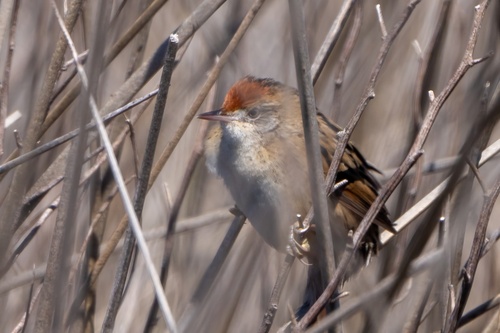 Bay-capped Wren-Spinetail
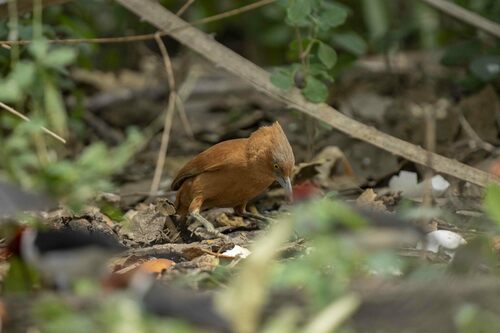 Rufous Cacholote
In breve
Il segno distintivo più affidabile per separare il Bay-capped Wren-Spinetail dal Rufous Cacholote è la dimensione e la struttura complessiva: il cacholote è molto più grande, massiccio e presenta una cresta prominente, mentre il wren-spinetail è piccolo, snello e privo di cresta. Nel piumaggio, il wren-spinetail mostra una corona rufous con un supercilium bianco contrastante e parti superiori con striature audaci, mentre il cacholote è di un uniforme rosso-rufous brillante con una cresta variabile grigia o rufous e poco patterning. Il wren-spinetail predilige la vegetazione palustre densa, mentre il cacholote si trova in habitat più aperti e boschivi. Se vedi un uccello piccolo, striato, abitante delle paludi con una corona rufous, è il wren-spinetail; un grande uccello cresta, uniformemente rufous sugli alberi è il cacholote.
Consigli di identificazione
- La dimensione è decisiva: Se l'uccello appare piccolo, delicato e simile a un wren, è il Bay-capped Wren-Spinetail; se è grande, massiccio e delle dimensioni di un tordo, è il Rufous Cacholote. Questo vale per tutte le età e stagioni.
- Presenza della cresta: Il cacholote mostra sempre una cresta prominente (rufous a grigia), anche nei giovani (sebbene più corta), mentre il wren-spinetail non ha mai una cresta. In uccelli posati o all'erta, questo è un controllo rapido.
- Pattern facciale: Il wren-spinetail ha un supercilium bianco audace e un volto sabbioso con una corona rufous, creando un forte contrasto. Il volto del cacholote è uniformemente rosso-rufous, privo di supercilium o di un pattern facciale netto.
- Striature sulla schiena e sul collo: Il wren-spinetail mostra striature nere audaci sul collo e sulla parte superiore della schiena, visibili in buona luce o in viste ravvicinate. La schiena del cacholote è semplice, priva di striature o patterning.
- Tono complessivo del piumaggio: Il cacholote è di un ricco rosso-rufous uniforme sopra e sotto (più chiaro sotto), mentre il wren-spinetail è sabbioso a marrone oliva sopra con una corona rufous e parti inferiori più chiare, lavate di buff.
- Struttura della coda: Il wren-spinetail ha una coda graduata e appuntita con un po' di nero sulle piume centrali; la coda del cacholote è larga, priva di barbigli alle punte ed è uniformemente rufous.
- Colore e forma del becco: Il wren-spinetail ha una maxilla fine e nerastra e una mandibola chiara, adatta per raccogliere insetti nell'erba. Il becco del cacholote è più pesante, blu-grigio a grigio con una mandibola più chiara, riflettendo la sua alimentazione più generalista.
- Colore dell'iride: Il wren-spinetail ha un'iride bianca opaca a blu chiaro; l'iride del cacholote è gialla a giallo-buff. Questo è sottile ma può aiutare in viste ravvicinate.
- Contesto dell'habitat: Se l'uccello si trova in una palude densa o in un canneto, specialmente basso nella vegetazione, aspettati il wren-spinetail. Se si trova in un bosco aperto, in un cespuglio o posato in alto sugli alberi, è quasi certamente un cacholote.
- Comportamento: Il wren-spinetail è riservato, cerca cibo in basso e da solo; il cacholote è evidente, spesso vocale e si posiziona apertamente.
- Tipo di nido: Il wren-spinetail costruisce un nido a coppa basso e aperto nelle paludi; il cacholote costruisce un grande nido di rami in alto sugli alberi. La struttura e la posizione del nido possono essere un indizio se osservate.
- Confusione giovanile: Anche i giovani cacholote, sebbene meno uniformi e con una cresta più corta, sono molto più grandi e privi del pattern facciale e della schiena striata del wren-spinetail.
- Viste in volo: Non sono descritti pattern unici di ali o di volo per nessuna delle due specie, quindi fai affidamento su dimensione, struttura e forma della coda in volo.
- Voce: Il canto del wren-spinetail è un lungo ronzio simile a un insetto; il cacholote è molto più forte e vario. Usalo con cautela a meno che tu non sia familiare con entrambe le specie.
- Sovrapposizione geografica: Entrambe le specie possono verificarsi in Paraguay e nel sud del Brasile, ma le loro preferenze di habitat riducono nettamente la confusione sul campo.
Taglia
La dimensione è un separatore importante: il Bay-capped Wren-Spinetail è molto più piccolo (massa corporea ~11 g, lunghezza 13–14,5 cm) rispetto al Rufous Cacholote (massa corporea ~49 g, lunghezza 20–21 cm). Il cacholote è quasi quattro volte più pesante e visibilmente più lungo, apparendo robusto e con un becco pesante, mentre il wren-spinetail è piccolo, snello e delicato. Sul campo, questa differenza è immediatamente evidente se entrambe le specie vengono viste in un contesto simile.
Piumaggio
Non sono descritti segni specifici per età sulle ali superiori o sul volo per nessuna delle due specie, quindi ci si concentra sul piumaggio adulto e giovanile. Il Bay-capped Wren-Spinetail adulto ha una corona rufous distintiva, un supercilium bianco audace, parti superiori sabbiose a marrone oliva con forti striature nere sul collo e sulla parte superiore della schiena, e ali marroni con cannella alla base delle piume da volo. Le parti inferiori sono bianche con un lavaggio buff o cannella sui lati. La coda è marrone, graduata e appuntita, con un po' di nero sulle piume centrali. Al contrario, il Rufous Cacholote adulto è quasi interamente di un brillante rosso-rufous, più chiaro sotto, con una cresta variabile (rufous a grigia), gola arancione e piumaggio uniforme privo di forti striature o contrasto facciale. Le sue ali hanno punte fuligginose e le piume della coda mancano di barbigli alle estremità. I giovani cacholote hanno una cresta più corta e un colore meno uniforme ma sono comunque molto più grandi e privi del pattern facciale e della schiena striata del wren-spinetail. Entrambi i sessi sono simili in ciascuna specie.
Comportamento
Il wren-spinetail viene tipicamente visto cercare cibo da solo, basso tra le erbe palustri dense e le giunchiglie, spesso rimanendo nascosto e muovendosi in modo simile a un topo attraverso la vegetazione. È raramente visto posato in alto o in aree aperte. Il cacholote, d'altra parte, è più evidente, spesso visto posato sugli alberi o nei cespugli, a volte in coppie, ed è più arboricolo e vocale. I suoi grandi nidi di rami sono costruiti in alto sopra il suolo, mentre il wren-spinetail nidifica in basso nella vegetazione palustre.
Habitat
Il Bay-capped Wren-Spinetail è uno specialista di canneti e giunchi in paludi d'acqua dolce, salmastre o salate, raramente avventurandosi lontano dalla vegetazione umida densa. Il Rufous Cacholote preferisce boschi aperti, savane e aree cespugliose, spesso lontano dalle paludi, e si trova tipicamente in habitat più asciutti e boschivi. La sovrapposizione è minima; l'habitat da solo è spesso un forte indizio.
Voce
Il canto del wren-spinetail è descritto come un lungo ronzio simile a un grillo, che è molto diverso dai tipici richiami forti, vari e spesso aspri del cacholote. Tuttavia, i confronti vocali dettagliati sono limitati nelle note, quindi la voce dovrebbe essere usata con cautela a meno che non si sia familiari con entrambe le specie.
Bay-capped Wren-Spinetail · Rufous Cacholote · I miei uccelli difficili