

Motmot

マレーワシミミズク 対 オオフクロウ

Ketupa sumatrana 対 Strix leptogrammica

マレーワシミミズクとオオフクロウのクイズ
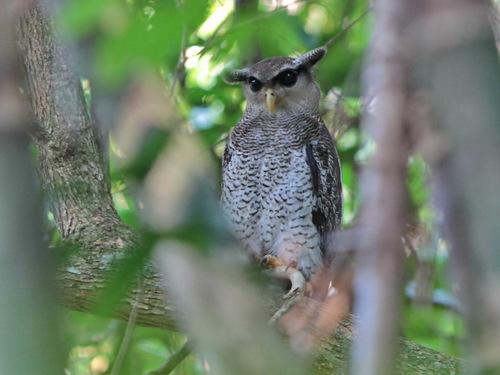
マレーワシミミズク (Ketupa sumatrana) マレーワシミミズク
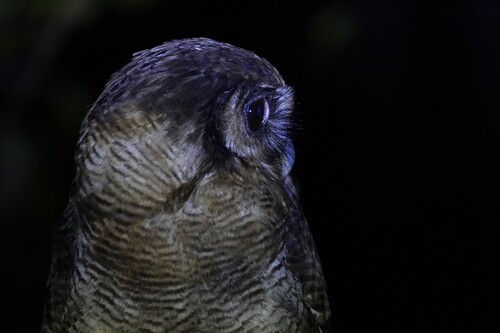
オオフクロウ (Strix leptogrammica) オオフクロウ

メディア

読み込み中…

要点

バード・イーグル・オウルとブラウン・ウッド・オウルを区別する最も信頼できるフィールドマークは、バード・イーグル・オウルに見られる目立つ横向きの耳羽の存在であり、耳のないブラウン・ウッド・オウルには完全に欠けています。止まっている時や飛んでいる時の視点では、バード・イーグル・オウルは重厚な縞模様の胸部と、眉毛から耳羽の前を通る特徴的な白い帯を示し、ブラウン・ウッド・オウルはより均一な赤褐色または茶色の顔の円盤と、縞模様の下部を持ち、縞模様ではありません。幼鳥のバード・イーグル・オウルは生まれたての羽毛が純白で、茶色の翼と尾の帯がある汚れた白に移行し、若いブラウン・ウッド・オウルは成鳥に似ていますが、耳羽がありません。どちらも大きな茶色のフクロウですが、頭の形、下部の模様、顔のマーキングに注意を払うことで、フィールドで確実に区別できます。

識別のコツ

  1. 耳羽: バード・イーグル・オウルは常に大きな横向きの耳羽を示し、ブラウン・ウッド・オウルには耳羽がありません。これはすべての年齢と季節において最も信頼できるフィールドマークです。
  2. 顔の円盤: バード・イーグル・オウルは汚れた灰白色の顔とロアを持ち、目の上と耳羽を通る目立つ白い帯があります。ブラウン・ウッド・オウルは茶色または赤褐色の顔の円盤を持ち、白で縁取られ、白い帯や耳羽の構造がありません。
  3. 下部の模様: バード・イーグル・オウルは胸部に強く広い縞模様を示し(特にジャワ亜種)、腹部はあまり目立ちません。ブラウン・ウッド・オウルは茶色の縞模様のあるクリーム色の下部を持ち、縞模様はありません。止まっている鳥や良好な飛行視点で模様を注意深く確認してください。
  4. 上部: バード・イーグル・オウルの上部は灰褐色で、ジグザグの赤褐色の帯があり、上尾は暗褐色で淡い帯があります。ブラウン・ウッド・オウルの上部は均一に暗褐色で、肩に淡い白い斑点があり、ジグザグの縞模様はありません。
  5. 足と足首: バード・イーグル・オウルは足首まで羽毛があり、ブラウン・ウッド・オウルはさらに広範囲に羽毛があり、爪を除いて足をほぼ完全に覆っています。これは鳥が止まっている時に足が見えるときに確認できます。
  6. 幼鳥の羽毛: バード・イーグル・オウルの幼鳥は生まれたての羽毛が純白で、次に茶色の帯がある汚れた白に移行し、非常に短い耳羽があります。ブラウン・ウッド・オウルの幼鳥は成鳥に似ており、耳羽がなく、同じ縞模様の下部と茶色の顔の円盤を示します。
  7. 目の色: 両種は通常暗褐色の目を持っていますが、バード・イーグル・オウルは稀に黄色の目を示すことがあります。このマークだけに頼らないでください。
  8. くちばしと顔の皮膚: バード・イーグル・オウルは淡い黄色のくちばしと顔の皮膚を持ち、時々緑がかった色合いがあります。ブラウン・ウッド・オウルのくちばしの色はフィールドではあまり特徴的ではありません。
  9. サイズ: ブラウン・ウッド・オウルは通常、バード・イーグル・オウル(40–48 cm)よりも大きくてがっしりしています(45–57 cm)が、サイズの重複と姿勢により、直接比較しない限り信頼できない場合があります。
  10. 止まっている姿勢: バード・イーグル・オウルはしばしばより直立して警戒しているように見え、部分的には耳羽のためです。ブラウン・ウッド・オウルは頭が丸く、よりコンパクトに見えます。
  11. 飛行シルエット: 飛行中、バード・イーグル・オウルは縞模様のために上翼によりコントラストを示すことがありますが、ブラウン・ウッド・オウルはより均一に茶色に見えます。これは微妙で、他のマークと組み合わせて使用するのが最適です。
  12. 顔のコントラスト: バード・イーグル・オウルの目の上と耳羽を通る白い帯はユニークで、良好な光の下である程度の距離からも見えます。
  13. 地理的範囲: マレー半島や大きな東南アジアの島々の外にいる場合、ブラウン・ウッド・オウルの方がはるかに可能性が高いです。重複ゾーンでは、羽毛と構造を使用してください。
  14. 生息地: 両者は密林を好みますが、ブラウン・ウッド・オウルはより適応性があり、広範囲に分布しています。生息地だけでは診断できません。
  15. 足の可視性: 足がはっきり見える場合、羽毛の広がりを確認してください—ブラウン・ウッド・オウルではほぼ完全に覆われており、バード・イーグル・オウルではそれほどではありません。

大きさ

バード・イーグル・オウルはかなり大きなフクロウですが、平均してブラウン・ウッド・オウルよりもやや小さいです。バード・イーグル・オウルは40–48 cmの長さで、いくつかの亜種(例:ジャワ)はより高い体重(最大1,600 g)に達しますが、通常はブラウン・ウッド・オウルよりも軽いです。ブラウン・ウッド・オウルは中型から大型で、長さは45–57 cmで、一般的によりがっしりとして長く見え、特に最大の個体では顕著です。両種には最小限の性差がありますが、バード・イーグル・オウルは島の亜種間でより多くの変異を示します。フィールドでは、サイズだけでは重複のため安全な区別にはなりません。

羽色

未成熟および幼鳥の場合: バード・イーグル・オウルの雛は生まれたての羽毛が純白で、次に茶色の帯がある汚れた白に移行し、この段階では非常に短い耳羽があります。ブラウン・ウッド・オウルの幼鳥は成鳥に似ており、耳羽が完全に欠けており、同じ茶色または赤褐色の顔の円盤と縞模様の下部を示します。成鳥では、バード・イーグル・オウルは胸部に強く広い縞模様があり(特にジャワの鳥)、腹部はあまり目立たず、目の上に白い帯があり、耳羽を通って伸びています。上部は灰褐色で、ジグザグの赤褐色の帯があり、暗褐色の尾には淡い帯があります。ブラウン・ウッド・オウルは均一に暗褐色の上部を持ち、肩に淡い白い斑点があり、茶色の縞模様のあるクリーム色の下部(縞模様ではない)を持ち、顔の円盤は茶色または赤褐色で、白で縁取られ、同心円の縞模様がありません。両者の目は暗褐色ですが、バード・イーグル・オウルは稀に黄色の目を示すことがあります。バード・イーグル・オウルの足首は足の関節まで羽毛があり、ブラウン・ウッド・オウルはさらに広範囲に羽毛があり、しばしば足をほぼ完全に覆っています。

行動

両種は主に夜行性で、昼間は静かに止まっていますが、バード・イーグル・オウルは目立つ耳羽のためにより直立して警戒しているように見えることがあります。飛行中、バード・イーグル・オウルはややコンパクトに見え、縞模様の羽毛のために上翼の模様によりコントラストを示すことがありますが、ブラウン・ウッド・オウルはよりがっしりとして均一に茶色に見えます。両者は秘密主義で、夕暮れ時に声やシルエットでしばしば検出されます。

生息環境

バード・イーグル・オウルは南マレー半島からボルネオ、スマトラ、ジャワ、バリを含むいくつかの大きな東南アジアの島々に分布し、密林を好みます。ブラウン・ウッド・オウルは南アジアおよび東南アジア全体に広い範囲を持ち、インド、バングラデシュ、スリランカ、インドネシア、台湾、南中国を含み、これらの地域で常駐繁殖しています。両者が発生する地域(例:インドネシアの一部)では、生息地の重複が可能ですが、ブラウン・ウッド・オウルはより広範囲に分布し、より多様な森林タイプで見つけることができます。

より良い説明を送る

比較と同じ項目を使ってください。文章はすぐに公開されます。

The most reliable field mark to separate Barred Eagle Owl from Brown Wood-Owl is the presence of prominent, sideways-slanting ear tufts on the Barred Eagle Owl—completely absent in the earless Brown Wood-Owl. In perched or flight views, Barred Eagle Owl shows a heavily barred breast and a distinctive white bar running from the eyebrows through the front of the ear tufts, while Brown Wood-Owl has a more uniform rufous or brown facial disc and streaked, not barred, underparts. Juvenile Barred Eagle Owls are pure white in natal down, transitioning to dirty white with brown wing and tail bands, while young Brown Wood-Owls resemble adults but lack ear tufts. Both are large, brownish owls, but careful attention to head shape, underpart pattern, and facial markings will reliably separate them in the field.

  1. Ear Tufts: Barred Eagle Owl always shows large, sideways-slanting ear tufts; Brown Wood-Owl never has ear tufts. This is the single most reliable field mark for all ages and seasons.
  2. Facial Disc: Barred Eagle Owl has a dirty grayish-white face and lores, with a conspicuous white bar running above the eyes and through the ear tufts. Brown Wood-Owl has a brown or rufous facial disc, edged with white, and lacks the white bar or any ear tuft structure.
  3. Underpart Pattern: Barred Eagle Owl shows strong, broad barring on the breast (especially in the Javan race), with the belly less marked. Brown Wood-Owl has buff underparts with brown streaking, never barring. Check the pattern carefully on perched birds or in good flight views.
  4. Upperparts: Barred Eagle Owl's upperparts are grey-brown with zigzag rufous-tawny bars, and the upper tail is dark brown with pale bars. Brown Wood-Owl's upperparts are uniformly dark brown with faint white spotting on the shoulders and lack the zigzag barring.
  5. Tarsi and Feet: Barred Eagle Owl has tarsi feathered to the toe joint; Brown Wood-Owl has even more extensive feathering, often covering the feet entirely except for the talons. This can be seen when the bird is perched and feet are visible.
  6. Juvenile Plumage: Barred Eagle Owl juveniles are pure white in natal down, then dirty white with brown banding on wings and tail and very short ear tufts. Brown Wood-Owl juveniles look like adults, lacking ear tufts and showing the same streaked underparts and brown facial disc.
  7. Eye Color: Both species usually have dark brown eyes, but Barred Eagle Owl can rarely show yellow eyes. Do not rely on this mark alone.
  8. Bill and Cere: Barred Eagle Owl has a pale yellow bill and cere, sometimes with a greenish tinge. Brown Wood-Owl's bill color is less distinctive in the field.
  9. Size: Brown Wood-Owl is typically larger and bulkier (45–57 cm) than Barred Eagle Owl (40–48 cm), but size overlap and posture can make this unreliable except in direct comparison.
  10. Perched Posture: Barred Eagle Owl often appears more upright and alert, partly due to its ear tufts. Brown Wood-Owl looks rounder-headed and more compact.
  11. Flight Silhouette: In flight, Barred Eagle Owl may show more contrast on the upperwing due to barred patterning, while Brown Wood-Owl appears more uniformly brown. This is subtle and best used in combination with other marks.
  12. Facial Contrast: The white bar above the eyes and through the ear tufts of Barred Eagle Owl is unique and visible even at some distance with good light.
  13. Geographic Range: If you are outside the Malay Peninsula or the larger Southeast Asian islands, Brown Wood-Owl is far more likely. In overlap zones, use plumage and structure.
  14. Habitat: Both prefer dense forest, but Brown Wood-Owl is more adaptable and widespread. Habitat alone is not diagnostic.
  15. Feet Visibility: If you see the feet clearly, check for the extent of feathering—almost fully covered in Brown Wood-Owl, less so in Barred Eagle Owl.

Barred Eagle Owl is a fairly large owl, but on average is slightly smaller than Brown Wood-Owl. Barred Eagle Owl ranges from 40–48 cm in length, with some subspecies (e.g., Javan) reaching higher weights (up to 1,600 g) but typically lighter than Brown Wood-Owl. Brown Wood-Owl is medium-large, 45–57 cm long, and generally appears bulkier and longer, especially in the largest individuals. There is minimal sexual dimorphism in both species, but Barred Eagle Owl shows more variation between island subspecies. In the field, size alone is not a safe separator due to overlap.

For immatures and juveniles: Barred Eagle Owl chicks are pure white in natal down, then transition to dirty white with brown banding on wings and tail, and have very short ear tufts at this stage. Brown Wood-Owl juveniles resemble adults, lacking ear tufts entirely, and show the same brown or rufous facial disc and streaked underparts. In adults, Barred Eagle Owl is marked by strong, broad barring on the breast (especially in Javan birds), with the belly less marked, and a white bar above the eyes extending through the ear tufts. The upperparts are grey-brown with zigzag rufous-tawny bars and a dark brown tail with pale bars. Brown Wood-Owl has uniformly dark brown upperparts with faint white spotting on the shoulders, buff underparts with brown streaking (not barring), and a facial disc that is brown or rufous, edged with white, lacking concentric barring. The eyes of both are dark brown, but Barred Eagle Owl can rarely show yellow eyes. The tarsi of Barred Eagle Owl are feathered to the toe joint, while Brown Wood-Owl has even more extensive feathering, often covering the feet almost entirely.

Both species are primarily nocturnal and perch quietly during the day, but Barred Eagle Owl may appear more upright and alert due to its prominent ear tufts. In flight, Barred Eagle Owl may look slightly more compact and show more contrast in the upperwing pattern due to its barred plumage, while Brown Wood-Owl appears bulkier and more uniformly brown. Both are secretive and often detected by voice or silhouette at dusk.

Barred Eagle Owl is found from the southern Malay Peninsula through several large Southeast Asian islands, including Borneo, Sumatra, Java, and Bali, favoring dense forests. Brown Wood-Owl has a broader range across South and Southeast Asia, including India, Bangladesh, Sri Lanka, Indonesia, Taiwan, and southern China, and is a resident breeder in these areas. In regions where both occur (e.g., parts of Indonesia), habitat overlap is possible, but Brown Wood-Owl is more widespread and can be found in a wider range of forest types.

変更を破棄しますか?

保存していない編集があります。今離れると失われます。

マレーワシミミズク · オオフクロウ · 苦手な鳥