

Barred Eagle-Owl vs Brown Wood-Owl
Ketupa sumatrana contro Strix leptogrammica
Fai un quiz con Barred Eagle-Owl e Brown Wood-Owl
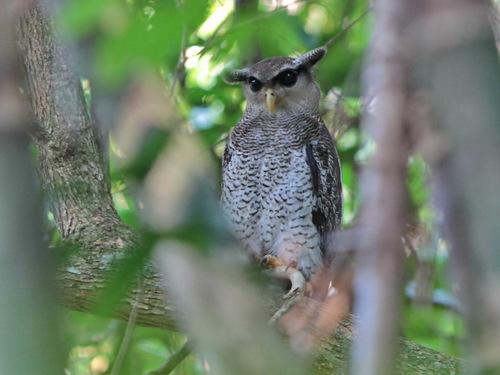 Barred Eagle-Owl
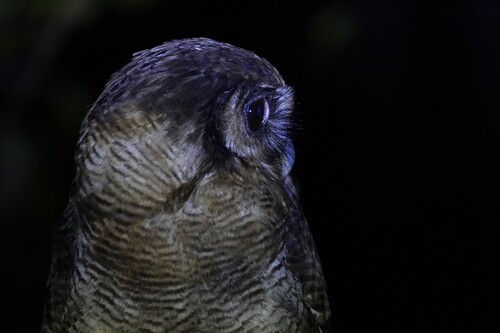 Brown Wood-Owl
In breve
Il segno distintivo più affidabile per separare il Barred Eagle-Owl dal Brown Wood-Owl è la presenza di ciuffi auricolari prominenti e inclinati lateralmente sul Barred Eagle-Owl, completamente assenti nel Brown Wood-Owl senza orecchie. In vista da posato o in volo, il Barred Eagle-Owl mostra un petto fortemente barrato e una barra bianca distintiva che corre dalle sopracciglia attraverso la parte anteriore dei ciuffi auricolari, mentre il Brown Wood-Owl ha un disco facciale rufous o marrone più uniforme e parti inferiori striate, non barrate. I giovani Barred Eagle Owls sono completamente bianchi nel piumaggio giovanile, passando a un bianco sporco con bande marroni sulle ali e sulla coda, mentre i giovani Brown Wood-Owls somigliano agli adulti ma mancano di ciuffi auricolari. Entrambi sono grandi gufi marroni, ma un'attenta attenzione alla forma della testa, al modello delle parti inferiori e alle marcature facciali li separerà in modo affidabile sul campo.
Consigli di identificazione
- Ciuffi Auricolari: Il Barred Eagle-Owl mostra sempre grandi ciuffi auricolari inclinati lateralmente; il Brown Wood-Owl non ha mai ciuffi auricolari. Questo è il segno distintivo più affidabile per tutte le età e stagioni.
- Disco Facciale: Il Barred Eagle-Owl ha un volto e lore grigio-bianco sporco, con una barra bianca evidente che corre sopra gli occhi e attraverso i ciuffi auricolari. Il Brown Wood-Owl ha un disco facciale marrone o rufous, bordato di bianco, e manca della barra bianca o di qualsiasi struttura di ciuffo auricolare.
- Modello delle Parti Inferiori: Il Barred Eagle-Owl mostra forti e ampie barre sul petto (soprattutto nella razza giavanese), con il ventre meno marcato. Il Brown Wood-Owl ha parti inferiori color crema con striature marroni, mai barrate. Controlla attentamente il modello sugli uccelli posati o in buone viste di volo.
- Parte Superiore: Le parti superiori del Barred Eagle-Owl sono grigio-marroni con barre rufous-tawny a zigzag, e la coda superiore è marrone scuro con barre chiare. Le parti superiori del Brown Wood-Owl sono uniformemente marrone scuro con macchie bianche deboli sulle spalle e mancano della barratura a zigzag.
- Tarsi e Piedi: Il Barred Eagle-Owl ha tarsi piumati fino all'articolazione delle dita; il Brown Wood-Owl ha un piumaggio ancora più esteso, spesso coprendo completamente i piedi tranne che per gli artigli. Questo può essere visto quando l'uccello è posato e i piedi sono visibili.
- Piumaggio Giovanile: I giovani Barred Eagle Owls sono completamente bianchi nel piumaggio giovanile, poi bianchi sporchi con bande marroni sulle ali e sulla coda e ciuffi auricolari molto corti. I giovani Brown Wood-Owls assomigliano agli adulti, mancando di ciuffi auricolari e mostrando le stesse parti inferiori striate e disco facciale marrone.
- Colore degli Occhi: Entrambe le specie di solito hanno occhi marroni scuri, ma il Barred Eagle-Owl può raramente mostrare occhi gialli. Non fare affidamento su questo segno da solo.
- Becco e Cere: Il Barred Eagle-Owl ha un becco e cere gialli pallidi, a volte con una sfumatura verdognola. Il colore del becco del Brown Wood-Owl è meno distintivo sul campo.
- Dimensioni: Il Brown Wood-Owl è tipicamente più grande e massiccio (45–57 cm) rispetto al Barred Eagle-Owl (40–48 cm), ma la sovrapposizione delle dimensioni e la postura possono rendere questo poco affidabile tranne che in confronto diretto.
- Postura da Posato: Il Barred Eagle-Owl appare spesso più eretto e all'erta, in parte a causa dei suoi ciuffi auricolari. Il Brown Wood-Owl sembra avere una testa più rotonda e più compatta.
- Silhouette in Volo: In volo, il Barred Eagle-Owl può mostrare più contrasto sulla parte superiore dell'ala a causa del modello barrato, mentre il Brown Wood-Owl appare più uniformemente marrone. Questo è sottile e meglio utilizzato in combinazione con altri segni.
- Contrasto Facciale: La barra bianca sopra gli occhi e attraverso i ciuffi auricolari del Barred Eagle-Owl è unica e visibile anche a una certa distanza con buona luce.
- Gamma Geografica: Se ti trovi al di fuori della Penisola Malese o delle isole più grandi del Sud-est asiatico, è molto più probabile che tu incontri il Brown Wood-Owl. Nelle zone di sovrapposizione, utilizza piumaggio e struttura.
- Habitat: Entrambi preferiscono foreste dense, ma il Brown Wood-Owl è più adattabile e diffuso. L'habitat da solo non è diagnostico.
- Visibilità dei Piedi: Se vedi chiaramente i piedi, controlla l'estensione del piumaggio: quasi completamente coperti nel Brown Wood-Owl, meno nel Barred Eagle-Owl.
Taglia
Il Barred Eagle-Owl è un gufo piuttosto grande, ma in media è leggermente più piccolo del Brown Wood-Owl. Il Barred Eagle-Owl varia da 40 a 48 cm di lunghezza, con alcune sottospecie (ad esempio, giavanese) che raggiungono pesi più elevati (fino a 1.600 g) ma tipicamente più leggeri del Brown Wood-Owl. Il Brown Wood-Owl è di dimensioni medie-grandi, lungo 45–57 cm, e appare generalmente più massiccio e lungo, specialmente negli individui più grandi. C'è un minimo di dimorfismo sessuale in entrambe le specie, ma il Barred Eagle-Owl mostra più variazione tra le sottospecie insulari. Sul campo, la dimensione da sola non è un separatore sicuro a causa della sovrapposizione.
Piumaggio
Per immaturi e giovani: I pulcini di Barred Eagle-Owl sono completamente bianchi nel piumaggio giovanile, poi passano a un bianco sporco con bande marroni sulle ali e sulla coda, e hanno ciuffi auricolari molto corti in questa fase. I giovani Brown Wood-Owl assomigliano agli adulti, mancando completamente di ciuffi auricolari e mostrando lo stesso disco facciale marrone o rufous e le parti inferiori striate. Negli adulti, il Barred Eagle-Owl è contrassegnato da forti e ampie barre sul petto (soprattutto negli uccelli giavanesi), con il ventre meno marcato, e una barra bianca sopra gli occhi che si estende attraverso i ciuffi auricolari. Le parti superiori sono grigio-marroni con barre rufous-tawny a zigzag e una coda marrone scuro con barre chiare. Il Brown Wood-Owl ha parti superiori uniformemente marrone scuro con macchie bianche deboli sulle spalle, parti inferiori color crema con striature marroni (non barrate), e un disco facciale che è marrone o rufous, bordato di bianco, privo di barrature concentriche. Gli occhi di entrambi sono marroni scuri, ma il Barred Eagle-Owl può raramente mostrare occhi gialli. I tarsi del Barred Eagle-Owl sono piumati fino all'articolazione delle dita, mentre il Brown Wood-Owl ha un piumaggio ancora più esteso, spesso coprendo quasi completamente i piedi.
Comportamento
Entrambe le specie sono principalmente notturne e si posano silenziosamente durante il giorno, ma il Barred Eagle-Owl può apparire più eretto e all'erta a causa dei suoi prominenti ciuffi auricolari. In volo, il Barred Eagle-Owl può sembrare leggermente più compatto e mostrare più contrasto nel modello della parte superiore dell'ala a causa del suo piumaggio barrato, mentre il Brown Wood-Owl appare più massiccio e più uniformemente marrone. Entrambi sono segreti e spesso rilevati dalla voce o dalla silhouette al crepuscolo.
Habitat
Il Barred Eagle-Owl si trova dalla parte meridionale della Penisola Malese attraverso diverse grandi isole del Sud-est asiatico, tra cui Borneo, Sumatra, Giava e Bali, preferendo foreste dense. Il Brown Wood-Owl ha una gamma più ampia attraverso il Sud e il Sud-est asiatico, inclusi India, Bangladesh, Sri Lanka, Indonesia, Taiwan e Cina meridionale, ed è un riproduttore residente in queste aree. Nelle regioni in cui entrambe le specie si trovano (ad esempio, parti dell'Indonesia), è possibile una sovrapposizione dell'habitat, ma il Brown Wood-Owl è più diffuso e può essere trovato in una gamma più ampia di tipi di foresta.
Barred Eagle-Owl · Brown Wood-Owl · I miei uccelli difficili