

Motmot

オビオヒゲハチドリ 対 シマノドユミハチドリ

Threnetes ruckeri 対 Phaethornis striigularis

オビオヒゲハチドリとシマノドユミハチドリのクイズ
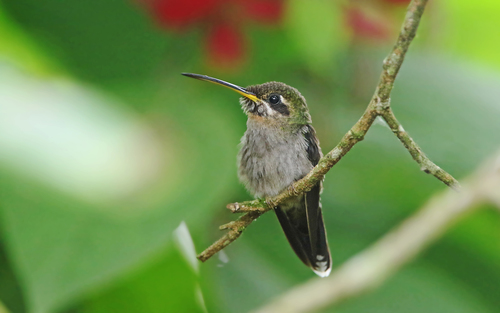
オビオヒゲハチドリ (Threnetes ruckeri) オビオヒゲハチドリ
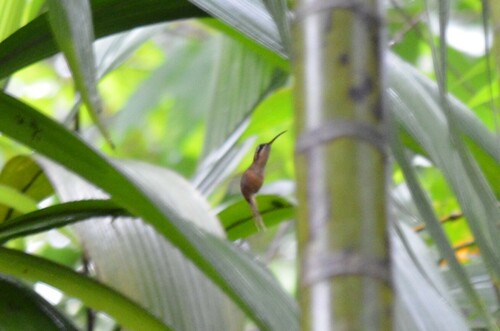
シマノドユミハチドリ (Phaethornis striigularis) シマノドユミハチドリ

メディア

読み込み中…

要点

オビオヒゲハチドリとシマノドユミハチドリを区別する最も信頼できるフィールドマークは、オビオヒゲハチドリの太く黒い尾帯で、白い基部と先端があることです。これは、すべての年齢の鳥が止まっているときや飛んでいるときに見ることができます。シマノドユミハチドリはこの強い尾のパターンを欠いており、代わりに淡い先端だけのより均一に暗い尾を示します。サイズも強い手がかりです:オビオヒゲハチドリは小さなシマノドユミハチドリよりも明らかに大きく、重いです。くちばしの形と顔のパターンは微妙に異なりますが、距離があると見分けるのが難しいことがあります。両種の幼鳥は成鳥に似ていますが、オビオヒゲハチドリの尾のパターンは独特です。特に混合群れや速く動く鳥の中で、最も信頼できる区別をするためには、尾と全体のサイズに注目してください。

識別のコツ

  1. Tail pattern (all ages): オビオヒゲハチドリは尾の先端近くに太い黒い帯を示し、尾羽の基部と先端は白で、止まっている鳥と飛んでいる鳥の両方で非常に目を引きます。シマノドユミハチドリは主に黒っぽい尾を持ち、淡い(白っぽいまたはオーカー色の)先端だけで、強い帯状の外観を欠いています。
  2. Size and bulk: オビオヒゲハチドリはシマノドユミハチドリよりも明らかに大きく、重い(10–11 cm、5–7 g)です。直接比較や他のハチドリと一緒にスケールを取ると、オビオヒゲハチドリは頑丈に見え、シマノドユミハチドリは華奢に見えます。
  3. Bill shape: 両者ともに長いくちばしを持っていますが、オビオヒゲハチドリのくちばしはほぼ真っ直ぐ(雌はやや下向き)で、シマノドユミハチドリのくちばしは明確に長く下向きです。距離があると微妙ですが、近くで見るとシマノドユミハチドリのより顕著な曲がりが見えるかもしれません。
  4. Facial pattern: シマノドユミハチドリは強い黒っぽいマスクを持ち、上部は白っぽいバフのスーペリシリウム、下部は白っぽいバフのマラーストライプで囲まれています。オビオヒゲハチドリは暗い耳の斑点と顎を持っていますが、シマノドユミハチドリの鋭い顔のストライプは欠いています。
  5. Throat color: オビオヒゲハチドリの喉はオーカー色から明るいオレンジ色(特にいくつかの亜種で)で、他の灰色の下部と対照的です。シマノドユミハチドリの喉は淡い灰褐色で、細かい暗い筋があり、しばしば薄く、常に見えるわけではありません。
  6. Underparts: オビオヒゲハチドリは灰色の下部にいくつかの緑の羽毛を持ち、シマノドユミハチドリはバフ色の脇腹と腹部、淡い灰褐色の中央下部を示します。
  7. Upperparts: オビオヒゲハチドリの上面は青銅色の緑で、シマノドユミハチドリの上面は鈍い虹色の緑で、淡い赤褐色の尾羽(特に幼鳥で)を持っています。
  8. Juvenile differences: オビオヒゲハチドリの幼鳥はオーカー色の羽毛の縁を持っていますが、診断的な尾のパターンを保持しています。シマノドユミハチドリの幼鳥は淡い赤褐色の背中を持っていますが、尾は淡い先端だけの平凡なものです。
  9. Flight jizz: オビオヒゲハチドリは飛行中により頑丈で直接的に見え、シマノドユミハチドリはより繊細で敏捷です。
  10. Perched posture: オビオヒゲハチドリはしばしばより直立して頑丈に見え、シマノドユミハチドリはより細長い外観で止まります。
  11. Habitat context: 両者は森林の下層やエッジに生息しますが、オビオヒゲハチドリは半開放的な地域やプランテーションで見られる可能性が高く、シマノドユミハチドリは水の近くのより密な湿った森林にしばしば見られます。
  12. Song: オビオヒゲハチドリの歌は速く高音のフレーズで、間に休止があります。シマノドユミハチドリの歌は単調で、きしむような連続音です。繰り返しの変わらないきしむ音を聞いたら、シマノドユミハチドリを考え、より複雑でトリルのあるフレーズを聞いたらオビオヒゲハチドリを考えてください(特に太平洋コスタリカで)。
  13. Sex differences: 両性は各種で似ています。オビオヒゲハチドリの雌はくちばしの曲がりがやや大きいですが、強いフィールドマークではありません。
  14. Pitfalls: 照明が悪いと、シマノドユミハチドリの淡い尾の先端が帯のように見えることがありますが、オビオヒゲハチドリのように太くはありません。オビオヒゲハチドリのオーカー色の喉は影で鈍く見えることがあるため、尾のパターンとサイズに頼ってください。
  15. When in doubt: 太く黒と白の帯状の尾を持つ中型のハチドリを見たら、それはオビオヒゲハチドリです。もしその鳥が小さく、平凡な暗い尾と淡い先端だけを持ち、強い顔のマスクを示しているなら、それはシマノドユミハチドリです。

大きさ

オビオヒゲハチドリは中型のハチドリで、全長10–11 cm、体重5–7 gです。それに対して、シマノドユミハチドリはかなり小さく、9–10 cm、体重はわずか2–3 gです。これにより、オビオヒゲハチドリはほぼ2倍の重さになり、フィールドで明らかに頑丈に見えます。一緒に見たり、他のハチドリと一緒にスケールを取ると、オビオヒゲハチドリのサイズとより頑丈な体型が明らかになり、シマノドユミハチドリは繊細で細長く見えます。

羽色

行動

両種は典型的なハーミットハチドリで、花のトラップライン回路を通じて餌を取り、時折蜜を盗みます。シマノドユミハチドリのオスはレックを形成し、メスを引き寄せるために歌いますが、オビオヒゲハチドリのオスは巣の近くに留まることがありますが、孵化には参加しません。両者は繁殖以外では孤独ですが、シマノドユミハチドリのレッキング行動はより目立つかもしれません。飛行中、オビオヒゲハチドリはより頑丈で直接的に見え、シマノドユミハチドリはより繊細で敏捷です。

生息環境

オビオヒゲハチドリは、海面から1,200 mまでの一次森林の下層やエッジ、古い二次成長、低木地、茂み、プランテーションに生息し、南東グアテマラやベリーズから西エクアドル、ベネズエラまで分布しています。シマノドユミハチドリは中央および南米北西部で類似の範囲を占めていますが、一般的には湿った低地や丘陵の森林に見られ、水の近くや密な下層にしばしば見られます。両者は乱れた生息地にも出現することがありますが、オビオヒゲハチドリは半開放的な地域やプランテーションに対してより耐性があるかもしれません。

声

オビオヒゲハチドリの歌は5–10音の速く高音のフレーズで、間に休止があり、例えば「tzi-tzi-tsee-ee-tsi-tzi-tzi」となります。コスタリカでは、太平洋側の鳥はより複雑な歌を持ち、トリルがあります。シマノドユミハチドリの歌は高音で、きしむような単調なもので、簡単に聞こえますが、あまり変化がありません。両者ともに高音で、地元の歌の構造に慣れていない限り、耳で分けるのが難しいことがあります。

より良い説明を送る

比較と同じ項目を使ってください。文章はすぐに公開されます。

The most reliable field mark to separate Band-tailed Barbthroat from Stripe-throated Hermit is the bold, black tail band with white bases and tips on the Band-tailed Barbthroat, visible in both perched and flying birds of all ages. Stripe-throated Hermit lacks this strong tail pattern and instead shows a more uniformly dark tail with only pale tips. Size is also a strong clue: Band-tailed Barbthroat is noticeably larger and heavier than the diminutive Stripe-throated Hermit. Bill shape and facial pattern differ subtly, but can be tricky at a distance. Juveniles of both species are similar to adults, but the Barbthroat’s tail pattern remains distinctive. Focus on tail and overall size for the most reliable separation, especially in mixed flocks or fast-moving birds.

  1. Tail pattern (all ages): Band-tailed Barbthroat shows a bold black band near the tail tip, with white bases and tips to the tail feathers—very striking in both perched and flying birds. Stripe-throated Hermit has a mostly blackish tail with only pale (whitish or ochraceous) tips, lacking the strong banded look.
  2. Size and bulk: Barbthroat is noticeably larger and heavier (10–11 cm, 5–7 g) than the Hermit (9–10 cm, 2–3 g). In direct comparison or with other hummingbirds for scale, Barbthroat looks robust, Hermit looks dainty.
  3. Bill shape: Both have long bills, but Barbthroat’s is nearly straight (female slightly more decurved), while Hermit’s is distinctly long and decurved. At a distance, this is subtle, but close views may show the Hermit’s more pronounced curve.
  4. Facial pattern: Stripe-throated Hermit has a strong blackish mask, bordered above by a whitish-buff supercilium and below by a whitish-buff malar stripe. Barbthroat has a dark ear patch and chin, but lacks the Hermit’s sharp facial stripes.
  5. Throat color: Barbthroat’s throat is ochraceous to bright orange (especially in some subspecies), standing out against otherwise gray underparts. Hermit’s throat is pale greyish-brown with fine dark streaks, often faint and not always visible.
  6. Underparts: Barbthroat has gray underparts with some green feathers, while Hermit shows buff flanks and belly, and a pale greyish-brown central underpart.
  7. Upperparts: Barbthroat’s upperparts are bronze-green; Hermit’s are dull iridescent green with a pale rufous rump (especially in juveniles).
  8. Juvenile differences: Barbthroat juveniles have ochraceous feather edges but retain the diagnostic tail pattern. Hermit juveniles have a pale rufous back, but tail remains plain with pale tips only.
  9. Flight jizz: Barbthroat appears bulkier and more direct in flight; Hermit is more delicate and agile.
  10. Perched posture: Barbthroat often appears more upright and robust, while Hermit perches with a more slender, elongated look.
  11. Habitat context: Both can occur in forest understory and edges, but Barbthroat is more likely in semi-open or plantation areas, Hermit often in denser, humid forest near water.
  12. Song: Barbthroat’s song is a fast, high-pitched phrase with pauses; Hermit’s is a monotonous, squeaky series. If you hear a repetitive, unvaried squeak, lean Hermit; if you hear a more complex, trilled phrase, consider Barbthroat (especially in Pacific Costa Rica).
  13. Sex differences: Both sexes are similar in each species; bill curvature is slightly greater in female Barbthroat but not a strong field mark.
  14. Pitfalls: In poor light, the Hermit’s pale tail tips can look like a band, but never as bold or wide as Barbthroat’s. The Barbthroat’s ochraceous throat can appear dull in shadow, so rely on tail pattern and size.
  15. When in doubt: If you see a medium-sized hummingbird with a bold black-and-white banded tail, it is a Band-tailed Barbthroat. If the bird is small, with a plain dark tail and only pale tips, and shows a strong facial mask, it is a Stripe-throated Hermit.

Band-tailed Barbthroat is a medium-sized hummingbird, measuring 10–11 cm in length and weighing 5–7 g. In contrast, Stripe-throated Hermit is significantly smaller, at 9–10 cm and only 2–3 g. This makes the Barbthroat nearly twice as heavy and noticeably bulkier in the field. When seen together or with other hummingbirds for scale, the Barbthroat’s size and more robust build are apparent, while the Hermit appears delicate and slender.

  • Juveniles and immatures: Both species’ young resemble adults, but the Barbthroat juvenile shows ochraceous feather edges, while Hermit juveniles have an overall pale rufous back. However, the Barbthroat’s black tail band with white bases and tips is present at all ages and is diagnostic.
  • Adults: Band-tailed Barbthroat males and females have bronze-green upperparts, a dark ear patch and chin, and a distinctive ochraceous throat (especially bright orange in some subspecies). The tail is dark with a prominent black subterminal band and white at the base and tip of each feather, creating a strong banded effect. Stripe-throated Hermit adults have dull iridescent green upperparts, a pale rufous rump, buff flanks and belly, and a pale greyish-brown throat with fine dark streaks (often faint). Their tail is blackish with only pale tips (whitish to ochraceous, depending on subspecies), lacking the Barbthroat’s bold band. The Hermit’s face shows a blackish mask, bordered above and below by whitish-buff lines, which is less pronounced in Barbthroat.

Both species are typical hermit hummingbirds, feeding by trap-lining circuits of flowers and occasionally robbing nectar. Stripe-throated Hermit males form leks and sing to attract females, while Band-tailed Barbthroat males may linger near nests but do not participate in incubation. Both are solitary outside breeding, but the Hermit’s lekking behavior may be more conspicuous. In flight, Barbthroat appears bulkier and more direct, while Hermit is daintier and more agile.

Band-tailed Barbthroat inhabits the understory and edges of primary forest, old second growth, shrublands, thickets, and plantations from sea level up to 1,200 m, ranging from southeastern Guatemala and Belize to western Ecuador and Venezuela. Stripe-throated Hermit occupies a similar range in Central and northwestern South America, but is generally found in humid lowland and foothill forests, often near water or in dense understory. Both can occur in disturbed habitats, but Barbthroat may be more tolerant of semi-open areas and plantations.

Band-tailed Barbthroat’s song is a fast, high-pitched phrase of 5–10 notes, repeated with pauses, e.g., 'tzi-tzi-tsee-ee-tsi-tzi-tzi.' In Costa Rica, Pacific slope birds have a more complex song with trills. Stripe-throated Hermit’s song is high-pitched, squeaky, and monotonous, easily overheard but less varied. Both can be high-pitched and difficult to separate by ear unless familiar with local song structure.

変更を破棄しますか?

保存していない編集があります。今離れると失われます。

オビオヒゲハチドリ · シマノドユミハチドリ · 苦手な鳥