

Band-tailed Barbthroat vs Stripe-throated Hermit
Threnetes ruckeri contro Phaethornis striigularis
Fai un quiz con Band-tailed Barbthroat e Stripe-throated Hermit
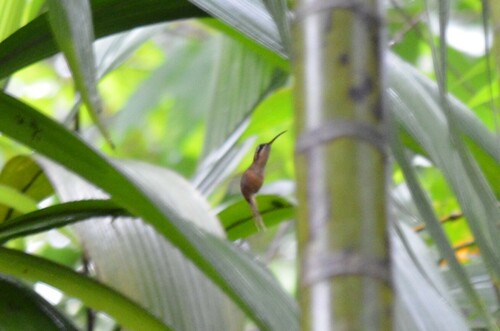
 Band-tailed Barbthroat
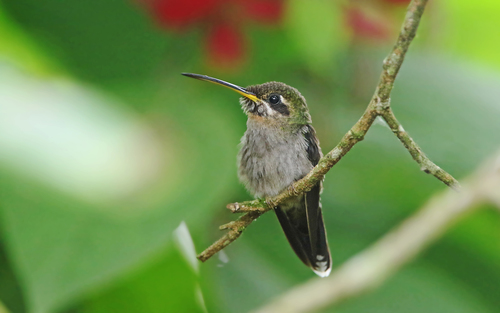
 Stripe-throated Hermit
In breve
Il segno distintivo più affidabile per separare il Band-tailed Barbthroat dallo Stripe-throated Hermit è il bold, nastro nero sulla coda con basi e punte bianche sul Band-tailed Barbthroat, visibile sia negli uccelli posati che in volo di tutte le età. Lo Stripe-throated Hermit manca di questo forte schema di coda e mostra invece una coda più uniformemente scura con solo punte chiare. Anche la dimensione è un forte indizio: il Band-tailed Barbthroat è notevolmente più grande e pesante rispetto al diminutivo Stripe-throated Hermit. La forma del becco e il pattern facciale differiscono sottilmente, ma possono essere difficili da distinguere a distanza. I giovani di entrambe le specie sono simili agli adulti, ma il pattern della coda del Barbthroat rimane distintivo. Concentrati sulla coda e sulla dimensione complessiva per la separazione più affidabile, specialmente in stormi misti o uccelli in rapido movimento.
Consigli di identificazione
- Tail pattern (all ages): Il Band-tailed Barbthroat mostra un bold nastro nero vicino alla punta della coda, con basi e punte bianche delle penne della coda—molto colpente sia negli uccelli posati che in volo. Lo Stripe-throated Hermit ha una coda per lo più nera con solo punte chiare (bianche o ocra), mancando dell'aspetto a bande forte.
- Size and bulk: Il Barbthroat è notevolmente più grande e pesante (10–11 cm, 5–7 g) rispetto all'Hermit (9–10 cm, 2–3 g). In confronto diretto o con altri colibrì per scala, il Barbthroat appare robusto, l'Hermit appare delicato.
- Bill shape: Entrambi hanno becchi lunghi, ma quello del Barbthroat è quasi dritto (femmina leggermente più curvata), mentre quello dell'Hermit è distintamente lungo e curvato. A distanza, questo è sottile, ma viste da vicino possono mostrare la curva più pronunciata dell'Hermit.
- Facial pattern: Lo Stripe-throated Hermit ha una forte maschera nera, bordata sopra da un supercilium bianco-ocra e sotto da una striscia malare bianco-ocra. Il Barbthroat ha una macchia scura sull'orecchio e sul mento, ma manca delle strisce facciali nette dell'Hermit.
- Throat color: La gola del Barbthroat è ocra a arancione brillante (specialmente in alcune sottospecie), risaltando contro il resto del corpo grigio. La gola dell'Hermit è grigio-marrone chiaro con fini striature scure, spesso deboli e non sempre visibili.
- Underparts: Il Barbthroat ha parti inferiori grigie con alcune piume verdi, mentre l'Hermit mostra fianchi e ventre ocra, e una parte centrale inferiore grigio-marrone chiaro.
- Upperparts: Le parti superiori del Barbthroat sono verde bronzo; quelle dell'Hermit sono di un verde iridescente opaco con un sottocoda rufous chiaro (specialmente nei giovani).
- Juvenile differences: I giovani del Barbthroat hanno bordi delle piume ocra ma mantengono il pattern distintivo della coda. I giovani dell'Hermit hanno un dorso rufous chiaro, ma la coda rimane semplice con solo punte chiare.
- Flight jizz: Il Barbthroat appare più robusto e diretto in volo; l'Hermit è più delicato e agile.
- Perched posture: Il Barbthroat appare spesso più eretto e robusto, mentre l'Hermit si posiziona con un aspetto più snello ed allungato.
- Habitat context: Entrambi possono trovarsi nel sottobosco e nei margini della foresta, ma il Barbthroat è più probabile in aree semi-aperte o piantagioni, l'Hermit spesso in foreste più dense e umide vicino all'acqua.
- Song: Il canto del Barbthroat è una frase veloce e acuta con pause; quello dell'Hermit è una serie monotona e squillante. Se senti un squeak ripetitivo e non variato, è probabile che sia l'Hermit; se senti una frase più complessa e trillata, considera il Barbthroat (specialmente nella Costa Rica Pacifica).
- Sex differences: Entrambi i sessi sono simili in ciascuna specie; la curvatura del becco è leggermente maggiore nella femmina del Barbthroat ma non è un forte segno distintivo.
- Pitfalls: In scarsa illuminazione, le punte chiare della coda dell'Hermit possono sembrare una banda, ma mai così bold o larga come quella del Barbthroat. La gola ocra del Barbthroat può apparire opaca in ombra, quindi fai affidamento sul pattern della coda e sulla dimensione.
- When in doubt: Se vedi un colibrì di dimensioni medie con una coda a bande bianche e nere bold, è un Band-tailed Barbthroat. Se l'uccello è piccolo, con una coda scura semplice e solo punte chiare, e mostra una forte maschera facciale, è uno Stripe-throated Hermit.
Taglia
Il Band-tailed Barbthroat è un colibrì di dimensioni medie, misurando 10–11 cm di lunghezza e pesando 5–7 g. Al contrario, lo Stripe-throated Hermit è significativamente più piccolo, a 9–10 cm e solo 2–3 g. Questo rende il Barbthroat quasi due volte più pesante e notevolmente più robusto sul campo. Quando visti insieme o con altri colibrì per scala, la dimensione e la costruzione più robusta del Barbthroat sono evidenti, mentre l'Hermit appare delicato e snello.
Piumaggio
- Juveniles and immatures: I giovani di entrambe le specie somigliano agli adulti, ma il giovane Barbthroat mostra bordi delle piume ocra, mentre i giovani dell'Hermit hanno un dorso rufous chiaro complessivo. Tuttavia, il nastro nero della coda del Barbthroat con basi e punte bianche è presente in tutte le età ed è diagnostico.
- Adults: I maschi e le femmine del Band-tailed Barbthroat hanno parti superiori verde bronzo, una macchia scura sull'orecchio e sul mento, e una gola distintiva ocra (specialmente arancione brillante in alcune sottospecie). La coda è scura con un prominente nastro nero subterminale e bianco alla base e alla punta di ciascuna piuma, creando un forte effetto a bande. Gli adulti dello Stripe-throated Hermit hanno parti superiori di un verde iridescente opaco, un sottocoda rufous chiaro, fianchi e ventre ocra, e una gola grigio-marrone chiaro con fini striature scure (spesso deboli). La loro coda è nera con solo punte chiare (bianche o ocra, a seconda della sottospecie), mancando della bold band del Barbthroat. Il volto dell'Hermit mostra una maschera nera, bordata sopra e sotto da linee bianco-ocra, che è meno pronunciata nel Barbthroat.
Comportamento
Entrambe le specie sono tipici colibrì eremiti, nutrendosi attraverso circuiti di fiori e occasionalmente rubando nettare. I maschi dello Stripe-throated Hermit formano leks e cantano per attrarre le femmine, mentre i maschi del Band-tailed Barbthroat possono sostare vicino ai nidi ma non partecipano all'incubazione. Entrambi sono solitari al di fuori della riproduzione, ma il comportamento di lekking dell'Hermit può essere più evidente. In volo, il Barbthroat appare più robusto e diretto, mentre l'Hermit è più delicato e agile.
Habitat
Il Band-tailed Barbthroat abita il sottobosco e i margini della foresta primaria, vecchie seconde crescita, arbusteti, cespugli e piantagioni dal livello del mare fino a 1.200 m, variando dal sud-est del Guatemala e Belize all'Equador occidentale e Venezuela. Lo Stripe-throated Hermit occupa un'area simile in America Centrale e nel nord-ovest del Sud America, ma si trova generalmente in foreste umide di pianura e di collina, spesso vicino all'acqua o nel denso sottobosco. Entrambi possono verificarsi in habitat disturbati, ma il Barbthroat può essere più tollerante verso aree semi-aperte e piantagioni.
Voce
Il canto del Band-tailed Barbthroat è una frase veloce e acuta di 5–10 note, ripetuta con pause, ad esempio, 'tzi-tzi-tsee-ee-tsi-tzi-tzi.' In Costa Rica, gli uccelli della pendenza pacifica hanno un canto più complesso con trilli. Il canto dello Stripe-throated Hermit è acuto, squillante e monotono, facilmente udibile ma meno vario. Entrambi possono essere acuti e difficili da separare all'orecchio a meno che non si sia familiari con la struttura del canto locale.
Band-tailed Barbthroat · Stripe-throated Hermit · I miei uccelli difficili