

Motmot

ヒガシメンフクロウ 対 アメリカメンフクロウ

Tyto longimembris 対 Tyto furcata

ヒガシメンフクロウとアメリカメンフクロウのクイズ
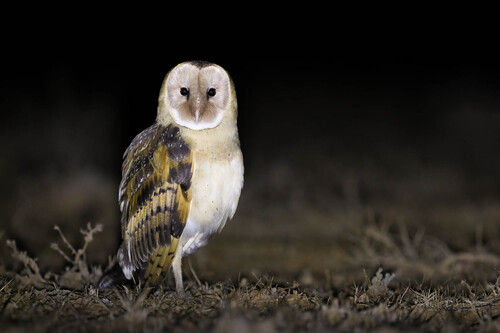
ヒガシメンフクロウ (Tyto longimembris) ヒガシメンフクロウ
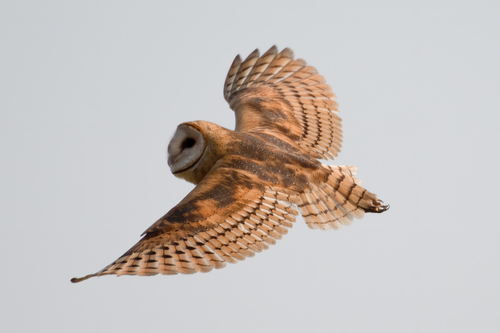
アメリカメンフクロウ (Tyto furcata) アメリカメンフクロウ

メディア

読み込み中…

要点

オーストラリアヒガシメンフクロウとアメリカメンフクロウの最も信頼できるフィールドでの識別は、飛行中の構造と羽毛です:ヒガシメンフクロウは尾を大きく超える長い脚を持ち、上面は特に翼の部分で暗く、より重く模様が入っています。両種はハート型の顔のディスクを持っていますが、ヒガシメンフクロウの顔は白い縁取りのあるバフ色で、アメリカメンフクロウは通常、より白い顔を示します。止まっている鳥では、ヒガシメンフクロウの長い羽毛のある脚と暗い上面が重要で、メンフクロウは下側がより淡く均一です。両者はサイズが似ていますが、ヒガシメンフクロウは脚が長く、密な草地のカバーに適応しているように見えます。

識別のコツ

  1. Leg length in flight: ヒガシメンフクロウの長い羽毛のある脚は、飛行中に尾を大きく超えて目立ち、「ぶらぶら」とした外観を与えます。メンフクロウの脚ははるかに短く、尾の先端をほとんど超えません。これは、特に若い鳥や下から見たときに最も信頼できるフィールドマークです。
  2. Upperwing pattern: ヒガシメンフクロウは、太く黒とバフのバーがあるより暗く、より重く模様が入った上翼を示しますが、メンフクロウの翼は淡い茶色で、より細かく、対照的な暗いバンドが少ないです。このコントラストは、止まっている鳥と飛んでいる鳥の両方で見ることができます。
  3. Facial disk color: ヒガシメンフクロウは、白い縁取りのあるバフ色のハート型の顔のディスクを持っています;メンフクロウのものは通常明るい白(時には一部の亜種でバフ色)で、強い白い縁取りがありません。
  4. Underparts: メンフクロウは通常、下側がはるかに淡く、純白または淡いバフ色で、時には細かい暗い斑点があります(特に雌において)。ヒガシメンフクロウは下側が淡いですが、通常はそれほど白くなく、斑点も少ないです。
  5. Upperparts color: ヒガシメンフクロウは全体的に上面が暗い(暗い茶色/バフ色に淡い斑点)、一方メンフクロウは淡い茶色または灰色がかっており、細かい黒と白の斑点がありますが、全体的なコントラストは少ないです。
  6. Eye color: 両者は暗い茶色から黒っぽい目を持ち、フィールドでの有用な識別要素ではありません。
  7. Beak color: ヒガシメンフクロウは非常に淡いくちばしを持っています;メンフクロウのくちばしは淡い角から暗いバフ色まで変化しますが、これは微妙で、通常は遠くからの診断には適しません。
  8. Tail shape: メンフクロウは短く四角い尾を持ち、飛行中に役立つことがあります;ヒガシメンフクロウの尾は似ていますが、長い脚が比較的尾をさらに短く見せます。
  9. Perched structure: ヒガシメンフクロウは止まっているときに脚が長く、より直立しているように見え、時には休んでいるときでも脚が見えることがあります。メンフクロウはよりコンパクトで、止まり木に低く座ります。
  10. Habitat context: ヒガシメンフクロウはほぼ常に高い草地や湿地に生息し、他の場所にはめったに見られません。メンフクロウは、納屋、畑、さらには都市部を含む広範囲の開放的な生息地に見られます。
  11. Roosting/nesting sites: ヒガシメンフクロウは草の「トンネル」で休息し、密な植生の中で地面に巣を作ります。メンフクロウは、木の空洞、建物、巣箱をより頻繁に利用します。
  12. Flight style: 両者は浮遊感のある静かな飛行を持っていますが、ヒガシメンフクロウの長い脚は空中でより「引きずる」または引き延ばされた外観を与えるかもしれません。
  13. Sexual dimorphism: 両種とも、雌はより大きく、しばしば下側がより暗く/より斑点が多いですが、これは種間の識別において信頼できるフィールドマークではありません。
  14. Vocalizations: 両者は厳しい叫び声を上げます;ヒガシメンフクロウの声はやや大きいですが、これは実用的なフィールドの識別要素ではありません。
  15. Geographic range: アメリカで見られた場合、ほぼ確実にメンフクロウです;オーストラリアや東アジアでは、適切な生息地であればヒガシメンフクロウの可能性があります。

大きさ

両種は中型のTytoフクロウで、測定値が重なっています。オーストラリアヒガシメンフクロウのオスは32–38 cmの長さ(雌は35–42 cm)、翼幅は100–116 cm、体重は400–460 gです。アメリカメンフクロウも同様のサイズで、一部の亜種の最大の雌は550 gを超えますが、ほとんどはヒガシメンフクロウと同じ範囲にあります。フィールドでは、サイズは重なりと両種の性的二形性のため、信頼できる識別要素ではありません。

羽色

行動

ヒガシメンフクロウは高い草地や湿地での狩猟に適応しており、長い脚を使って密なカバーの中で獲物に到達します。草のトンネル内の平らになった植生に休息し、巣を作ります。アメリカメンフクロウはより一般的で、しばしば開けた畑、草地、農地で狩猟し、密な草に特化していません。両種は主に小さな齧歯類を狩り、静かで浮遊感のある羽ばたきで飛びますが、ヒガシメンフクロウの飛行は脚の長さのためにより引き延ばされた「ぶらぶら」とした外観に見えることがあります。

生息環境

オーストラリアヒガシメンフクロウは高い草地や湿地に強く関連しており、しばしば密な地面のカバーがあり、ほとんど干渉のない地域に生息しています。このような生息地から離れて見られることはめったにありません。アメリカメンフクロウははるかに多様で、開けた国、農地、草地、さらには都市の端に生息しています。広範な高い草や湿地で見られた場合、特にオーストラリアや東アジアではヒガシメンフクロウの可能性が高く、開けた畑、納屋、農業の環境、特にアメリカではメンフクロウが優勢です。

声

両種はTytoフクロウに典型的な厳しい、シューという叫び声を上げます。ヒガシメンフクロウの鳴き声はメンフクロウよりも大きいとされていますが、マスクドオウルよりは柔らかいです。実際には、違いは微妙で、両者がよく知られていない限り、フィールドでの識別には信頼できません。どちらの種も、フィールドで声だけで自信を持って識別されることはほとんどありません。

より良い説明を送る

比較と同じ項目を使ってください。文章はすぐに公開されます。

The most reliable field separation between Australasian Grass-Owl and American Barn Owl is their structure and plumage in flight: Grass-Owl shows notably longer legs that project well beyond the tail, and its upperparts are darker and more heavily marked, especially on the wings. Both species have a heart-shaped facial disk, but Grass-Owl’s face is more buff-toned with a white border, while American Barn Owl usually shows a whiter face. In perched birds, Grass-Owl’s long, feathered legs and darker upperparts are key, while Barn Owl is paler and more uniform below. Both are similar in size, but Grass-Owl tends to look leggier and more adapted to dense grassland cover.

  1. Leg length in flight: Grass-Owl’s long, feathered legs project conspicuously beyond the tail in flight, giving a 'dangly' look. Barn Owl’s legs are much shorter and barely extend past the tail tip. This is the single most reliable field mark, especially in younger birds or when seen from below.
  2. Upperwing pattern: Grass-Owl shows darker, more heavily barred upperwings with bold black and tan bars, while Barn Owl’s wings are paler brown with finer, less contrasting dark bands. This contrast is visible in both perched and flying birds.
  3. Facial disk color: Grass-Owl has a heart-shaped facial disk that is buff with a white border; Barn Owl’s is usually bright white (sometimes buff in some subspecies), lacking the strong white border.
  4. Underparts: Barn Owl is typically much paler below, often pure white or pale buff, sometimes with fine dark speckles (especially in females). Grass-Owl is pale below but usually not as strikingly white, and less speckled.
  5. Upperparts color: Grass-Owl is overall darker above (dark brown/tan with pale spots), while Barn Owl is paler brown or greyish, with fine black-and-white speckling but less overall contrast.
  6. Eye color: Both have dark brown to blackish eyes, not a useful separator in the field.
  7. Beak color: Grass-Owl has a very pale beak; Barn Owl’s beak varies from pale horn to dark buff, but this is subtle and not usually diagnostic at a distance.
  8. Tail shape: Barn Owl has a short, squarish tail, which can help in flight; Grass-Owl’s tail is similar but the long legs make the tail look even shorter by comparison.
  9. Perched structure: Grass-Owl appears longer-legged and more upright when perched, sometimes with legs visible even at rest. Barn Owl is more compact and sits lower to the perch.
  10. Habitat context: Grass-Owl is almost always in tall grassland or swamp, rarely elsewhere. Barn Owl is found in a wide range of open habitats, including barns, fields, and even urban areas.
  11. Roosting/nesting sites: Grass-Owl roosts in grass 'tunnels' and nests on the ground in dense vegetation. Barn Owl uses tree cavities, buildings, and nest boxes more often.
  12. Flight style: Both have buoyant, silent flight, but Grass-Owl’s longer legs may give it a more 'draggy' or elongated look in the air.
  13. Sexual dimorphism: In both species, females are larger and often darker/more spotted below, but this is not a reliable field mark for separation between species.
  14. Vocalizations: Both give harsh screeches; Grass-Owl’s is slightly louder, but this is not a practical field separator.
  15. Geographic range: If seen in the Americas, it is almost certainly Barn Owl; in Australasia or East Asia, Grass-Owl is possible, especially in appropriate habitat.

Both species are medium-sized Tyto owls, with overlapping measurements. Australasian Grass-Owl males are 32–38 cm long (females 35–42 cm), wingspan 100–116 cm, and mass 400–460 g. American Barn Owl is similarly sized, with the largest females of some subspecies exceeding 550 g, but most are in the same range as Grass-Owl. In the field, size is not a reliable separator due to overlap and sexual dimorphism in both species.

  • Juvenile/immature flight: No specific age-dependent upperwing pattern is described for either species that is diagnostic in flight, but Grass-Owl is consistently darker above with more obvious black and tan barring on the wings. Barn Owl upperparts are paler, often showing more grey or pale brown with fine speckling, and the remiges (flight feathers) are lighter brown with darker bands.
  • Adults: Grass-Owl has dark brown or tan upperparts with pale spots and bold black/tan wing bars, a buffy heart-shaped face with a white border, and dark brown eyes. Its underparts are paler but not as white as typical American Barn Owl. American Barn Owl is much paler overall, especially below, with a bright white or buff heart-shaped face, blackish-brown eyes, and underparts that range from white to reddish buff, often with fine dark speckles (especially in females). The beak of Grass-Owl is very pale, while Barn Owl’s can be pale horn to dark buff. Both have feathered legs, but Grass-Owl’s are longer and more conspicuous.

Grass-Owl is adapted for hunting in tall grasslands and swamps, using its long legs to reach prey in dense cover. It roosts and nests in flattened vegetation within grass tunnels. American Barn Owl is more generalist, often hunting over open fields, meadows, and agricultural land, and is less specialized for dense grass. Both species hunt mainly small rodents and fly with silent, buoyant wingbeats, but Grass-Owl’s flight may appear more elongated and 'dangly' due to its leg length.

Australasian Grass-Owl is strongly associated with tall grasslands and swamps, often in areas with dense ground cover and little disturbance. It is rarely found away from such habitats. American Barn Owl is much more versatile, occupying open country, farmland, grasslands, and even urban edges. If seen in extensive tall grass or swamp, especially in Australasia or East Asia, Grass-Owl is more likely; in open fields, barns, or agricultural settings, especially in the Americas, Barn Owl predominates.

Both species give harsh, hissing screeches or screams typical of Tyto owls. Grass-Owl’s call is described as louder than Barn Owl’s but softer than Masked Owl. In practice, the difference is subtle and not reliable for field separation unless both are known well. Neither species is likely to be separated confidently by voice alone in the field.

変更を破棄しますか?

保存していない編集があります。今離れると失われます。

ヒガシメンフクロウ · アメリカメンフクロウ · 苦手な鳥