

Australasian Grass-Owl vs American Barn Owl
Tyto longimembris contro Tyto furcata
Fai un quiz con Australasian Grass-Owl e American Barn Owl
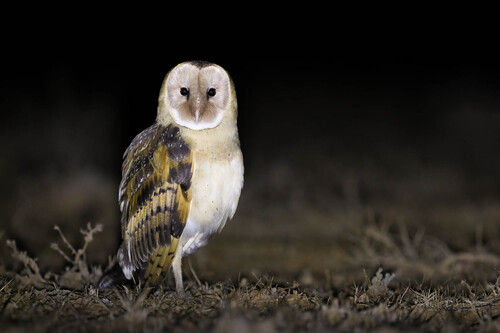 Australasian Grass-Owl
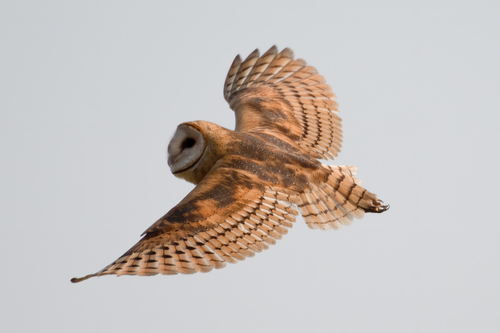 American Barn Owl
In breve
La separazione più affidabile sul campo tra Australasian Grass-Owl e American Barn Owl è la loro struttura e il piumaggio in volo: Grass-Owl mostra gambe notevolmente più lunghe che si proiettano ben oltre la coda, e le sue parti superiori sono più scure e più pesantemente marcate, specialmente sulle ali. Entrambe le specie hanno un disco facciale a forma di cuore, ma il volto di Grass-Owl è più color sabbia con un bordo bianco, mentre l'American Barn Owl mostra solitamente un volto più bianco. Negli uccelli in perching, le lunghe gambe piumate di Grass-Owl e le sue parti superiori più scure sono fondamentali, mentre l'American Barn Owl è più chiara e più uniforme sotto. Entrambe sono simili in dimensioni, ma Grass-Owl tende a sembrare più slanciata e più adattata a coperture erbose dense.
Consigli di identificazione
- Leg length in flight: Le lunghe gambe piumate di Grass-Owl si proiettano in modo evidente oltre la coda in volo, dando un aspetto 'pendente'. Le gambe dell'American Barn Owl sono molto più corte e si estendono appena oltre la punta della coda. Questo è il segno più affidabile sul campo, specialmente negli uccelli più giovani o quando visti dal basso.
- Upperwing pattern: Grass-Owl mostra ali superiori più scure, più pesantemente barrate con barre nere e color sabbia audaci, mentre le ali dell'American Barn Owl sono di un marrone più chiaro con bande scure più fini e meno contrastanti. Questo contrasto è visibile sia negli uccelli in perching che in volo.
- Facial disk color: Grass-Owl ha un disco facciale a forma di cuore che è color sabbia con un bordo bianco; quello dell'American Barn Owl è solitamente bianco brillante (a volte color sabbia in alcune sottospecie), privo del forte bordo bianco.
- Underparts: L'American Barn Owl è tipicamente molto più chiara sotto, spesso di un bianco puro o color sabbia chiaro, a volte con fini macchie scure (specialmente nelle femmine). Grass-Owl è chiara sotto ma di solito non così bianchissima, e meno macchiata.
- Upperparts color: Grass-Owl è complessivamente più scura sopra (marrone scuro/color sabbia con macchie chiare), mentre l'American Barn Owl è di un marrone più chiaro o grigiastro, con fine macchiatura bianca e nera ma meno contrasto complessivo.
- Eye color: Entrambi hanno occhi di un marrone scuro a neri, non un separatore utile sul campo.
- Beak color: Grass-Owl ha un becco molto chiaro; il becco dell'American Barn Owl varia da un corno chiaro a un color sabbia scuro, ma questo è sottile e di solito non diagnostico a distanza.
- Tail shape: L'American Barn Owl ha una coda corta e squadrata, che può aiutare in volo; la coda di Grass-Owl è simile ma le lunghe gambe fanno sembrare la coda ancora più corta in confronto.
- Perched structure: Grass-Owl appare con gambe più lunghe e più erette quando è in perching, a volte con le gambe visibili anche a riposo. L'American Barn Owl è più compatta e si siede più in basso sul posatoio.
- Habitat context: Grass-Owl è quasi sempre in prati alti o paludi, raramente altrove. L'American Barn Owl si trova in una vasta gamma di habitat aperti, tra cui fienili, campi e persino aree urbane.
- Roosting/nesting sites: Grass-Owl si riposa in 'tunnel' d'erba e nidifica a terra in vegetazione densa. L'American Barn Owl utilizza più spesso cavità negli alberi, edifici e cassette nido.
- Flight style: Entrambi hanno un volo silenzioso e galleggiante, ma le gambe più lunghe di Grass-Owl possono darle un aspetto più 'pendente' o allungato in aria.
- Sexual dimorphism: In entrambe le specie, le femmine sono più grandi e spesso più scure/più macchiate sotto, ma questo non è un segno affidabile per la separazione tra le specie.
- Vocalizations: Entrambi emettono strida aspre; quella di Grass-Owl è leggermente più forte, ma questo non è un separatore pratico sul campo.
- Geographic range: Se visto nelle Americhe, è quasi certamente l'American Barn Owl; in Australasia o nell'Asia orientale, è possibile vedere Grass-Owl, specialmente in habitat appropriati.
Taglia
Entrambe le specie sono gufi Tyto di dimensioni medie, con misurazioni sovrapposte. I maschi di Australasian Grass-Owl sono lunghi 32–38 cm (femmine 35–42 cm), apertura alare 100–116 cm e massa 400–460 g. L'American Barn Owl è di dimensioni simili, con le femmine più grandi di alcune sottospecie che superano i 550 g, ma la maggior parte è nella stessa gamma di Grass-Owl. Sul campo, la dimensione non è un separatore affidabile a causa della sovrapposizione e del dimorfismo sessuale in entrambe le specie.
Piumaggio
- Juvenile/immature flight: Non è descritto alcun modello di ala superiore specifico per età diagnostico in volo per entrambe le specie, ma Grass-Owl è costantemente più scura sopra con barre nere e color sabbia più evidenti sulle ali. Le parti superiori dell'American Barn Owl sono più chiare, spesso mostrando più grigio o marrone chiaro con fine macchiatura, e le remiganti (piume da volo) sono di un marrone più chiaro con bande più scure.
- Adults: Grass-Owl ha parti superiori marrone scuro o color sabbia con macchie chiare e audaci barre nere/color sabbia sulle ali, un volto a forma di cuore color sabbia con un bordo bianco e occhi marrone scuro. Le sue parti inferiori sono più chiare ma non così bianche come l'American Barn Owl tipica. L'American Barn Owl è molto più chiara nel complesso, specialmente sotto, con un volto a forma di cuore bianco brillante o color sabbia, occhi marrone scuro e parti inferiori che variano dal bianco al color sabbia rossastro, spesso con fini macchie scure (specialmente nelle femmine). Il becco di Grass-Owl è molto chiaro, mentre quello dell'American Barn Owl può essere da corno chiaro a color sabbia scuro. Entrambi hanno gambe piumate, ma quelle di Grass-Owl sono più lunghe e più evidenti.
Comportamento
Grass-Owl è adattata per la caccia in prati alti e paludi, usando le sue lunghe gambe per raggiungere le prede in copertura densa. Si riposa e nidifica in vegetazione schiacciata all'interno di tunnel d'erba. L'American Barn Owl è più generalista, spesso cacciando su campi aperti, prati e terreni agricoli, ed è meno specializzata per l'erba densa. Entrambe le specie cacciano principalmente piccoli roditori e volano con battiti d'ala silenziosi e galleggianti, ma il volo di Grass-Owl può apparire più allungato e 'pendente' a causa della lunghezza delle sue gambe.
Habitat
L'Australasian Grass-Owl è fortemente associato a prati alti e paludi, spesso in aree con densa copertura vegetale e poca perturbazione. È raramente trovato lontano da tali habitat. L'American Barn Owl è molto più versatile, occupando territori aperti, terreni agricoli, prati e persino margini urbani. Se visto in ampie aree di erba alta o palude, specialmente in Australasia o Asia orientale, è più probabile che sia Grass-Owl; in campi aperti, fienili o ambienti agricoli, specialmente nelle Americhe, prevale l'American Barn Owl.
Voce
Entrambe le specie emettono strida aspre e hissanti o grida tipiche dei gufi Tyto. Il richiamo di Grass-Owl è descritto come più forte di quello dell'American Barn Owl ma più morbido di quello del Masked Owl. In pratica, la differenza è sottile e non è affidabile per la separazione sul campo a meno che entrambi siano ben conosciuti. Nessuna delle due specie è probabile che venga separata con fiducia solo per voce sul campo.
Australasian Grass-Owl · American Barn Owl · I miei uccelli difficili